Bilbao in 3 Days: Guggenheim, Pintxos, Coast and Budget
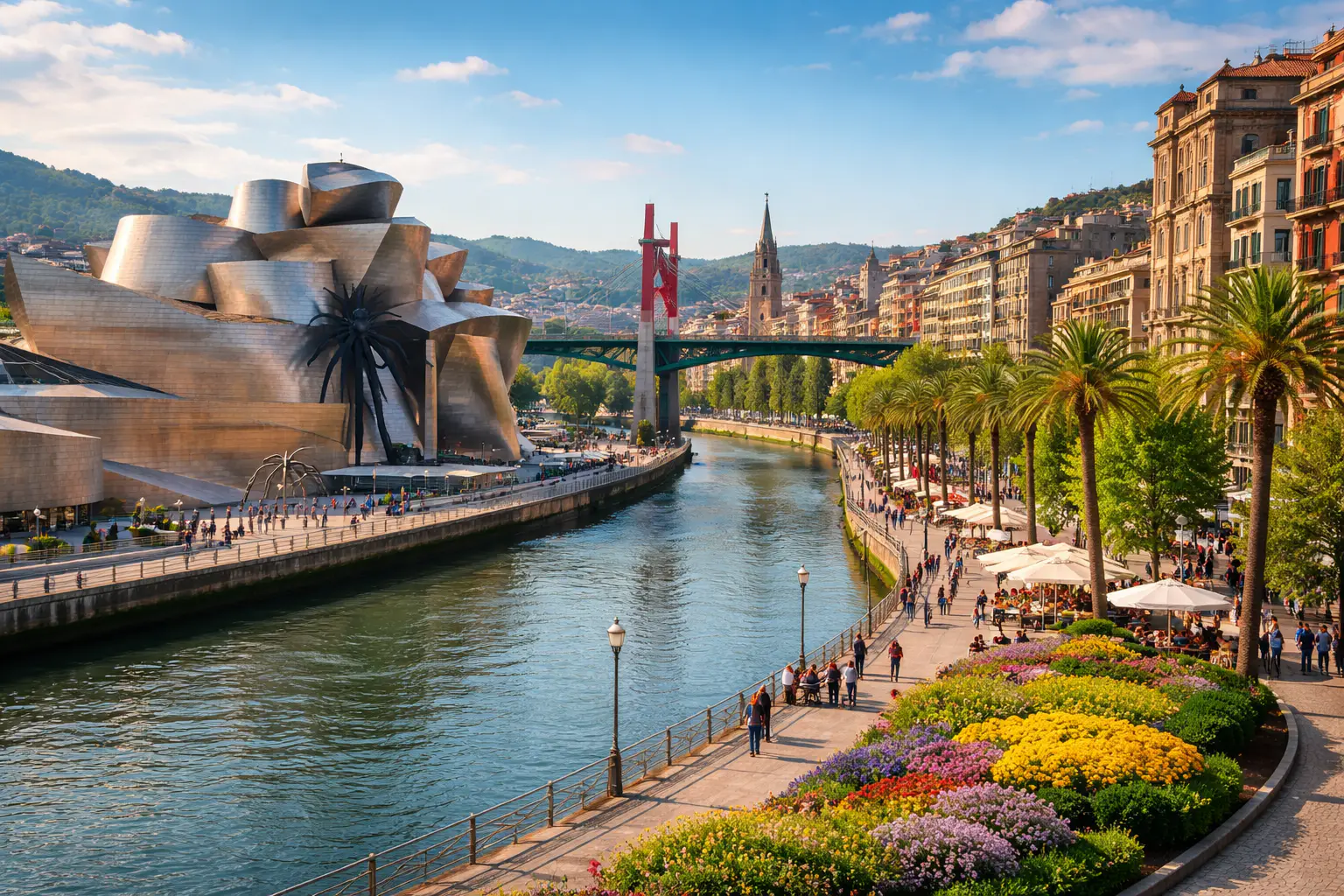
Bilbao did not suddenly become interesting when the Guggenheim opened. The museum made a much wider transformation visible: port activity moved, riverbanks were reclaimed, a new metro arrived, footbridges and trams connected districts, and industrial buildings found new uses. The city remains compact, sometimes grey and frequently wet. That texture is exactly what prevents its contemporary architecture from feeling like a stage set dropped into place.
Three days reveal both sides of the river. Day one follows the water and modern Bilbao. Day two belongs to the Casco Viejo, market and pintxos. Day three climbs to Artxanda or takes the metro towards the Atlantic. The final day must remain a choice. Combining a beach, San Sebastián and another museum in one slot turns a Basque trip into a timed transfer.
This guide promises neither constant sunshine nor implausibly cheap meals. It shows how to use rainy weather, build a pintxo crawl without overordering, choose an efficient area and let public transport open up the coast without a rental car.
Our recommended 3-day Bilbao itinerary
The ria is the itinerary’s spine and the feature that makes Bilbao legible. Day one moves from Abando and the Ensanche towards the Guggenheim, Doña Casilda and the redeveloped waterfront. Day two heads into the Siete Calles, Plaza Nueva and Ribera Market. Day three follows the weather: Artxanda when the cloud lifts, Sopela or Plentzia when the Atlantic deserves the journey, and a deeper cultural programme if the rain stays.
The right pace: reserve one major museum, not three. Bilbao rewards the transitions between stone, steel, water and bar counters. An hour walking beside the ria can contribute more than an extra exhibition added from fear of not “making the most” of the trip.
Airport bus, Barik and car-free transport
The airport bus reaches central Bilbao and serves several useful stops. Stops and conditions can change, so check the airport or operator’s current page for your date rather than memorising a route number and fare from an old article. Staying in Abando, Indautxu or the Casco Viejo then places most of the first two days within walking distance.
The metro becomes most valuable beyond the centre: Getxo, Sopela’s beaches and Plentzia turn into manageable outings. The tram follows part of the river, while buses fill the remaining gaps. A Barik card may simplify public transport; read the official Barik guidance before buying because the best option depends on party size and the journeys you will actually make. Walking remains the main mode for days one and two.
Bilbao Turismo also explains the Barik transport card. Do not load a large balance automatically. Estimate the airport, coast and city journeys first.
The network is useful because Bilbao sits in a valley rather than on a flat grid. A route that seems short can involve a bridge, river crossing or climb. Use public transport to remove repetitive sections, then walk the parts where architecture and water matter. This hybrid approach saves energy without turning the city into a sequence of underground stations.
Guggenheim, the river and modern Bilbao
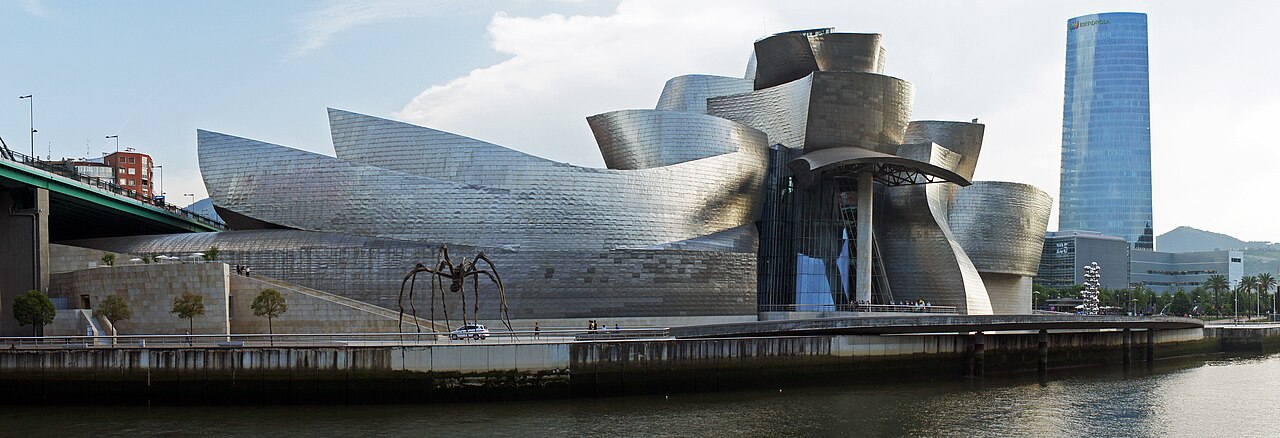
Begin near Abando and walk towards the water instead of immediately taking the metro. The Ensanche blocks, bridges and views towards the surrounding hills create a gradual introduction. Approaching the Guggenheim on foot reveals how the building relates to the river, La Salve Bridge and the quays. Circle the exterior before entering: the volumes change with the light, and several works belong to the promenade as much as to the museum.
Inside, prioritise the exhibitions that genuinely interest you. A ticket does not create an obligation to complete every room. Opening times, closures and admission conditions are maintained on the official Guggenheim website. Booking is sensible on a busy weekend or for a popular temporary show; during a quiet weekday, retaining weather flexibility may be more useful.
Continue through Abandoibarra, cross or observe the Pedro Arrupe footbridge and reach Doña Casilda park. The park does not need a spectacular bloom to justify the stop. Water, mature trees and open paths create a pause between the museum and Ensanche. Municipal flowerbeds change with the season, so it is more honest to promise a useful urban park than guaranteed spring tulips.

Azkuna Zentroa and an evening in the Ensanche
Azkuna Zentroa occupies a former wine warehouse transformed into a cultural centre. It offers another answer to Bilbao’s industrial inheritance. Enter for an exhibition or event, or simply to understand the column-filled atrium and the building’s public life. It becomes particularly useful in rain, but should not be reduced to a quick photograph.
Eat around Indautxu or elsewhere in the Ensanche. A pintxo crawl does not require ten bars. Two or three stops, one or two pieces in each and a modest drink create movement without turning the evening into a contest. Watch what comes out of the kitchen, ask about the speciality and follow the house’s payment system. The best choice is not always the tallest item that has been sitting on the counter.
Casco Viejo, Siete Calles and Ribera Market
Enter the Casco Viejo in the morning while its streets are still easy to read. The Siete Calles form the historic core, but their value lies in the network: shops, churches, passages and small squares. Plaza Nueva is a useful marker rather than a half-day attraction. Compare this older urban grain with the geometry of the Ensanche seen the day before.
Ribera Market naturally continues the route back towards the water. Its building and position beside the ria matter as much as the stalls. At lunchtime, distinguish the produce market, food-hall counters and surrounding restaurants. A stop can remain affordable when you order deliberately; it becomes expensive when small plates accumulate without checking prices.
Cross towards Bilbao La Vieja or return past the Arriaga Theatre, depending on your energy. Bilbao La Vieja and San Francisco contain creative spaces, bars and a social fabric more complex than the monumental districts. Visit with attention rather than turning a lived-in neighbourhood into an “alternative” backdrop. For a conventional route, stay around the river and the squares of the Casco Viejo.


How to build a satisfying pintxo crawl
A pintxo is more than a small portion. The crawl establishes a social rhythm: enter, look, order a house speciality, drink lightly and move. Practices vary. Some pintxos are displayed; others are best ordered hot. Ask what the kitchen does well instead of pointing automatically at the most decorative piece.
Plaza Nueva concentrates many bars and simplifies a first attempt, but it does not contain all of Bilbao’s food culture. Continue through the Ensanche, Indautxu or the Ribera area. The tourism office’s pintxo route ideas help identify clusters; keep the freedom to choose according to crowds and the day’s blackboards.
Artxanda or the Atlantic coast by metro
Artxanda is the shorter outing. The funicular quickly raises you above the city and makes Bilbao’s shape understandable: river, valley, hills, neighbourhoods and infrastructure. Go when visibility is reasonable; beneath very low cloud, the viewpoint loses its purpose. The hill does not need a full day. It works as a breath of air before a final museum, lunch or waterfront walk.
The coast requires more time, but the metro makes it realistic. Sopela offers a broad beach and cliffs; Plentzia adds a small town and estuary. Swimming depends on season, waves and local conditions. The Atlantic is not a swimming pool and should not be described as one. Even without going into the water, a coastal walk provides a convincing change after two urban days.
Use Metro Bilbao information and Visit Biscay’s guide to beaches by metro. Check the final return, marine forecast and walking distance between station and sand. If persistent rain arrives, stay in Bilbao: the Fine Arts Museum, Azkuna Zentroa, cafés and markets make a richer plan B than a beach in a storm.


Where to stay in Bilbao
Abando
Central, connected and balanced between the Casco Viejo and Guggenheim. You can walk home without choosing between old and contemporary Bilbao.
Indautxu
Lively, convenient for Azkuna Zentroa and rich in restaurants. Check noise when the room faces a major road or nightlife street.
Casco Viejo
Excellent for evenings on foot and quiet early starts. Some lanes remain noisy, and access in older buildings varies.
Deusto
More residential and connected by metro, but less immediate for a short stay. Choose it only if the saving compensates for the journeys.
Being near a station does not automatically create a good base when every dinner requires the metro. For three days, Abando is the most robust compromise. The Casco Viejo wins on atmosphere; Indautxu on evening choice. Always measure the walk to the river as well as the station.
Recent guest comments are especially important in older buildings. Ask whether windows face a nightlife street, whether lifts begin at ground level and whether heating or air conditioning suits your season. Bilbao’s compactness makes a central room valuable, but poor sleep can erase any time saved by the location.
Budget for three days in Bilbao
Bilbao remains manageable when you walk, limit paid attractions and treat pintxos as tastings instead of an endless stream. Accommodation changes sharply during events and weekends. A slightly dearer central room may remove transport, while Barik can also make a well-connected outer area viable.
| Cost per person | Tight budget | Balanced | Comfort |
|---|---|---|---|
| 3 nights, shared double room | €105–195 | €195–345 | €345–600 |
| Food and pintxos | €85–130 | €135–220 | €230–380 |
| Transport | €20–35 | €35–60 | €60–110 |
| Museums and activities | €20–45 | €45–90 | €90–180 |
| Total before flights | €230–405 | €410–715 | €725–1,270 |
Add a margin when rain pushes you towards more museums or seated meals. These ranges do not replace a search for your dates. Compare rooms with the same cancellation terms, then check cultural and sporting calendars before assuming a high weekend quote is normal.
Bilbao or San Sebastián, and should you combine them?
Bilbao offers more contemporary architecture, museums and industrial contrast. San Sebastián places its bay, beaches and food at the centre. Connecting them is possible, but a return trip inside a three-day stay takes time from both. With five nights, dividing the trip starts to make sense. Our Granada two-day guide provides another Spanish option when monumental history matters more than the Atlantic coast.
For a warmer winter city and a markedly different rhythm, compare Seville in February. Bilbao does not win through guaranteed sunshine. Its strength is turning changing weather, topography and architecture into one coherent urban character.
A coast day is also different from transferring to another city. Sopela extends Bilbao’s own transport geography and returns you to the same room. San Sebastián introduces another destination with its own bay, food culture and pace. If you cannot give it at least a night, keeping the third day in Biscay usually produces the more complete journey.
Five common Bilbao mistakes
Scheduling the coast before checking the sky
Keep Sopela flexible until the previous evening. A museum in the wet slot and the beach moved to a clear spell make a much better trip.
Seeing the Guggenheim only from inside
The building, bridge and quays form one composition. Walk around before joining the galleries.
Ordering too many pintxos in the first bar
The crawl relies on movement. Start small, ask for specialities and preserve your appetite.
Promising spring tulips
Planting varies and does not define Bilbao. Doña Casilda remains valuable without a particular bloom.
Adding San Sebastián at the last minute
Over three days, a second city removes the time needed for the ria, Casco Viejo and the Biscay coast.
Bilbao 3-day FAQ
Yes for the city, Guggenheim, Casco Viejo and one short outing. Add a night for the coast and several museums without rushing.
It becomes useful with several metro, tram or bus journeys, particularly towards the coast. Check the rules and estimate usage before buying.
Yes, including Sopela and Plentzia, with a final walk. Check weather, sea conditions and the final return service.
Plaza Nueva makes the first steps easy, while the Ensanche and Indautxu broaden the choice. Two or three considered bars are enough for an evening.
Combine the Guggenheim or Fine Arts Museum, Azkuna Zentroa, Ribera Market and cafés. Bilbao handles rain better than a coast-centred schedule.
Useful official sources before departure
Use the Guggenheim for exhibitions and opening conditions, the Bizkaia Transport Consortium for Barik, Metro Bilbao for disruptions and Visit Biscay for coastal access. Budgets and journey times here are editorial ranges to compare against your dates.
Bilbao comes together through water, buildings and bar counters
The museum attracts attention, but the river explains the city. The Casco Viejo adds historical depth, pintxos establish a rhythm, Artxanda reveals the valley and the metro shows how close the Atlantic is. Keep day three flexible and meals mobile, and the result is a dense city break without reducing Bilbao to a checklist of photographed objects.
Disclosure: some booking links are affiliate links. Using them may support LowCostWings without changing the displayed price. Recommendations remain independent and based on the coherence of the trip.