Marsa Alam Snorkeling Hotels: Where to Stay for a House Reef
In Marsa Alam, the prettiest pool tells you almost nothing about the holiday waiting beyond your hotel room. The crucial question is at the water's edge: can you put on your mask and swim towards a reef from a sandy bay, or will you need to walk down a long jetty and enter deep water? Along this stretch of Egypt's Red Sea coast, two hotels that look similar online can offer completely different days in the sea.
For an easy introduction to shore snorkeling, we would start with Abu Dabbab. For a genuine reef-focused escape, Marsa Shagra is more compelling. Coraya Bay and Port Ghalib have their own advantages—comfortable resorts, organised reef access and easier airport logistics—but they are not simply interchangeable alternatives. Choosing well is less about counting stars and more about knowing how you like to swim.
The best Marsa Alam snorkeling hotels for different travellers
A good hotel in Marsa Alam is one that makes the ocean experience you came for genuinely possible. That might mean shallow seagrass frequented by turtles, reef walls accessed from a jetty, or a small dive village where the shore entry is part of everyday life.
| If your main priority is… | The stay we would choose | Why it fits—and the catch |
|---|---|---|
| A first shore-snorkeling holiday, with a chance of seeing turtles | Malikia Resort Abu Dabbab | Sandy entry on Abu Dabbab Bay; visitors also come on day trips, and coral lies mainly to the sides |
| Resort facilities and a comparatively sheltered bay | JAZ Solaya | Coraya Bay; pleasant beach, with key reef areas reached via a jetty |
| A holiday built around a proper house reef | Marsa Shagra Village | Shore access from its bay and a diving community, but a different style from a conventional luxury resort |
| An easier transfer from Marsa Alam Airport | Three Corners Fayrouz Plaza | Near Port Ghalib; long jetty and deep-water entry for the reef |
| Remote beaches and a quieter stretch of coast | Shams Alam Beach Resort | Sandy shore and house reef near Wadi el-Gemal; a significantly longer transfer |
Our overall first-time pick is Abu Dabbab. Being able to take your time in the sandy bay, return to your room and try again later is a real luxury. If you are already a confident swimmer and want reefs more than resort entertainment, however, we would look much harder at Marsa Shagra or Coraya. Wind, water conditions and local safety instructions can override any itinerary.
House reef, sandy beach or jetty: what the hotel description may leave out
A hotel described as beachfront with snorkeling might have a shallow swimming area and a coral wall that begins far beyond it. At some Red Sea resorts, a fringing reef reaches right towards the shoreline. Swimming or walking over that fragile coral would damage it, so a jetty carries guests beyond the reef flat. It is often the right environmental solution—and for strong swimmers it can be a wonderful way to reach marine life. For someone who dislikes stepping directly into deep water, it is a very different proposition.
A sandy entry lets you work up gradually: check your mask, find a comfortable depth and start swimming when ready. But the fish-rich coral may not be right beside the first patch of sand. At Abu Dabbab, the central seagrass meadows and the side reefs are different habitats, each rewarding in its own way.
A sheltered bay offers another kind of advantage. Coraya Bay is relatively protected from waves and current, and its diving centre has a dedicated jetty to the north and south reefs. Yet even well-designed access points can close in challenging conditions. A blue sky above the pool is no guarantee that the reef will be open that morning.
The phrase house reef also does not settle what is included. A hotel or dive centre may require an orientation, restrict access to particular areas, or charge separately for equipment or guided activities. Find this out before booking if you are planning to spend most days in the water. Never assume that a beach advertised as private is automatically a beginner-friendly snorkeling beach.

Abu Dabbab: the bay we would choose for an easy first trip
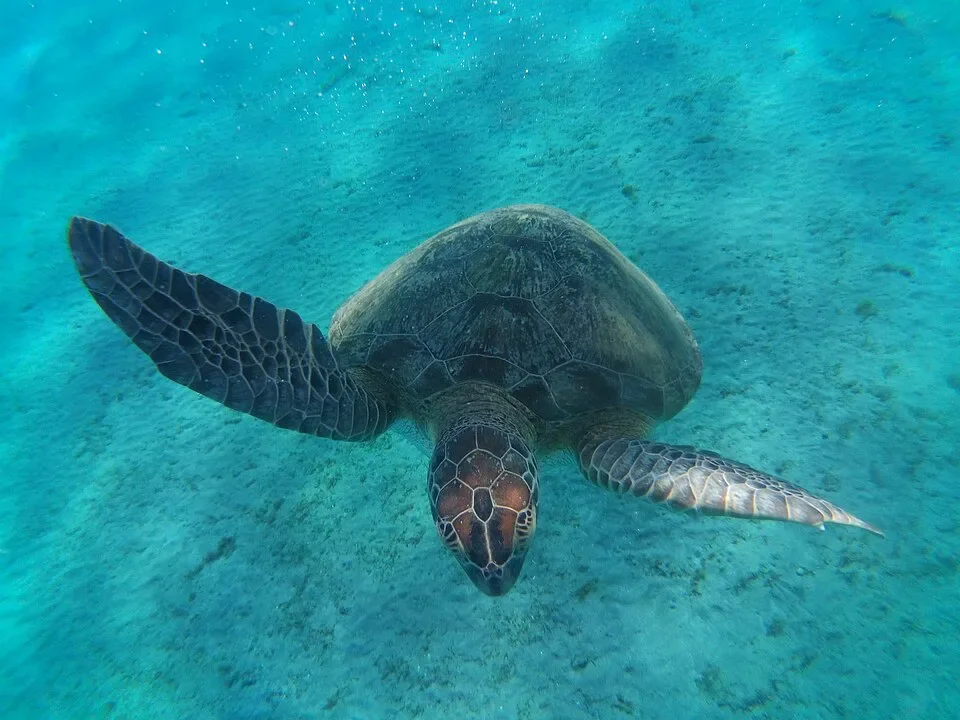
Abu Dabbab is not famous because somebody installed a photogenic swimming pool next to the Red Sea. Its appeal is the bay itself: a sandy entry, seagrass beds, and reefs towards the sides. Green turtles feed among the seagrass, making it possible to look for wildlife without organising a boat excursion. That last phrase matters—look for, not guarantee. Turtles are wild animals, and even a long stay does not promise a sighting.

Malikia Resort Abu Dabbab: choose the bay, not just the resort
For a couple or family whose dream is to return to Abu Dabbab several times, Malikia Resort Abu Dabbab is the most straightforward recommendation. It stands on the bay itself. You can swim when the water looks inviting, retreat to a sunbed or your room, and try again rather than arranging another car transfer. If marine life is the reason for your holiday, that freedom is worth far more than a longer list of hotel amenities.
It is also a proper resort, with pools, dining options and activities for days when somebody in your group has had enough of the sea. The trade-off is popularity: this is a well-known bay, not a secluded private snorkeling spot, and day visitors can share the beach. The central seagrass is not a vast coral garden; look towards the reef edges with an appropriate guide and only when conditions allow.
We would start gently, especially with children. A safe, supervised introduction in suitable shallow water beats an overambitious swim to reach a reef wall. We would also avoid choosing any hotel here solely because a rare dugong has occasionally been reported in the wider area. That is a remarkable possibility, not a travel product.

Best for: first-time shore snorkelers, couples hoping to observe turtles and families who want a resort as well as the sea. Less convincing for: experienced reef enthusiasts seeking a quiet dive-camp atmosphere. They may find Marsa Shagra more satisfying.
Coraya Bay: sheltered surroundings, serious reef access
Coraya Bay offers a more resort-oriented version of a Red Sea snorkeling holiday. Its northern and southern reefs are well known locally, and the diving centre provides a jetty designed to carry swimmers beyond the reef flat. It makes excellent sense for people who feel comfortable entering the water from a platform; it is not the same as wading gradually out over a sandy bottom.

JAZ Solaya: a family holiday with the reef close at hand
We like JAZ Solaya for travellers who want the reef to be one part of an enjoyable, well-equipped resort holiday. The hotel sits in the Coraya Bay area and offers a sandy beach, organised facilities and a chance to spend time around the water without planning long journeys every day. If one person loves snorkeling while everyone else prefers swimming, lounging or other activities, it is easier to make everybody happy here than in a specialist dive village.
But the distinction that matters most is still the entry point. A sandy beach for relaxing does not mean the coral starts at the sand. The reef sections are commonly reached through the jetty and designated access routes. Anyone who is nervous about deep-water entries, or travelling with children who are not strong swimmers, should ask the diving centre what a normal snorkeling session actually involves.
For guests still deciding between resorts along this coast, exploring available Marsa Alam stays can help compare accommodation styles and dates. Then check the underwater access for the shortlisted hotels individually. In this destination, a vague promise of a 'private beach' is not enough information to make the right choice.
Malikia or JAZ Solaya? We would choose Malikia for the beach-entry experience and the chance to observe turtles over seagrass. We would choose Solaya for a more rounded resort stay with reef access by jetty. Neither is inherently better; they solve different travel problems.
Marsa Shagra: when the reef is the reason for the trip
There is something appealingly uncomplicated about a diving village. Rather than disappearing into a huge lobby every evening, you gravitate towards the shore, the shared spaces and the dive centre. You start recognising the people who are as excited about the reef as you are. Marsa Shagra is a specialist option, but that specificity is its strength.
Marsa Shagra Village: our pick for a true house-reef escape
If we were travelling to Marsa Alam principally to spend time over coral, Marsa Shagra Village would be high on our list. Its house reef is accessible from the village bay, and the resident diving operation organises reef access, equipment and briefings. It is a place where the rhythm of the holiday follows the sea rather than a programme of hotel entertainment.
That does not give anyone permission to snorkel wherever they like or ignore the conditions. The briefing and marked entry points matter, and more exposed parts of a reef can be unsuitable on a windy day. But being able to return to the same bay, observe it in different light and learn its features is precisely why the experience stands apart from a one-off boat trip.
The accommodation comes in different levels, including notably simple options. This is an important positive for travellers who want an outdoorsy atmosphere, but it can disappoint somebody imagining a conventional five-star all-inclusive resort with water slides and several restaurants. We would recommend it to confident swimmers and lovers of marine life; for a family that barely plans to get in the water, we would steer back towards Abu Dabbab or Coraya.
Some services arranged through the dive centre may be separate from the room booking. Confirm what is included if you need an instructor, equipment or a particular activity. Getting the right experience here is more important than choosing the lowest room category.
Port Ghalib: a practical base if a long jetty does not worry you
The Port Ghalib area is appealing for a different reason: logistics. Close to Marsa Alam International Airport, it has a marina, restaurants and services that are much less common along the isolated stretches of coast. After a flight, the prospect of reaching your resort quickly rather than sitting in a car for hours is a genuine selling point.

Three Corners Fayrouz Plaza: close to the airport, close to the reef wall
Three Corners Fayrouz Plaza Beach Resort makes sense for travellers who are already comfortable snorkeling in deeper water and who prefer the convenience of a substantial resort. Its own description mentions a large beach and a jetty extending approximately 368 metres towards the reef. That figure is not a boast about how easy it is to wade into the coral. It tells you that accessing the good snorkeling typically involves walking beyond the shallow reef flat first.
The attraction is obvious: a short journey from RMF, an accessible marina area, organised facilities and a route to marine life without an excursion boat. The important caveat is just as obvious once you picture the jetty: getting into the water at its far end can feel quite different from paddling out from the sand. Sea conditions and the hotel's designated access rules come first.
If your priority is the airport and marina rather than a particular resort, it makes sense to compare accommodation around Port Ghalib before choosing. Look at the transfer and the room terms, then find out exactly how the reef is entered. We would not make Fayrouz our first choice for a nervous swimmer, regardless of its conveniences.
Shams Alam: heading south for quiet beaches and a different pace
Travel farther down the coast and the resorts become fewer, the scenery wider and the desert a more constant presence. This is the Marsa Alam trip for people who actively want to be away from everything. In and around Wadi el-Gemal, the appeal is not nightlife or a marina promenade: it is time by the sea, a long beach and the feeling of being somewhere quieter.
Shams Alam Beach Resort is a considered option in this category. The hotel promotes a jetty-free sandy shoreline and a house reef accessible from the beach. For someone who would otherwise feel put off by a long pier, that can be a meaningful advantage. You must still respect the actual entry points, wind conditions and any guidance from the onsite centre. The existence of a sandy beach does not mean every section of a reef is suitable for every swimmer.
There is a clear cost in time: the hotel lies far south of RMF, so the transfer is much more substantial than for Coraya or Port Ghalib. We would not recommend it for a hurried two-night stopover or a late landing followed by an improvised night drive. For a full week devoted to nature and unhurried mornings, that isolation becomes part of the attraction.

Brayka Bay is worth considering—but it is not Abu Dabbab
Brayka Bay often gets folded into descriptions of Abu Dabbab, which is misleading. They are different bays, with different locations and different marine environments. Brayka has a sandy entry in its central section and coral towards its sides; for shore snorkelers, that configuration deserves attention.
We would treat it as another bay to investigate rather than casually adding a named hotel to a 'best' list. Abu Dabbab is particularly associated with seagrass and turtles. Brayka's appeal includes the layout of its own reef. The specific resort facilities, permitted entry points and booking options need to stand on their own merits. A vague geographical label on a hotel booking site is not evidence that the property overlooks the bay you intend to visit.
Flights, hotel and transfer: where your booking decision really happens
Marsa Alam is not a compact resort town. Hotels marketed under the same destination can be spread across a long stretch of coast. This matters when you choose an airport: RMF is Marsa Alam International Airport, while HRG is Hurghada, considerably farther away from many of the hotels in this guide.
We would shortlist two hotels that genuinely fit our swimming level first, then compare flights into the Red Sea region for the same travel dates. A cheaper flight to Hurghada is not necessarily a cheaper—or more pleasant—holiday once you factor in a long return transfer, bags and arrival times. The equation changes again if you choose the far south rather than Port Ghalib.
After confirming a workable arrival, browse Marsa Alam accommodation for your dates or use one of our direct hotel recommendations. Compare the same board basis, room type, cancellation conditions and transfers. An all-inclusive resort and a diving village on full board are not the same product, even before you consider extra snorkeling services.
It is worth comparing a holiday package with separate flight and hotel reservations, particularly if you know exactly which reef you want. But booking independently does not always save money, and package holidays can carry different legal protections. The right comparison includes the whole trip, not a single attractive fare or a room rate detached from its conditions.
What else should you do around Marsa Alam?
If your hotel gives you a rewarding house reef, you probably do not need to book a boat trip every other day. That is one of the biggest pleasures of choosing accommodation well. One or two contrasting experiences can enrich the week far more than a packed schedule.
For guests staying closer to Port Ghalib and the northern coast, a morning in the desert is a striking change from the reef. The ochre landscape, dry valleys and Bedouin-style hospitality feel a world away from the water. Travellers who enjoy motorised adventures may like a guided desert quad excursion with a Bedouin camp visit; check the pickup area and suitability carefully before booking. It is an optional adventure, not something every visitor needs to squeeze into a snorkeling holiday.
From the southern coast, a responsible, locally guided trip into Wadi el-Gemal is more compelling. Arrange it with a reputable local operator and remember that the distance from your hotel makes a huge difference. An outing that feels natural from Shams Alam may be a poor use of time from Coraya Bay. The desert also has protected landscapes and access restrictions; spontaneous off-road exploring is not the way to experience them.
There is also a good case for a guided first shore-snorkeling session at Abu Dabbab if you are new to the activity. This can help you understand the entry points and wildlife etiquette without requiring a boat. Keep your distance from turtles, never follow or touch them, and do not stand on coral or seagrass. The benefit of snorkeling from shore is freedom, not permission to ignore the environment.
When to visit for snorkeling—and how to keep it enjoyable
The Red Sea around Marsa Alam attracts visitors throughout much of the year, but wind and sea conditions matter more than a beautiful daily weather forecast. Winter water can feel cool when you are floating and watching fish for a long time. In the hotter months, an early swim and plenty of shade are much more enjoyable than spending the middle of the day exposed on the beach.
We would favour five to eight nights for a reef-focused stay. That gives you several mornings in case the wind closes an entry point, enough time to learn your bay and space for a desert excursion if you want one. Two nights would make much less sense, particularly for a hotel in the far south.
If this trip is making you think about trying scuba rather than simply snorkeling, our beginner-friendly European dive destinations guide explores the different preparation that involves. Start by talking to the dive centre or lifeguards. Ask where you may enter, what the flags mean, which areas are protected and whether the reef is suitable for your swimming ability. Do not snorkel alone. Children and weaker swimmers need appropriate supervision, not just a claim that the bay is sheltered. Never walk over coral, chase turtles or feed fish; keeping the reef healthy is what makes future trips worthwhile.
Which Marsa Alam hotel would we actually book?
For our first ever snorkeling holiday here, Malikia at Abu Dabbab would be the most intuitive booking. The sandy bay, the chance to see turtles and the ability to try several short swims create a trip that is both exciting and relaxed. If we already knew we loved reefs and wanted to be immersed in that world for a week, Marsa Shagra Village would be the more memorable choice.
We would choose JAZ Solaya for resort comforts around Coraya, Three Corners Fayrouz for airport convenience and a reef reached from its jetty, and Shams Alam when the goal was to slow down on a remote sandy beach. All five can be excellent choices; none is right for every swimmer.
The real question is not which Marsa Alam hotel wins an arbitrary ranking. It is which hotel will let you enjoy the sea in the way you feel most comfortable doing it. Once you know that, the rest of the holiday becomes much easier to put together.
Frequently asked questions
Can you see turtles in Marsa Alam without taking a boat trip?
Yes. Green turtles visit seagrass habitats in bays such as Abu Dabbab, which can be reached from shore. Sightings are never guaranteed, and you must watch from a respectful distance without disturbing the seagrass.
What does 'house reef' actually mean at a hotel?
It describes a reef associated with the accommodation or its diving centre. You might enter from sand, take a jetty to the reef edge or follow an organised route. It does not automatically promise free, unrestricted access or a reef that begins in knee-deep water.
Which hotel is best if I dislike deep-water entries?
Start with locations offering a genuine sandy entry, especially Abu Dabbab, and ask where the supervised swimming zones are. Some of the most colourful coral may still require more advanced swimming. If you are a weak swimmer, consider a guided introduction rather than heading out independently.
Should I fly to Marsa Alam or Hurghada?
RMF is usually the practical arrival point for Coraya Bay, Port Ghalib and many Marsa Alam resorts. HRG can offer different flight options, but transfers to southern hotels may take several hours. Compare the total flight and return-transfer journey, including luggage and arrival times.
Are independently booked holidays always better value?
No. Packages sometimes offer attractive negotiated rates and may provide different legal protections. Compare equivalent flights, meals, baggage, transfers, cancellation conditions and accommodation before deciding.
What travel formalities should I check for Egypt?
Entry requirements depend on your nationality. French travellers can consult France Diplomatie's Egypt entry and visa advice and the current safety recommendations before committing to flights and transfers. Other travellers should check their own government's current guidance.