Where to Stay on Lake Garda Without a Car: 4 Experiences Worth Staying For
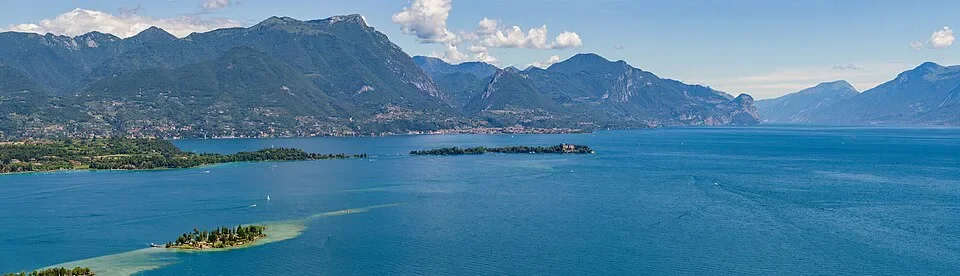
Lake Garda looks temptingly simple on a map: one huge expanse of blue, with pretty towns dotted along the shore. Arrive without a car, though, and a different question becomes important. What do you actually want your days to feel like? A leisurely bike ride beside a river? Dinner in an old harbour when the last day-trippers have gone? A warm thermal pool at the end of a narrow peninsula? Or a mountain path high above the water?
- Four Lake Garda holidays, not four interchangeable towns
- Peschiera: cycle to Borghetto, then come home to the canals
- Desenzano: Tuesday market, Roman mosaics and an evening by the old harbour
- Sirmione: twenty-four hours on the peninsula, from Roman ruins to thermal pools
- Riva del Garda: walk out of town and above the water
- Three nights or a week: choose the rhythm before the accommodation
- The transport details that actually change your choice
- What three nights really cost beyond the room
- Questions worth answering before you go
- The best place to stay is where you want the evening to continue
Those are four quite different holidays, and they start in four different places. That is why where to stay on Lake Garda without a car is more interesting than a ranking of hotel rooms. First, choose the experience you would love to have. Then find somewhere that lets the day continue naturally, right up to the moment you walk home after dinner.
For a flexible first trip, Peschiera del Garda is hard to beat. Desenzano suits people who want lively harbour evenings, Sirmione comes into its own when visitors leave the peninsula, and Riva del Garda is the gateway to the mountains. None is automatically the best: they simply offer different versions of the lake.
Four Lake Garda holidays, not four interchangeable towns
| The experience you are hoping for | Where to make your base | Why it works without a car |
|---|---|---|
| Cycling beside the Mincio to the watermills of Borghetto | Peschiera del Garda | A railway station, a riverside cycle route and easy outings towards Verona |
| Tuesday market, Roman mosaics and evenings by the old harbour | Desenzano del Garda | Trains within the town and waterfront streets you can enjoy on foot |
| Sirmione after the daytime crowds, with time for thermal bathing | Sirmione | Getting there takes another connection, but you can slow down once you arrive |
| Walking the Ponale path above the cliffs of the northern lake | Riva del Garda | Arrive by bus from Rovereto, then walk into mountain scenery from town |
It is tempting to pick a hotel halfway around the lake and attempt everything. But Lake Garda is long, boats follow seasonal timetables and the north is not a quick hop from the southern shore. A holiday that feels wonderfully unhurried usually begins with choosing one side of the lake rather than trying to conquer all of it.
Peschiera: cycle to Borghetto, then come home to the canals


Peschiera does not announce itself with sheer cliffs or a grand mountain backdrop. Its charms are gentler: Venetian fortifications, canals threading through the old town, boats moving slowly towards the lake. Beyond the gates, the Mincio River offers something even better for visitors without a car — a beautiful day out that begins almost on the doorstep.
Rent a bike and follow the Mincio cycle route towards Borghetto sul Mincio. For roughly 15 km each way, the riverside scenery gives way to quieter villages before Borghetto's old watermills appear beside the water. Stop for coffee, wander around the millponds and take the ride back when you feel ready. The return trip adds up to around 30 km, which makes a lovely day out with plenty of pauses rather than a race to the finish. Pick comfortable bikes and a day when the route conditions suit everyone.
Bike-rental options are available around Porta Brescia and via Milano in Peschiera, though pickup and return times vary. For roughly 30 km there and back, setting out in the morning leaves time for Borghetto and a proper lunch. Local Valeggio tortellini are a delicious reason not to rush. A conventional bicycle suits many occasional riders on this relatively gentle route; on a hot day, or with younger children, the pace and water stops matter much more than the distance on paper.
There are two lovely ways to make the ride your own: book an e-bike for the day and stop whenever Borghetto catches your eye, or choose a guided e-bike ride to Borghetto if you would rather follow someone who already knows the riverside route. Both are based around Peschiera; check the precise collection or meeting point before booking.


What makes Peschiera special is how easily you can follow a day like this with an entirely different one. A train to Verona, an outing towards the eastern shore, an afternoon in the walled centre: there is room for spontaneity. You don't need to invent a new complicated transfer every morning just to feel you have seen somewhere new.
Evenings are simple, too. Walk back through the fortified streets, choose a table beside a canal and let the town settle around you. The pleasure is in knowing you can make Peschiera your base for a few nights and choose the part of town that suits your days. Close to the old gates, dinner can drift into a long evening by the canals; nearer the station, the next morning's train to Verona starts almost on your doorstep.
Two existing places to stay reflect that difference without needing to turn this into a hotel contest. Hotel Garden makes arrival remarkably easy: it sits next to Peschiera station, useful if your days include trains and you want to drop your bags immediately. Enjoy Garda Hotel is still within walking distance of the station but adds more of a holiday-at-the-hotel feeling, with a pool and restaurant to enjoy after a day's cycling. The better choice is the one that fits how you intend to spend the afternoons, not the one with the longest facilities list.
One of the nicest days might involve no cycling at all
You could spend a morning on a train to Verona, come back for a late lunch and do little more than wander beside the canals. Peschiera gives you permission to change plans. That flexibility is especially valuable on a short holiday, when one rainy morning or a delayed train can otherwise throw everything off course.
Desenzano: Tuesday market, Roman mosaics and an evening by the old harbour


There is more to Desenzano than an aperitivo beside the boats. Porto Vecchio catches the evening light beautifully, but the town also has a proper weekly market, lively shopping streets and an extraordinary Roman past hidden a few minutes from the water. These small, walkable experiences make it worth staying rather than dropping in for an afternoon.
If your trip includes a Tuesday, keep the morning free. The market spreads along the lakeside, including lungolago Cesare Battisti, and around the centre's squares, usually from 8 am to 1 pm. Wander between the stalls, find a quiet coffee, then walk over to the Roman villa of Desenzano, on via Crocefisso. Its late-antique mosaics show scenes of fishing, animals and intricate patterns. Within a single morning you can move from contemporary local life to centuries-old floors, and be back beside the lake without taking a bus.
The villa is worth visiting on other opening days too; it closes on Mondays. If you are drawn to a panoramic view, the castle above the centre offers another perspective on the rooftops and water. Then comes the part Desenzano does best: the evening can unfold without a plan. Restaurants fill around Porto Vecchio, and nobody has to leave halfway through dinner to catch the last connection to another town. Arriving on a Monday and leaving on Thursday gives you Tuesday's market, another morning for the mosaics and plenty of time for evenings around the harbour.
Why stay here instead of making a day trip?
You can see the harbour in an afternoon. Two or three nights give you room for the market if your dates align, the Roman mosaics, the waterfront and perhaps a boat trip to another southern-lake stop. That last outing depends on actual sailings: check both directions on your chosen day rather than assuming ferries run constantly. Desenzano is still a rewarding place to stay even if you never board a boat.
If you fancy seeing Sirmione’s peninsula from the water without juggling ferry connections, a guided boat outing departing from Desenzano harbour combines the crossing with free time in Sirmione and a scheduled return. It is an experience in its own right rather than a replacement for public transport.
The railway station, Desenzano del Garda–Sirmione, sits above the town. Walking downhill towards the lake is easy enough; the return with luggage feels different. A harbour-side room rewards those who value long evenings, while a base higher up may be better if you plan several train journeys. That is the choice worth making when you look for somewhere to stay in Desenzano, rather than ranking rooms only by their photographs.
Beside the harbour, Hotel Piroscafo suits mornings overlooking the water and evenings that end among the cafés below, although room views vary. Hotel City gives a less waterfront-centred base for days split between the Roman villa, local streets and railway outings. Both let you walk out for dinner. Anyone sensitive to noise should also consider how lively the harbour can be after dark.
Desenzano's real appeal is not simply that you can get around without a car. It is a living lakeside town that still has something to offer after the day-trippers have left: the market, an unexpected glimpse of Roman history, then the harbour as the day winds down.
Sirmione: twenty-four hours on the peninsula, from Roman ruins to thermal pools


Most visitors leave Sirmione with a photograph of the castle. Stay overnight and you gain something less easy to capture: the freedom not to leave when the day-trippers do. As the crowds thin beyond the bridge, the lanes become somewhere to wander rather than a route to hurry along. And the next morning, the old town is still on your doorstep.
The most rewarding way to experience Sirmione is as one evening and the following morning, not a race to see everything before the last bus. Drop your bags, walk through the historic centre and save a generous stretch of the evening for Terme di Sirmione's SPA & Thermal Garden. Thermal pools, relaxation areas and views of the lake give the peninsula another character entirely. Advance booking is required, and there are different admission lengths, including evening sessions. Staying nearby means you can enjoy the experience without working backwards from a late-night journey to Desenzano.
If you have another evening to enjoy, a short sunset cruise around Sirmione offers a different view of the castle and Roman ruins, with a glass of local wine on board. It leaves from the little harbour by the castle — a particularly easy addition when your room is in the old town.
Next morning, stroll towards the Grotte di Catullo. Despite the name, these are not caves, but the remains of a Roman villa at the far end of the peninsula, with the lake opening on more than one side. The walk becomes part of the pleasure when you are not racing a schedule. The archaeological site has seasonal opening hours, so fit the visit around an actual opening rather than assuming it is accessible all day.
If you would enjoy hearing the stories behind those ruins, a guided Sirmione walk and boat trip including the Grotte di Catullo is an alternative to exploring alone. It is separate from the thermal spa, so check exactly what is included and choose a time that fits the rest of your day.
The decision that matters is where your last transfer ends
The railway station called Desenzano del Garda–Sirmione is in Desenzano, not on the peninsula. From either Desenzano or Peschiera, another bus or taxi ride is needed; a boat may be an option when the required sailing runs. During the tourist season, a shuttle connects Colombare (Piazza Campiello) with the old town from April to October. At other times different public bus services operate, with changing schedules. After a long train journey, the distance between the final stop and your hotel matters more than it might on a map.
Two places both described as being in 'Sirmione' can offer very different evenings. A room in Colombare may simplify some arrivals, but it does not place you among the old-town lanes. A room beyond the castle lets you enjoy the historic setting but may involve a final walk with luggage. When you browse places to stay in Sirmione, that small geographical distinction is worth more than a glossy hotel photograph.
Close to the castle and boat landing, Hotel Eden makes it easy to return from an evening stroll and rediscover the lanes at breakfast time. Hotel Vinci, a little back from the fortified centre, suits travellers who also want time by a garden and pool. The first draws you into the old-town evening; the second allows a more sheltered pause without putting the peninsula out of reach.
Sirmione is not the best base for catching a different train every morning. For two nights as a couple, though, the extra transfer can be a very fair exchange: you come for thermal water, Roman history and the quieter side of the peninsula, not for a timetable full of day trips.
Riva del Garda: walk out of town and above the water


Northern Lake Garda feels almost like a different country. Mountains crowd the shoreline, sails move across the water and footpaths climb into the cliffs. The view can be dramatic, but the most compelling reason to stay in Riva del Garda is wonderfully practical: you can begin a memorable walk almost as soon as you leave the town centre.
The Ponale path follows part of an old road carved into the mountainside above the lake. It begins near Riva, with the first viewpoints appearing as the path rises over the water. The mapped 6.4 km route takes around three hours one way. Walking all the way and returning to Riva on foot is a much longer outing; for a more relaxed half-day, enjoy the early tunnels and viewpoints, then retrace your steps when you are ready. Those wanting a bigger hiking day can continue towards Ledro, having checked the complete route and return arrangements. It is not a perfectly flat town promenade: the path runs along exposed terrain, is shared with cyclists and requires care, particularly after poor weather. But for walkers who love big scenery, it is exactly the kind of day that justifies choosing the northern lake.


Come back, find a café in the old centre and watch the late-afternoon light move across the mountains. Another day might be devoted to a lakeside walk towards Torbole, cycling on local routes or exploring the historic streets without a full programme. The pleasure of Riva is the contrast: hours outdoors, then an easy evening in a town that has plenty of life of its own.
After a day on the trail, a winery visit with wine and olive-oil tasting makes a lovely change of pace. The activity includes hotel pickup and return in Riva del Garda, which is especially useful without a car; confirm that your accommodation is covered when choosing a date.
There is one initial journey to arrange. Riva has no railway station by the lake. Travellers commonly take the train to Rovereto and continue on the B332 bus. If your accommodation participates in the Garda Guest Card scheme, public transport in Trentino may be included — worth asking about when booking. That makes it less convenient for jumping onto trains each morning than Peschiera or Desenzano, but once you settle in, many of the nicest outdoor activities begin within walking or cycling distance. After a day high above the lake on Ponale, coming back to a room in Riva del Garda and wandering out for dinner is all the reward you need.
If your idea of a good evening involves stepping straight into the central square, Hotel Portici puts the old harbour, restaurants and waterfront walks close at hand. Those who would rather return from the hills to a garden and pool might enjoy the calmer rhythm of Hotel Luise, still within walking distance of Riva's centre. The useful question is not which hotel is 'best', but where you want to be after you've taken off your walking shoes.
A second beautiful walk, for a different day
The Busatte–Tempesta trail near Torbole is famous for its steps bolted along the cliffs, but it is not the same walk as Ponale and it does not begin right outside Riva's old town. You first have to reach the Torbole area and then consider the return journey. There are more than 400 steps along the way, so this is one for walkers comfortable with stairs rather than anyone expecting an easy waterfront stroll. It can be wonderful for an extra day, provided you plan the access and do not treat every mountain trail as a casual lakeside stroll. If a combination of coastal walking and rail travel appeals, Cinque Terre by train is another rewarding Italian escape.
Three nights or a week: choose the rhythm before the accommodation
For three nights on your first visit, a single base is usually more satisfying than packing up repeatedly. Peschiera offers a blend of river cycling, fortified streets and excursions by rail. Desenzano offers a gentler kind of movement: harbour walks, good dinners and the freedom to make plans only when you feel like it.
If you have four nights and want a romantic break, staying in Sirmione can make the difference between simply seeing it and enjoying it after hours. A thermal afternoon, a walk through the ruins and long evenings can easily become the trip's central memories. For walking enthusiasts, Riva offers an entirely different four nights, with Ponale and the northern shoreline providing days of exploration.
With six or seven nights, two bases can work well. Spend part of the trip in the south for the Mincio and Verona, then move to Riva for the mountains. What rarely pays off without a car is changing hotels every night just to collect more town names. You gain far more by knowing a place well enough to enjoy it once the visitors leave.
Not having a car does not mean never taking a bus or train. It means the experiences that matter to you are possible without hiring one. That is a much more satisfying way to design the trip.
For another car-free Italian holiday, the rail journey from Venice to Florence via Bologna offers a different sort of escape, with time to savour each stop.
The transport details that actually change your choice
Lake Garda does not have a railway going all the way around it. The two useful southern stations are Peschiera del Garda and Desenzano del Garda–Sirmione. The latter is in Desenzano, not on the Sirmione peninsula. Reaching Sirmione's historic centre therefore involves another journey; reaching Riva from the railway commonly means a bus from Rovereto.
Ferries are a pleasure, not a guaranteed shortcut. The crossings change with the seasons, the route and sometimes the weather, while winter services can be very limited. Before setting off for another town, look up the boat times for your travel dates, including the last trip back. That small bit of planning can make the difference between a relaxed afternoon on the water and an unexpected journey home.
Luggage matters more than maps suggest. Desenzano's station is above the waterfront; Sirmione's historic lanes are largely pedestrianised; Riva is a bus journey away from the railway. None of these details is a reason to avoid a town. They are a reason to choose the right kind of stay rather than the cheapest room at the wrong end of the map.
What three nights really cost beyond the room
Comparing four hotels on a random August weekend would tell you little about which town suits a spring break. A better question is what the day you most want to have will cost for two people, followed by accommodation for the same dates and a comparable room type.
In Peschiera, the key extra is hiring bikes for the Mincio. Rentals around via Milano offer different durations and bike types. Ask for the complete day's price, including return time, rather than taking a low 'from' price as the cost of the 30 km round trip to Borghetto.
In Desenzano, the Tuesday market and harbour walks need no ticket. The Roman villa charged €6 per adult, or €12 for two. A boat trip, if you want one, adds a separate cost that depends on the route and season.
In Sirmione, the experience budget changes substantially. A five-hour SPA & Thermal Garden admission was listed at €44 per person Monday to Thursday or €58 Friday to Sunday: €88–116 for two, before accommodation and transfers. Add the Grotte di Catullo at the standard admission of €10 each, and the spa-plus-ruins day reaches €108–136 for two. Prices, sessions and capacity can change, so check the date before making the spa the centrepiece of your stay.
In Riva, the Ponale path itself is free to walk. There is still the bus from Rovereto to consider, and perhaps outdoor equipment if conditions demand it. Some eligible accommodations provide a Garda Guest Card that includes Trentino public transport, which can make a difference to your arrival costs.
Activity costs can change with the season and availability, and so can hotel rates. For a three-night stay, look at the room, your arrival, the experience you came for and the transport you will actually use. The cheapest nightly rate does not necessarily add up to the best-value escape.
If you are flying into northern Italy, take a look at flight options, but give the last few miles to your accommodation just as much thought as the plane journey.
Questions worth answering before you go
Where should I stay on Lake Garda without a car for the first time?
Peschiera del Garda is generally the most flexible starting point for visitors who want trains, a bike ride and some local excursions. Desenzano is an attractive alternative if evenings by the harbour are a bigger part of the dream. The right answer depends on the days you want to have.
Is Sirmione worth staying in rather than visiting for the day?
Yes, especially if you want quieter evenings, thermal bathing and time to explore the Roman ruins. It is less convenient for daily train trips because the nearest useful stations are outside the peninsula.
Can I rely on ferries to explore Lake Garda without a car?
Not every day and not for every route. Timetables vary considerably by season and the weather may interrupt services. Check an actual outward and return sailing before planning a long excursion. Buses and trains are often important alternatives.
Which town works best for walking and outdoor activities?
Riva del Garda is especially appealing for walkers thanks to the Ponale path and northern-lake landscapes. The trip from the railway involves a bus, but many walks can begin close to town. Peschiera is a better fit for fairly gentle cycling along the Mincio.
Is Desenzano or Peschiera better for a couple?
Choose Desenzano if you like lively little harbours, aperitivo and dinners without a timetable. Choose Peschiera for railway convenience, canals and the freedom to plan different day trips. Both can be explored without a car.
How long should I stay on Lake Garda without a car?
Three or four nights in one base are a lovely start. With a week, a southern town and Riva make a rewarding contrast, provided you leave time for the transfer. Changing rooms every night rarely improves the experience.
Is Desenzano worth staying in if I skip the ferries?
Absolutely. The Tuesday market, Roman villa mosaics and old harbour can all form a rewarding day on foot. Ferries can add an outing when they run, but they are not what makes this a good place to stay.
How much does a thermal day in Sirmione cost for two?
A five-hour SPA & Thermal Garden admission costs around €88 for two Monday to Thursday or €116 Friday to Sunday. Add your accommodation, the journey to the peninsula and, if you like, the Roman ruins. Book a spa slot in advance and reconfirm rates for your dates.
The best place to stay is where you want the evening to continue
Lake Garda is not memorable because of a list of hotel amenities. It is memorable because of a bicycle ride that ends beside old watermills, a second glass at a harbour table, a quieter Sirmione after sunset or the view from a path above Riva.
Choose the day you would most love to live. Where to stay becomes a much easier decision after that — and you can do it all without a car.