8 European Ski Resorts You Can Reach by Train: Transfer, Lift Pass & Budget
Eight European ski resorts that genuinely work by train, compared by final transfer, 3-day lift pass and a realistic four-night ski budget.
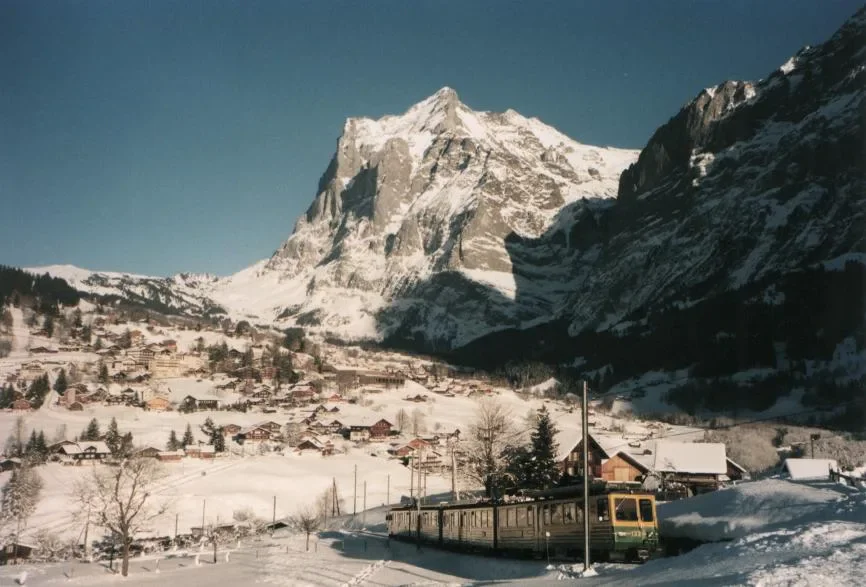
The best thing about a ski trip by train is dropping your bag and forgetting about the car until the journey home. At Les Arcs, a funicular takes over from the mainline train. In St Anton, Zermatt and Wengen, rail brings you almost into the resort itself. Bardonecchia goes one better: the station is already in town.
These eight resorts are here because rail genuinely makes the holiday easier: little or no road transfer, lifts that are straightforward to reach and enough skiing for three full days. Some are good-value choices, others are anything but cheap; all work without hiring a car.
What four nights and three ski days are likely to cost
Budgets are shown per person for two people travelling together. They include four nights, a three-day lift pass, standard ski-and-boot hire and the local transport needed between the useful rail station and the slopes. Meals and the long-distance train are extra.
That keeps the comparison honest. Paris to Bourg-Saint-Maurice, London to St Anton and Munich to Garmisch have completely different fares and booking patterns; adding them would tell you more about where you live than about the resort.
Zermatt and the High Tatras use dynamic lift-pass pricing, so leave a little breathing room in the budget for peak winter dates, especially around school holidays.
| Resort | Useful rail arrival | Final mile | Adult 3-day lift pass | 4 nights / 3 ski days, per person | Good to know |
|---|---|---|---|---|---|
| Les Arcs | Bourg-Saint-Maurice | 7-minute funicular + shuttles | ≈ €203 | €540–740 | Excellent logistics, accommodation can jump |
| Bardonecchia | Bardonecchia | Station in town + bus/walk | ≈ €120–156 depending on period | €330–470 | Great value, smaller ski area |
| St Anton am Arlberg | St Anton | Station in the village | €251 | €650–950 | Outstanding skiing, premium prices |
| Garmisch-Partenkirchen | Garmisch-Partenkirchen | Local rail towards Hausberg | ≈ €207* | €500–660 | Easy from Munich, more compact ski area |
| Zermatt | Zermatt | Train into the car-free village | from CHF 209, higher in core season | €650–900 | Iconic experience, Swiss budget |
| Wengen | Wengen | Train to village + Jungfrau rail network | CHF 232–244 | €650–850 | Superb transport, premium rooms |
| Mayrhofen | Mayrhofen via Jenbach | Zillertalbahn + walk/bus | €241 | €430–590 | Large ski area, one extra connection |
| Tatranská Lomnica | Tatranská Lomnica via Poprad | Electric railway + walk/ski bus | dynamic; allow roughly €174 | €320–500 | Low total cost, smaller ski area |
* Garmisch-Partenkirchen publishes a €69 online adult day pass for 2026/27, so three days come to roughly €207.

1. Les Arcs — from the platform to the slopes in minutes
At Bourg-Saint-Maurice, the funicular feels like a continuation of the railway station rather than a separate transfer. Seven minutes later you step out at Arc 1600; free resort shuttles continue to the other villages. With skis and luggage, that seamless handover is a major advantage.
The 2026/27 Classic pass for Les Arcs / Peisey-Vallandry is around €203 for three days. Accommodation up the mountain can push the bill up quickly, but you have a genuine choice: pay for the convenience of Arc 1600 or stay in Bourg-Saint-Maurice and ride the funicular each day.
Where to stay
Arc 1600 makes the most of the rail arrival. La Cachette, Friendly Hotel & Spa is only a few minutes on foot from the funicular and avoids another transfer in the morning. To compare around the same arrival point, browse stays in Arc 1600.
Our guide to winter mountain breaks by train looks at Les Arcs in a wider car-free context. For a ski-first trip, few large French resorts are this easy to reach.
2. Bardonecchia — easy Italian skiing without the transfer bill
Bardonecchia has one big practical advantage: the station sits in the town rather than down in the valley. Drop your bags, then use the local network or walk towards Campo Smith, Melezet or Jafferau depending on where you stay. The ski-pass office in Piazza Europa is even opposite the station.
Adult day passes for 2026/27 are roughly €40–52 depending on the period, putting three ski days around €120–156. The area is smaller than the Arlberg or Zillertal, but on a four-night trip that can be a virtue: less faff, gentler prices and enough terrain to keep the skiing varied.
Where to stay
Look between the station, the centre and Campo Smith. Hotel I Larici is only a few minutes from the railway station and still close enough to the lifts to keep the trip simple. For more choice, compare Bardonecchia accommodation.

3. St Anton am Arlberg — big-mountain skiing straight off the train
Many major Alpine resorts still finish with an hour in a minibus. St Anton does not. The train stops in the village, and Galzig is close enough that the final leg can be done on foot or with the local buses. For a ski area of this scale, the arrival is remarkably civilised.
The price matches the reputation. Ski Arlberg lists €251 for a three-day adult pass in the 2026/27 main season, and central rooms are rarely bargains. But if the priority is three hard days of skiing, there is enough terrain here to make the journey worthwhile on its own.
Where to stay
For four nights, staying near the station and Galzig is usually worth more than saving a little on the edge of town. Hotel Rundeck is about five minutes from both the railway station and Galzigbahn. Compare St Anton stays to see whether moving farther out actually saves enough to be worthwhile.

4. Garmisch-Partenkirchen — the easy Alpine escape from Munich
From Munich, Garmisch-Partenkirchen is one of the simplest ski breaks you can do by rail. The main station is in town and local trains continue towards Hausberg at the foot of Garmisch-Classic. For three ski days, a car adds surprisingly little.
The 2026/27 adult day pass is €69 online, so three days cost about €207. Garmisch-Classic is more compact than Ski Arlberg, but you gain a proper town, restaurants, a major railway station and the Zugspitze nearby — a good combination if you like some life after the lifts close.
Where to stay
Close to the station, aja Garmisch-Partenkirchen is convenient with luggage and only a short walk from the Zugspitzbahn. If you would rather move closer to Hausberg, compare Garmisch-Partenkirchen stays.

5. Zermatt — the car-free ski resort in its purest form
In Zermatt, rail is not the alternative way in; it is the normal way into the village. Conventional cars disappear, replaced by walking, electric buses, e-taxis and mountain railways. Within an hour of arriving, it is easy to forget that a car was ever part of the equation.
The cost is unmistakably Swiss. The Zermatt-only three-day pass starts at CHF 209 for 2026/27, but the lowest price rises on popular dates. For January and February, leave some headroom rather than building the whole trip around the headline minimum.
Where to stay — and one worthwhile non-ski extra
To keep the bill under some control without sacrificing the station location, Hotel Bahnhof is hard to beat: the station is steps away and the ski bus stops outside. Rooms are simple, but the position is excellent. Compare Zermatt accommodation before booking; room rates can vary enormously.
If you keep half a day off skis, the Gornergrat cogwheel railway is the extra that most easily earns its place: the climb opens up one of the classic Matterhorn panoramas.

6. Wengen — the train right into the village
Wengen is one of those places where the rail journey feels like part of the scenery. The cogwheel train climbs above Lauterbrunnen to the car-free village, and mountain railways continue to shape the ski day once you arrive. Here, not having a car feels completely normal.
The Jungfrau Ski Region lists CHF 232 for three adult days in the cheaper 2026/27 periods and CHF 244 in high season. Accommodation is the bigger lever. Staying down in Lauterbrunnen may save money, but it adds a train ride morning and evening — not always a good trade on a three-day ski break.
Where to stay
Hotel Victoria Lauberhorn is almost tailor-made for this sort of trip: the railway station and Männlichen cable car are next door. If the rate is too high, compare Wengen accommodation before dropping down to the valley.
7. Mayrhofen — the Zillertal at the end of a local railway
The journey is not quite as direct as St Anton, but it remains easy. Mainline trains stop at Jenbach, then the Zillertalbahn carries you up the valley to Mayrhofen. There is no mountain transfer to organise; it simply feels like the next train in the journey.
The 2026/27 Zillertaler Superskipass costs €241 for three days and opens up a much larger ski area than Bardonecchia or Garmisch-Classic. Mayrhofen sits in a useful middle ground: lots of skiing and a lively resort without immediately jumping to St Anton or Zermatt prices.
Where to stay
Posthotel Mayrhofen is a few minutes from the railway station and about ten minutes from the Penkenbahn. To balance easy arrival against lift access, compare Mayrhofen stays.
If you want more town and mountain than pure ski resort, our car-free Innsbruck winter guide is the more urban Austrian alternative.

8. Tatranská Lomnica — lower prices, big High Tatras scenery
The High Tatras prove that a rail ski break does not have to mean the Alps. Mainline trains run to Poprad-Tatry, then the Tatra electric railway climbs to Tatranská Lomnica. The resort is compact and the station is in the village; in 2025/26 a ski bus completed the short hop towards the lifts.
Gopass prices move with date and booking time. At roughly €58 per adult day, three days currently land around €174, but allow for some movement. The ski area is smaller than the Arlberg or Zillertal; for three days that is rarely a problem, and the saving can be substantial.
Where to stay
APLEND Hotel Lujza Major is only a few minutes from the station and roughly ten minutes from the lifts, keeping the rail advantage intact to the end. Compare Tatranská Lomnica stays to see how far the budget stretches on your dates.
If price matters more than the rail journey itself, our guide to cheap ski resorts in Europe widens the search to places where rail is less central.
Which resort fits your priority?
The best choice changes depending on whether you care most about price, ski-area size or having the cleanest possible journey from train to lift.
- Almost no final-mile hassle: Les Arcs, St Anton, Zermatt and Wengen.
- A controlled total budget: Bardonecchia and Tatranská Lomnica.
- A large ski area without jumping straight to Swiss prices: Mayrhofen.
- An easy gateway through Munich: Garmisch-Partenkirchen becomes particularly strong.
How to book without undoing the rail advantage
- Start with the full rail journey, especially the last useful evening connection and the first sensible train home.
- Then choose where to sleep. A small room saving is not worth two awkward bus rides every day.
- Check the lift pass for your exact dates, particularly in Zermatt and the High Tatras where prices can move.
- Put ski hire near either the lifts or your hotel so you are not carrying equipment around the local network.
- Book the least flexible tickets last, once the whole trip works cleanly without a car.
What about Chamonix, La Molina or Åre?
Chamonix works well without a car once you are in the valley, but its full rail arrival is less direct for a short break. La Molina remains a very interesting train-from-Barcelona option, but its 2026/27 pricing is harder to align cleanly with the eight resorts above. Åre and Geilo almost deserve a separate category: night trains, Nordic distances and a different cost structure.
This is not a list of every resort with a railway somewhere nearby. These eight make the cut because the train genuinely improves the trip instead of merely replacing part of the road journey.
Frequently asked questions
Which European ski resort is easiest to reach by train?
For the final mile, Les Arcs, St Anton, Zermatt and Wengen are among the cleanest setups here. The best choice still depends on your origin city and the actual long-distance timetable.
Which is the cheapest of these eight resorts?
On a four-night, three-ski-day basis excluding the main train and meals, Bardonecchia and Tatranská Lomnica come out cheapest. Accommodation and travel dates are still the two things most likely to move the final total.
Can you genuinely do a ski holiday without a car?
Yes, if you choose accommodation with transport in mind. In all eight resorts, station, room and lifts can be linked by walking, local rail, funicular or bus. An isolated apartment can still undo that advantage.
Why is the long-distance train not included in the budget?
Because the same resort costs very different amounts to reach from Paris, London, Brussels, Lyon or Munich. Excluding the main rail fare keeps the comparison focused on the resort rather than your starting city.
Should you buy the lift pass in advance?
Yes whenever online discounts or dynamic pricing apply. Zermatt and the High Tatras are the clearest examples; Garmisch also publishes a lower day-ticket price online than at the ticket office.
Before you book
Lift-pass prices, local rail timetables and ski-bus services can change during the season. Before paying for a non-refundable ticket or room, check the current official information from Les Arcs, Bardonecchia Ski, Ski Arlberg, Zugspitze/Garmisch-Classic, Matterhorn Paradise, Jungfrau Ski Region, Mayrhofner Bergbahnen/Zillertalbahn and Vysoké Tatry/Gopass.
Some accommodation and activity links are affiliate links. LowCostWings may earn a commission if you book, at no extra cost to you.