Budapest Christmas Markets: Dates, Locations, Itinerary and Budget
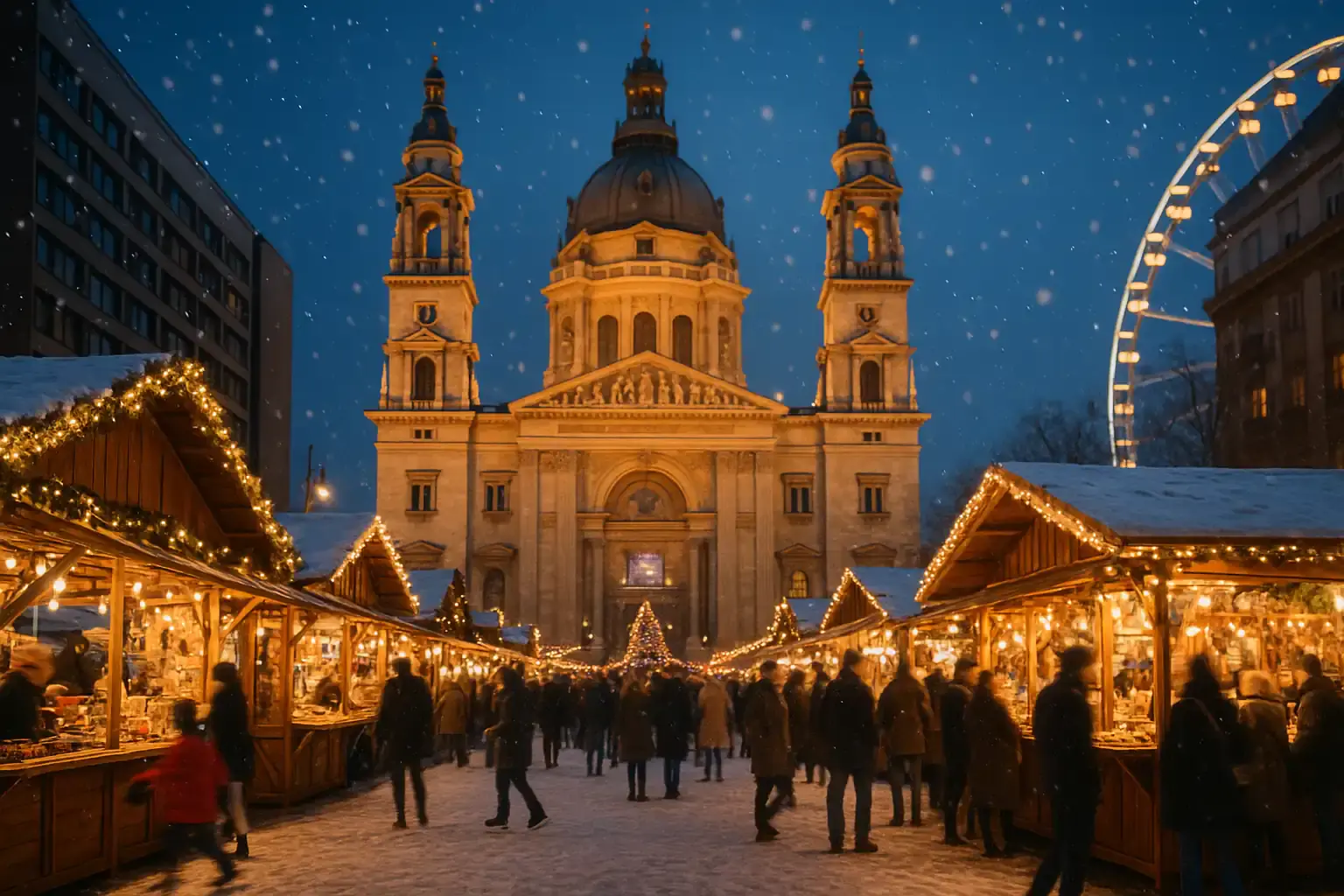
Christmas in Budapest is about much more than a row of wooden stalls. The city works as a winter break because it delivers several different experiences in one weekend: monumental Pest, hilly Buda, steaming thermal pools and two major markets within walking distance of each other. Festive lights reflect on the Danube in the late afternoon; a couple of hours later, you can be sitting in a wood-panelled café or soaking in a hot outdoor pool.
That variety makes good choices essential. The markets outside St Stephen’s Basilica and on Vörösmarty Square are close together, but they do not feel identical. A thermal bath takes half a day once transport and changing time are included. The Castle District deserves the brightest hours of the day rather than a rushed visit after sunset.
This guide therefore builds a three-day trip around those trade-offs. Always confirm exact market dates on the organisers’ websites before making a non-refundable booking. The main season usually runs from the second half of November into the New Year, but dates and holiday opening hours differ from one venue to another.
Who will enjoy Budapest at Christmas?
Budapest is particularly good for travellers who want a festive atmosphere without spending the whole trip at markets. The stalls provide colour and evening energy; the baths, Buda, Parliament, cafés and Jewish Quarter give the break substance. It is also an easy city to visit without a car, provided you stay on the Pest side or near a useful metro or tram line.
Our verdict: choose Budapest if you enjoy alternating between outdoor sightseeing and memorable indoor experiences. Krakow or Nuremberg is easier to grasp if a compact traditional market is your only priority; Budapest is stronger if you want architecture, festive evenings and a thermal bath in the same trip.
Contents
Advent Basilica or Vörösmarty Square: which is better?
The Advent Basilica market creates the strongest first impression. The square is relatively compact, the basilica façade becomes a screen for light projections and the stalls wrap around a small skating rink. It delivers the classic festive photograph after dark. Its drawback is equally predictable: evening performances draw dense crowds and the substantial market dishes are not budget meals.

Vörösmarty Square, less than ten minutes away on foot, fits more naturally into a walk through central Pest. Its craft and food stalls extend the route between Váci Street and the Danube. It is a convenient place for one local speciality or a small purchase, but it becomes busy too. There is no need to pick one market and ignore the other: spend your first evening at the basilica, then visit Vörösmarty in the late afternoon on another day, before the busiest evening period.
Smaller events — at City Hall Park, in Óbuda or elsewhere depending on the annual programme — can add a more local dimension. They should not dictate a long cross-city journey until their dates and content have been published. On a three-day break, two well-timed markets are better than collecting similar venues for the sake of a checklist.
| Market | What makes it distinctive | Best time | Limit to understand |
|---|---|---|---|
| Advent Basilica | Light projections, monumental backdrop and compact atmosphere | A weekday after 5 pm | Very busy around performances |
| Vörösmarty Square | Crafts, food and an easy link between the centre and Danube | Late afternoon | Market food can be expensive |
| Smaller markets | A more local feel when the programme is strong | Only when they fit another neighbourhood visit | Dates and quality vary by edition |
Dates: check the Advent Basilica calendar and Budapest Info’s Vörösmarty fair page separately. Holiday opening on 24, 25, 26 and 31 December may differ from normal hours.

Where should you stay for a walkable Christmas break?
District V is the easiest option: the basilica, Vörösmarty Square, the Danube and several metro stations are within walking distance. Yet the district name alone guarantees neither quiet nor value. A room facing an inner courtyard can be peaceful two streets from the action, while a hotel directly on Váci Street may charge mostly for its address. Check the exact street, insulation reviews and distance from transport rather than relying on the neighbourhood label.
Terézváros in District VI often offers the best balance. Around Oktogon or the M1 metro, you can reach the basilica quickly while gaining a broader choice of everyday cafés and restaurants. It is a strong first-trip base when you stay south of Nyugati station or close to a metro entrance. Ferencváros in District IX can provide better value near the Great Market Hall, tram 2 or the M3; travel too far south, however, and every outing gains an avoidable journey.
District V
Best for walking and simple evening returns. Pay the premium only if the exact address genuinely saves transport.
District VI
Useful around Oktogon and the M1, with more regular cafés and restaurants than the riverfront.
District IX
Look around Kálvin tér, Fővám tér or tram 2. A cheaper room is not a bargain if it requires two connections.
Winter adds two filters to the usual search: consistently positive heating reviews and reception arrangements that match your arrival time. A slightly more expensive central room can save several journeys and a late-night transfer.

From the airport to the markets
The 100E bus links the airport directly with central Pest and is normally the clearest option. It uses a specific airport ticket; an ordinary urban pass does not automatically cover it. The 200E bus plus metro can cost less depending on the current fare structure, but it adds a connection and is less attractive with luggage or late at night. Check the BudapestGO app or BKK shortly before travelling.
Once you have checked in, walking, metro and trams cover almost everything. Tram 2 follows the Pest riverfront past Parliament and Fővám Square; trams 4 and 6 form a useful late-running spine across the city. On the Buda side, buses and walking are practical alternatives to the funicular unless the ride itself matters to you. Buy and validate the correct ticket: the rules may not match those of your home network and inspections are common.
Practical move: save your accommodation address and nearest stop offline before landing. A taxi is most defensible for a very late arrival shared by several people — compare the total door-to-door cost with the airport bus, not one isolated fare.

A three-day Budapest Christmas itinerary
Monumental Pest and a first evening at Advent Basilica
Begin at St Stephen’s Basilica while it is still a monument rather than a market backdrop. Continue to Liberty Square, Parliament and the Shoes on the Danube memorial. This almost entirely flat route establishes the scale of Pest and gives you daylight views of the Buda hills across the river.
After lunch, choose one indoor stop — a pre-booked Parliament tour, a museum or a grand café — and take a genuine break before the evening. Return to Advent Basilica as the lights come on. Walk around once before ordering, identify stalls cooking on site and share one speciality rather than turning tastings into a full expensive dinner. Finish with a short Danube walk; it is a better first-night introduction than committing immediately to a boat tour.
Wet-weather version: shorten the river walk, retain the basilica and place Parliament or a museum during the heaviest rain.
Buda in the morning and a thermal bath in the afternoon
Cross to the Castle District early. Fisherman’s Bastion and the area around Matthias Church fill quickly; a morning arrival gives you room to notice the Neo-Gothic detail and Parliament views. Continue through the Royal Palace courtyards, then descend on foot or by bus. There is no need to add every Buda museum: the pleasure of this half-day lies partly in the walk and the complete change of atmosphere.
Schedule your thermal bath for mid-afternoon. Széchenyi has the most dramatic outdoor pools, but it requires a journey to City Park and attracts large crowds. Rudas feels more intimate and has a different connection to the Danube, with access rules that vary by space and day. Lukács is less theatrical but may suit travellers who care more about bathing than photographs. Read the chosen bath’s rules on lockers, cabins, towels, caps, age restrictions and the pools included in your ticket.
Spend the evening at Vörösmarty Square and compare it with the basilica market. Have a seated dinner on a nearby side street afterwards: after hours outside and in hot water, it is usually more enjoyable than a second heavy market plate eaten standing up.
Great Market Hall, Jewish Quarter and your own final choice
Start at Fővám Square and the Great Market Hall. It is touristy, but the building and produce stalls offer a wider view of Hungarian food than the Christmas chalets. Continue to the Jewish Quarter. Visit the Great Synagogue if its history genuinely interests you; otherwise spend time looking at courtyards, passages, independent shops and traces of the former ghetto instead of doing a daylight ruin-bar checklist.
Use the afternoon for your priority: the House of Music and City Park for contemporary architecture, the National Museum for history, a long café break or Margaret Island in dry weather. This open block stops the trip becoming an inventory. For the final evening, return to your preferred market or choose a short cruise only if the weather and timetable are right. The riverbanks already deliver excellent free views, so a boat should add an experience rather than replace the walk you never had time to take.

What should you try at the markets?
Expect lángos, sausages, goulash served in bread, stuffed cabbage, kürtőskalács and hot drinks. Not all of these are exclusively Christmas foods, and portions can be substantial. The most rewarding approach is to share one savoury dish and one sweet item rather than buying several full plates out of curiosity. Read the displayed prices, portion sizes and toppings before ordering.
For other meals, walk a few streets away from the basilica and Váci Street. A daily lunch, modern canteen or neighbourhood restaurant will often provide a better seat, better value and a broader picture of Hungarian cooking. Try a soup, paprikás, nokedli or a pastry in a café without turning the trip into another checklist. Market halls are good for seeing ingredients; Christmas markets are good for atmosphere; neither is automatically the cheapest place to eat.
Thermal bath, food tour or Danube cruise?
One thermal bath
This is the closest thing to an essential booking on a first winter trip. Choose by atmosphere and access rules rather than the most famous photograph, then book on the bath’s official website.
Markets and tastings
A guided walk makes sense when it explains traditions and includes clearly identified tastings. It is poor value if it merely escorts you between the two obvious central squares.
Danube cruise
Compare duration, boat size, indoor visibility and departure time. A post-sunset sailing can work well, but a riverbank walk remains an excellent free alternative.
Do not schedule a bath, guided tour and cruise on the same day. In December, one timed booking per day leaves room for queues, cold-weather breaks and delays.

How much does a three-night December trip cost?
These are planning ranges per person, based on two people sharing a room and excluding flights. Prices vary sharply between early weekdays and Saturdays, and again around the holidays. Add flights, luggage, airport transport and accommodation before comparing dates: a very cheap fare can be cancelled out by an expensive Saturday night.
Swipe the table horizontally on mobile.
| Cost per person | Lean | Balanced | Comfort |
|---|---|---|---|
| 3 nights, shared room | €105–180 | €180–300 | €300–510 |
| Food and market tastings | €75–110 | €115–175 | €175–260 |
| Local and airport transport | €20–35 | €30–50 | €45–75 |
| Bath and attractions | €30–55 | €55–105 | €100–170 |
| Total excluding flights | €230–380 | €380–630 | €620–1,015 |
Accommodation is the main lever, not coffee. Compare Sunday or Monday arrivals first, then reduce paid activities. The markets themselves are free; repeated stall meals, a hyper-central room and too many tickets are what push the total upwards.
December weather, daylight and what to pack
Expect cold days that can be damp or windy, with daytime temperatures often only a few degrees above freezing and possible overnight frost. Snow can happen but is never guaranteed. The real challenge is not one dramatic temperature; it is moving between walking, standing still, overheated interiors and the cold outside.
Pack removable layers, a wind-resistant coat, shoes that cope with wet paving and spare socks. A small bath bag, swimwear already under your clothes and a towel if it is not included make bath day easier. Use the middle of the day for Buda and viewpoints; save museums, cafés and thermal water for late afternoon as daylight fades.
Four mistakes to avoid
Booking around assumed dates
A previous edition shows the usual season, not the next exact calendar. Confirm each market and holiday opening hours separately.
Eating every meal at the stalls
Portions are large and event prices add up. Share a tasting, then use side-street restaurants and cafés for proper meals.
Choosing a bath from one photograph
Széchenyi, Rudas and Lukács have different atmospheres and rules. Check travel time and the spaces included before paying.
Crossing the city to collect markets
The two central markets are enough for three days. A detour only makes sense when the neighbourhood itself adds something you want to see.
Budapest Christmas market FAQ
Yes for the two central markets, Buda, one bath and one Pest neighbourhood. Add a night if you want several museums or a very relaxed pace.
Advent Basilica has the strongest visual setting; Vörösmarty Square fits more naturally into a central-city walk. They are close enough to enjoy both.
No. The airport, markets, baths and main districts are linked by bus, metro and tram. Parking would add difficulty rather than freedom.
Yes, especially warm outdoor pools, but account for the walk between changing areas and water. Check which pools and facilities are open on your date.
Cards are widely accepted, though a small cash reserve is useful. Decline dynamic currency conversion into your home currency and check your bank’s fees.
It depends on the venue and edition. Some events continue towards New Year while others reduce hours or close. Use each organiser’s calendar.
Useful official sources
- Advent Basilica — dates and opening hours.
- Budapest Info — events and visitor information.
- BKK — fares, routes and disruption information.
- Széchenyi Baths — tickets and access rules.
The best trip combines two festive evenings with a real city
Budapest works when the markets shape your evenings without consuming the days. Keep daylight for Buda and the Danube, place one thermal bath at the heart of the trip, taste market food without eating every meal there and protect half a day of flexibility. That margin makes the break richer, cheaper and far more resilient to winter weather.
Disclosure: some accommodation and activity links are affiliate links. LowCostWings may receive a commission if you book through them, at no additional cost to you. Budget ranges are planning estimates, not guaranteed prices.