Cheap Christmas Markets in Europe: 10 Budget City Breaks
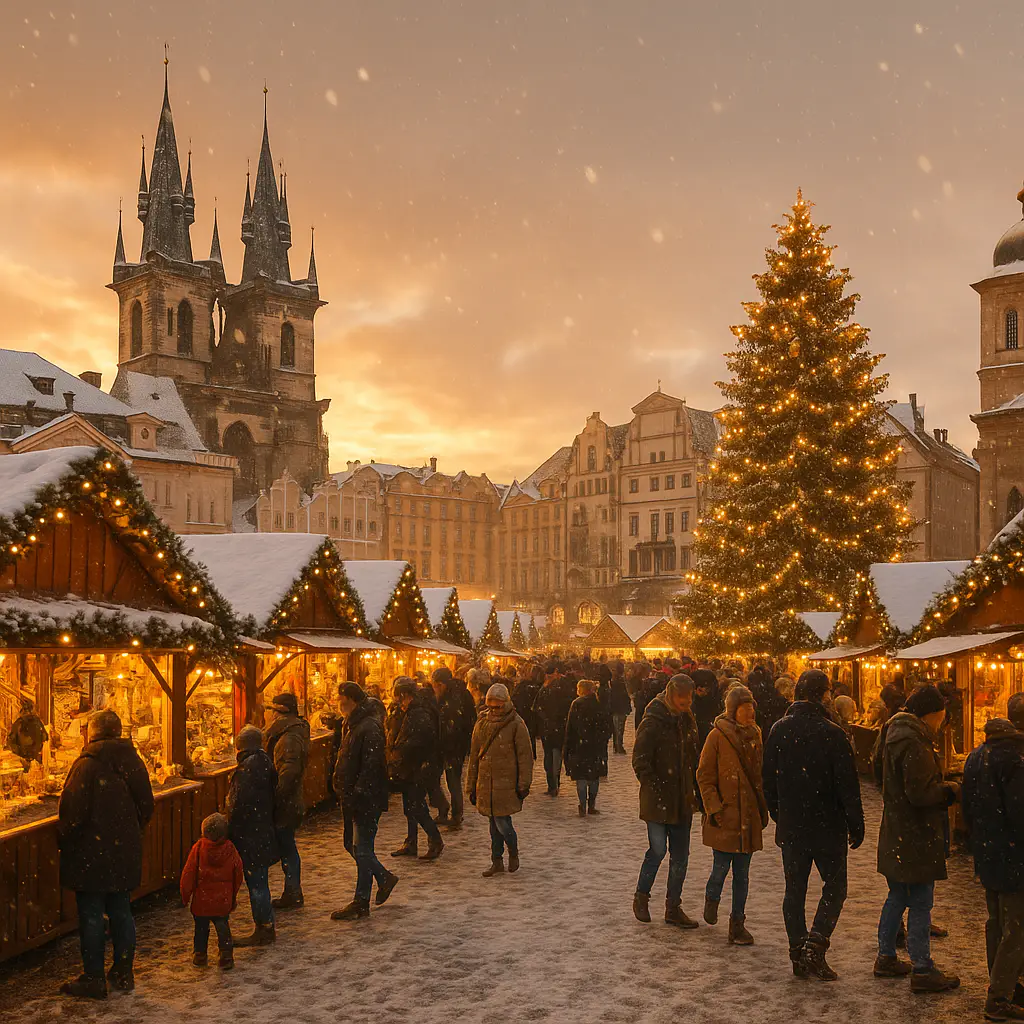
A “cheap” Christmas market is not defined by the price of mulled wine. Flights, Friday and Saturday nights, airport transfers and the area where you stay matter far more. Strasbourg can be inexpensive by train from a nearby country and costly from somewhere without a direct connection; Vienna can undercut a supposedly budget city when weekday transport and a room in Neubau align.
The quality of the break also depends on what remains after the stalls close. Budapest has thermal baths, Krakow has deep history, Prague has architecture and Tallinn has medieval walls. Nuremberg offers the most traditional market in this selection but is less suitable after 24 December. Brussels and Strasbourg spread their events across several quarters, whereas Bratislava concentrates almost everything in a very compact centre.
This comparison treats ten destinations as complete city breaks. It explains each market’s identity, the area to stay, the timing that avoids the worst crowds and a realistic three-night budget. Always verify exact dates on official websites: some cities publish early, others confirm later, and holiday opening hours change.
Which European Christmas market should you visit?
Vienna
Several genuinely different markets and an imperial city, with a budget best built outside the most expensive centre.
Budapest
Two central markets, the Danube and thermal baths make three days richer than a purely festive weekend.
Nuremberg
The Christkindlesmarkt is the clearest choice for a trip centred on Christmas, especially on weekdays before the 24th.
Krakow
One market on the Rynek, accessible food and enough heritage to make bad weather irrelevant.
Our overall choice: Budapest for variety, Krakow for value, Vienna for market density and Tallinn for medieval atmosphere. Your cheapest option will still depend on the airport or station you start from.
Compare ten markets for three nights
Budgets are per person for two travellers sharing a room and exclude travel to the city. They cover accommodation, food, local transport and one paid attraction. Add the journey separately because it varies too much by origin.
Swipe the table horizontally on mobile.
| City | Market identity | Best base | Budget excluding travel | Watch out for |
|---|---|---|---|---|
| Vienna | Imperial and varied | Neubau / Wieden | €430–760 | Choose 2 or 3 markets, not 8 |
| Prague | Monumental and very busy | Vinohrady / New Town | €360–650 | Avoid main-square meals |
| Budapest | Markets + baths + Danube | District V or VI | €380–630 | Book the bath, not every hour |
| Krakow | Compact and deeply local | Around Planty | €350–585 | Do not reduce the trip to the Rynek |
| Bratislava | Small and convivial | Old Town / Nivy | €300–520 | Two nights may be enough |
| Wrocław | Colourful and family-friendly | Rynek / Nadodrze | €320–560 | Fewer direct flights |
| Strasbourg | Spread across the Grande Île | Station / Krutenau | €430–760 | Very high room demand |
| Nuremberg | Traditional and concentrated | Station / south Old Town | €390–680 | Market ends on 24 December |
| Brussels | Urban, food-led and extensive | Sainte-Catherine / centre | €390–690 | Avoid Saturday evening |
| Tallinn | Medieval and Nordic | Kalamaja / Old Town | €420–750 | Cold, wind and flight cost |
Check two things separately for every city: market dates and museum or monument opening on 24, 25, 26 and 31 December. An open market does not mean the rest of the city follows an ordinary timetable.
Vienna: choose your markets instead of collecting them
Vienna’s markets feel genuinely different. Rathausplatz supplies the grand setting and ice rink; Schönbrunn puts stalls in front of the palace; Karlsplatz focuses more on crafts; Spittelberg threads the event through narrow streets. Seeing all of them does not automatically improve the trip. Pair each chosen market with a day: central Vienna and Freyung, museums and Spittelberg, Schönbrunn, then Karlsplatz on the way back.
For a lower budget, stay in Neubau, Wieden or close to a metro station outside the Ring. A hyper-central hotel saves little transport and adds a great deal to the price. Historic cafés and major museums make Vienna excellent in poor weather; reserve priorities because December attracts visitors for the city as much as the markets.
Best for: travellers wanting a major cultural weekend with Christmas as the thread. Less suitable when: room budget is fixed and only Saturday dates work.

Prague: Old Town early, markets later
Old Town Square market enjoys an unbeatable setting: Týn Church, the Astronomical Clock and historic façades create one continuous stage. Wenceslas Square adds a more linear urban market. Their popularity requires a simple strategy: visit Charles Bridge and the Old Town before 9 am, devote the day to the castle or neighbourhoods, then return to the stalls after a proper break.
Vinohrady and lower New Town offer better room-to-transport value than the area beside the clock. They also provide dinner away from group-focused menus.
If Old Town prices jump on your dates, compare hotels across Prague before moving too far out. Vinohrady and Nové Město usually keep you close enough to return easily after the markets without paying the premium for sleeping directly beside the main square.
The main markets often continue beyond Christmas, making Prague relevant around New Year, although prices and crowds rise sharply then.
Best for: a highly visual first winter trip. Less suitable when: you dislike crowds and refuse early starts. Our three-day Prague itinerary connects the castle, centre and neighbourhoods.

Budapest: two markets, a thermal bath and the Danube
Advent Basilica creates the strongest visual effect through projections on St Stephen’s; Vörösmarty Square fits more naturally into a walk between the centre and river. They are close enough to split across two evenings without shuttling around the city. Keep daylight for Buda, place a thermal bath in mid-afternoon and use day three for the Jewish Quarter or Great Market Hall.
District V simplifies everything, but District VI around the M1 often lowers prices while retaining neighbourhood life. Eat one market speciality rather than every meal from the stalls: event pricing and large portions add up. Book your chosen bath on its official website and leave any cruise flexible according to the weather.
Before paying the District V premium, compare current hotel prices across Budapest. A well-located stay around District VI can leave considerably more of the budget for the baths, food and the rest of the trip without making the Christmas markets difficult to reach.
Best for: travellers wanting much more than a market. Read our complete Budapest Christmas market guide.

Krakow: the Rynek, szopki and a city that matters
The market occupies Rynek Główny around the Cloth Hall. Its strength is compactness: you return after Wawel, Kazimierz or a museum without planning a dedicated journey. Try pierogi, oscypek or gingerbread, but save meals for milk bars and neighbourhood restaurants too.
The szopki tradition — architectural nativity scenes inspired by Krakow’s towers — gives December an unusually local identity. The Krzysztofory Palace exhibition deserves as much attention as the stalls. Stay near Planty for the station and centre on foot, or in Kazimierz for evenings. Wieliczka fits easily as an excursion; Auschwitz-Birkenau is a distinct memorial visit requiring a full day and preparation.
December weekends can narrow the price gap quickly, so compare hotels in Krakow for the same dates before choosing between the Rynek, Planty and Kazimierz. The cheapest room is not necessarily the best value if it adds repeated tram journeys in winter.
Best for: travellers seeking a compact market and a dense historical break. Our guide to Krakow in December develops the itinerary.

Bratislava: a human-scale market across two squares
Stalls cluster around Hlavné Square and Hviezdoslav Square in a centre crossed within minutes. The experience is less monumental than Vienna or Prague but easier to enjoy: browse crafts, try Slovak dishes, walk to the castle and return without transport.
Two nights are often enough. A third makes sense for a slow rhythm, an extra museum or a Vienna combination. That proximity can create a good rail trip, but do not automatically sleep in Vienna: Bratislava rooms may reduce the budget and the centre deserves its own evening. Check any market pause around 24 and 25 December.
Best for: a simple, convivial and economical first market. Our two-day Bratislava guide gives the right pace.
Wrocław: bright façades, dwarfs and Cathedral Island
The market radiates from the Rynek into Solny Square and nearby streets. Colourful façades create a joyful rather than solemn mood, while bronze dwarfs scattered across the city turn walking into a game, especially with children. At dusk, Cathedral Island and its gas lamps offer a quiet contrast with the stalls.
Wrocław is often less expensive than Prague or Vienna, but direct flights may be limited from your airport. Compare the complete journey with rail connections if needed. A Rynek base maximises simplicity; Nadodrze can reduce the rate while retaining trams and restaurants. Hydropolis and museums are substantial indoor plans.
Best for: families and travellers who already know the classic capitals. Less suitable when: the route requires two connections for a two-night break.
Strasbourg: several squares and one route to design
The market is not limited to the cathedral. Place Broglie, Kléber, Petite France squares and other sites spread stalls across the Grande Île. This creates a continuous atmosphere but encourages aimless wandering and crowding. Start early around the cathedral and narrowest streets, eat away from the core, then return to the lights by a different route.
Rail is often the best arrival: the station is roughly a ten-minute walk from the centre according to the tourist office. Accommodation near the station or in Krutenau can control cost if booked early. Saturday draws large day-trip crowds; a Sunday or Monday arrival changes the experience significantly. Driving into the centre is poor value amid restrictions and park-and-ride arrangements.
Best for: travellers wanting an entire city transformed by Christmas. Less suitable when: only a December Saturday works on a tight budget.

Nuremberg: Christkindlesmarkt, gingerbread and Old Town
The Christkindlesmarkt occupies the Hauptmarkt with red-and-white stalls, an opening by the Christkind and a strong emphasis on traditional products. The Sister Cities Market and children’s market complete the event without scattering it. Try small Nuremberg sausages and Lebkuchen, then explore the Altstadt and castle outside the busiest hours.
The official calendar ends on 24 December, earlier than Prague or Tallinn. Nuremberg is therefore an Advent choice, not an automatic break between Christmas and New Year. The station lies south of the Old Town and lets you stay slightly outside the centre without multiplying transport. Weekdays are considerably more enjoyable.
Best for: travellers for whom the market is genuinely the centre of the trip. Less suitable when: your dates begin after Christmas.
Brussels: Grand-Place, Sainte-Catherine and living neighbourhoods
Winter Wonders extends from Grand-Place towards the Bourse, De Brouckère and Sainte-Catherine. Its length creates an energetic evening with lights, a Ferris wheel and food, but also congestion points. Follow the route once, then spend the rest of the trip on museums, Art Nouveau, the Marolles or galleries rather than repeating the same festive axis.
Sainte-Catherine is useful for the market and restaurants; the Central Station area simplifies museums and trains. Brussels can be inexpensive without flying when your starting city has good rail links, though Saturday room prices rise quickly. Chips, waffles and chocolate are not required at every stop: choose good addresses and share tastings.
Best for: groups and couples combining markets, food and museums. Our two-day Brussels guide broadens the route.
Tallinn: a medieval market that continues after Christmas
The market concentrates on Raekoja plats outside Town Hall and around the large tree. Its small scale becomes a strength when frost or snow extends the atmosphere into the Old Town lanes. Tallinn does not require a collection of stalls: walls, passages, museums and creative districts provide the rest of the break.
Kalamaja sometimes offers more reasonable accommodation, neighbourhood life and a walk through Telliskivi to the Old Town. Sleeping directly on central streets adds charm along with cobbles, stairs and noise. The market usually continues into early January, making Tallinn relevant after Christmas. In return, flights, cold and short days increase cost and require a good indoor–outdoor rhythm.
Best for: travellers wanting an intimate Nordic setting and accepting real winter. Less suitable when: mild weather or the lowest airfare is the priority.

How do you avoid a false budget Christmas market?
Check the official calendar first, then open transport and accommodation searches together. A cancellable room protects a good rate when detailed hours have not yet appeared. Compare Sunday–Wednesday with Friday–Monday: room-night differences often exceed the flight saving.
Choose a connected neighbourhood rather than the market square. Markets are free and visited in the evening; paying to sleep beside the stalls adds little during the day. Reserve one capacity-limited attraction, then keep market visits untimed.
One market per evening is enough. Use daylight for neighbourhoods, viewpoints and monuments, then return to the stalls after a break. This rhythm reduces standing meals, fatigue and impulse purchases.
Four common mistakes
Booking from an old date
Seasons look similar but are not identical. Check every organiser and special holiday hours.
Sleeping on the main square
You pay for noise, crowds and the address. An area ten minutes away by metro or tram often creates a better trip.
Doing everything on Saturday night
The most famous markets become difficult to enjoy. Travel midweek or use Saturday for outlying neighbourhoods.
Having no meaningful indoor plan
Cold, rain and short days demand a museum, café or bath that is genuinely worth visiting, not merely an emergency warm-up.
Cheap Christmas markets in Europe FAQ
Bratislava, Krakow and Wrocław are often inexpensive on the ground. The final cost still depends on travel from your city and the dates.
Vienna has several activities, Wrocław has its dwarf trail and Nuremberg has a children’s market. Compare journey time and cold exposure first.
Prague, Tallinn and sometimes Budapest or Bratislava continue events towards New Year. Nuremberg ends on 24 December. Verify the current edition.
Yes for Bratislava or Brussels. Three are better in Vienna, Budapest, Prague, Krakow and Tallinn if you also want the city.
Entry is normally free. Reserve accommodation and capacity-limited attractions instead, while checking any separately ticketed rides.
Share one market speciality, eat lunch away from the festive route, use public transport and limit paid attractions to one meaningful experience per day.
Where should you check dates?
Choose a city you would enjoy without the stalls
Budapest offers the strongest complete trip, Krakow the best history-to-cost balance, Vienna the greatest variety and Nuremberg the most concentrated tradition. The rule that truly protects the budget is simpler: choose a city you would still want to visit in rain, stay one useful stop from the centre rather than on the square and travel on weekdays. The market then enriches the journey instead of becoming its only expensive backdrop.
Disclosure: some accommodation links are affiliate links. LowCostWings may receive a commission if you book through them, at no additional cost to you. Budgets are planning ranges, not guaranteed prices.