Istanbul in 3 Days Without a Car: Itinerary, Budget and Where to Stay
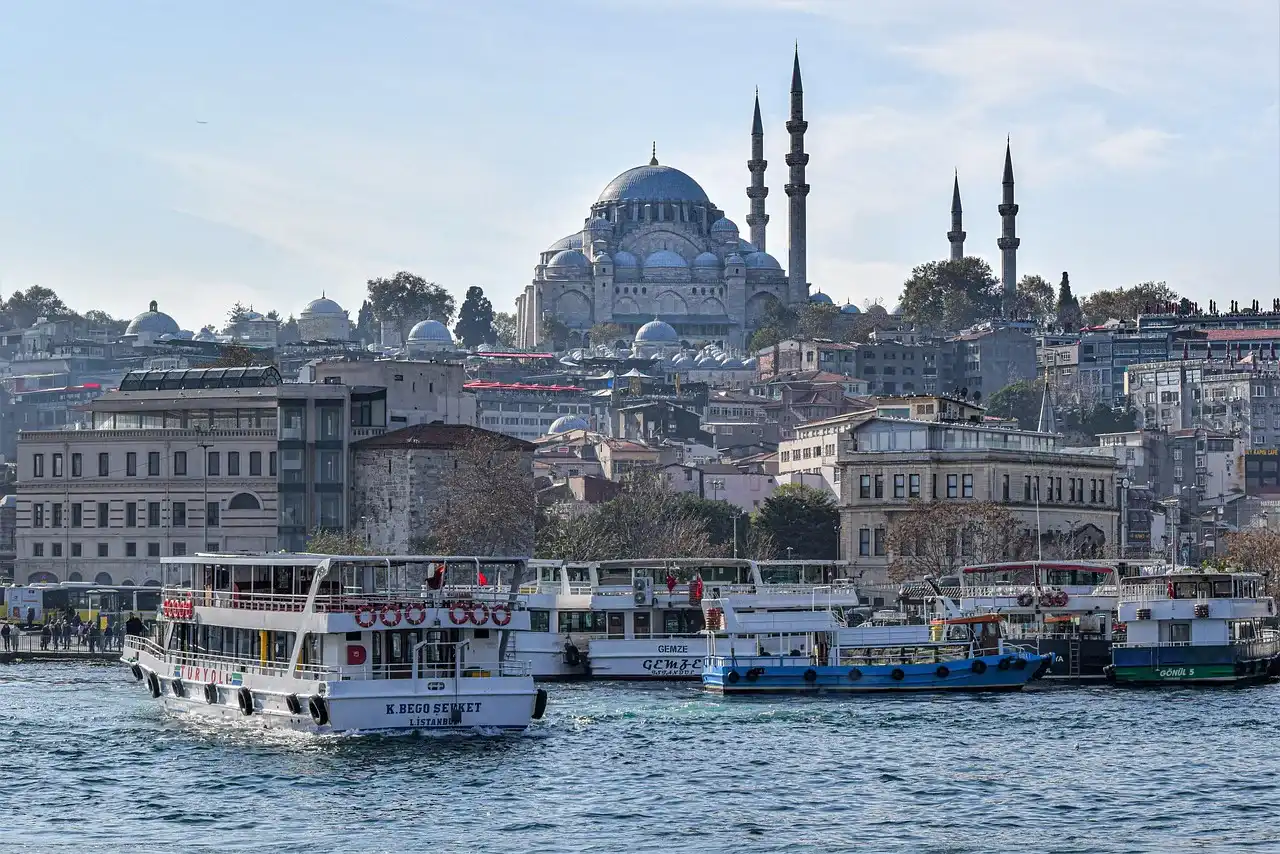
Istanbul punishes itineraries that sound too certain. A short line on a map can conceal a steep hill, a packed quay, security checks or a detour around restoration work. A journey that looks long can become a pause as soon as you board a ferry: mosques recede, gulls follow the boat, and the geography of the Golden Horn, Bosphorus and Asian shore finally comes into focus.
Three days are not enough to “do Istanbul.” They are enough for a coherent first encounter: the historic peninsula on day one, the bazaars and Beyoğlu on day two, then Kadıköy and Moda on day three. The route relies on trams, metro lines, ferries and walking. A car would contribute nothing except the opportunity to sit in traffic.
This guide turns several seasonal plans into one durable structure. In winter, the cistern, museums, cafés and a hammam provide shelter. In spring, crossings and longer walks take more space. The skeleton remains useful throughout the year, while the order must respond to queues, prayer times, restoration and weather.
A car-free 3-day Istanbul itinerary
Day one concentrates on Hagia Sophia, the Blue Mosque and one additional major paid site: Topkapı Palace or Basilica Cistern, depending on your interests and current access. Day two moves through the markets, then across the Golden Horn to Karaköy and Galata. Day three takes the ferry to Kadıköy, eats through the market and walks towards Moda. A public Bosphorus service or hammam can replace a visit when energy drops.
The decision that protects the trip: do not reserve three timed tickets on the same day. Queues, worship and crowded streets make those sequences fragile. Fix one priority, then keep two branches open.

Where to stay: Sultanahmet, Karaköy or Kadıköy?
Sultanahmet makes the early hours easy. Major monuments are close and returning after a long day is straightforward. At night, however, parts of the district lose their everyday rhythm and some businesses focus almost entirely on visitors. It suits a first trip centred on heritage, families seeking fewer connections and travellers who dislike steep streets.
Karaköy and lower Galata offer the most balanced compromise. Trams, ferries, Galata Bridge, the funicular and the climb towards Beyoğlu open several directions. Cafés, restaurants and waterfront activity continue into the evening. Check the exact gradient: a room marketed as “Galata” may be several charming but exhausting streets above the quay when you are carrying luggage.
Kadıköy provides more local evenings, an absorbing market and excellent ferry connections. In return, every Sultanahmet morning begins with a crossing. That is a pleasure in calm weather and a complication when you hold an early ticket in strong wind. Kadıköy is an excellent second-trip base, or a first-trip choice when food and neighbourhood life matter more than landmark efficiency.
Karaköy
The strongest combination of ferry, tram and Beyoğlu access. Read recent reviews about street noise and construction.
Sultanahmet
Useful for early starts and walking home. Make sure the address is not far from the tram or sold as central despite a long uphill approach.
Airports, Istanbulkart, trams and public ferries
Istanbul has two major airports: IST on the European side and SAW on the Asian side. The best option is not determined by airfare alone. Add arrival time, accommodation area and the connection operating that day. Shuttles, metro links and works can change. Check airport and operator websites shortly before departure and protect the return with a generous margin. Crossing the metropolitan area at a busy hour is not a minor detail.
Istanbulkart is the system to understand for urban transport. Purchase, top-up and usage conditions can evolve; the official visitor portal summarises the Istanbul Card. The T1 tram shapes the historic peninsula and continues towards Eminönü and Karaköy. Metro lines and funiculars remove several punishing climbs. Public ferries function as both transport and an introduction to the city’s geography.
Use the official Şehir Hatları timetables and distinguish a scheduled ferry from a sightseeing cruise or private boat. A regular crossing towards Kadıköy or Üsküdar already provides major views for the price of transport. Longer Bosphorus tours offer something different and need a real half-day.
Be careful with trips sold spontaneously near the piers. Confirm the operator, duration, stops and total price before boarding. A municipal ferry does not require a persistent salesperson in the street.
Hagia Sophia, the Blue Mosque and one major site
Reach Sultanahmet early and begin with the square rather than immediately joining a queue. Hagia Sophia and the Blue Mosque face each other, but their status, entrances and patterns of use differ. They are active religious places. Respectful clothing, quiet behaviour and closed prayer areas are not optional. Access can change around worship, festivals or works, so verify official information the previous evening.
Hagia Sophia is undergoing long-term restoration and visible areas can evolve. Do not build the visit around a guaranteed complete circuit or scaffolding-free photograph. The Blue Mosque also deserves time from its courtyard and the Hippodrome. When a long queue forms, walk towards the obelisks and return later rather than spending the calmest hour standing still.
Then choose Topkapı or Basilica Cistern. The palace takes several hours: courtyards, Bosphorus views, collections and potentially separately controlled spaces. The cistern is shorter, indoors and theatrical, making it especially useful in rain or heat. Both can fit on paper. Doing both without losing breaks and attention is a different matter.

Gülhane, Eminönü or a hammam
After the major site, cross Gülhane Park if the light remains pleasant, then descend towards Eminönü. Quays, fishing lines, vendors and boats create a lively transition towards day two. Save the Spice Bazaar for the following morning if you already feel saturated. You may also return to the hotel before dinner. Istanbul fatigue often comes from refusing to sit down.
A hammam fits naturally here, particularly in winter. Decide what kind of experience you want: a grand historic institution, local bath or polished visitor package. Read exactly what is included, whether spaces or sessions are mixed or separated, and recent comments about upselling. Clear expectations matter more than a famous façade.
Grand Bazaar, Spice Bazaar, Karaköy and Galata
Start at the Grand Bazaar near opening time. Its importance lies in scale, passages, hans and commercial continuity, not an obligation to buy. Note the gate you entered, save a map pin and accept that your route will not remain straight. For a significant purchase, compare, ask for the final price and be willing to leave. Negotiation only makes sense once you know your own limit.
Walk downhill towards the Spice Bazaar through shopping streets. Visitor-oriented products sit beside shops serving local customers. Prepared gift boxes may cost more than products sold by weight. Read labels, ask before sampling and avoid blocking narrow passages for photographs.
From Eminönü, cross Galata Bridge on foot or use the tram to Karaköy in bad weather. Eat in the lower streets, then climb gradually towards Galata Tower. The slopes are real. Use the funicular when it preserves your energy, and reject the idea that an “authentic” traveller must suffer through every staircase.


Galata passages and an evening around Karaköy
Galata Tower creates queues, but the neighbourhood also earns its time through changes in level, stairways, apartment blocks and views that appear between façades. Decide whether the day’s visibility justifies the wait. Keeping the tower as a visual anchor and continuing towards historic passages and the side streets off İstiklal can be more rewarding than forcing a complete walk along the avenue.
Descend to Karaköy for dinner or stay in Beyoğlu according to your hotel. Karaköy combines contemporary restaurants, bakeries, small bars and immediate transport access. Streets and prices change quickly. Read the menu before sitting, ask whether service is included and avoid businesses whose aggressive invitation begins on the pavement.

Kadıköy market, Moda and a Bosphorus return
Take a morning ferry to Kadıköy. Stay outside for part of the crossing when conditions allow: the journey provides a view neither tram nor taxi can reproduce. On arrival, do not immediately search for a monument. Kadıköy Market unfolds in layers — fish, spices, bakeries, cafés, restaurants and shopping streets — and rewards slow circulation.
Build lunch around your appetite: a small lokanta, mezze, fish or several market stops. A local queue can be a clue, never a guarantee. Ask the price when it is not displayed and preserve room for pastries. The district rewards curiosity more than the search for one address proclaimed the “best in Istanbul.”
Continue towards Moda and the shoreline. The walk passes cafés and residential streets before opening to the Sea of Marmara. Winter wind may shorten the loop; return earlier by ferry and place a hammam or indoor site at the end of the day. In calm weather, cross back around sunset and let the municipal service become your cruise.
For a longer Bosphorus experience, choose an official Şehir Hatları tour or an excursion whose duration and stops are explicit. The operator’s Bosphorus tour page distinguishes the options. Do not abandon Kadıköy for a cruise purchased at random around noon.

How much do three days in Istanbul cost?
Local prices move too quickly for a fixed list in Turkish lira to remain reliable. Use the euro ranges below as envelopes, then search your actual dates. Accommodation and internationally priced attractions matter more than public ferries or a simple meal. The most effective saving is often booking fewer combination tickets and using the regular transport network.
| Cost per person | Tight budget | Balanced | Comfort |
|---|---|---|---|
| 3 nights, shared double room | €90–180 | €180–360 | €360–720 |
| Food and drinks | €60–105 | €110–200 | €210–390 |
| Urban and airport transport | €25–50 | €50–90 | €90–180 |
| Attractions and hammam | €35–80 | €85–190 | €200–420 |
| Total before flights | €210–415 | €425–840 | €860–1,710 |
View restaurants, historic hammams, private transfers and skip-the-line products can move the total quickly. Neighbourhood breakfasts, scheduled ferries and one major ticket per day keep the trip dense without making it poor. Always confirm the displayed currency, card fees and final amount before payment.
Adapting Istanbul in winter or bad weather
Winter days are shorter and wind on the quays intensifies the cold. Place outdoor monuments in a clear morning and attach an indoor refuge to each district: the cistern or Archaeological Museums around Sultanahmet, cafés and passages in Beyoğlu, and the market or restaurants in Kadıköy. Properly waterproof shoes improve the trip more than a stylish but fragile outer layer.
Snow and heavy rain can disrupt ferries, flights and roads. Never build the airport return around a narrow margin. A hammam booked near the end of the day remains a useful anchor when cancellation terms are reasonable. Spring brings longer light but not immunity from showers. Flexibility remains more valuable than a rigid schedule.
Seven Istanbul mistakes to avoid
Changing shores for every meal
Ferries are enjoyable, but waiting adds up. Group visits and meals by neighbourhood.
Accepting a restaurant without clear prices
Read the menu, ask about supplements and check the bill. Walk away calmly from aggressive invitations.
Locking three timed monuments together
One queue or prayer period can break the chain. Reserve one priority each day.
Underestimating Galata’s hills
A cheap room uphill can consume a surprising amount of energy. Measure gradients and use funiculars.
Confusing a ferry with a sightseeing cruise
Check the operator and stops. A regular Kadıköy service already provides a memorable crossing.
Photographing without attention inside a mosque
Respect worshippers, closed areas and instructions. A visitor never takes priority over prayer.
Leaving too little time for the airport
Distance, congestion and security make small margins risky. Leave earlier than you would in a compact city.
Car-free Istanbul 3-day FAQ
Not for this itinerary. Trams, metro lines, funiculars, ferries and walking fit the selected districts. Traffic and parking would make the trip harder.
Karaköy for balance between shores and evening life; Sultanahmet for early monument access and fewer connections. Check gradient and noise in both.
No. A public ferry already offers substantial views. Buy a cruise when you want to dedicate several hours to the Bosphorus and know the exact route.
Yes, as they face one another, but access depends on prayer, queues, restoration and current rules. Keep the order flexible.
There is no universal answer. Compare airfare, arrival time, hotel area and the actual ground connection, then add a wide margin for departure.
Compare seasons and alternatives
When price is the main decision, compare Istanbul with our guide to affordable countries in Eastern Europe. For a smaller-scale city break with easier logistics, see our budget Mediterranean weekend alternatives. Istanbul demands more movement than either category suggests, but it also provides a depth that few three-day destinations can match.
Useful official sources
Use Şehir Hatları for ferries, Visit Istanbul for the transport card, airport websites for ground links and official monument pages for hours and restoration. Religious and operating conditions can change quickly; no old guide should replace a check the previous evening.
Three successful days come from three neighbourhoods experienced properly
Sultanahmet supplies the historical depth, Karaköy and Galata show a city in motion, Kadıköy adds everyday life, and ferries connect the whole route. Limit fixed tickets, respect religious use, keep a weather branch and choose an area that protects your evenings. You will not see all of Istanbul. You will understand enough of its geography to want to return.
Disclosure: some booking links are affiliate links. Using them may support LowCostWings without changing the displayed price. Recommendations remain based on usefulness and trip coherence.