Vienna in 3 Days: Palaces, Museums, Neighbourhoods and Budget
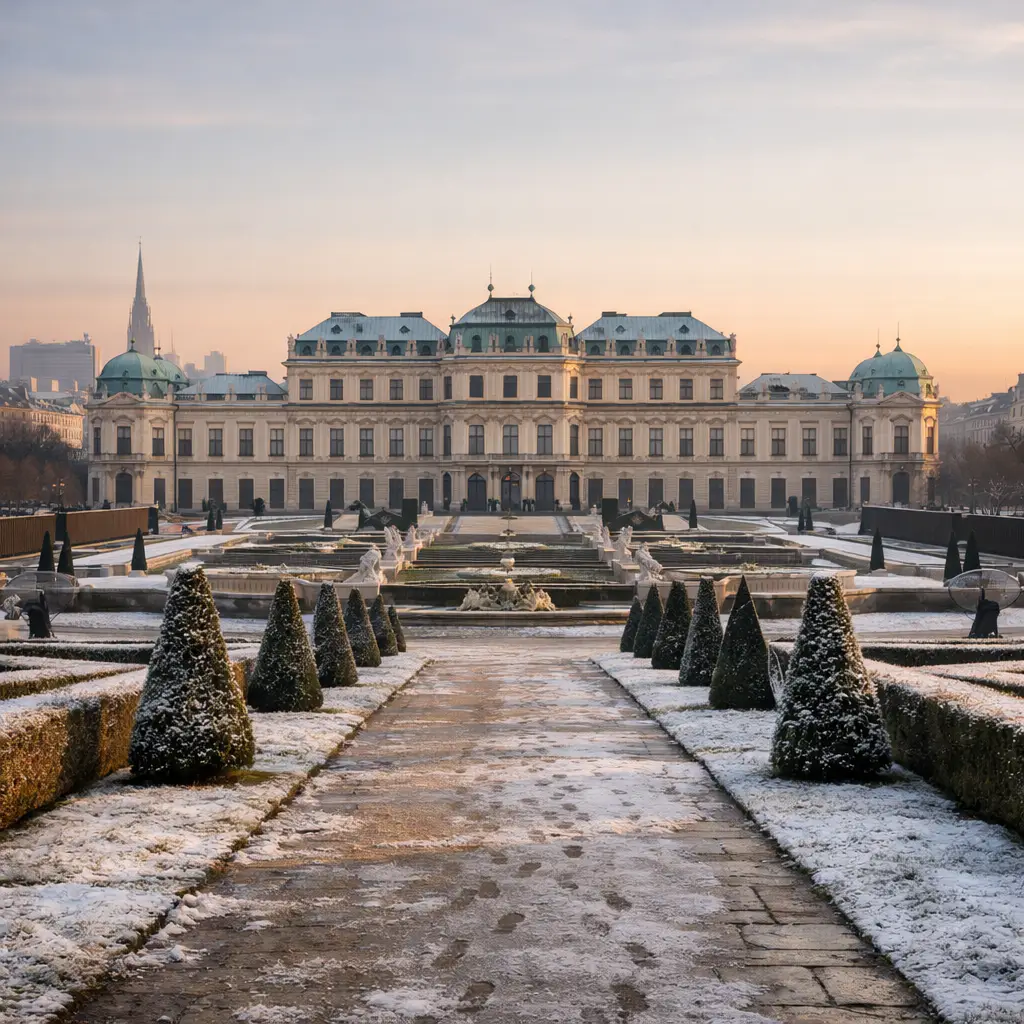
Three days between imperial display and contemporary districts Vienna is not difficult to visit, but it becomes overwhelming when every palace, museum, coffee house and concert receives equal priority. The Ring concentrates one monumental layer; Schönbrunn requires travel and half a day; markets, parks and neighbourhoods reveal another city. A successful trip alternates cultural density with breathing space.
This guide replaces overlapping general, winter and January itineraries with one pillar. It transfers their valuable advice about cold weather, indoor options, markets, budget and transport while removing dated prices and annual promises. The historic French slug retains “2025” to protect the established URL, but both editorial versions are fully evergreen.
Three days cover the centre, one major museum, Schönbrunn and a more everyday Vienna. They do not allow complete visits to the Kunsthistorisches Museum, Albertina, Belvedere, Hofburg and every Schönbrunn interior. Select the art and stories that genuinely interest you; keep the other buildings for their exteriors or a future trip.
What is the best 3-day Vienna itinerary?
Day one follows the Innere Stadt: Stephansdom, Graben, Hofburg, part of the Ring and a deliberate coffee-house stop. The centre is compact, but its interiors are not. Reserve a single major visit, then let streets and façades explain religious, imperial and bourgeois power.
Day two belongs to Schönbrunn. Palace, state rooms, gardens, Gloriette and the estate’s additional attractions can fill many hours. Do not add Belvedere and a concert merely because Vienna’s transport works well. Return through Naschmarkt, Mariahilf or Neubau to move from imperial scenery into a neighbourhood evening.
Day three starts with the art you chose: Belvedere for Klimt and palace architecture, Kunsthistorisches for older collections, Albertina for changing exhibitions and works on paper, or MuseumsQuartier for several institutions. Prater, the Danube Canal or Karmeliterviertel then complete the city without another large entry.
Governing principle: one major palace or museum per day. Your attention declines long before the institutions close.

Where should you stay in Vienna?
Innere Stadt maximises walking and gives you central streets early and late. It is also the most expensive area, with some tourist-oriented dining. Decide whether the premium buys a genuinely useful position or only a prestigious address. A room near the Ring may balance access and quiet better than one inside the busiest pedestrian streets.
Neubau and Mariahilf are often the best city-break bases. Cafés, restaurants, smaller shops, MuseumsQuartier and metro lines provide neighbourhood life without separating you from the centre. Around Mariahilfer Straße, request a quiet room because commercial activity and deliveries can begin early.
Leopoldstadt suits visitors wanting Prater, the canal and straightforward connections. Karmelitermarkt adds a residential food district. Schönbrunn is further away, but transfers remain simple. Wieden and Margareten can offer value around Belvedere, the main station and Naschmarkt.
Hotels near Hauptbahnhof work well for rail arrivals and onward travel to Bratislava, Prague or Budapest. The immediate streets have less historic charm but reduce luggage transfers. In Vienna, a nearby U-Bahn or tram stop is frequently worth more than saving one kilometre on a map.
Check the building as carefully as the district. Vienna contains grand historic properties, converted apartments and newer business hotels, and the same price may buy very different space, air conditioning or lift access. A beautiful Altbau room can have high ceilings and real character, but also creaking floors or limited cooling in summer. Read recent comments about the specific room category rather than relying on photographs of the lobby.
Neubau
Museums, cafés and direct central access outside the most expensive district.
Innere Stadt
Landmarks on foot and fine early hours, at a higher price.

Airport, U-Bahn and tram: useful Vienna logistics
Several trains and buses connect the airport. Urban rail, direct regional services and the CAT differ in price and stops. Choose according to the final address, not marketing. Consult official ÖBB and Wiener Linien information for current works, schedules and ticketing.
The U-Bahn efficiently covers Schönbrunn, Hauptbahnhof, Prater and major corridors. Trams move more slowly but reveal the Ring and link intermediate districts. Walk in the Innere Stadt: changing lines adds nothing between Stephansplatz, Hofburg and adjacent streets.
Tickets and passes evolve. Count complete days and planned journeys before buying. A tourist pass may mix transport with discounts unrelated to your list. A normal network product can be more rational when museums are booked separately.
Vienna works exceptionally well without a car. Parking, regulations and traffic add constraints. Bratislava is more naturally reached by train or seasonally by boat. A car can help in the Wachau, but that excursion sits outside an already full first three-day visit.
Stephansdom, Graben, Hofburg and Ring
Begin at Stephansdom before the commercial streets fill. Cathedral floor, towers, catacombs and paid areas follow different access rules. Choose according to your interest and services. The coloured roof creates an immediate landmark; a tower explains the geography but is not essential to understanding the church.
Cross Graben and Kohlmarkt while looking beyond shop windows. The Plague Column, façades and passages record the city’s transformations. A historic coffee house can be meaningful, but an hour-long queue turns the experience into expensive waiting. At busy times, a neighbourhood café may express Viennese coffee culture better than a famous name.
Decide before entering Hofburg. Imperial Apartments, Sisi Museum, Spanish Riding School, National Library and Treasury are separate institutions. Combining them consumes the day. Select one narrative: court life, horses, architecture or collections. The external courtyards already connect the palace complex without a ticket.
Finish on the Ring around Parliament, City Hall, Burgtheater, university or State Opera. A tram offers an overview, but a partial walk makes the spaces legible. For a performance, purchase through the venue or an authorised seller and verify view, category and terms; a street offer in historical costume does not guarantee quality.

Schönbrunn, gardens and an evening in Neubau
Reach Schönbrunn early. Its interior routes, gardens, Gloriette, zoo and additional attractions are not an automatic bundle. Palace entry needs a slot; outdoor spaces require substantial walking and depend on weather. Read precisely what the official ticket includes.
Inside, value comes from the sequence of rooms and court life rather than only the most photographed decoration. Respect rules concerning photography, bags and timing. If state rooms matter less to you, spend longer on garden perspectives and the Gloriette climb. That choice supplies context without adding another museum.
The grounds are large. Appropriate shoes, water and honest distance estimates prevent the visit becoming punitive. In poor weather, shorten the exterior and return to a central museum. Winter operation differs for some spaces and attractions; verify rather than assume.
In the evening, move to Neubau, Spittelberg or Mariahilf. Small streets, wine bars, restaurants and shops show a less ceremonial Vienna. Naschmarkt is worthwhile while active; late in the day it is not the same market experience. Do not choose a restaurant only because it occupies the busiest aisle.

Belvedere or a major museum, Karmelitermarkt and Prater
Belvedere combines collection and architecture. It suits a visit motivated by Klimt and Austrian art. Upper and Lower Belvedere do not always carry the same exhibitions or conditions. Reserve what matches your interest and retain time for gardens and the city view.
Kunsthistorisches Museum is the alternative for Old Masters, imperial collections and a spectacular interior. It can take half a day. Albertina offers variable exhibitions and graphic work; MuseumsQuartier gathers several institutions. Read current programming instead of selecting solely by name.
After the museum, cross towards Leopoldstadt and Karmelitermarkt while it is active. Market, restaurants and residential streets transition towards Prater more honestly than a metro jump between attractions. The Danube Canal can extend the walk in suitable weather.
At Prater, the Giant Ferris Wheel provides a historic ride and views, while other attractions form a leisure park with variable hours. The green Prater extends far beyond the rides. Choose the wheel, a long walk or an animated evening according to season; the area does not require a bundle of attractions.

What should you eat in Vienna?
Wiener Schnitzel, Viennese goulash, Tafelspitz, sausages and seasonal plates create a cuisine broader than cake. In a Beisl, look for a readable menu and local rhythm. Schnitzel may be veal or pork; the description and price should make this clear. Portions are often substantial.
Coffee-house culture combines drink, newspaper, conversation and time. A famous café may offer a remarkable room, yet an hour’s queue contradicts the purpose of sitting. Choose that experience deliberately or enter a less exposed establishment. Sachertorte, Apfelstrudel and Kaiserschmarrn need not all be consumed in one afternoon.
Naschmarkt is useful for products, some food stops and its setting, but stalls and restaurants vary. Karmelitermarkt and district markets work at a more everyday scale. Winter seasonal markets change the offer; verify dates and do not confuse a temporary event with the city’s annual food culture.
Wine is another part of Vienna’s identity. Traditional Heuriger areas on the edge of the city can make a pleasant extension, but travel time matters during a three-day visit. Check opening days, understand whether food is ordered from a buffet or menu, and designate a straightforward return. A local wine bar in Neubau or the centre gives a simpler introduction when the schedule is already full.
How much does 3 days in Vienna cost?
Rooms vary around conferences, holidays, Christmas markets and major weekends. Public transport allows you to stay outside the first district without losing the city. Compare a hotel three minutes from a station with a slightly more central but much more expensive option.
Attractions create the difference. Schönbrunn, one large museum, a performance and several Hofburg sites can double the activity budget. Decide what matters before buying a pass. For food, one Beisl lunch, a prolonged coffee stop and a simpler dinner may feel more Viennese than three prestigious reservations.
| Per person | Lean | Balanced | Comfort |
|---|---|---|---|
| 3 nights, shared double room | €120–230 | €240–430 | €500–900 |
| Food and coffee | €75–125 | €150–250 | €300–500 |
| Airport and transport | €25–45 | €50–85 | €120–240 |
| Palaces, museums and show | €35–75 | €100–190 | €250–500 |
| Total excluding flights | €255–475 | €540–955 | €1,170–2,140 |
Planning ranges: recalculate for your dates, venues and official prices. Choosing interiors has more impact than the cost of one isolated coffee.

When is the best time to visit Vienna?
Spring and autumn support gardens, walking and culture. Weather remains variable, so pair one outdoor plan with one interior instead of fixing every hour weeks in advance. Weekends and public holidays affect crowds.
Summer provides long evenings and parks, while some interiors become dense. Start palaces early, use shade and coffee houses in the afternoon, then consider the Danube or Prater at night. Not every concert venue follows the same artistic season.
Winter shifts importance towards museums, coffee houses, performances and seasonal markets. Cold, wind and possible snow call for compact routes without promising white scenery. January may become calmer after the holidays, with specific opening times. Earlier winter content is integrated here so that the advice survives without competing pages.
Concert and opera calendars deserve their own check. Some visitors assume that every famous venue offers the same programme throughout the year, while festivals, summer breaks and touring productions create very different choices. Select a performance only after reading the work, venue, cast or ensemble and seating information; “classical concert in Vienna” is too broad to be a meaningful guarantee.
Eight Vienna mistakes to avoid
Planning Schönbrunn, Belvedere and Hofburg on one day is the first mistake. Buying a pass without checking inclusions and purchasing an unknown concert from a street seller follow closely. More gilded rooms do not replace an actual choice.
Staying far from transport for a small saving, crossing Innere Stadt by metro instead of walking and reaching Naschmarkt after its activity waste time. Waiting only for the most famous coffee houses can consume an absurd portion of the trip.
Treating Vienna solely as an imperial museum excludes its districts, markets, parks and current culture. Avoiding every institution because it is popular removes exceptional collections. Balance one great interior per day with lived space around it.
Vienna in 3 days: FAQ
Yes for the centre, Schönbrunn, one or two major museums and an outer district. You must select institutions.
Neubau for culture and food, Innere Stadt for walking, Leopoldstadt for Prater and a more residential base.
Only after listing palaces, museums and transport. A discount has no value when the included sites do not match your interests.
Allow at least half a day for an interior route and gardens. The zoo or several additional attractions can fill a whole day.
Yes for museums, cafés, music and dated seasonal markets. Prepare for cold conditions without relying on snow.
Yes by train or seasonally by boat, but the excursion removes a full day from an already rich first Vienna visit.
More useful LowCostWings guides
For onward travel, compare Prague in 3 days, Bratislava in 2 days and Budapest in winter. These are not interchangeable day trips; each deserves its own pace and an overnight stay when the calendar allows.
Vienna becomes lighter when palaces stop competing
Book one major interior each day, stay near transport and use neighbourhoods as breathing spaces. Three days then connect cathedral, imperial court, Schönbrunn, art and Prater without reducing Vienna to gilded rooms. The city feels more coherent, more current and far less tiring.
Disclosure: some booking links are affiliate links. Using them may support LowCostWings without changing the displayed price. Recommendations remain based on practical value.