Where to Stay on the Amalfi Coast: Sorrento, Positano, Amalfi or Salerno?
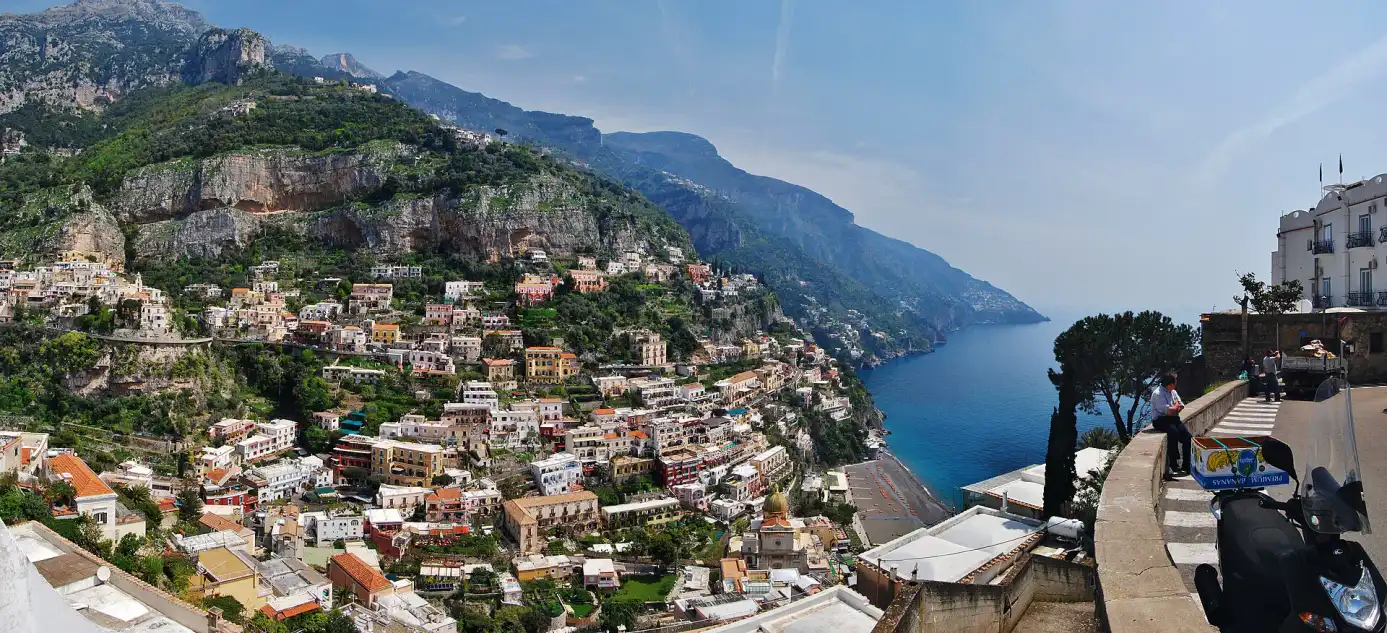
A balcony above Positano looks irresistible when you are planning a trip to Italy. Yet the holiday you picture might be quite different from the one you book: mornings on the beach, a boat to another village, or a train to Pompeii. On this steep stretch of Campania, choosing the right town gives you something no sea view can guarantee: more time to enjoy the places you came to see.
For a first visit focused on the Amalfi Coast itself, our pick is lower Amalfi, close to the harbour. Choose Sorrento for a wider Bay of Naples holiday, Positano for two or three nights of unhurried coastal living, and Salerno for an easier rail arrival and a more flexible budget. Sorrento and Salerno are gateways, rather than villages on the Amalfi Coast proper.
| Town | Best area to look | Best for | Trade-off |
|---|---|---|---|
| Amalfi | Harbour, Piazza Duomo, lower Via Lorenzo d'Amalfi | Coastal sightseeing without a car | Busy waterfront; no railway |
| Sorrento | Piazza Tasso, Corso Italia, railway station | Capri, Pompeii, Naples and coast | Repeated trips to coastal villages |
| Positano | Piazza dei Mulini, lower village, Fornillo | Romance, views, beach time | Steps, transfers and accommodation costs |
| Salerno | Station, Corso Vittorio Emanuele, old town | Mainline trains, budget, eastern coast | Daily travel to the iconic villages |
Between Sorrento in the west and Salerno in the east, the coastal villages run from Positano through Praiano, Amalfi, Atrani, Minori and Maiori. Ravello sits high above Amalfi and Minori, so reaching it involves a journey uphill rather than stepping off a ferry.
In this guide- Sorrento for a wider trip
- Positano for the setting
- Amalfi for coastal day trips
- Salerno for rail arrivals
- Sorrento vs Positano and other comparisons
- Smaller alternatives
- How many nights and where?
- Getting around and choosing a hotel
- Frequently asked questions
Sorrento: the best base for Capri, Pompeii and the Bay of Naples
If your Italy itinerary includes a day exploring Pompeii's streets and another on Capri, Sorrento makes more sense than a hotel halfway along the coastal road. Piazza Tasso is lively in the evening, the historic lanes invite you out for dinner, and the railway gives you an alternative to relying entirely on boats and buses.

Among the places to stay in Sorrento, those around Piazza Tasso and the eastern end of the historic centre are especially convenient for the EAV railway station. Corso Italia puts restaurants and shops within reach. For waterfront dining, walk down to Marina Grande, the old fishing neighbourhood; it is not the same place as Marina Piccola, where passenger boats for Capri depart. Check the walking route down to the correct marina rather than treating every hotel described as near the sea as a harbour hotel.
For Capri, head down towards Marina Piccola, not the fishing harbour of Marina Grande. The lift below Villa Comunale is a useful shortcut when operating; with heavy bags a local bus or taxi via Via Luigi De Maio is easier than the steps. Save Marina Grande for a seafood lunch or an evening by the water.
With a full day of sightseeing ahead, Hotel Plaza near Piazza Tasso is a convenient place to wake up: the station is close, yet you can still step out into the centre for dinner. If time between trips matters just as much, Hotel Antiche Mura has a garden and pool in the same central part of town. It's an appealing choice for an afternoon of doing very little after a day at the archaeological site; check seasonal pool operation.
If the Faraglioni are on your wish list, set aside a day for this boat trip around Capri from Marina Piccola. The listed start is Via Marina Piccola 2 in Sorrento, with meeting arrangements depending on the selected option. Choose the full-day version with three or four hours ashore rather than the four-hour cruise. That leaves time to explore Capri town; disembarkation and the Blue Grotto carry separate charges, and swimming stops depend on conditions. For a land-focused day, take the regular ferry instead.
From Sorrento, devote a full day to Capri when sailings operate, another to Pompeii, and a separate day to Positano or Amalfi. The railway stop for the main archaeological entrance is Pompei Scavi–Villa dei Misteri; our practical advice on getting to Pompeii by train from Naples also explains the station choices. If you're not interested in Capri or Pompeii, however, there's little reason to repeat the journey across the peninsula every morning. Stay on the coast instead.
Positano: wonderful for staying put, less convenient for constant day trips
What struck us about Positano was how beautiful it was — and how busy it still felt in September. Staying overnight gives you a chance to enjoy the village beyond the busiest hours.
The reward for spending the night in Positano is the time you get back from the day-trippers. You can start at Spiaggia Grande, linger over lunch and watch the light change on the hillside houses without needing to catch a boat back to another town. That is what makes Positano worth considering for a honeymoon or a short, special stay.

The lower village and Piazza dei Mulini
For a first visit, favour accommodation in Positano around Piazza dei Mulini, with the pedestrian lanes leading towards the church and Spiaggia Grande. Hotel Savoia sits close to the square, making the shops, cafés and lower village part of your ordinary evening rather than a separate outing. You'll still encounter gradients on the walk to and from the water, so don't read the central location as a promise of step-free access.
Fornillo and the hillside
When we visited Positano, rows of sun loungers took up much of Spiaggia Grande, but we also found a free spot farther to the right when facing the sea. Fornillo is a useful option if all you want is a swim and somewhere to spread your towel. Facing the sea, turn right towards the harbour and follow Via Positanesi d’America along the coast. Around ten minutes later you will reach Fornillo, where free public areas share the pebbled beach with private lidos. Arrive early in the busy season to give yourself a better chance of finding a spot.
For a holiday built around the beach, Fornillo is our choice. Hotel Pupetto sits right on Fornillo Beach: you can spend an afternoon by the sea and return to your room without climbing back to the road. Access is on foot only, so it is especially appealing if you arrive by ferry and travel light. Road arrivals require a walk from the parking area; ask about luggage assistance.
If you are arriving by private transfer with substantial luggage, the road-level location of Hotel Posa Posa, at Via Pasitea 165, changes the experience. It trades instant beach access for views and easier vehicle drop-off. That does not guarantee step-free access inside the building. Expect an uphill return from the beach, and confirm the nearest bus stop before relying on local transport.
Driving into Positano: what to expect from the car parks
We found driving into Positano difficult. At some underground car parks, you may be asked to hand your keys to an attendant, who parks your car and arranges the vehicles to make the most of the limited space. It can take you by surprise, but the attendants are accustomed to working this way. If you are bringing a car, arrange parking before you arrive and check the key handover and vehicle collection arrangements.
The deciding factor is your luggage and daily routine. For a short ferry-based stay, choose the lower lanes near Piazza dei Mulini or Fornillo. For a road arrival and a balcony-led holiday, Via Pasitea makes more sense. For travellers who cannot manage steps, Maiori is generally a more comfortable starting point; even lower Positano is not automatically accessible.
Amalfi: the best place to stay for exploring the coast without a car
In Amalfi, the cathedral steps, the busy little harbour and the lanes around Piazza Duomo all belong to the same compact part of town. That creates a rhythm we particularly like for a first coastal holiday: board a boat in the morning, have dinner near your hotel on your return, and take the bus uphill to Ravello on a different day.

For ferry-based days, choose somewhere to stay in Amalfi near the seafront, Piazza Flavio Gioia, Piazza Duomo or the lower part of Via Lorenzo d'Amalfi. As the main street climbs inland, accommodation may be quieter but farther from the waterfront. A hotel listed in Amalfi can also be in a hillside locality such as Pogerola, where you would organise days around buses or taxis rather than stroll down to every ferry.
Hotel Residence is right on the seafront, a lovely position if you want time by the water before the morning crowds arrive. Select a sea-facing room if the view is part of the reason for choosing it. If you prefer the energy of the main square, Hotel Fontana overlooks Piazza Duomo, so a return after dinner needn't involve a trip up the hillside. Ask about steps at the entrance and inside either building when accessibility matters.
Spend one day exploring Amalfi and neighbouring Atrani, another visiting Positano by ferry, and a third taking the bus uphill to the gardens of Villa Rufolo in Ravello. If boats are suspended, swap the ferry outing for the hilltop village or a day closer to home. Leave an evening free to linger around the cathedral and harbour after the day-trippers have gone: that is one of the pleasures of staying in the centre of the coast.
Salerno: an easier arrival from Rome and a practical budget alternative
For travellers coming south by mainline train, Salerno is an attractive alternative to a transfer through Naples and Sorrento. The station opens onto Piazza Vittorio Veneto, and the pedestrian shopping street, Corso Vittorio Emanuele, leads into the city. After a day on the coast, there's still the Lungomare Trieste waterfront to stroll and the old town around the cathedral to explore.

If you're travelling with luggage and expect to board several ferries from Piazza della Concordia, favour accommodation in Salerno at the station end of Corso Vittorio Emanuele. Some services use Molo Manfredi instead; check your ticket's named pier. Hotel Plaza opposite the railway station is particularly useful if you arrive late or leave early. Farther along the pedestrian street, Hotel Montestella suits a stay that mixes outings with evenings in the city itself.
Salerno works well for visiting the eastern villages, including Cetara, Maiori and Minori, as well as Amalfi when boats serve those ports. Positano makes a worthwhile full-day outing, but doing the longest journey every day would defeat the point of saving on accommodation. Leave yourself a day to enjoy the city when the sea is rough or the coastal road is busy. You can have a good holiday here without feeling obliged to leave town every morning.
On a three-night stay, spend one full day in Amalfi and another around Maiori and Minori. Leave the arrival or departure day for Salerno itself, walking from the cathedral through Via dei Mercanti to Lungomare Trieste. If your ideal evening is dinner above Positano’s beach after the ferries have left, choose Positano instead; the last boat should not dictate every evening.
Sorrento or Positano? Four comparisons that really matter
Sorrento vs Positano
With two full sightseeing days, a Capri day and a Pompeii day make Sorrento the obvious base: you avoid a coastal transfer before each outing. If both days are really about the beach, an aperitivo and the view, Positano gives you the evenings that day visitors miss. Do not spend both mornings travelling into the place you most want to be.
Positano vs Amalfi
Amalfi wins if you are planning separate outings to Positano and Maiori. The April 2026 Travelmar timetable gives 25 minutes from Amalfi to Positano and 15 to Maiori, so both round trips add up to roughly 80 minutes on the water. Starting in Positano for Maiori may mean changing boats in Amalfi. Choose Positano instead when the beach and the hillside setting are the holiday itself.
Sorrento vs Amalfi
Separate the places you want to visit into two groups: Capri and Pompeii on one side; Positano, Atrani, Ravello and the eastern coast on the other. The group with more of your must-see places tells you which base makes sense. If neither dominates and you have enough nights, split the stay.
Salerno vs Sorrento
Salerno saves a change of railway for many travellers coming from Rome, while Sorrento is better for Capri and Pompeii. For a coastal-focused holiday, compare Salerno with Amalfi too: one round trip to Positano and another to Maiori total roughly 3 hours 20 minutes of sailing from Salerno, compared with 1 hour 20 minutes from Amalfi.
| Route | One way | Round trip |
|---|---|---|
| Amalfi ↔ Positano | 25 min | 50 min |
| Amalfi ↔ Maiori | 15 min | 30 min |
| Amalfi ↔ Minori | 10 min | 20 min |
| Salerno ↔ Amalfi | 35 min* | 70 min* |
| Salerno ↔ Positano | 70 min | 140 min |
| Salerno ↔ Maiori | 30 min | 60 min |
Illustrative sailing times from Travelmar’s April 2026 timetable. Excludes walking, boarding and waiting. *Fast service; some Salerno–Amalfi sailings take 60 minutes. Check your travel dates.
In the same April 2026 fare schedule, those two return outings for two adults totalled €108 from Salerno and €60 from Amalfi. Fares can change, but that €48 difference makes the advantage of staying in the middle of the coast tangible. It shows why a less expensive room in Salerno does not automatically mean a less expensive holiday.
Smaller towns that might suit you better
Maiori would be our first choice with small children. Along Lungomare Amendola, a beach morning, lunch and a nap are easy to fit into the same day. Hotel Panorama, near Via Santa Tecla, suits that rhythm. Amalfi is a short ferry ride when services operate. In neighbouring Minori, break up a beach day with a visit to the Roman villa and a lemon pastry at Sal De Riso on the seafront. The Path of the Lemons is a lovely walk between the two towns but includes steps, so it is not a stroller shortcut.
Atrani offers a different kind of evening: a drink on Piazza Umberto I, followed by a walk to the small beach. The pedestrian passage near the Luna Rossa garage links the area to Amalfi, though individual properties may still require steps. Praiano is best for travellers drawn to quieter terraces and coves; Marina di Praia lies below the higher streets, so a beach outing may involve a climb home. In Ravello, stay near Piazza Vescovado if the gardens of Villa Rufolo and Villa Cimbrone are the reason for your visit. It is a delightful hilltop retreat, not a convenient base for daily swims or ferry departures.
Two, three or five nights on the Amalfi Coast
| Nights | Coastal holiday | Wider Italy trip |
|---|---|---|
| 2 | Amalfi or Positano; one full day to explore | Salerno if arriving late by train, Amalfi day trip next day |
| 3 | Amalfi; one day Positano, one day Ravello | Sorrento; Capri and Pompeii on separate days |
| 5 | One base in Amalfi or Maiori for a slower trip | Three nights Sorrento, two nights Amalfi |
Moving hotels costs part of a day. For a two- or three-night stay, we wouldn't split the trip merely to experience two views. On the five-night version, make your transfer day a relaxed arrival in Amalfi rather than squeezing in an activity with a fixed start time. Three nights in Sorrento give you two full days for Capri and Pompeii; two nights in Amalfi give you one full coastal outing plus time on either side. If the ferry is cancelled, use the road connection where feasible and leave the evening free. When the coast is your whole holiday, stay in one well-located hotel instead.
Before you book: trains, ferries, steps and total trip cost
Getting there from Rome or Naples
For an arrival from Rome, check mainline trains to Salerno as well as Naples. Salerno's station is near the Concordia pier, but there is no guaranteed connection to the final ferry of the day. From Naples, the EAV railway connects Sorrento with the city via the Circumvesuviana network; the local railway platforms at Piazza Garibaldi are not the same as the mainline platforms upstairs. An overnight stop in a convenient Naples neighbourhood may be preferable to trying to reach a coastal hotel late at night.
Flying into Naples Capodichino? The Curreri airport coach serves Sorrento directly, bypassing the main railway station. For Amalfi, a mainline train to Salerno followed by a ferry from Piazza della Concordia works well when you arrive early enough; a late arrival calls for a bus or a night in Salerno instead. For Positano, the boat makes sense with light bags and a lower hotel, while a road transfer is preferable for properties along Via Pasitea.
Ferry season and a bad-weather alternative
Sea travel is often the most enjoyable way between coastal villages, but schedules depend on the time of year and the weather. Check Travelmar's current sailings and the operator of any route from Sorrento or Capri. Don't assume that summer connections operate throughout winter. On the road, SITA Sud runs routes linking Sorrento, Positano and Amalfi, and Amalfi with Maiori and Salerno; traffic and busy buses can slow the journey. Keep generous margins before a mainline train or flight. When planning a stopover in another village, check whether separate ferry tickets are needed for each leg.
Spring and early autumn are appealing for walking and exploring, while high summer favours an address where you can step away from the crowds without another transfer. In winter, a city base such as Salerno or Sorrento is a more resilient choice if seasonal businesses close or sailing frequencies fall. Amalfi remains a possibility when the bus and local walks meet your plans.
The real cost of a cheaper hotel
Look beyond accommodation alone: add the arrival transfer, the journeys you expect to make on most days, luggage assistance where needed and parking if you are driving. A hillside bargain can lose much of its appeal if you need a taxi for every evening out. A Salerno hotel can offer better value when you limit outings to a few well-planned days, but not automatically if you commute to Positano every morning.
We would avoid renting a car solely for these four towns. If a car is essential for the rest of your Italy itinerary, arrange parking with the property and confirm access restrictions and any limited-traffic zones before arriving. The convenience of an address close to the coast does not imply a road right to the front door.
Frequently asked questions
What is the best town to stay in on the Amalfi Coast for a first visit?
Lower Amalfi for coastal sightseeing; Sorrento if you also want to visit Capri and Pompeii. Positano is best for a shorter, slower stay where the setting is a major part of the experience.
Where should I stay without a car?
Choose a walkable address near the transport you will use most: Amalfi's harbour, Sorrento's railway station or Salerno's station and Concordia pier. In Positano, check the actual walking route and stairs to your hotel.
Can you get to a Positano hotel from the ferry with luggage?
Yes for some lower-town properties, but the pier is not level with the whole village. Fornillo is reached along a coastal footpath, while Piazza dei Mulini and higher streets involve a climb. Ask the hotel for the route from the pier and luggage assistance before booking.
Can I visit the Amalfi Coast from Naples?
Yes, but a day trip involves more travelling than staying in a coastal town. If your trip is mostly urban, three days in Naples already gives you a rewarding city and archaeological itinerary. Reserve a separate coastal stay if the villages are the main attraction.
Some booking links are affiliate links. LowCostWings may earn a commission at no extra cost to you.