Naples in 3 Days: Neighbourhoods, Food, Pompeii and Budget
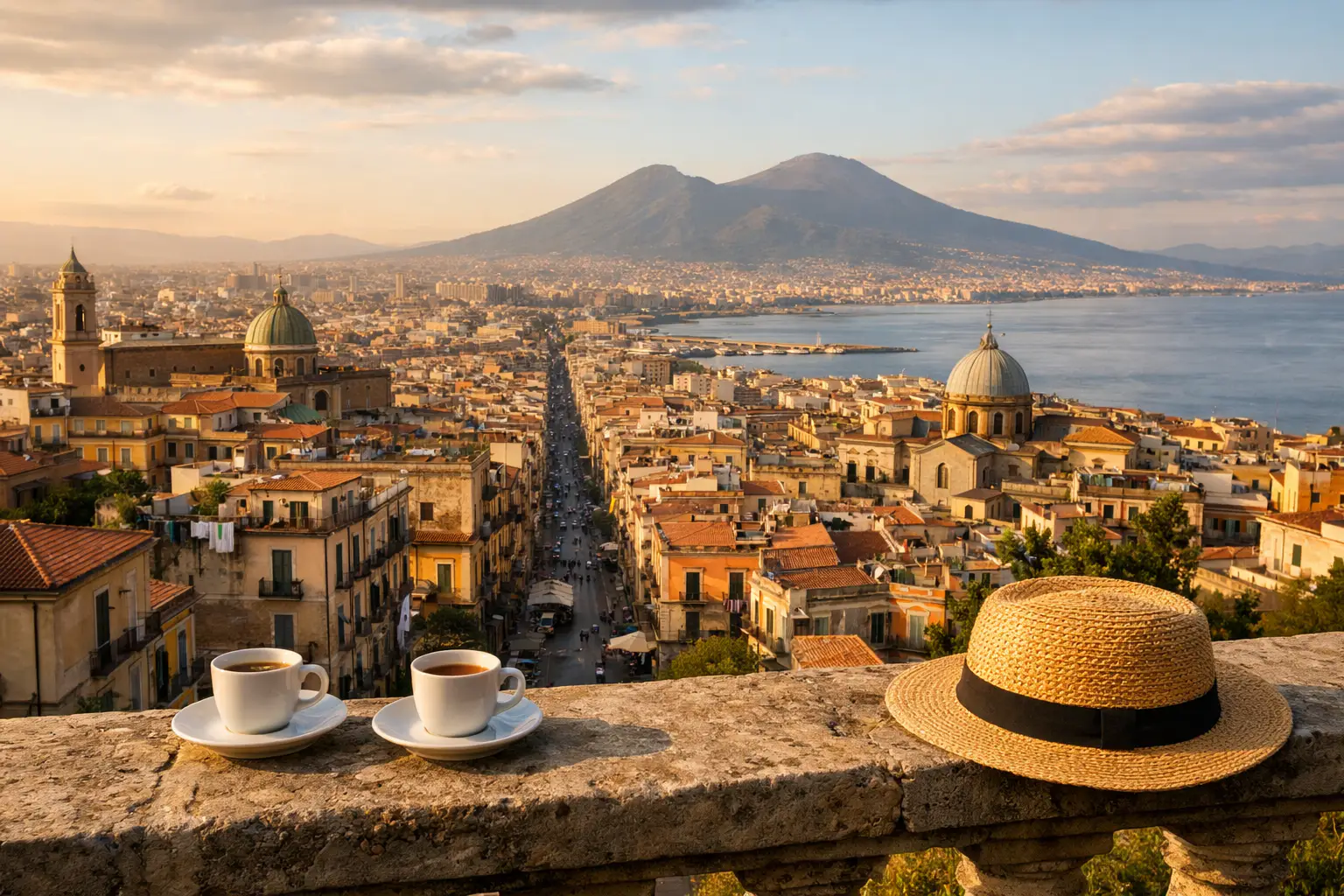
Three days to read the city before going beneath Vesuvius Naples cannot be reduced to pizza, hanging laundry and photogenic disorder. Its old centre layers Greek streets, Baroque churches, palaces, workshops, university and daily life; Toledo connects monumental power with the Spanish Quarter; the waterfront suddenly opens space; Vomero finally reveals the geography beneath Vesuvius.
A sound first trip therefore does not begin with an excursion. Give Naples two complete days, then choose between Pompeii, the archaeological museum and a third urban day. This pillar absorbs the useful former 48-hour itinerary without preserving its seasonal frame: museums, walkable districts, funiculars, waterfront, food and the ancient site now form an evergreen plan.
Naples requires attention, not permanent suspicion. Scooters, uneven paving, dense lanes and imperfect transport call for a few clear habits; they justify neither caricature nor carelessness. With a well-chosen base and grouped days, the city becomes much more legible than it appears at the first junction.
What is the best 3-day Naples itinerary?
Start in the historic centre because its streets require slow reading. Spaccanapoli is not one street but an axis through successive complexes: Gesù Nuovo, Santa Chiara, Sansevero, San Domenico, San Gregorio Armeno and the Duomo. Select two major interiors to preserve time for courtyards, façades and ordinary scenes.
Day two links Toledo and the Spanish Quarter with the Royal Palace, Galleria Umberto I and waterfront. It moves from a vertical, compressed city into the space of the bay. A funicular to Vomero can open the morning or close the afternoon according to visibility.
Day three requires an honest choice. Pompeii suits travellers prioritising archaeology and weather that permits hours outside. In strong rain, heavy heat or fatigue, stay in Naples: the archaeological museum, Capodimonte, catacombs, Sanità or a Procida crossing can fill a day without creating an inferior version of the trip.
Key decision: Pompeii takes a long half-day or a full day. Do not insert it between two Naples reservations.

Where to stay in Naples
The Historic Centre places Spaccanapoli, chapels and many restaurants at the door. It is the most immersive base, with noise, stairs, scooters and old buildings. Check floor, lift, insulation and the exact route from the metro. A lane quiet at midday may become active at night, and the reverse.
Toledo and the edges of the Spanish Quarter balance metro, centre, shopping, palaces and waterfront. Staying deep inside the Quarter suits visitors seeking its energy, less so light sleepers. Chiaia and Santa Lucia are more open, near the sea and often more expensive, while adding distance to the ancient centre.
Vomero provides views, regular streets and calmer nights. Funiculars connect it to the centre, although hours, works or closures can alter logistics. It suits travellers wanting a composed base after active days. The central station area simplifies Pompeii and departures, with immediate surroundings varying sharply by street.
Do not choose by district label alone. Examine the nearest station, gradient, late reception and entrance reviews. In Naples, a vertical hundred metres or an apartment staircase matters more than a neat circle on a map.
Historic Centre
The best access to ancient streets, with a denser atmosphere.
Chiaia or Santa Lucia
A more open base for waterfront walks and calmer evenings.

Arriving and moving around without a car
From the airport, buses, taxis and urban transport serve the centre according to hour and destination. A regulated taxi fare can be rational for a group or late arrival; confirm official conditions and destination before departure. From the central station, the metro reaches several bases, while crossing a major station square simply calls for normal attention to bags.
Metro, funiculars, buses and walking combine across the stay. Metro lines are useful, although interchanges and exits can surprise. Funiculars save a genuine climb to Vomero. Check tickets, validation and disruption with the local operator rather than relying on an old published fare.
In narrow lanes, keep to the side, look before crossing and do not assume that no pavement means no traffic. Scooters form part of mobility; the goal is to be predictable, not to freeze in the road. Handle phone and wallet as in any dense area without turning every street into a threat.
A car does not improve this itinerary. Traffic, restricted zones and parking add risk. The train or an organised transfer serves Pompeii. Assess ferries, buses and excursions to the Amalfi Coast separately by season and weather; do not automatically attach it to three full days.
Spaccanapoli, chapels, Duomo and archaeology museum
Begin in Piazza del Gesù Nuovo and study the façade before entering. Santa Chiara, its cloister and neighbouring church provide an early contrast between Gothic fabric, transformation and wartime memory. Continue towards San Domenico Maggiore while looking into open courtyards, portals and small businesses rather than running to the next queue.
Sansevero Chapel often requires booking and has strict photography rules. The Veiled Christ attracts attention, while the complete iconographic programme deserves reading. If no slot remains, substitute a church, Santa Chiara complex or an identified underground visit; do not pay any resale offer.
San Gregorio Armeno combines nativity workshops, souvenirs and crowds. Pass early, look beyond humorous figures towards the craft and continue to the Duomo. The Treasury Chapel of San Gennaro explains the city’s relationship with its patron saint; worship and ceremonies take priority over tourism.
Later, reach the National Archaeological Museum if Pompeii is planned. Frescoes, mosaics and objects restore ancient houses before the site visit. The museum is large: select collections connected with tomorrow and leave another wing for a future trip. Otherwise devote the afternoon to the Catacombs or Sanità with contextual guidance.

Vomero, Spanish Quarter, Toledo and waterfront
Climb to Vomero when visibility is useful. Castel Sant’Elmo provides a circular reading: Spaccanapoli cuts the urban fabric, the port fills the bay and Vesuvius dominates without always being visible. San Martino Charterhouse adds another view of Neapolitan history. Choose one when time is short.
Descend by funicular or stairs into the Spanish Quarter. It is a lived-in district, not a film studio. Watch traffic, ask before photographing a person or interior and do not reduce the area to football shrines. Façades, courtyards and level changes tell a broader social story.
Via Toledo leads to Galleria Umberto I, Teatro di San Carlo, the Royal Palace and Piazza del Plebiscito. Choose the palace or theatre if you want a major interior; both plus a museum would make the day incoherent. A coffee pause now allows the waterfront to receive genuine attention.
Continue through Santa Lucia to Castel dell’Ovo, checking access and works. The Lungomare provides space, Vesuvius views when the sky permits and an evening distinct from the old centre. Eat here for fish and the bay or return towards Toledo for a more urban table.

Visiting Pompeii from Naples
Leave early and verify train, entrance and closures. Stations containing the name Pompeii do not all serve the same gate. Carry water, sun or rain protection, stable shoes and a small list of priorities. The site is vast, exposed and more tiring than its proximity to Naples suggests.
Begin at the Forum to understand civic organisation, then select one district of houses, baths and businesses. Openings rotate to protect buildings, so a rigid route copied years earlier fails easily. Use the current official map and accept that a famous villa may be closed or distant.
A guided visit is useful when it explains construction, water, commerce, status and conservation, not only when it leads quickly to casts. After two or three guided hours, keep autonomous time or return before exhaustion. Adding Vesuvius requires coordinated transport and fitness; it is not the default.
When weather makes the site unpleasant, stay at the archaeology museum and explore Sanità, Capodimonte or the Catacombs. Pompeii should not become an obligation in driving rain. A successful trip can focus entirely on Naples and save archaeology for a longer stay.

What to eat in Naples and how to choose
Margherita and marinara are useful reference points, not a final examination. Sound dough, fast baking and legible ingredients matter more than a displayed world ranking. A queue may move quickly; waiting two hours is unnecessary when another serious pizzeria sits several streets away.
Explore pasta e patate, genovese, ragù, frittatina, cuoppo, vegetables, fish and pastries. Sfogliatella riccia and frolla offer different textures; babà is best moist without being drowned. Markets reveal ingredients, but respect work and ask before photographing closely.
Coffee is often taken quickly at the counter. Understand the price before sitting, particularly in a monumental area. For seafood restaurants, ask weight and price when fish is sold by the kilo. A short seasonal card is more convincing than a catalogue of generic Italian dishes.
Safety, scooters and respecting neighbourhoods
Use big-city habits: closed bag in transport, deliberate phone handling near doors, hidden wallet and reliable cash machines. Opportunistic theft exists without describing the whole experience. Constant fear can distract from genuine risks such as traffic and uneven steps.
In the centre, share space with residents, deliveries and two-wheelers. Do not block a lane for a photograph or enter a private courtyard. The Spanish Quarter and Sanità are neither inherently dangerous attractions nor rule-free scenery. A local tour can add context while supporting district organisations.
At night, select a simple known return. An occasional taxi is rational after dinner far from the hotel. During demonstrations, matches or religious events, follow local instructions and alter the route rather than forcing a passage.
How much should you budget for 3 days?
Accommodation and the excursion create the difference between lean and comfortable trips. Walking, simple meals and many churches keep spending down. Pompeii, several museums, private transfer and a seafood dinner increase it quickly without all being necessary together.
Rates vary with weekends, events and season. Book a well-connected room rather than a very cheap address requiring repeated transfers. For Pompeii, compare independent train and ticket with an excursion that is genuinely guided; do not pay a premium only for transport without interpretation.
These ranges exclude flights, assume three nights and a shared double room. Add city tax, luggage storage, transport margin and current admission prices. Food spending remains particularly adaptable without lowering quality.
| Per person | Lean | Balanced | Comfort |
|---|---|---|---|
| 3 nights, shared double room | €90–190 | €200–370 | €390–700 |
| Food and drink | €65–110 | €120–210 | €230–390 |
| Transport and airport | €20–45 | €45–90 | €100–220 |
| Visits and Pompeii | €35–70 | €80–160 | €180–330 |
| Total excluding flights | €210–415 | €445–830 | €900–1,640 |
When to visit Naples and Pompeii
Spring and autumn generally suit walking and Pompeii, with possible rain and strong holiday demand. Keep the archaeology museum as a local alternative when the outdoor site turns unpleasant. Wind can suspend sea links, often mattering more than the listed temperature.
In summer, Pompeii and mineral streets require an early start, water, a hat and pauses. Put museums or churches in the hottest hours. Naples remains lively in winter and major sites may breathe, although short days and rain limit coastal extensions.
San Gennaro celebrations, Christmas, matches and holiday weekends change circulation and atmosphere. They can enrich a trip when accommodation is secured and the route remains flexible. Check weather, transport and official pages on the eve of Pompeii.

Nine Naples mistakes to avoid
Going to Pompeii on the first morning removes Naples’ introduction. Adding the Amalfi Coast, Capri and Vesuvius within three days turns the trip into connections. Staying far from a station for a small saving complicates every return.
Reducing the centre to Spaccanapoli misses the bay, Vomero and modern districts. Photographing residents and shrines without asking turns a city into scenery. Waiting two hours for one famous pizza is unnecessary for eating well.
Driving in the centre adds risk without benefit. Underestimating paving, stairs and heat creates exhaustion before day three. Finally, repeating that Naples is dangerous while handling a phone carelessly in a crowd mixes caricature with imprudence.
FAQ: visiting Naples in 3 days
Yes for two city days plus Pompeii, or three complete Naples days. They are not enough to add Capri and the full Amalfi Coast.
No. Toledo or the Historic Centre remain practical via metro. Choose the station area only when departures dominate the trip.
It calls for normal big-city precautions and particular attention to traffic. Avoid generalisations and keep belongings closed.
The site provides ancient urban space; the museum provides objects, frescoes and mosaics. Ideally they complement each other.
Historic Centre for immersion, Toledo for balance, Chiaia for the sea and Vomero for calm and views.
Other useful LowCostWings guides
For a car-free regional extension, compare the merits of Bari, Lecce, Monopoli and Polignano in our Puglia accommodation guide. For a more classical monumental contrast, our 3-day Rome guide follows a different urban logic.
Naples improves when one extra excursion leaves the plan
Give full days to streets, museums, viewpoints and the bay, then choose Pompeii deliberately. The city does not become simple, but it becomes readable — and its energy changes from a cliché into a geography.
The night before each day, check only what can genuinely alter it: museum closure, funicular disruption, rain, wind or an event affecting streets. Keep the neighbourhood order intact and change the interior choice. That small discipline preserves the city’s rhythm without turning the visit into a rigid operation. It also leaves space for the unplanned café, courtyard or conversation that often explains Naples better than one more scheduled stop.
Transparency: some booking links are affiliate links. Using them may support LowCostWings without changing the displayed price. Recommendations remain based on trip value.