Where to Stay in Puglia Without a Car: Bari, Lecce, Monopoli or Polignano?
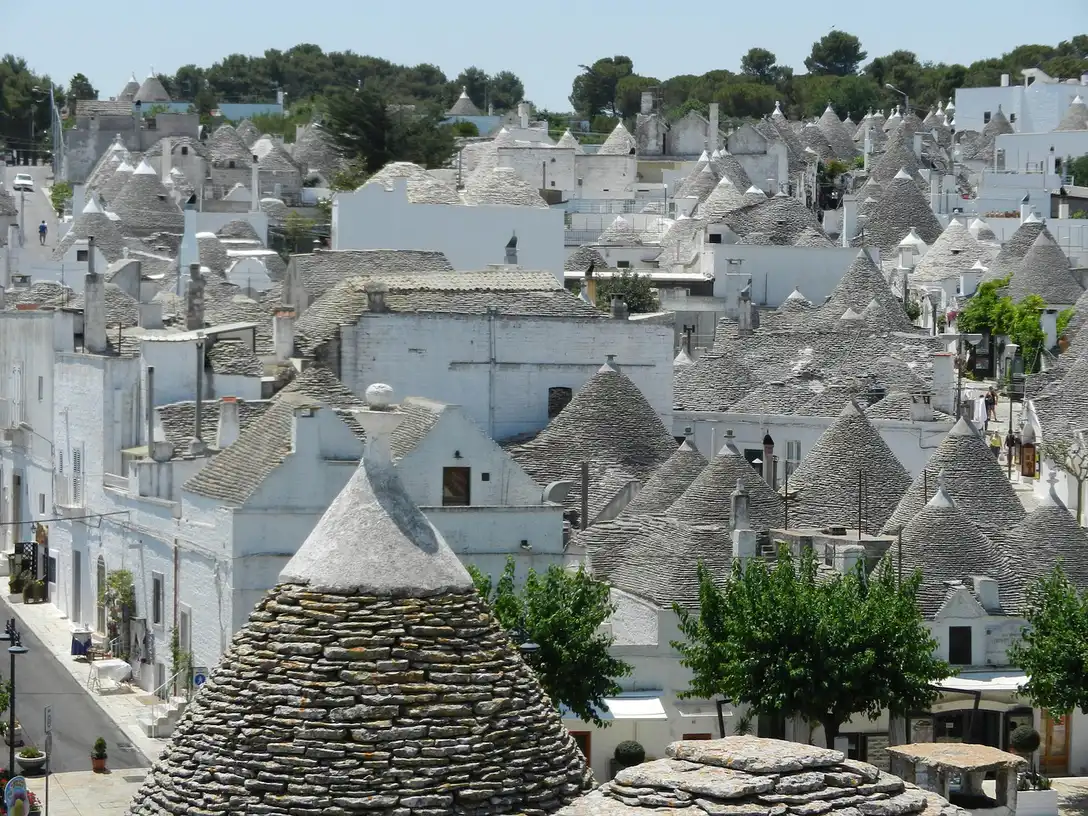
Choosing where to stay in Puglia without a car is not a matter of finding the prettiest town in a photograph. It is about choosing the network you want to belong to. Bari opens the door to Matera and the north of the region; Lecce places you inside the Salento; Monopoli lets you walk home from the sea while staying on the main railway; Polignano a Mare delivers the most dramatic setting, but also the least space and, frequently, the tightest prices.
The same coastal line serves all four towns, which makes them look interchangeable on a map. They are not. An extra half-hour on the train every morning becomes noticeable during a short break. Accommodation sold as being “near” a town can require a taxi after the last bus. A romantic room in an old quarter may be hard work if you are carrying a suitcase up steps or walking twenty-five minutes to the station.
This guide therefore makes a decision based on the trip you will actually take: its length, airport, beaches, day trips and evening rhythm. There is no perfect base for everything. The aim is to find the place whose compromises matter least to you.
Which Puglia base should you choose without a car?
Choose Bari for a first short trip, a flight into Bari airport, Matera or the widest range of direct trains. Choose Lecce when the Salento, Baroque architecture and slower days define your plans. Choose Monopoli to alternate swimming, dinner and rail day trips without giving up the services of a genuine town. Choose Polignano for two or three romantic nights, not as the universal base for a whole week.
Our choice for five nights: Monopoli if the sea genuinely matters; Bari if Matera and logistics come first. For seven nights or more, splitting the stay between Bari and Lecce is usually wiser than forcing one base to cover the entire region.
The railway corridor that makes a car-free trip work
The useful backbone follows the Adriatic coast: Bari, Polignano a Mare, Monopoli, Ostuni, Brindisi and Lecce. Regional trains make these places considerably easier than inland villages. Trenitalia markets the route as the Salento Line and explains that some connecting buses to beaches or Otranto are seasonal. A service visible in July should not be assumed to run in November.
A station alone is not enough; what lies between the platform and your room matters just as much. Bari Centrale sits between the modern centre and the old town. In Monopoli and Polignano, a carefully chosen fifteen-minute walk can place you close to both the station and the historic heart. Lecce’s Baroque centre begins reasonably near the railway, but an address far to the east adds more walking. Ostuni station is well below the hill town: it can be a day trip, yet it is not as seamless a base as its name on the rail map suggests.
Practical rule: check the final return for the exact day of every outing and leave a margin. Frequencies can fall on Sundays and outside summer; beach buses are more variable than the coastal railway.
Schedules and linked services change. Review the official Salento Line page and search every journey in the Trenitalia app before committing to non-refundable accommodation.

Staying in Bari: choose logistics and day trips
Bari rewards travellers who like early starts and frequent changes of scenery. From Bari Centrale, Monopoli, Polignano and Lecce can be reached without rebuilding every day around a coach. Matera is also a credible outing, whether by an organised transfer or whatever public connections suit your date. In the evening, Bari Vecchia is more than a waiting room for the next train: its lanes, basilicas, focaccia, seafront walks and local life give you a reason to come home.
The compromise is the beach experience. Bari has Pane e Pomodoro beach and a long waterfront, but neither reproduces the cove at Polignano nor Monopoli’s small town beaches. If you dream of swimming below the old town every morning, Bari is functional rather than emotional. If you land late, fly home early or want to combine Matera and two coastal towns in four nights, that functionality is exactly the point.
Murat, between the station and the old town, is the easiest area. Madonnella feels more residential in places and gives you a pleasant stretch of waterfront. Bari Vecchia has atmosphere, but you should check access, steps and street noise. We would avoid an address beyond the ring road, or one labelled “Bari” when a bus is required for every trip.
Murat
The best balance of Bari Centrale, restaurants and the old town. Aim to stay within a ten- to fifteen-minute walk of the station.
Madonnella
Calmer on some streets and enjoyable in the evening, but check the walk to the station if you expect to take several day trips.
Read our detailed comparison of Bari and Lecce for a budget city break before deciding, then use the French-language Matera from Bari without a car guide for the excursion logistics currently published on the English site.

Staying in Lecce: choose heritage and slower evenings
Lecce works in the opposite way to Bari. You sacrifice some connections but gain pleasure from staying put. The pale stone shifts colour in the late light, squares become lively after the heat and the historic centre is broad enough not to collapse into one tourist street. A day without an excursion never feels wasted. That matters when wind, rain or industrial action unsettles a plan.
The city becomes especially relevant for Otranto, Brindisi and Salento destinations served at the time of your visit. It is far less sensible for repeated outings to Polignano and Bari. Lecce therefore suits a trip that commits to the south of the region, not one that tries to tick the entire coastline from Bari to Otranto. Without a car, the famous Ionian beaches require more planning: summer connections do not describe the rest of the year.
Stay within or just outside the historic gates so that the railway remains walkable. Around Porta San Biagio or on the axis towards Piazza Sant’Oronzo, you retain Lecce’s atmosphere without complicating departure days. An isolated masseria is not an authentic experience when every dinner demands a taxi.

Staying in Monopoli: sea, a real town and the railway
Monopoli is the most balanced answer for many travellers. Its old harbour and lanes provide the coastal setting people hope to find, yet the town does not vanish when day visitors leave. You can have dinner, buy groceries, walk home and catch a train the next morning. Bari, Polignano and Ostuni remain practical without turning each outing into a logistical exercise.
The difference from Polignano is space. Monopoli has several places to reach the water around town and more streets in which to find a room or a restaurant. The best-known beaches farther south, around Capitolo, are not all walkable; linked services are seasonal. “Staying by the sea” and “reaching every postcard beach effortlessly” are different promises.
Aim for the triangle between the station, modern centre and old town. An address inside the historic core creates memorable evenings but may be noisy in summer; a room slightly back towards the station simplifies luggage and early departures. Once the walk to the station exceeds fifteen or twenty minutes, the railway advantage begins to fade.

Staying in Polignano a Mare: magnificent, not always rational
Polignano is the town many people picture before reaching Puglia: limestone cliffs, balconies above the Adriatic, white lanes and Lama Monachile framed by houses. Sleeping here lets you rediscover that setting early in the morning and after the day trippers have gone. For an anniversary, two nights as a couple or a stop between Bari and Monopoli, that quieter relationship with the place has real value.
The problem is not its railway, which is useful, but concentration. The accommodation market is smaller, sea-view rooms command a premium and the compact beach becomes crowded in high season. After two evenings, some travellers find less variety than in Monopoli. The old centre can be awkward with luggage, while “sea view” may also mean wind, steps or a restaurant below the window.
We would choose Polignano as a deliberate treat, not a disguised saving. Compare the total price with Monopoli, then ask how often you will actually use the sunrise or sunset view. If the answer is once, a train day trip will probably be enough.

The decision table
Swipe the table horizontally on mobile.
| Base | Best for | Real drawback | Suggested stay | Logical airport |
|---|---|---|---|---|
| Bari | Matera, late arrivals, broad rail network | Weaker beach experience | 3–5 nights | Bari |
| Lecce | Salento, heritage, slower rhythm | Far from the north | 3–5 nights | Brindisi |
| Monopoli | Sea + train + lively evenings | Southern beaches may need seasonal links | 4–6 nights | Bari |
| Polignano | Couples, views, short stays | Price and limited choice | 2–3 nights | Bari |
Three car-free itineraries that avoid backtracking
One base in Bari
Spend one day in Bari, one in Matera, one around Monopoli with Polignano as an option, then keep the final day for a shorter outing or uncertain weather. This version minimises hotel changes and suits flights through Bari. Adding Lecce usually makes it too ambitious: nearly three hours on transport for one Baroque day is not necessarily the best use of a short break.
Live by the coast in Monopoli
Settle in Monopoli, explore the town and accessible swimming spots, take an early train to Bari one day and choose Ostuni or Lecce on another. Polignano fits into half a day without sacrificing an evening. The approach works particularly well from May to September, provided you check beach connections and resist booking a long excursion every day.
Bari + Lecce as complementary bases
Spend three or four nights in Bari, then move to Lecce. Visit Matera and the central coast from the north, followed by Otranto and the Salento from the south. One hotel move saves several hours of repeated travel. Monopoli can be a day trip or an intermediate night if the sea is your priority.

Budget: compare the room and the journeys it creates
A nightly price does not tell you what a base costs. Add the airport transfer, daily tickets, taxis created by a peripheral address and time lost. A room in Bari that costs ten euros more may be economically better if it removes two private transfers. Paying for a view in Polignano is not irrational either when that view is the central experience of the trip.
| Cost per person | Lean | Balanced | Comfort |
|---|---|---|---|
| 5 nights, shared double room | €175–275 | €275–475 | €475–800 |
| Trains and local transport | €35–60 | €55–90 | €85–150 |
| Food | €125–185 | €190–300 | €300–475 |
| Visits and one excursion | €25–60 | €60–140 | €140–260 |
| Total before flights | €360–580 | €580–1,005 | €1,000–1,685 |
These ranges frame a search; they are not promised prices. August, public holidays and weekends can transform the accommodation market. Search your dates first, then compare two bases using the same cancellation terms and comfort level.
Summer, spring or winter: one base does not always win
In July and August, Monopoli and Polignano give immediate access to the sea, but prices, heat and crowds rise. Bari may feel less romantic while offering more options to eat, move and change plans. In spring and early autumn, Monopoli often reaches its best balance. In winter, Bari and Lecce regain the advantage: both have an independent urban life while smaller coastal places slow down.
Do not build an off-season week around a summer beach shuttle. Choose an address that remains enjoyable in rain: a lived-in centre, open restaurants and a station within walking distance. Puglia is milder than much of Europe, but that does not make every month a swimming holiday.
Five car-free traps to avoid
Choosing an isolated masseria for the price
Without a vehicle, the saving soon disappears into taxis and timetable dependence. Keep rural accommodation for a driving trip or one with clearly organised transfers.
Treating Ostuni as a town-centre station
The white city rises above the plain and its station is several kilometres below it. Confirm the linking bus before placing Ostuni inside a tight day.
Booking Polignano without checking access
Steps and pedestrian lanes matter to non-drivers as well: they determine how easily you can arrive with luggage.
Planning Matera from Lecce on a short day
The map hides connections. Matera belongs naturally with Bari; Otranto with Lecce. Planning in zones produces a better trip.
Changing hotels every night
Distances look short, yet check-out, luggage and waiting consume the coolest hours. Two bases are more than enough for one week.
FAQ: where to stay in Puglia without a car
Bari for four nights, Matera or a late arrival. Monopoli for five nights or more when the sea should be part of everyday life.
It can be reached, but is less straightforward than the coastal corridor and requires a date-specific timetable check. An organised outing from Bari may be worthwhile when it combines transport with useful time on site.
Brindisi is usually the logical geographical choice. Compare the whole journey, however: a much cheaper flight to Bari can remain competitive after the ground connection.
Not for a rest-focused trip with special accommodation, but often for an exploratory journey. Monopoli gives you more space and services while remaining very close.
Ticket rules differ by train category. Search every service in the official app and follow the validation requirements of the fare you select.
What to verify before departure
Use Trenitalia for schedules and engineering work, airport sites for transfers and local tourism offices for seasonal shuttles. Journey times, budgets and services in this guide are editorial planning ranges and must be checked against the dates of your stay.
The best base is the one that removes your longest journeys
Bari wins on its network, Lecce on cultural depth, Monopoli on balance and Polignano on emotion. Circle two essential outings first, then choose the town that joins them without sacrificing every evening. It is less spectacular than a universal ranking, but far more reliable for a successful car-free Puglia trip.
Transparency: some booking links are affiliate links. Using them may support LowCostWings without changing the displayed price. Recommendations remain based on route logic rather than commission.