Andalusia by Train Without a Car: Seville, Córdoba & Granada in 7 Days
Travel Andalusia without a car: a seven-day Seville–Cordoba–Granada rail itinerary, six nights, hotel areas, Alhambra tickets and real budget planning.
Andalusia · Seville → Cordoba → Granada · seven days by rail
Three cities, three very different moods: Seville's slow evenings beside the Guadalquivir, Cordoba's arcaded Mosque-Cathedral, and Granada's Alhambra looking down over the Albaicín. You can see all three with just two intercity train journeys and no rental car. The trick is not the rail network. It is giving each city enough time, booking the Alhambra sensibly, and sleeping in places where a suitcase won't become a burden.
Our preferred balance is three nights in Seville, one in Cordoba and two in Granada: time to enjoy the cities without constantly moving luggage. The journey uses regular intercity trains booked individually, not the luxury Al Ándalus tourist train. Staying overnight in Cordoba makes the stop feel like a city break rather than a rushed transfer, while two nights in Granada protect a full day for the Alhambra.
The short answer: three cities, six nights
Seville: three nights. Cordoba: one night. Granada: two nights. Arrive in Seville on day 1, take the train to Cordoba on day 4, continue to Granada on day 5 and leave on day 7. This leaves two full sightseeing days in Seville and one protected day for the Alhambra. It is ideal for a first independent trip, provided the flight home works from Granada or Malaga—or you allow for a return train.
This itinerary works in several seasons. Keep the three-night, one-night and two-night split, then choose dates around your flights and your Alhambra booking.
Start by comparing Seville accommodation for the first three nights. Your base there will shape how much walking and local transport the first half of the trip involves. We'll handle the other cities on their own dates below.
In this guide
- At a glance
- Day-by-day route
- Trains and stations
- Seville: three nights
- Cordoba: one night
- Granada: two nights
- Where to stay
- Budget for two
- Booking priorities
- Variations and pitfalls
- FAQ
Your seven-day Andalusia itinerary, day by day
The wrong way to do this is to add Malaga, Ronda and Cádiz to the same six nights. Those are excellent trips in their own right, but they turn your week into hotel check-ins and station waits. Here's a route that leaves room for coffee breaks, a long lunch and an unplanned street you actually want to explore.
| Day | What to do | Sleep in |
|---|---|---|
| 1 | Arrive in Seville, check in, wander Santa Cruz or Alameda | Seville |
| 2 | Timed Royal Alcázar entry, cathedral and Giralda, old-town evening | Seville |
| 3 | Plaza de España, María Luisa Park, Guadalquivir and Triana | Seville |
| 4 | Morning train to Cordoba, Mosque-Cathedral, Jewish Quarter, Roman bridge | Cordoba |
| 5 | Relaxed Cordoba morning, train to Granada, Albaicín and tapas | Granada |
| 6 | Alhambra with a reserved Nasrid Palaces time; viewpoint at sunset | Granada |
| 7 | Easy morning and your onward journey or flight home | — |
The overnight stop in Cordoba is deliberate. You can see the Mosque-Cathedral on a day trip from Seville, but an evening in the old town—after many day visitors have left—is an experience worth the extra check-in if your mobility allows it.
Train routes, travel times and stations
Our seven-day route requires just two intercity journeys: Sevilla-Santa Justa → Córdoba, then Córdoba → Granada. Book the legs separately and choose a morning train to Cordoba and a late-morning train towards Granada if the schedules work for you. Depending on the service and travel date, options may be direct or require a connection. Match the station and arrival time to the rest of your day's plans.
| Journey | Typical planning time | How it fits |
|---|---|---|
| Seville → Cordoba | About 45 minutes on fast services | Morning travel leaves time for Cordoba |
| Cordoba → Granada | Roughly 1 hr 40 min–2 hr | Late-morning train protects the afternoon |
| Granada → Seville | Roughly 2 hr 30 min–3 hr depending on service | Only if flying home from Seville; leave a generous margin |
The travel times above are estimates, not confirmed timetables for your dates. Check the actual departures on Renfe before committing to a timed monument entry. Fares can change with the train type, day, booking conditions and how far ahead you buy; the cheapest advertised ticket may not suit your travel day.
How far are the stations from the centres?
Sevilla-Santa Justa is convenient for arriving but not directly beside the Cathedral; allow time for a longer walk, local bus or a short taxi ride. Córdoba station lies north of the historic centre, within a manageable walk of many hotels and about twenty to thirty minutes on foot from the Mosque-Cathedral. Granada station connects to local transport, but Granada's steeper old districts are not luggage-friendly.
For a no-car itinerary, pay attention to a hotel's left-luggage facilities. Arriving at 11am is only useful if you can drop your suitcase before exploring. Avoid hauling luggage up the Albaicín or to the Alhambra: use local transport and choose your base around the ground you'll actually cover.

Fly into Seville and out of Granada—or Malaga?
An open-jaw flight, arriving in Seville and flying home from Granada or Malaga, often fits the route better than returning to your starting point. Yet flight frequency and prices vary dramatically by home airport. Compare the full price of an extra train and transfer before deciding that a cheaper return flight from Seville saves money. Malaga can work as an airport gateway from Granada, but don't treat it as a fourth sightseeing city squeezed into day 7.
Days 1–3: why Seville deserves three nights
Three nights in Seville give you two full days. Keep arrival day free of timed tickets: getting from the airport or station, checking in and finding your bearings can take longer than expected. Settle into Santa Cruz or walk towards the riverside, then save the major monuments for tomorrow.

Day 2: the Royal Alcázar and the Cathedral
The Royal Alcázar of Seville is worth a proper morning. Its public general admission is currently listed at €15.50, with seasonal opening hours and potentially changing future prices. Use the official Alcázar visitor page to select a timed entry, and allow time for the gardens as well as the palace rooms. Pair it with the Cathedral and Giralda if you have the energy, but break for lunch rather than lining up one timed ticket immediately after another.
If you enjoy guided interpretation, a well-chosen small tour can justify its cost. But first check what is included: a guided walking tour of central Seville is not necessarily a ticketed Royal Alcázar entry. The baseline itinerary works without purchasing extra tours.
Day 3: park, river and Triana
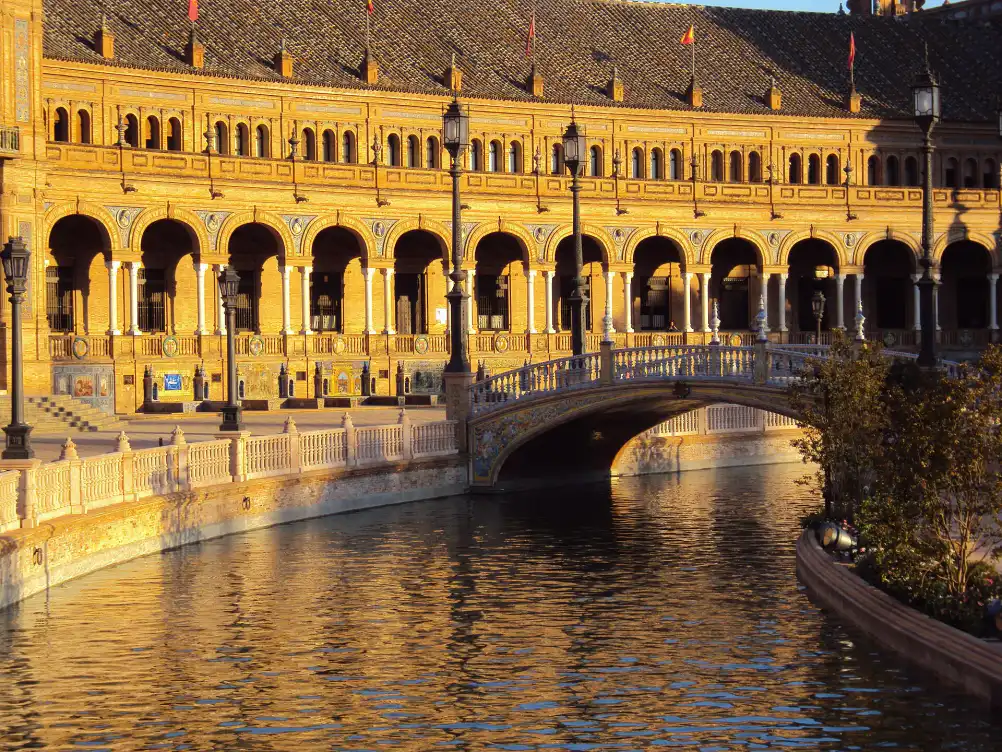
Walk through María Luisa Park and along the tiled curves of Plaza de España in the morning. Later, follow the Guadalquivir toward Triana, with its ceramic tradition, market and neighbourhood bars. It is a day of slower discoveries, not an excuse to schedule every paid attraction on the map.
For more local options and different walks, see our existing Seville three-day city guide.
Day 4: Cordoba, the stop you shouldn't rush
Take a morning train from Seville and head toward the Jewish Quarter after dropping your bags. The centre is compact enough to explore on foot, with a beautiful contrast between quiet lanes and the vast Mosque-Cathedral. Don't treat the building merely as an Instagram backdrop: successive periods of Islamic and Christian history remain visible within its architecture.
Current general admission is €15, according to the official Mosque-Cathedral site. There is a conditional early-morning free-visit window on some weekdays, with exceptions for religious celebrations; check the actual day rather than relying on it for your budget. After the visit, explore the Judería and cross the Roman Bridge when the light softens.


On day 5, stop for a slow coffee and perhaps a courtyard or the Palacio de Viana before continuing to Granada. Add a second night in Cordoba only if the city's history or patios are your main passion; don't insert a seventh night without revising flights and the budget accordingly.
Days 5–7: protect your Granada time
Arriving in Granada on day five, save the Alhambra for the following day. Instead, wander around the Cathedral and Plaza Nueva before heading into the Albaicín for tapas and its views. The slopes and cobbled lanes are part of the charm, but a hotel high above the centre is not always fun with luggage.

Day 6: the Alhambra and Nasrid Palaces
Make the Alhambra your first time-sensitive reservation. Its Nasrid Palaces require a specific entry slot, and you'll need the original identity document specified in your booking. For independent visitors, the Alhambra General ticket currently costs €22.27 through the official ticket office, including the Nasrid Palaces, Alcazaba, Partal and Generalife. This is a current reference price, not a confirmed future rate; standard admission usually cannot be changed or refunded.
If you want the architecture and history explained in context, we recommend this guided Alhambra visit with Nasrid Palaces admission included. The tour also covers the Alcazaba and Generalife and offers English-language options. It costs more than a basic entry ticket, so check the exact tour language, Nasrid entry time and full price for your dates. Travelling on a tighter budget? The official general ticket is the straightforward self-guided option.
Allow most of the day, rather than treating the Alhambra as a two-hour tick-box visit. Pace yourself in the gardens and use a local bus if the uphill approach feels uncomfortable. A visit to the Mirador de San Nicolás later in the day makes a memorable ending, though it can become crowded at sunset.

Day 7 is deliberately light: breakfast, a final walk and onward travel. You can always add Sierra Nevada or white villages on a longer itinerary, but they deserve separate planning and often less straightforward public transport. Our two days in Granada guide offers additional city options.
Where to stay in Seville, Cordoba and Granada
Convenient train stations and easy walking routes matter more than a hotel's straight-line distance from a monument. That is especially true for Cordoba's one-night stop and Granada's steep streets. The six hotels below suit different priorities; compare prices and availability for your own dates. Accommodation searches may open with example dates, so change them to your own trip before comparing final totals.
Seville: station convenience or atmospheric Arenal?
The Nervión / Santa Justa area is practical when you arrive by train or need to depart quickly on day 4. Ibis Styles Sevilla City Santa Justa offers an efficient base near the station, trading immediate access to the old town's lanes for easier luggage handling and transfers. If you prefer a more central riverside setting, Hotel Bécquer is a convincing Arenal option for walking into historic Seville and across to the Guadalquivir, provided you plan your taxi or bus back to Santa Justa.
Cordoba: one-night logistics count
Hotel Selu is especially sensible for a single night because both the rail station and the Mosque-Cathedral are a manageable walk away. If historical atmosphere outranks station convenience, Eurostars Patios de Córdoba offers characterful Andalusian courtyards in the old centre; you may prefer a short taxi ride with heavy bags.
For your one-night stay, compare Cordoba accommodation for your dates, then compare map location, final cost and cancellation terms. Avoid comparing teaser rates for different periods.
Granada: lower town or the Genil side
Near Plaza Nueva, Monjas del Carmen Hotel makes it easy to explore the centre and connect to buses uphill toward the Alhambra. It suits travellers who prioritise evening restaurants and walkability; some nearby streets can be lively. For a little more separation from the busiest centre, Hotel Macià Monasterio de los Basilios by the Genil area has convenient bus connections and stays within reach of the Cathedral.
Compare Granada rooms for the final two nights and check elevation as well as distance. An apartment listed as 'close to the Alhambra' may still involve a strenuous uphill walk, and not every attractive Albaicín property is easy to reach with cases.
What does seven days in Andalusia by train cost?
The figures below show what two adults sharing one room could spend over six nights, excluding the journey to Spain. They compare two comfort levels, not bookable offers from Renfe or individual hotels. Keep all six nights and both trains in the calculation before judging which option costs less.
| Cost for two people | Lower-cost scenario | More comfortable |
|---|---|---|
| Hotels: Seville 3 + Cordoba 1 + Granada 2 | €505 | €825 |
| Meals over seven days | €350 | €490 |
| Two intercity train journeys | €140 | €240 |
| Alcázar + Mezquita + Alhambra (current published fees × 2) | €105.54 | €105.54 |
| Local transport / transfers and small buffer | €55 | €90 |
| Total for two | ≈ €1,160 | ≈ €1,750 |
| Per person | ≈ €580 | ≈ €875 |
The hotel (€505/€825) and train (€140/€240) figures are budget assumptions, not quoted fares. The €105.54 monument line uses October 2026 general-admission prices for two adults at the Alcázar, Mosque-Cathedral and Alhambra. The guided Alhambra option presented earlier increases the sightseeing total; use the actual checkout price instead of the baseline Alhambra entry fee. Flights to Spain, Seville Cathedral admission, shows, drinks and optional additional airport transfers are excluded.
If you want to save money, the first rule is not necessarily to book a cheaper but remote hotel. Losing an hour each day and paying for extra rides can wipe out the saving. The Alhambra is the one big sightseeing expense this itinerary is built around; secondary admissions are much easier to drop.
The booking order that makes this itinerary work
- Compare incoming and outgoing flights. Seville inbound and Granada or Malaga outbound may avoid backtracking. Try our flight comparison tool, including transfers, baggage and realistic departure times.
- Secure a Nasrid Palaces entry time. This is the most time-sensitive booking: it can come with a standard Alhambra ticket or a guided tour that explicitly includes palace admission. Do not book the rest of the trip around an unconfirmed slot.
- Compare all three accommodation windows separately. Keep three nights in Seville, one in Cordoba and two in Granada, then choose the actual dates for each stop. That way you avoid booking a seventh night by accident.
- Buy the two Renfe train tickets. Check actual station names, times, class, refund rules and luggage conditions. Don't infer future schedules from a sample Tuesday train.
- Reserve the Alcázar and Mosque-Cathedral. Check official opening hours for the exact day and carry your Alhambra identity documents.
Secure an option with a confirmed Nasrid Palaces time first, whether that's a standard admission ticket or a guided visit with entry included. The self-guided ticket makes most sense for a tight budget; the guided option in our Granada section is worthwhile if you want an expert explanation. Check the chosen language, total cost and cancellation conditions before paying.
Route variations, seasons and common mistakes
Could you do Cordoba as a day trip?
Yes. If changing hotels is difficult, spend four nights in Seville and make Cordoba a return day trip, followed by two nights in Granada. You lose the evening atmosphere and add train travel, but you avoid packing and unpacking for a single night. With six nights and a first-time visit, we prefer the one-night stop.
Do you need to add Malaga?
Only as an airport gateway if your flights require it. Adding it as a fourth sightseeing stop takes meaningful time away from Seville or Granada. Similarly, Ronda and the white villages deserve another trip or a longer holiday rather than being an afterthought between booked monument slots.
Best time to travel?
Spring and autumn are usually more comfortable for city walking than the height of Andalusian summer, particularly in Seville and Cordoba. Watch for Easter Holy Week, the Seville April Fair, Cordoba's patio festivities and other major events, which can raise room rates. Winter may be cheaper but brings shorter days and changeable weather.
Seven mistakes to avoid
- Booking all six nights in Seville and expecting effortless day trips.
- Putting an uphill Albaicín apartment ahead of luggage access.
- Confirming the hotel before finding a suitable Nasrid Palaces slot.
- Allowing no margin between arrival in Granada and the Alhambra.
- Confusing scheduled intercity services with the luxury Al Ándalus train.
- Comparing hotel or rail offers for different dates.
- Flying home from Seville without budgeting the return journey from Granada.
Frequently asked questions
Are seven days enough for Seville, Cordoba and Granada?
Yes, for a first visit with six nights: three in Seville, one in Cordoba and two in Granada. If you have seven nights rather than six, you can add breathing room—but be clear that it is now an eight-day travel span depending on arrival and departure.
Can you travel around Andalusia by train without a car?
Yes, this three-city rail corridor is well suited to car-free travel. Local buses, trams, occasional taxis and walking handle the city visits. The exact rail timetable still needs confirming for your dates.
Which route direction is best?
Choose according to your flights and Alhambra availability. Seville → Cordoba → Granada works neatly for arriving in Seville and leaving from Granada or Malaga. The reverse can work just as well.
Is a night in Cordoba worth it?
Usually, yes: you can enjoy the Mosque-Cathedral, Jewish Quarter and Roman Bridge without rushing off on the next train. Skip the overnight stop if reducing hotel changes is the higher priority.
How much are train tickets?
There is no defensible universal ticket price for both legs. Operator, train type, booking conditions, season and date all matter. Our budget includes indicative envelopes, not live fare quotes.
When should I book the Alhambra?
As early as practical, especially in spring and autumn. The Nasrid Palaces entry is timed and tied to the visitor, so booking it is more important than leaving minor sightseeing decisions until arrival.
Some accommodation and activity links are affiliate links. If you book through them, LowCostWings may receive a commission at no extra cost to you. Always check prices, entry times and conditions for your travel dates.