Austria by Train: Vienna, Salzburg & Innsbruck in 7 Days
Plan 7 days in Austria by train: Vienna, Salzburg and Innsbruck, direct journeys, station-friendly hotels, ticket strategy, budget and car-free tips.
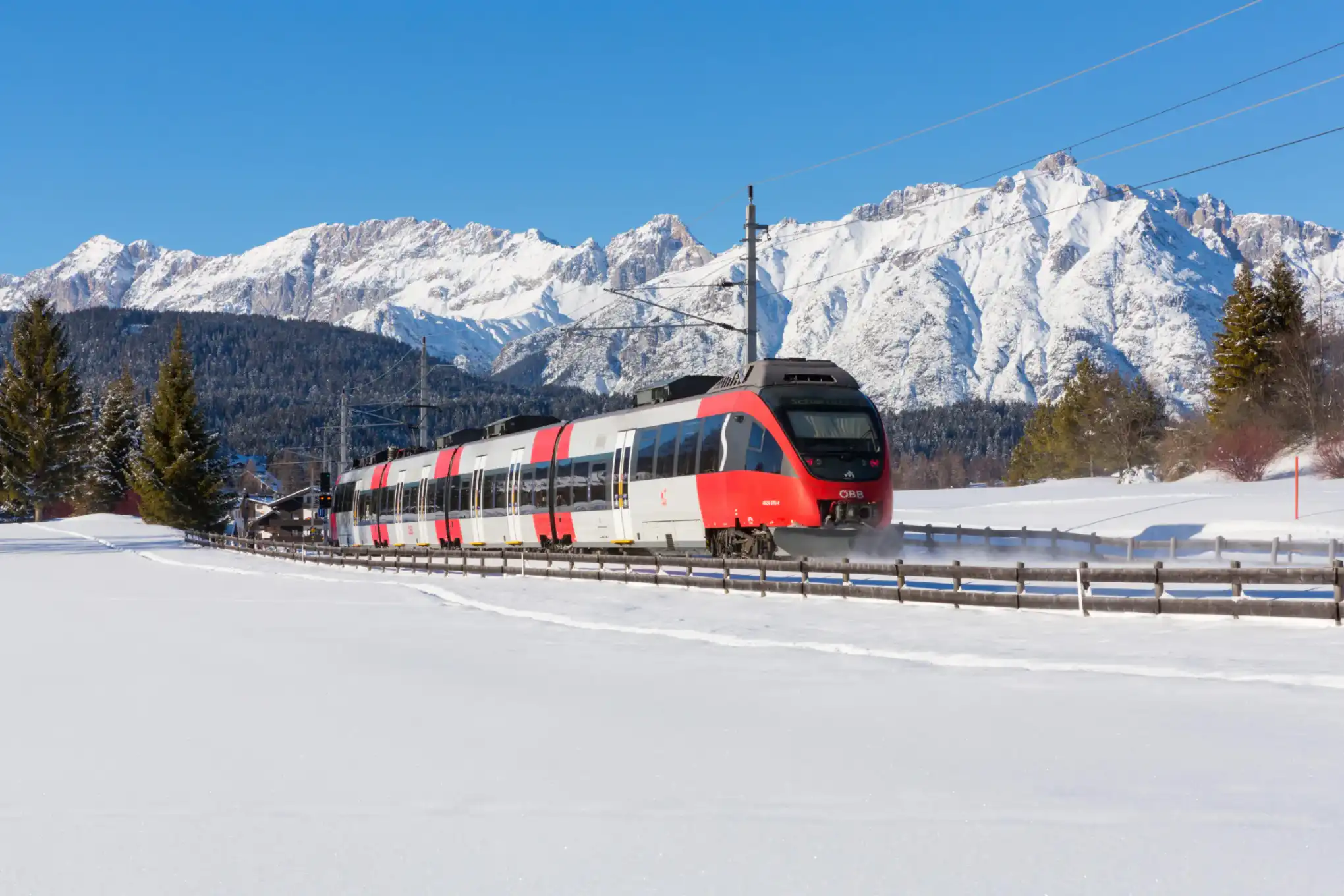
Vienna, Salzburg and Innsbruck fit surprisingly well into one week by train — as long as you do not turn the trip into a race through Linz, Hallstatt and every lake in between. With six nights, the best itinerary is not the one with the most pins on the map. It is the one that gives each base enough time while keeping the rail transfers short and useful.
2–2–2 or 3–2–1: how should you split the week?
Three cities in seven days sounds easy because the trains are fast. The hidden cost is the hotel change itself: packing, reaching the station, travelling, dropping bags and restarting the day. That is why this itinerary deliberately stays with three bases instead of copying the official seven-stops-in-seven-days style of route.
| Version | Vienna | Salzburg | Innsbruck | Best for |
|---|---|---|---|---|
| 2–2–2 | 2 nights | 2 nights | 2 nights | Balanced first trip: imperial city + Baroque old town + Alps |
| 3–2–1 | 3 nights | 2 nights | 1 night | Museums and palaces matter most |
| 2–3–1 | 2 nights | 3 nights | 1 night | Only if you add a Salzburg-based day trip |
We use 2–2–2 as the main itinerary. Vienna could easily absorb four days, but two nights are enough for the historic centre plus one major imperial complex. Salzburg is compact enough for two nights without feeling rushed. Innsbruck deserves one full day because mountain visibility can decide whether a cable-car trip is worthwhile.
Compare accommodation across all three stops
To make the six-night cost easy to compare, these searches use one sample trip for two adults: Vienna 12–14 April 2027, Salzburg 14–16 April and Innsbruck 16–18 April. Change the dates in the hotel search to match your trip; the important part is keeping the night split that suits you.
Rail travel is easy — ticket rules are the part to understand
Vienna, Salzburg and Innsbruck sit on Austria's main western rail corridor. ÖBB describes two services per hour between Vienna and Salzburg, with regular direct Railjet connections continuing west. Westbahn also links all three cities: about 2h30 from Vienna to Salzburg and 1h55 from Salzburg to Innsbruck. Engineering works can add time, so treat these as planning benchmarks rather than a promise for every departure.
| Leg | Planning time | How to use it |
|---|---|---|
| Vienna → Salzburg | ≈ 2h30 | Leave around 9am and you can still have lunch and a full afternoon in Salzburg. |
| Salzburg → Innsbruck | ≈ 1h55 | A morning departure makes this a half-day transition rather than a lost day. |
| Innsbruck → Vienna | ≈ 4h26–4h31 on selected direct services | Avoid backtracking if an open-jaw ticket from western Austria or Munich works. |
Vienna Airport is particularly convenient for this route: ÖBB Railjet services reach Wien Hauptbahnhof in about 15 minutes. That makes the main-station area a strong choice for the first two nights — no city-centre luggage transfer on arrival, and a straightforward departure towards Salzburg.
If you are travelling to Austria overland, our guide to night trains in Europe helps compare seats, couchettes and sleepers. Before paying, always confirm the exact service in ÖBB or Westbahn.
Days 1–2: Vienna, without trying to complete Vienna
Keep arrival day flexible. Drop the bags and make a first loop through Stephansdom, Graben, the Hofburg and the Ring. If you arrive early, add one short museum or coffee-house stop. If you arrive late, enjoy the centre and save the major interiors for the next day.

On day 2, choose one major imperial block. Schönbrunn works best as a deliberate half-day rather than something squeezed between museums. If you want a guided visit and priority access, this Schönbrunn Palace and gardens guided tour is directly relevant to the itinerary; check language, included rooms and cancellation rules for your date. Otherwise, book directly and use the rest of the day for Neubau, Naschmarkt or the Belvedere.
For a more complete city plan, our Vienna in 3 days guide helps decide which museums and districts deserve more time. This national itinerary should not try to reproduce all three days.
Wien Hauptbahnhof is the efficient choice
Motel One Wien-Hauptbahnhof is hard to beat for pure logistics: it sits by the main station. If you want something with more personality while staying around 300 metres from the trains, Hotel Schani Wien Hauptbahnhof is a strong alternative. The area is less atmospheric than the Innere Stadt, but airport access, westbound trains and easy local transport matter more on a two-night rail itinerary.
Day 3: Vienna to Salzburg, then two compact nights
There is little reason to leave at dawn. With a journey around 2h30, departing around 8:30–9:30am normally lets you drop your bags before lunch and keep a proper afternoon. That is the key advantage of this route: transfers replace downtime rather than consuming full sightseeing days.

Use the first afternoon for a simple axis: Mirabell, the Salzach crossing, Getreidegasse, cathedral squares and the Old Town. If opening hours line up, finish at Hohensalzburg Fortress. Travellers who want to secure admission can book a Hohensalzburg Fortress admission ticket rather than adding another excursion outside the city.
Keep day 4 in Salzburg. Add Mönchsberg, a Mozart site, cafés and river walks. This is intentional: Hallstatt is not a free extra. On a six-night itinerary it turns Salzburg into a sleeping base just before another hotel change.
Station convenience or station-to-centre compromise
arte Hotel Salzburg is almost beside the main station and still within easy reach of Mirabell and the Old Town. If you would rather move closer to the historic centre while keeping Salzburg Hbf roughly a ten-minute walk away, IMLAUER HOTEL PITTER Salzburg is the better middle ground. With only two nights, a peripheral hotel rarely saves enough to justify extra buses and transfer margins.
Our Salzburg at Christmas guide is useful only for Advent travel; do not copy its market-heavy itinerary for a spring or summer trip.
Day 5: Salzburg to Innsbruck, then one full Alpine day
A direct journey around 1h55 makes Innsbruck a proper stop rather than a day trip. Travel after breakfast, leave your luggage and spend the afternoon around Maria-Theresien-Straße, the Golden Roof, the Old Town and the Inn. Unlike Salzburg, Innsbruck's mountains frame almost every city-centre view.

Reserve day 6 for the mountains, but keep the plan weather-aware. In clear conditions, the Nordkette is exactly what makes Innsbruck special without a car: you can move from the city centre to high Alpine terrain in a short sequence of lifts. This Nordkette cable-car ticket from Innsbruck matches the itinerary directly; check which sections are included and current operating conditions. If cloud closes in, swap the mountain for Bergisel, museums and the Old Town.
Between the station and the Old Town
Motel One Innsbruck sits almost opposite the main station, making it ideal for early departures and heavy luggage while remaining within walking distance of the centre. If you want to move a little closer to the Old Town without giving up rail convenience, Boutique Hotel Zach is roughly six minutes' walk from the station and a short walk from the Golden Roof. For a two-night stop, location is usually worth more than a slightly cheaper room on the edge of town.
For winter travel, our Innsbruck in winter without a car guide covers snow, mountain timing and Christmas markets in more detail. Outside winter, keep its mobility logic and ignore the seasonal sections.
What should two people budget for seven days?
Hotel and rail prices are dynamic, so this is a planning framework for two adults, not a live quote. It assumes six nights in mid-range double rooms, two internal intercity legs, limited local transport, a few paid attractions and ordinary restaurants rather than fine dining every evening. International travel to and from Austria is excluded.
| Cost | Planning range for 2 | Main variables |
|---|---|---|
| 6 hotel nights | ≈ €680–€1,200 | Weekends, events, season, cancellation, breakfast |
| Vienna–Salzburg–Innsbruck trains | ≈ €80–€220 | Advance fares, flexibility, operator |
| Local transport | ≈ €40–€100 | Vienna pass choices, Salzburg mobility ticket, Innsbruck needs |
| Attractions | ≈ €160–€320 | Vienna palace/museums, fortress, Nordkette |
| Food | ≈ €290–€430 | Breakfast included or not, dinner style |
| Total on the ground | ≈ €1,250–€2,100 | Excluding international arrival/departure |
Hallstatt, Graz or an extra night: what should you change?
Hallstatt: we would not add it to the 2–2–2 week. If it is a priority, make Salzburg three nights and Innsbruck one, or — better — add an eighth night. The trip then becomes Salzburg plus a day trip rather than a clean three-city rail itinerary.
Graz: it deserves a different route. Adding it between Vienna and Salzburg breaks the simple western-line logic. On seven days, replace Innsbruck with Graz rather than attempting four cities.
Open-jaw tickets: the cleanest structure is Vienna in and Innsbruck out, or continuing to Munich if your onward transport works. If you must return to Vienna, protect day 7 for the roughly 4½-hour west-to-east journey and do not schedule a major attraction that morning.
If you like this travel style, our Italy by train without a car in 7 days follows the same principle: few bases, direct transfers and hotels chosen for rail logistics rather than maximum destination count.
FAQ: Austria by train without a car
Are seven days enough for Vienna, Salzburg and Innsbruck?
Yes for a balanced first look, provided you stop at three bases. Six nights give you two nights in each city. If Vienna's major museums are a priority, use 3–2–1 instead.
How early should I book the trains?
You can often travel without booking months ahead, but the cheapest promotional fares are limited. Sparschiene and WestSuperpreis come with specific restrictions. Compare the saving with the flexibility you need.
Can I use an ÖBB ticket on Westbahn?
Not by default. Westbahn explicitly says ÖBB and DB tickets are not valid on its trains, so check the operator attached to the ticket you buy.
Where should I stay in Vienna for this itinerary?
Near Wien Hauptbahnhof. The Old Town is more atmospheric, but the main station simplifies the airport arrival and the westbound departure to Salzburg, while tram and metro links keep the centre easy to reach.
Should I add Hallstatt from Salzburg?
Not on the balanced 2–2–2 version. It consumes most of a day and reduces Salzburg itself to a short stop. Add a night or deliberately switch to 2–3–1.
Do I need a car in Innsbruck?
No for this route. The station is central, the Old Town is walkable and the Nordkette starts effectively from the city centre. A car becomes useful mainly if you replace the city stay with several scattered valleys or mountain hotels.
Which direction is better?
Vienna → Salzburg → Innsbruck is the obvious choice if Vienna is your arrival gateway. The reverse works just as well. The bigger decision is whether you can avoid backtracking to Vienna at the end.
What is the best season?
The itinerary works year-round. Spring and early autumn are easy for walking, summer is busier, and winter adds snow and Christmas markets but requires more weather flexibility in Innsbruck. Always check mountain conditions before committing to a lift ticket.
Transport benchmarks checked in October 2026: ÖBB western corridor, current Westbahn journey-time and fare information, Vienna Airport Railjet and Salzburg Guest Mobility Ticket. Timetables, engineering works and fares can change, so confirm the exact date before payment.