Amsterdam in 3 Days: Canals, Museums, Neighbourhoods and Budget
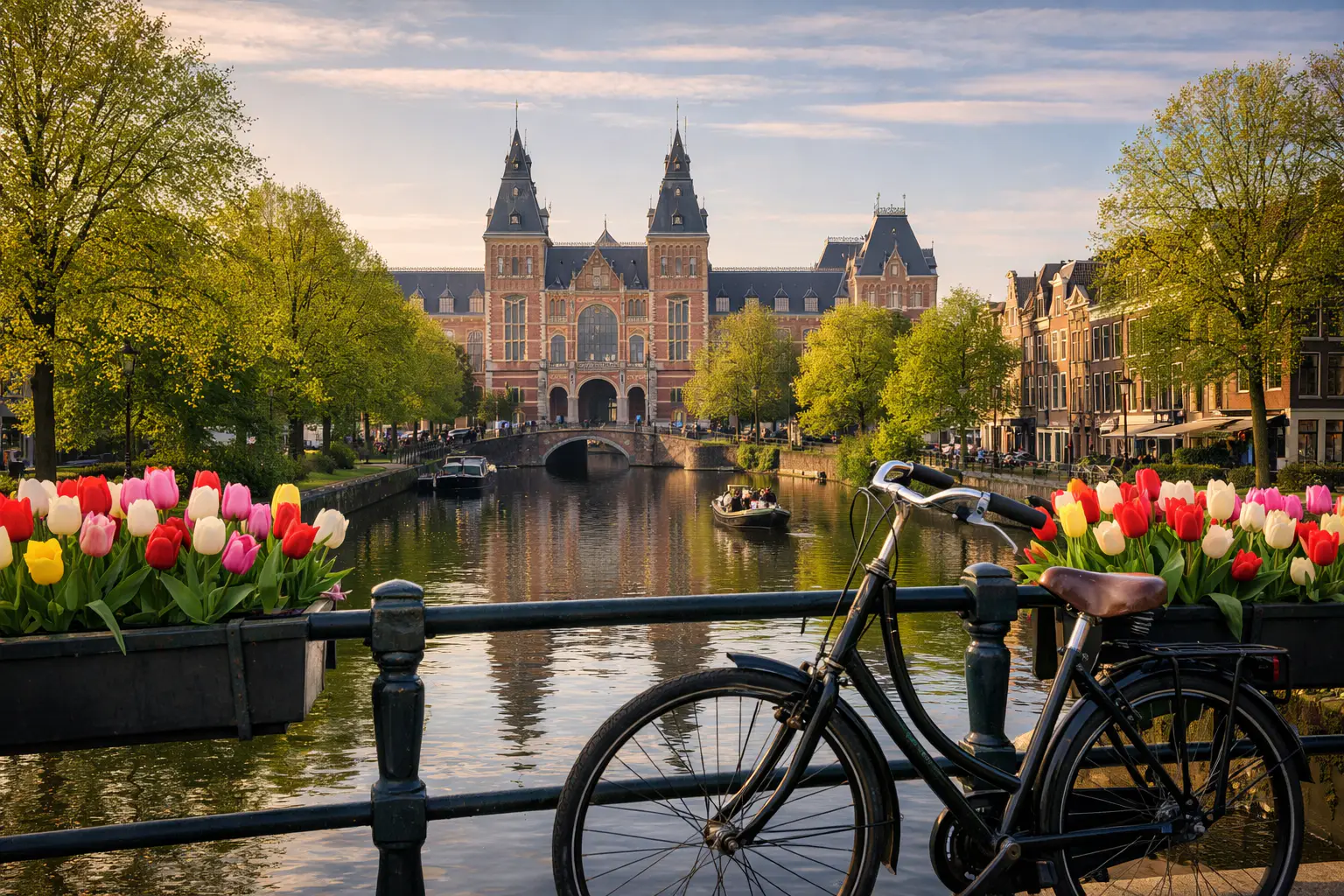
Three days in a city where time slots matter Amsterdam looks small on a map, yet time disappears through museum reservations, narrow-house queues, canal detours, sudden rain and unfamiliar cycle traffic. A strong itinerary does not attempt everything. It combines one reserved major museum, long neighbourhood walks and at least half a day flexible enough to follow the weather.
This pillar absorbs three near-identical French spring guides. Their useful material — parks, canals, museums, walking and wet-weather alternatives — remains without pretending spring is the only valid season. The new guide works throughout the year and answers practical decisions about areas to stay, Schiphol transfers, bicycle rules, booking strategy, realistic costs and whether an excursion fits at all.
Three days cover the historic centre, Jordaan, Museumplein, De Pijp and a more contemporary area. They do not cover every famous museum, Keukenhof, Zaanse Schans and several nearby cities. Quality comes from choosing: no more than one major cultural commitment per day, followed by long sequences in which canals, houses, shops and ordinary urban life remain visible.
How should you organise Amsterdam in 3 days?
Keep day one inside the canal belt: Central Station, a brief Damrak introduction, the Begijnhof, Grachtengordel and Jordaan. It works without a large booking and can absorb a delayed train or flight. Add only a short visit if the arrival time is genuinely reliable.
Day two is cultural. Choose the Rijksmuseum, Van Gogh Museum or another Museumplein institution according to your interest. Major venues use timed entries and may sell out. Buy through official sites, read the conditions and do not build the day around a city pass before knowing which art you want to see. Vondelpark and De Pijp then provide air and a logical route.
Day three offers two different Amsterdams. Stay urban with NDSM, Noord, the ferry, eastern docks and perhaps a smaller museum. Or commit to a regional day trip. An excursion is not free in time: station access, waiting, the journey and return remove hours from neighbourhoods you have not yet explored.
Canals and Jordaan
A flexible arrival day, mainly on foot.
Museum and park
One major slot, then Vondelpark and De Pijp.
Noord or excursion
Contemporary city or region, never both at speed.
Before booking: Anne Frank House and major museum availability changes quickly. Use official channels and be wary of tickets whose actual inclusion is unclear.

Where should you stay in Amsterdam?
Jordaan and the western canal belt make the most attractive first-visit base: beautiful early walks, cafés, small streets and proximity without sleeping on Damrak. Rooms are expensive, buildings narrow and stairs often steep. Read accessibility details, confirm the lift and never assume a historic room will be spacious.
De Pijp balances restaurants, market, transport and Museumplein. It feels lively without carrying the whole centre’s visitor pressure. A room near a direct route to the station or Schiphol simplifies the trip. Streets around bars can remain noisy at weekends, so request a courtyard-facing room when sleep matters.
Oud-West near Vondelpark suits visitors seeking residential evenings and quick museum access. Amsterdam-Noord may provide more space and creative venues, but not every address is near the ferry or metro. Measure the night-time journey rather than the straight-line distance across the IJ.
The blocks around Centraal maximise convenience for a late arrival or excursions. The immediate environment is dense, tourist-heavy and sometimes loud. On a tighter budget, Sloterdijk or another connected outer district may save money, but add daily transport and time before deciding it is genuinely cheaper.
Jordaan
Canals, intimate streets and natural access to the historic centre.
De Pijp
A lively base for Museumplein and the southern districts.

How do you reach Amsterdam and get around?
Trains from Schiphol serve Amsterdam Centraal and other city stations. The best stop depends on the hotel: Zuid or Sloterdijk may prevent an unnecessary return to the centre. Check engineering works, night services and payment options on official NS and GVB pages. A taxi is rational mainly for a group, unusual luggage or a poorly connected address.
Walking is ideal throughout the canal belt. Trams link the centre, Museumplein, De Pijp and Oud-West; the metro saves time towards Noord, Zuid and outer districts. Ticket products and caps change. Choose one only after drawing the itinerary rather than purchasing transport as an abstract bargain.
Cycling is transport, not a rule-free attraction. Residents use the network at speed. Keep right, signal, never stop in a lane, cross tram rails carefully and park only in permitted places. A guided ride or a limited calm route can be more satisfying for an inexperienced visitor than three anxious rental days.
Free ferries behind Central Station connect several parts of Noord. They carry pedestrians, bicycles and commuters, so prepare before boarding and keep the flow moving. A commercial canal cruise is a separate experience. Compare boat size, roof, route and cancellation conditions instead of choosing by the word “cruise” alone.
Centraal, canal belt, Begijnhof and Jordaan
Begin outside Central Station and cross Damrak without making it your whole Amsterdam. The façades and former harbour relationship provide a first landmark, but highly visible shops do not define the city. Move towards secondary canals and slow down to notice gables, bridges, basement doors and homes opening directly onto the street.
The Begijnhof requires quiet and restraint. It is inhabited heritage, not a private photography set. Confirm access conditions and accept that it may close. Continue towards the Nine Streets, where shops and cafés occupy canal houses, then move west into Jordaan.
Do not reduce Jordaan to Anne Frank House. Westerkerk, accessible courtyards, quays and day-specific markets show how a working-class district became one of the most sought-after parts of the city. Anne Frank House usually requires strict booking. If you have no ticket, respect the site from outside and do not buy a dubious last-minute solution.
Finish with a carefully chosen canal cruise or a walk when lights begin reflecting on the water. A boat helps explain the concentric plan and water engineering; it does not replace walking. An open small boat gives better visibility in fair weather, while a covered vessel protects a cold or rainy day.

Rijksmuseum or Van Gogh, Vondelpark and De Pijp
Book your major museum in the morning if you prefer to begin with concentration. The Rijksmuseum covers centuries of art, famous works, decorative objects and national history; it needs a selection. Van Gogh offers a more focused narrative but can be equally difficult to enter without a slot. Stedelijk serves modern and contemporary interests. Visiting all three in one day creates fatigue rather than depth.
Cross Museumplein and enter Vondelpark. The park is a buffer between institutions and neighbourhoods, not a monument to tick off. Walk, take a cautious cycle loop or have lunch nearby. Spring blossom increases attention, while autumn colour and winter space remain worthwhile with suitable clothing.
Continue towards De Pijp and Albert Cuyp Market when open. It is a commercial street with useful goods, snacks and souvenirs of mixed quality. Taste something without making every social-media stall mandatory. Side streets contain cafés, restaurants and residential architecture; the district becomes clearer away from the central market line.
If rain becomes heavy, replace the park with a smaller museum, photography venue, historic house or long lunch. Do not automatically add another major ticket. Flexibility is not an inferior fallback in Amsterdam; it is the protection required by variable weather and fixed entries.

Amsterdam-Noord, NDSM and transformed docks
Take a ferry behind Centraal towards Noord. The short crossing restores Amsterdam’s port geography. Depending on the route, you reach Eye Filmmuseum and A’DAM Toren or travel further to NDSM. Check the pier and frequency because ferries with similar boarding points do not share the same destination.
Around Eye, contemporary architecture and IJ views contrast with narrow canals. A film, exhibition or the café can structure the morning. NDSM takes longer: former industrial spaces, studios, large-scale art and events form a cultural district in motion, not a street-art theme park.
Back on the southern side, choose an area still missing: Plantage and Hortus Botanicus, the eastern docks, Waterlooplein or Brouwersgracht. This half-day should complete the trip rather than repeat Dam Square. It also creates space for a visit displaced by rain.
A day trip to Utrecht, Haarlem, Zaanse Schans or Keukenhof replaces this day; it does not fit on top of it. Utrecht and Haarlem are complete cities. Zaanse Schans concentrates heavily visited heritage. Keukenhof is seasonal, dated and reservation-sensitive. Choose according to your interest and current calendar, not because every generic itinerary uses the same photograph.

What should you eat in Amsterdam?
Dutch classics often work as pauses rather than three large meals: seasonal herring, bitterballen, cheese, pastries, pancakes or chips. Try them where portions and prices are clear. A queue generated by social media does not guarantee quality or good use of time.
Amsterdam is equally understood through Indonesian, Surinamese, Middle Eastern and other international cooking. A rijsttafel can be a generous shared meal; check minimum party size and book dinner. De Pijp, Oud-West and Oost move you away from the same central visitor corridors while retaining easy transport.
Cannabis coffee shops are not ordinary cafés and their rules matter. Never buy in the street, do not combine substances with cycling and protect your judgement. Traditional brown cafés provide another historic atmosphere; ask about serving size and price and drink with normal city-break caution.
How much does 3 days in Amsterdam cost?
Amsterdam is rarely cheap. Rooms become especially expensive at weekends, holidays, events and during tulip season. Early booking with sensible cancellation often delivers more value than searching endlessly for codes. An outer but connected room can save money only when transport and daily time are included.
Museums require selection. Two major venues and one canal cruise already create a substantial attraction budget. A pass pays only when its inclusions match your list and booking slots remain available. Food costs fall with one simple lunch, tap water where offered, a deliberately chosen dinner and fewer impulse snacks in the busiest streets.
| Per person | Lean | Balanced | Comfort |
|---|---|---|---|
| 3 nights, shared double room | €150–270 | €300–520 | €600–1,050 |
| Food and drinks | €90–140 | €170–280 | €330–520 |
| Airport and transport | €25–45 | €55–100 | €130–260 |
| Museums and activities | €35–70 | €90–170 | €220–420 |
| Total excluding flights | €300–525 | €615–1,070 | €1,280–2,250 |
Honest reading: the lower range assumes early decisions. The upper range is not required, but becomes plausible with a late central hotel and private experiences.

When is the best time to visit Amsterdam?
Spring brings longer days, parks and tulips alongside high demand. Keukenhof is outside Amsterdam and has a limited operating season: verify official dates and transport. King’s Day transforms the city. Visit specifically for the celebration or avoid those dates if you want a normal museum-and-canal trip.
Summer supports long evenings, terraces and open boats, with more visitors. Start early in central districts and keep an indoor reservation for the busiest hours. Autumn adds rain and colour; a waterproof layer and suitable footwear help more than a programme built entirely under cover.
Winter shortens days but supports museums, cafés and canal light. Damp wind can feel colder than the forecast. Build compact loops, plan a warm pause and never promise natural ice skating because conditions are not guaranteed.
Whatever the month, check the city calendar before choosing a room. Large conferences, music events and public celebrations can change availability more than ordinary seasonal averages. Weather tells you how to order the days; events often determine whether the accommodation budget remains realistic.
Nine Amsterdam mistakes to avoid
Leaving major museums until the final moment, buying a pass without available time slots and planning four institutions across two days are the costliest errors. Sleeping far from a station or tram for a tiny saving can add several hours of commuting.
Walking in a cycle lane, stopping in it, hiring a bicycle without confidence or parking illegally creates real danger. Photographing sex workers is disrespectful and prohibited. Buying substances in the street or combining consumption with riding is dangerous.
Spending a whole day around Damrak produces an impoverished view of Amsterdam. Letting weather cancel everything is the opposite mistake: always create an outdoor–indoor pair instead of one rigid schedule.
Amsterdam in 3 days: FAQ
Yes for the canal belt, two major districts, one large museum and Noord. A day trip means removing part of that plan.
Only if you are comfortable in dense cycle traffic. Walking and public transport are enough for a first trip.
Rijksmuseum for broad art and history, Van Gogh for a focused narrative, Stedelijk for modern and contemporary work.
Jordaan for character and walking, De Pijp for food and museums, Oud-West for a more residential balance.
Calculate the visits you actually want and check their time slots. A pass cannot create availability when reservations are full.
Utrecht or Haarlem for another city, Zaanse Schans for concentrated heritage, Keukenhof only during its official season.
More useful LowCostWings guides
Compare another water-shaped capital with our 3-day Stockholm itinerary. For a rougher port city that is often easier on the budget, see Hamburg in 2 days. Our Oslo itinerary adds another balance of culture, waterfront and public transport.
Amsterdam needs precision without compression
Secure the museum that matters, choose a connected base and allow the canals to decide part of the route. With that margin, three days move naturally from historic water streets to park and contemporary harbour. Without it, Amsterdam becomes a sequence of slots and queues that hides the ordinary city its streets reveal best.
Disclosure: some booking links are affiliate links. Using them may support LowCostWings without changing the displayed price. Recommendations remain independent and based on practical value.