Florence in 3 Days: Art, Neighbourhoods, Food and Budget
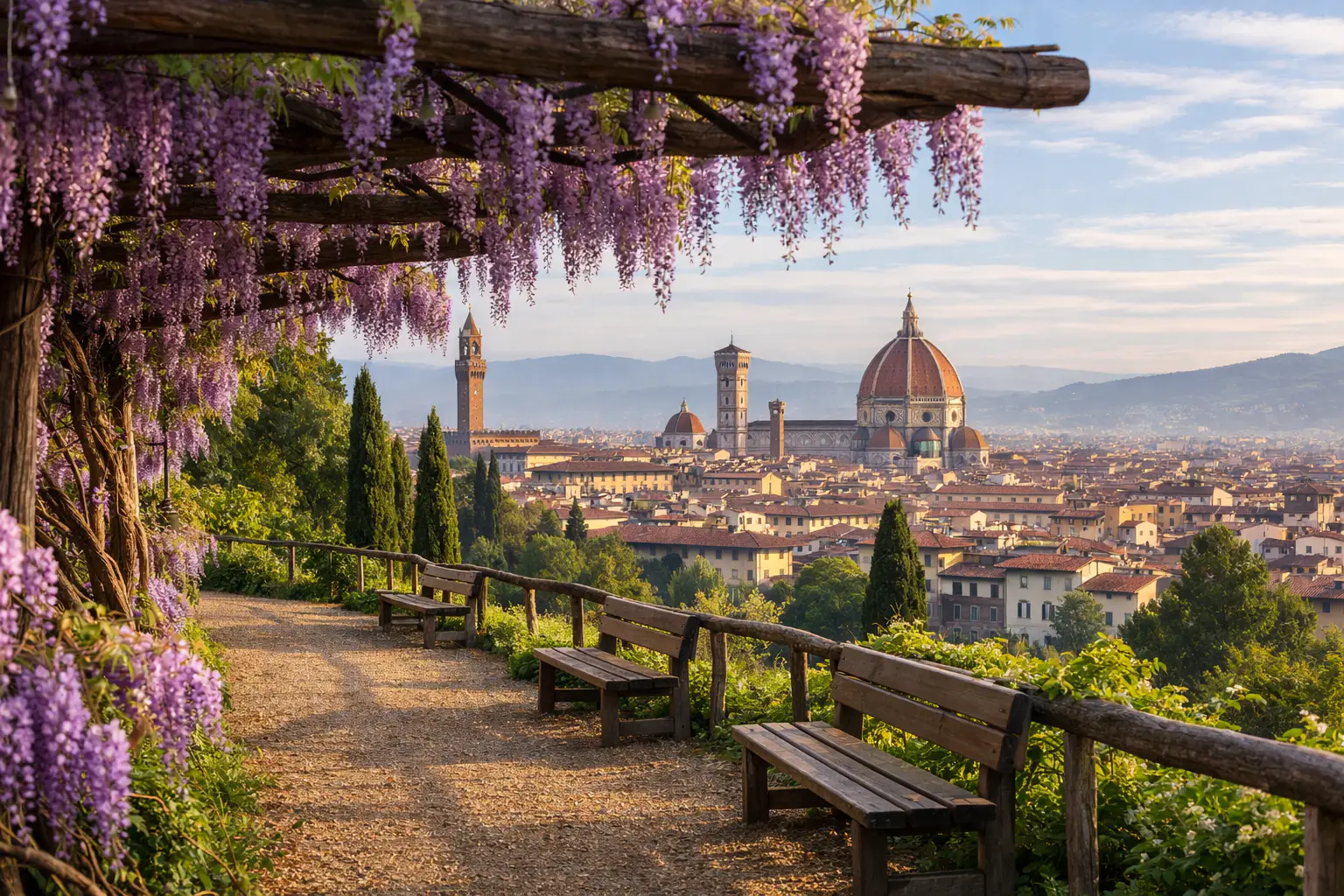
Three days to look, not to collect tickets Florence appears tiny on a map and enormous once the itinerary opens. The Duomo, Uffizi, Accademia, Palazzo Vecchio, chapels, palaces and churches can fill a week. The first-trip danger is not distance but museum stacking, until Botticelli, Michelangelo and Fra Angelico begin to blur into one demanding sequence.
This guide builds three distinct days: civic and religious Florence around the Duomo and Accademia; power and painting from the Uffizi to Santa Croce; then workshops and gardens beyond the Arno. It consolidates the useful spring material into an evergreen pillar, keeping parks, views, museums and walking routes without depending on a particular month or a promise of light crowds.
The sound strategy is to reserve two difficult places, not every hour. Choose the Uffizi and either the Accademia or dome climb, then place everything else around those anchors. Florence also reveals itself through a workshop door, a glimpsed courtyard, a local market and evening light from the Oltrarno.
What is the best 3-day Florence itinerary?
Place the Duomo on the first morning even without a ticket. The piazza immediately establishes the city’s religious, economic and technical scale. A dome-climb slot controls the day; otherwise select the baptistery, Opera museum or bell tower separately. The complex should not be treated as one attraction to rush through in an hour.
Reserve the Uffizi for the second morning, when your eye already has reference points. Its rooms describe an evolution rather than a ranking of famous pictures. After two or three hours, Piazza della Signoria, the Arno and Santa Croce extend the theme of power without imposing another vast museum.
Keep the Oltrarno for day three. This bank changes perspective through workshops, markets, Pitti Palace, Boboli Gardens and the climb towards San Miniato. In rain, replace gardens with a chapel, the Bargello or more of Pitti; do not cross the entire city for a separate theoretical “wet-day plan”.
Useful balance: one demanding museum in the morning, one district in the afternoon and a view later. Consecutive blockbuster museums reduce attention.

Where to stay in Florence for three days
The Duomo–San Lorenzo area provides the shortest walks to major sights and the station. It suits a first visit, although noise, floor level and windows deserve scrutiny. “Near the Duomo” may mean a delivery lane or active evening street; recent sleep reviews matter more than decorative room photographs.
Santa Croce balances the centre, restaurants and evening life. You remain within walking distance of the Uffizi while leaving the densest corridor. The square can be noisy during events, so a side street is preferable. Santa Maria Novella simplifies train arrivals and day trips, with atmosphere varying between streets near the station.
The Oltrarno — Santo Spirito, San Frediano or around Pitti — suits travellers prioritising craftspeople, bars and neighbourhood evenings. Ponte Vecchio concentrates footfall; staying a little farther west reduces pressure. The trade-off is an additional morning walk to the Accademia or Duomo.
Many Florentine properties occupy historic buildings. Confirm lift, air conditioning, stairs, vehicle access and luggage storage. For a three-day visit, a simpler room in the right district is usually better than a dramatic property dependent on buses.
Duomo or San Lorenzo
Nearly everything remains walkable and the station is never far.
Santo Spirito
A lively Oltrarno base aligned with the third day.

Airport, railway station and moving around Florence
Florence Airport is close, but the true connection depends on district and time. The tram serves the station area, followed by walking, bus or taxi. Pisa can offer more flights at the cost of an extra train or bus. Compare door-to-door travel rather than airfare alone, particularly after a late arrival.
Santa Maria Novella is the main railway gateway. The Duomo is an easy walk with manageable luggage, while paving, kerbs and works make large cases awkward. Confirm reception hours and use an official storage service when an apartment cannot accept bags.
Walking is almost always simpler in the centre. Buses help with some peripheral accommodation or climbs, while taxis and private vehicles face restricted access. Do not rent a car for these three days: limited-traffic zones, garages and fines remove any advantage.
If Florence sits inside a Tuscan road trip, collect the car only when leaving the city and return it before re-entering the centre. Trains or buses often handle Siena, Lucca or Bologna without sacrificing a day to parking.
Uffizi, Accademia and Duomo: what should you book?
The Uffizi deserves the itinerary’s most important reservation. Choose a morning time, read the floor plan and select several groups: medieval painting, early Renaissance, Botticelli, Leonardo, Michelangelo or Caravaggio according to interest. Reading every label turns the final hour into endurance. A short café or terrace pause can restore attention.
The Accademia is more compact. David justifies the trip for many visitors, but the museum is not a one-sculpture room: the Prisoners expose unfinished process, while paintings restore context. If sculpture matters less to you, the Bargello or Medici Chapels may be a better second major ticket.
At the Duomo, distinguish cathedral, dome, bell tower, baptistery, crypt and museum. Products and time slots do not include the same spaces. The dome climb means narrow stairs, exertion and no quick exit; the bell tower offers another view with the dome inside it. The museum explains construction and protects a rainy period.
Buy from official operators and verify name, time, bag rules and late-arrival tolerance. A guided visit is valuable when it prioritises works; simple escort to an entrance may not justify the premium.
Duomo, Accademia, San Lorenzo and early palaces
Begin in Piazza del Duomo before groups pass through. Walk around the full ensemble: façade, baptistery, campanile and dome volume change with angle. If you hold a climb slot, arrive early and travel light. Otherwise enter the Opera museum or baptistery to understand the project without turning the morning into a chain of staircases.
Reach the Accademia through the San Marco streets. A morning or late-morning ticket limits waiting. Around David, change distance: silhouette from the entrance, bodily tension close up, surface and proportion from the sides. Then give the Prisoners time rather than leaving after the expected photograph.
Have lunch near San Lorenzo and read the market critically. Mercato Centrale contains varied businesses but is not automatically more local or inexpensive. The Medici Chapels, basilica or Laurentian Library can continue the patronage theme. Choose only one additional interior.
Finish at Palazzo Medici Riccardi, Santa Maria Novella or with an orientation walk towards Piazza della Repubblica. A flexible ending absorbs a delayed Duomo visit and avoids a third reservation that would send you through final rooms without looking.
Uffizi Gallery, Piazza della Signoria and Santa Croce
Enter the Uffizi with a simple mental map. Early rooms show changes in figures, space and light; masterpieces become more legible when you follow that thread. Do not let the Botticelli crowd control the entire visit. Less dense galleries may provide the strongest encounter.
Stay inside the same urban chapter after exiting. The Uffizi courtyard leads into Piazza della Signoria, Palazzo Vecchio and Loggia dei Lanzi. Outdoor sculptures do not replace a museum, but reveal how power displayed narratives in the street. Enter Palazzo Vecchio only when civic interiors genuinely interest you.
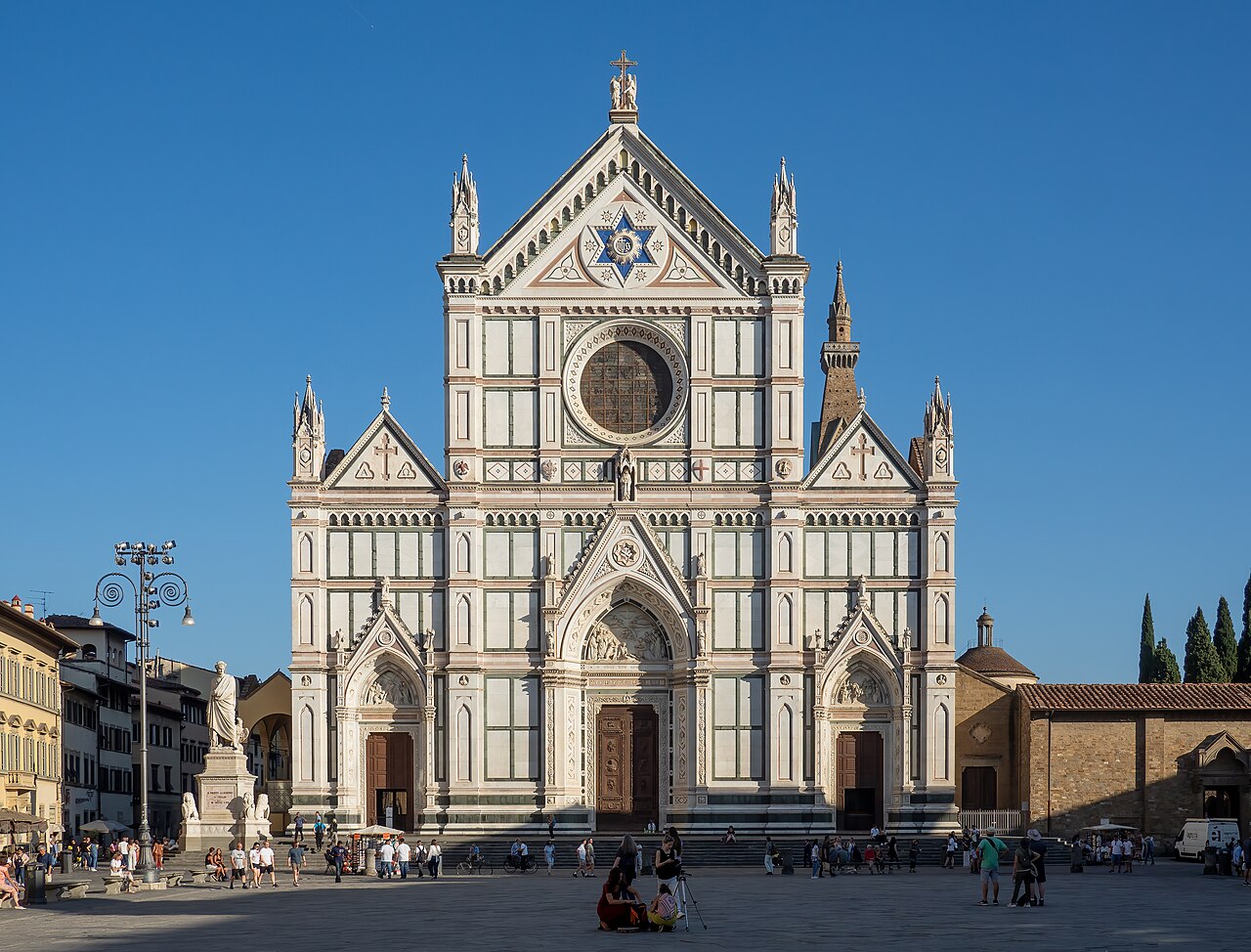
Cross towards Santa Croce through side streets. The basilica combines architecture, tombs, chapels and national memory; it requires time and suitable dress. If interiors have saturated your attention, study the exterior and devote the afternoon to the district, workshops or Sant’Ambrogio market according to its hours.
Return to the Arno later. Ponte Vecchio is clearer from Ponte Santa Trinita than inside its jewellery corridor. Cross for dinner in the Oltrarno or return to Santa Croce. The distance is short, while evening light on the façades provides a real conclusion to Uffizi day.

Oltrarno, Pitti Palace, Boboli and Santo Spirito
Start in the Oltrarno before large sites open. Santo Spirito and San Frediano combine workshops, shops, churches and cafés without becoming fixed scenery. Craftspeople are not permanent entertainment: check hours, ask before photographing and purchase only when the work matters to you.
Pitti Palace contains several collections, and buying without reading the included spaces invites fatigue. Prefer the Palatine Gallery and apartments if Medici context and painting appeal. Boboli Gardens need stable shoes, water and reasonable weather. They are a historic composition, not a flat park designed only for rest.
Return towards Santo Spirito for lunch instead of remaining at the palace’s busiest point. The district offers a simple plate, markets when operating and a less formal pace. Continue to San Miniato al Monte or Piazzale Michelangelo according to energy. The walk is beautiful but a real climb; a timely bus or taxi protects knees.
Piazzale Michelangelo becomes dense at sunset. Arrive earlier, continue to San Miniato or choose another terrace. The view rereads all three days as dome, Palazzo Vecchio, Santa Croce, Arno and hills finally regain their distances.

What to eat and how to choose a restaurant
Bistecca alla fiorentina is thick, traditionally cooked and often sold by weight. Ask the weight, price and expected doneness before ordering; it is normally shared. Do not choose it as an obligation when ribollita, pappa al pomodoro, beans, tripe, crostini or seasonal vegetables suit you better.
Schiacciate and panini work for a quick lunch, although a famous queue guarantees neither comfort nor discovery. A neighbourhood bakery or bar may provide a better pause. At markets, distinguish produce stalls from food halls and everyday trade from visitor-focused offers.
Wine by the glass permits exploration without turning every meal into a tasting. Check cover, water, service and products sold by weight. Santo Spirito, Sant’Ambrogio and side streets around Santa Croce offer useful choices, provided you do not assume that hidden automatically means authentic.
How much should you budget for 3 days in Florence?
Florence is compact, so urban transport remains minor with central accommodation. Rooms and major sights shape the budget. A programme containing the Uffizi, Accademia, full Duomo complex and Pitti–Boboli becomes expensive and culturally heavy; choosing three primary experiences improves both cost and attention.
Rates vary sharply with trade fairs, holidays and high season. Secure accommodation before museum slots when dates are fixed. For food, alternate one full dinner, one simple lunch and market products. Counter coffee and public water reduce repeated spending without reducing the experience.
These ranges exclude flights and need current checks. They assume three nights and a shared double room. Add a margin for city tax, luggage storage, temporary exhibitions or an occasional taxi.
| Per person | Lean | Balanced | Comfort |
|---|---|---|---|
| 3 nights, shared double room | €120–230 | €240–430 | €450–800 |
| Food and drink | €75–120 | €130–220 | €240–400 |
| Transport and airport | €20–45 | €45–80 | €90–180 |
| Visits | €45–80 | €90–160 | €180–300 |
| Total excluding flights | €260–475 | €505–890 | €960–1,680 |
Florence through seasons and weather
Spring and autumn favour walking while museum demand remains strong. Manage a shower by reordering places within one district: the Opera museum near the cathedral, Bargello near Signoria or Pitti near Santo Spirito. Keep a local indoor alternative rather than a separate rainy day crossing the city.
In summer, start squares early, place interiors around midday and avoid the dome or Piazzale climb in peak heat. Parts of Boboli are exposed. Winter can reduce demand outside holidays, but short light means scheduling views before closure and checking reduced calendars.
First Sundays, public holidays and exhibitions change queues and access. Free admission can increase waiting. Verify each institution’s official calendar rather than building the trip around an old rule.

Eight Florence mistakes to avoid
Booking the Uffizi, Accademia and dome on one day fractures attention. Treating every Duomo product as identical creates false expectations. Driving into the centre exposes visitors to restricted zones and expensive parking.
Following only the Duomo–Ponte Vecchio line misses Santa Croce, San Frediano and inhabited Florence. Ordering bistecca without asking its weight can surprise the bill. Waiting for sunset only at Piazzale Michelangelo turns a view into a competition.
Photographing inside a workshop without asking disrespects the work. Finally, inserting a Tuscan day trip into three days removes a full Florence chapter: add a night or accept that the city will remain substantially unexplored.
FAQ: visiting Florence in 3 days
Yes for the Duomo, two major museums, civic centre and Oltrarno. They are not enough for every palace and chapel.
Choose the Uffizi for the history of painting and the Accademia for Michelangelo in a more compact format.
Not in Florence. Rent one only when leaving for the countryside and understand limited-traffic zones.
Duomo–San Lorenzo for centrality, Santa Croce for balance and Santo Spirito for neighbourhood evenings.
Yes with an extra day. During a three-day stay, the excursion removes a substantial part of Florence.
Other useful LowCostWings guides
Combine Florence with our 3-day Rome itinerary to continue the history of art and power. For a slower southern journey, compare the different rhythms and rail connections of car-free Puglia bases.
Florence deserves better than a masterpiece marathon
Book two anchors, cross districts in a readable order and allow works to breathe. You will not see everything in three days, but you can understand how cathedral, palaces, painting, workshops and hills form one city.
A final practical review should confirm museum calendars, named-ticket requirements and luggage arrangements. Florence is easy to cross only when the schedule remains breathable; precise essentials and deliberately empty hours work together, rather than competing.
Transparency: some booking links are affiliate links. Using them may support LowCostWings without changing the displayed price. Recommendations remain based on trip value.