Lisbon in spring: a realistic 3-day car-free itinerary
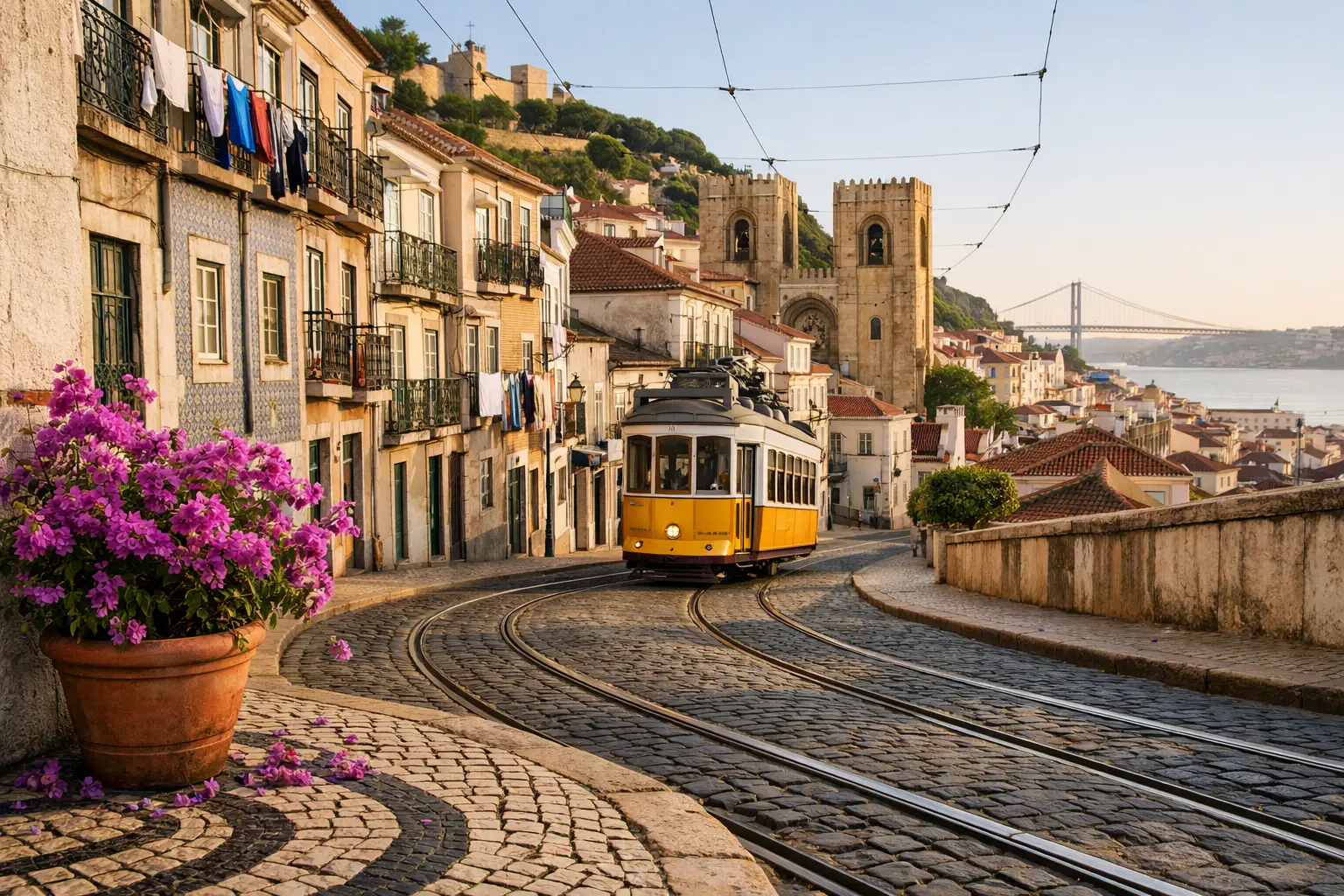
A three-day plan built around Lisbon’s terrain
Spring is one of the easiest seasons in which to explore Lisbon: days are longer, gardens regain colour and the heat usually remains compatible with steep walks. The city still becomes exhausting when Alfama, Belém and the western viewpoints are mixed without a geographical plan.
This itinerary gives each of Lisbon’s main atmospheres its own day. It uses trams as occasional transport rather than a queue-based attraction, keeps Sintra for a genuine extra day and includes a nearby indoor fallback for Atlantic showers.
The decision in 30 seconds
Choose Lisbon in spring if you want long walking days without midsummer heat. Three days cover the city well; Sintra belongs on a fourth day rather than being squeezed between two incomplete Lisbon days.
Best plan: stay near Baixa or Rossio, enter Alfama early and walk downhill, dedicate a full day to Belém, then use the final day for Chiado, Estrela and western viewpoints.
Contents
- The decision in 30 seconds
- Where to stay: choose the area before the hotel
- Getting there and moving around without a car
- Day-by-day itinerary
- What to book and what to keep flexible
- Read Lisbon by terraces and descents
- What spring genuinely changes
- Realistic budget
- Season, weather and backup plan
- Continue planning the trip
- Mistakes to avoid
- Frequently asked questions
- Useful official sources
Where to stay: choose the area before the hotel
For three days in Lisbon, the area matters more than a small price difference: a central base cuts transfers and lets you walk back after dinner.
Baixa and Rossio
Direct airport access, flat connections around the riverfront and useful metro lines. It feels less residential, but the logistics are hard to beat.
Chiado and Bica
Excellent for Cais do Sodré, cafés and late dinners. Check the exact slope and street noise because two nearby properties can offer very different experiences.
Alfama and Graça
Beautiful early and late in the day, but awkward with luggage and less convenient for Belém. Prioritise a property with a realistic connection, not just a romantic address.
Always compare the final price, cancellation terms, soundproofing and the actual airport connection. The examples below are useful benchmarks, not a permanent ranking.
Hotel Gat Rossio
Worth comparing for its position between Rossio, Restauradores and Baixa. Check room category and street exposure before deciding.
Lisbon Destination Hostel
Inside Rossio station, useful for central Lisbon and a possible Sintra train. Private rooms and dorms target very different budgets.

Getting there and moving around without a car
The metro links Humberto Delgado Airport with the centre through one straightforward change. For two or three travellers, compare a taxi or ride-hail door to door, particularly after a late arrival.
Move through Lisbon by terraces and downhill routes: ride up when needed, walk down through Alfama, connect Belém by tram or train and use funiculars only when they solve a genuine elevation problem. Tram 28 is optional.
- Airport: metro by day; compare a taxi or ride-hail late at night or with luggage.
- Belém: use tram 15E or the train from Cais do Sodré depending on disruption and your starting point.
- Viva Viagem: load individual trips or a pass; one card cannot validate two passengers.
- Walking: grippy shoes matter because calçada paving becomes slippery in rain.
Skip the rental car. Parking, one-way streets and steep lanes add cost without improving this itinerary. Rent only when leaving Lisbon for a wider road trip.
Day-by-day itinerary
Each day follows the terrain. Treat the timings as a framework and preserve time for viewpoints; they often add more to the trip than one rushed extra monument.
If flights remove half a day, drop LX Factory or a secondary museum. Do not compress Alfama and Belém into one day.
Alfama, the castle and Baixa downhill
Start at Portas do Sol before the lanes fill, then enter Alfama from above. São Jorge Castle is useful for its panorama and historical context, but free viewpoints are a credible budget alternative.
Descend via the cathedral and Casa dos Bicos to Praça do Comércio. After lunch, cross Baixa towards Rossio and Restauradores instead of climbing to another hill immediately.
Reach Graça or Senhora do Monte for late light, then eat just outside Alfama’s most visible tourist terraces.
Rain / low-energy backup: The Fado Museum, José Saramago Foundation and Baixa arcades preserve the day’s geography in poor weather.
Belém without unnecessary backtracking
Reach Belém early. Book Jerónimos Monastery if the cloister matters, then see the church and riverfront before the busiest part of the day.
Walk to the Discoveries Monument and Belém Tower, then choose one large museum: MAAT for contemporary art and architecture, or the National Coach Museum for a more historical collection.
Return through Alcântara for LX Factory only if its bookshops and converted industrial spaces appeal. Otherwise go straight to Cais do Sodré and save energy for dinner.
Rain / low-energy backup: MAAT, the Coach Museum and a seated pastry stop are nearby fallbacks; avoid crossing the city simply to escape a shower.
Chiado, Estrela and western viewpoints
Begin in Chiado, cross Carmo and continue towards São Bento. The point is the gradual shift from the commercial core to lived-in neighbourhoods.
Continue to Estrela Basilica and garden, then choose between the National Museum of Ancient Art and Campo de Ourique. This lighter afternoon absorbs the accumulated impact of Lisbon’s paving.
Finish at Santa Catarina or São Pedro de Alcântara. A fado show works best in a small venue with transparent conditions rather than a compulsory tourist menu.
Rain / low-energy backup: The Ancient Art Museum, Carmo and Chiado cafés create a coherent indoor alternative.

What to book and what to keep flexible
The right strategy is not to prepay everything. Book the sights with timed entry or limited capacity, then keep walks and meals flexible enough to absorb weather and fatigue.
Lisbon history walking tour
A strong first-morning walk explains reconstruction, tiles and the relationship between Baixa and Alfama. It is less valuable once you have already explored those streets alone.
Small-group Belém walk
Useful if maritime history matters more than a photo stop. Check carefully whether monument entry is included.
Sintra, Pena and Cascais
An organised trip simplifies transfers but fixes the pace. With only three days it removes too much time from Lisbon; add it only with a full extra day.
Book in this order: flights and accommodation, Jerónimos or Sintra timed entry, then an optional walking tour. Viewpoints, funiculars and secondary museums can remain flexible.
Read Lisbon by terraces and descents
Swipe the table horizontally on mobile.
| High area | Logical descent | Useful ride | Avoid |
|---|---|---|---|
| Graça | Alfama → cathedral | Bus or tram uphill | Climbing straight back to Graça |
| Bairro Alto | Chiado → Cais do Sodré | Funicular when tired | Collecting paid lifts |
| Estrela | São Bento → Chiado | Selective tram | Adding Belém the same afternoon |
Direction of travel often saves more energy than an unlimited transport pass.
What spring genuinely changes
Spring increases the value of outdoor spaces: Estrela garden, the riverfront and viewpoints become proper stops rather than brief photo breaks. It does not remove Atlantic showers or river wind, so every day should keep one indoor option in the same district.
Longer light does not mean every monument extends its opening hours. Put ticketed interiors in the morning and leave flexible viewpoints for later.
Realistic budget
Judge the trip by the cost per usable day, not the headline airfare. A very early flight may add a night transfer and a low-value hotel night.
A lean budget remains realistic when free viewpoints, one major paid sight per day and lunches away from headline squares are combined.
Swipe the table horizontally on mobile.
| Item | Lean | Comfort | What matters |
|---|---|---|---|
| Accommodation / night | €35–65 hostel or simple room | €90–160 double room | Weekends and exact street position drive the total. |
| Food / day | €25–35 | €45–70 | Lunch menus and counters keep costs controlled. |
| Local transport | €15–25 | €30–50 | Airport taxis affect solo travellers most. |
| Sightseeing | €20–45 | €60–110 | The number of paid interiors creates the gap. |
Indicative per-person ranges excluding flights. Recheck official admission and the final accommodation price for your dates.
Season, weather and backup plan
Spring alternates mild sun and rain bands. Temperature can feel different between an exposed viewpoint, a sheltered Alfama lane and the Belém waterfront.
Bring a light windproof layer, compact rain protection and shoes with grip. An umbrella alone is awkward when wind comes off the Tagus.
March
More variable and often cheaper. A central base and one nearby indoor backup per day pay off.
April
A strong balance of flowers, daylight and manageable crowds, except around Easter weekends.
May
Long days and pleasant terraces, with major sights already approaching summer demand.
Mistakes to avoid
Queuing for tram 28
The wait can cost more time than the ride adds. Board early, use a quieter segment or replace it with a downhill walk.
Squeezing in Sintra
Sintra needs a real day. Adding it to three days produces three incomplete Lisbon days.
Ignoring elevation
A 1.5-km walk on Graça’s paving is not equivalent to the same distance along the river. Check terrain before booking.
Pre-booking every meal
Weather and real walking pace may shift the schedule. Keep at least one evening completely flexible.
Frequently asked questions
Yes for Alfama, Baixa, Belém and a third neighbourhood group. Add a fourth day for Sintra or multiple museums.
Only when your actual plan combines enough included transport and admissions. Calculate against the sights you will genuinely enter.
Baixa, Rossio and lower Chiado simplify movement. Check the exact street elevation rather than relying on the neighbourhood name.
Showers remain possible, especially in March and April. They are manageable when each day has a nearby museum or café fallback.
Yes. Metro, trams, urban rail and walking cover this itinerary; a car would mainly be a constraint.
Useful official sources
Final verdict
Lisbon in spring rewards an itinerary that respects the hills. Walking down through Alfama, giving Belém its own day and keeping the west side flexible lets you see more with less wasted effort.
Book only the time slots capable of blocking the trip, choose accommodation for its real connection and let the viewpoints follow the light.
Transparency: some accommodation and activity links are affiliate links. LowCostWings may receive a commission if you book after using them, at no extra cost. Budget bands are search targets rather than guaranteed prices.