Porto in January: winter itinerary, weather and budget
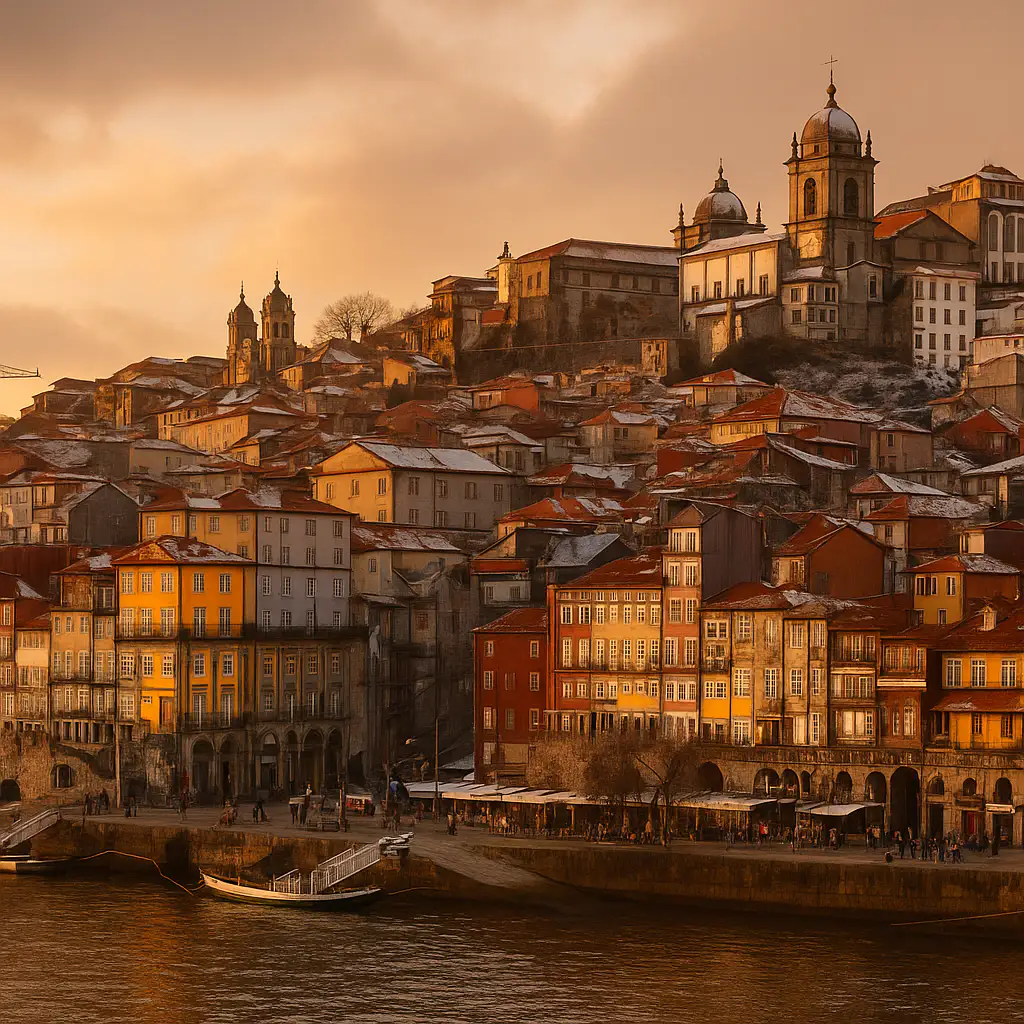
Porto works in January when every day has shelter
January brings quieter quays, soft light and often better-value accommodation. In exchange, rain, Douro wind and wet paving make an entirely outdoor checklist unreliable.
This plan groups the historic centre, Gaia and the cultural districts into three compact days. Every route can switch to a museum, cellar or café without crossing the city.
The decision in 30 seconds
Porto in January suits travellers who prioritise atmosphere, food and heritage over long terrace evenings. Two days cover the essentials; a third adds Gaia, Foz or breathing room.
Best balance: historic centre on day one, Gaia on day two, Bolhão and Cedofeita on day three. Save Foz for a dry window and never turn a wet day into a viewpoint marathon.
Contents
- The decision in 30 seconds
- Where to stay: choose the area before the hotel
- Getting there and moving around without a car
- Day-by-day itinerary
- What to book and what to keep flexible
- Rain strategy by district
- Winter Porto is not a lesser Porto
- Realistic budget
- Season, weather and backup plan
- Continue planning the trip
- Mistakes to avoid
- Frequently asked questions
- Useful official sources
Where to stay: choose the area before the hotel
For three days in Porto, the area matters more than a small price difference: a central base cuts transfers and lets you walk back after dinner.
Trindade and Bolhão
Direct airport metro, the market and easy central walks make this the most resilient base when weather changes.
Aliados and São Bento
Very central for Ribeira and major sights, with more foot traffic. Check soundproofing and the exact street gradient.
Cedofeita
More residential and useful for galleries and restaurants. Expect a walk or bus to Ribeira and Gaia.
Always compare the final price, cancellation terms, soundproofing and the actual airport connection. The examples below are useful benchmarks, not a permanent ranking.
Moov Hotel Porto Centro
A simple property to compare for Batalha and São Bento access; check category, breakfast and cancellation.
Gallery Hostel
Worth comparing in Cedofeita for its cultural setting. Private rooms and dorms provide very different levels of quiet.

Getting there and moving around without a car
The airport metro reaches Trindade without a car. After a late arrival, compare a direct transfer because a small saving can be erased by a long wet wait.
The centre is walkable, yet slopes and wet surfaces increase fatigue. Use metro, bus or funicular to climb, and cross Dom Luís I Bridge at the level that fits the route.
- Airport: metro to Trindade, then a short walk or connection.
- Gaia: walk across the bridge; the cable car is optional and mainly panoramic.
- Foz: a bus is more sensible than a long January walk.
- Luggage: avoid properties halfway up stairs or a severe slope.
Do not rent a car. It helps neither in Ribeira nor in Gaia. The Douro Valley works by train or organised transport.
Day-by-day itinerary
The plan alternates indoor and outdoor time so a shower cannot erase half a day. Keep the quays flexible and give one cellar or excursion a fixed slot.
With two days, fold day three into arrival or departure. Drop Foz or a secondary museum, not Gaia.
São Bento, cathedral and Ribeira
Start at São Bento and the cathedral, then descend through medieval lanes. Tiles and churches create natural covered pauses.
Follow Ribeira to the bridge without collecting every viewpoint. A bridges cruise is worthwhile only when visibility and wind allow.
Ride or walk back towards Aliados, then eat around Bolhão or Cedofeita instead of the most exposed riverfront menus.
Rain / low-energy backup: Bolsa Palace, São Francisco and World of Discoveries remain in the same area.
Gaia, a cellar and Jardim do Morro
Cross to Gaia and use one booked cellar as the day’s anchor. Choose according to the style and quality of the explanation, not the number of tastings.
Walk the Gaia riverfront and climb to Jardim do Morro when the sky clears. A second cellar rarely adds as much as unscheduled time.
Return to Porto for dinner or stay in Gaia for a researched address. The illuminated bridge provides a free finale.
Rain / low-energy backup: The cellar, WOW and Serra do Pilar reduce exposure without changing district.
Bolhão, Cedofeita and a Foz window
Visit Bolhão and Santa Catarina early, then continue to Cedofeita and Miguel Bombarda’s gallery streets.
In dry weather, take a bus to Foz for a short Atlantic walk. In rain, choose Serralves or the Soares dos Reis Museum.
Finish in a historic café or small Cedofeita restaurant. The flexible day protects the first two days from forecast changes.
Rain / low-energy backup: Serralves, Soares dos Reis and a timed Livraria Lello visit are the indoor alternatives.

What to book and what to keep flexible
The right strategy is not to prepay everything. Book the sights with timed entry or limited capacity, then keep walks and meals flexible enough to absorb weather and fatigue.
Six Bridges cruise
Book late in January: visibility, wind and comfort matter more than the theoretical departure time.
Douro Valley with boat and lunch
Useful with a fourth day and stable weather. On a three-day break it replaces Porto rather than adding to it.
One Gaia cellar
Pick a clear timed tour that explains port styles. Book directly with the cellar when its offer matches your needs.
Book in this order: connected accommodation, one cellar, a Douro trip only with an extra day, then the cruise once the forecast becomes useful.
Rain strategy by district
Swipe the table horizontally on mobile.
| Area | Outdoor | Nearby shelter | Decision |
|---|---|---|---|
| Ribeira | Quays and bridge | Bolsa / São Francisco | Stay if the shower is brief |
| Gaia | Jardim do Morro | Cellar / WOW | Use the cellar as anchor |
| Cedofeita | Streets and galleries | Soares dos Reis | Switch without transport |
Do not change riverbank simply to find a museum.
Winter Porto is not a lesser Porto
Cellars, markets, churches and cafés gain value when the quays are quiet. Long waits for a bookshop or a rough-weather cruise become harder to justify.
Use January to slow the trip down, not to add more sights than you would in summer.
Realistic budget
For 3 days and 2 nights, the cheapest flight is not always the cheapest trip: add transfer times, baggage and the hotel’s location.
The ranges below are per-person search targets excluding flights. Recheck every price for your exact dates.
Swipe the table horizontally on mobile.
| Item | Lean | Comfort | What matters |
|---|---|---|---|
| Accommodation / night | €30–60 | €80–150 | Compare the final price and location. |
| Food / day | €25–35 | €45–70 | Lunch menus and counters keep the total down. |
| Transport | €12–25 | €25–50 | The airport transfer creates most of the gap. |
| Sightseeing | €25–50 | €60–120 | Book one highlight and keep the rest flexible. |
The comfort range assumes a shared double room. Events, weekends and school holidays can move these bands considerably.
Season, weather and backup plan
January is cool and wet, with quick clear spells. Wind on the bridge and at Foz can feel much colder than sheltered streets.
Layer clothing, protect shoes and bags, and carry dry socks. A waterproof jacket works better than a large umbrella on exposed quays.
Dry day
Prioritise Foz, the upper bridge and viewpoints.
Showers
Alternate São Bento, churches, market and covered stops.
Persistent rain
Choose one riverbank and two strong interiors; do not commute across the city.
Mistakes to avoid
Staying too low in Ribeira
The view may be good, but every return requires a climb and the waterfront can be noisy.
Booking the cruise too early
January weather determines the value. Keep it flexible.
Collecting cellars
One well-explained tour is enough; use the rest of the day for Gaia.
Ignoring wet paving
After rain, shoes and direction of travel become safety choices.
Frequently asked questions
Yes for a quiet, food-led cultural break if you accept rain and plan nearby shelter.
Yes for the historic centre and Gaia. A third day adds Foz, Serralves or a gentler pace.
Trindade, Bolhão and Aliados simplify both airport access and wet-weather returns.
Yes for a specific house or weekend. One good slot is enough.
Yes. Metro, buses, funicular and walking cover the plan.
Useful official sources
Final verdict
Porto in January does not need a shorter itinerary, but a smarter one. With one district and one nearby indoor option per day, weather stops controlling the whole trip.
Book one cellar, choose a connected base and let the cruise and Foz follow the sky.
Transparency: some accommodation and activity links are affiliate links. LowCostWings may receive a commission if you book after using them, at no extra cost. Budget bands are search targets rather than guaranteed prices.