Easy Spring Hikes in Europe Without a Car
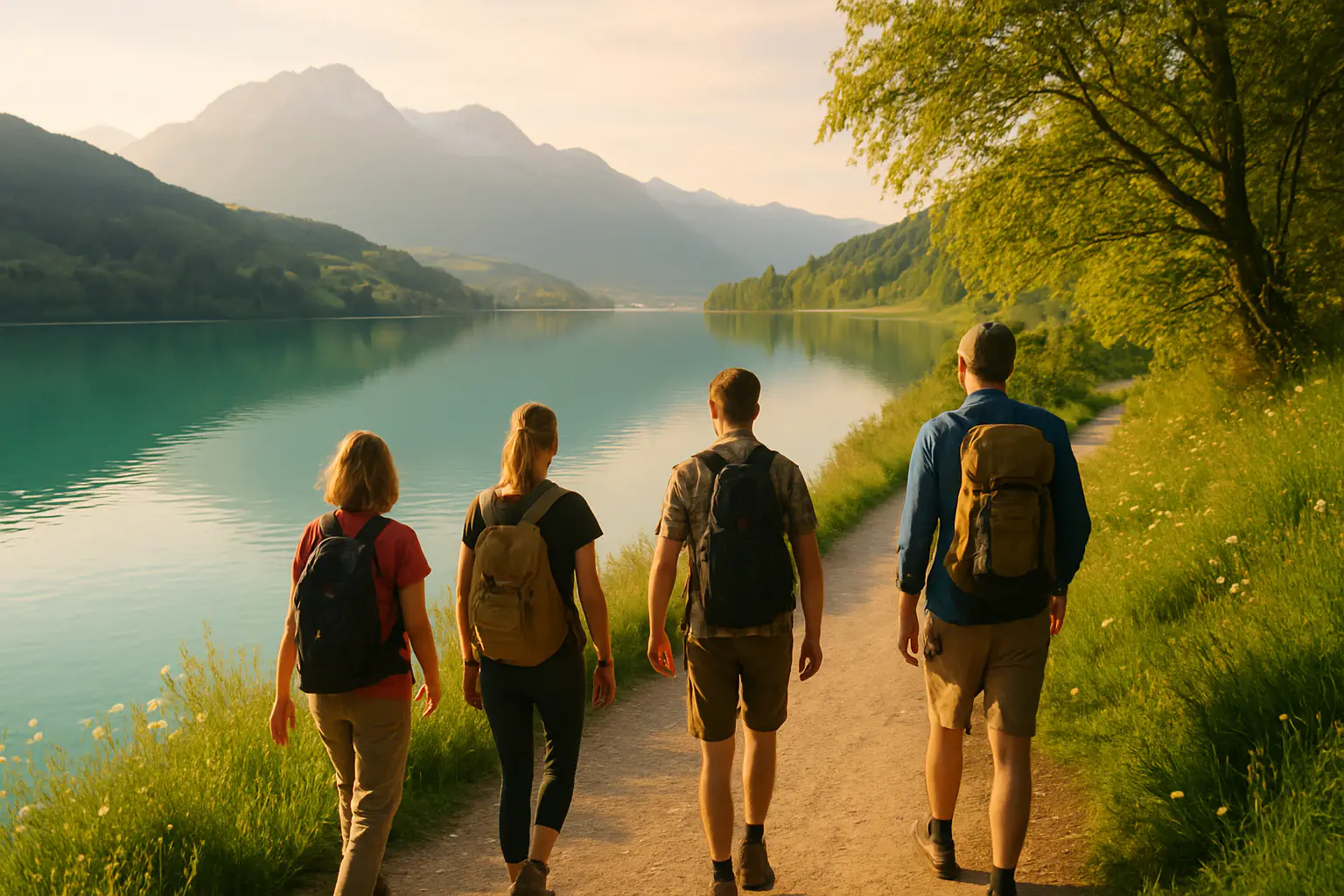
Looking for easy spring hikes in Europe without a car? The best trips are usually not the wildest or the most remote. They are the ones where the scenery feels rewarding, the logistics stay simple, and you can still enjoy the destination even if spring weather turns halfway through the weekend.
What “easy” means here: short half-day hikes, gentle full-day walks, coastal sections you can shorten, lake promenades, viewpoint trails with limited ascent, and destinations where public transport gives you a backup plan. You still need to respect spring conditions: mud, wind, showers, and occasional lingering snow at altitude can change the feel of a route very quickly.
Mobility
How to choose the right car-free spring hike
Before picking a destination, ask yourself four simple questions:
- Do you want coast, lake, forest, or hill views? This sounds obvious, but it is the biggest mood difference.
- How much transport complexity are you willing to accept? Some destinations are almost effortless from the station; others work, but only if you stay organized.
- Are you trying to keep costs low? Scenic does not always mean expensive, but some regions reward a stricter budget strategy than others.
- Do you need flexibility if the weather changes? A city base with multiple options is usually smarter in spring than a postcard-perfect but isolated village.
In general, the easiest format is one well-connected base town, one main scenic walk, one flexible second walk, and one slower arrival/departure day. That structure gives you room for changing forecasts, late buses, and the very normal spring reality of not wanting every single day to feel like a mission.
Mobility
12 easy spring hikes in Europe without a car
1) Cinque Terre, Italy — best for iconic coastal scenery with train backup
Cinque Terre is one of the most obvious picks on paper, but it still earns its place because it solves a problem many travelers have: you want big scenery without big logistics. The villages are linked by local trains, so you do not need to commit to a demanding full traverse. You can choose one section, enjoy it properly, then take the train back.
Best for: couples, first-time car-free hikers, travelers who want a beautiful but manageable long weekend.
Best base: La Spezia. It is usually more practical and often cheaper than sleeping inside the five villages. That matters if you want easier arrivals, better value, and more accommodation choice on Booking.com.
Budget fit: mid-range rather than ultra-cheap, but manageable if you sleep outside the postcard core and keep restaurant spending sensible.
Trade-off: the views are famous for a reason, but this is not a secret destination. Even in spring, some spots can feel busy.
Practical tip: always check the official trail status page and the Cinque Terre Card information before you go. Trail access and conditions can change.
2) Lake Bled and Vintgar Gorge, Slovenia — best for a first easy hiking trip
If you are new to short hiking breaks, Bled is one of the safest recommendations in Europe. The lake loop is easy, scenic, and forgiving, while nearby Vintgar Gorge adds something more dramatic without requiring a truly strenuous day.
Best for: beginners, couples, casual walkers, travelers who want scenery without feeling like they are “doing a hiking holiday.”
Best base: Ljubljana for easier logistics and better value, or Bled itself if you are happy to spend more for a slower pace.
Budget fit: good value overall, especially compared with alpine destinations farther west.
Trade-off: it is polished and popular rather than wild. That is part of the convenience, but some travelers may want a less iconic atmosphere.
Practical tip: check the official visitor information, the opening details, and local access guidance from Bled tourism before planning the gorge around your train or bus day.
3) Costa Brava, Spain — best for easy sea views and relaxed half-day walks
The Costa Brava is ideal if your dream spring walk is less about distance and more about pine trees, coves, stone paths, and lunch with a sea view. The old camins de ronda are perfect for travelers who want scenic movement without turning the whole trip into a sporting challenge.
Best for: spring sun seekers, couples, friends on a short break, travelers who want coastal scenery over mountain atmosphere.
Best base: Girona if you want better transport and lower stress, or a small coastal town if you prefer slower mornings near the water.
Budget fit: often good, especially if you avoid peak-summer style resort thinking and use Girona as your base.
Trade-off: some sections are very easy, others include more steps and small climbs than people expect. “Coastal path” does not always mean flat.
Practical tip: Spain’s official tourism site has a useful overview of the Camí de Ronda. The smartest approach is to pick one gentle section, not try to turn the whole coast into a checklist.
4) Edinburgh, Scotland — best for a city break with real hiking energy
Edinburgh is one of the best examples of a place where you can have a satisfying outdoor trip without ever feeling cut off from cafés, museums, and easy urban comfort. Arthur’s Seat gives you a genuine summit feel inside the city, and the Pentland Hills offer a second day out if you want more green space.
Best for: solo travelers, couples, city-break fans, people who want a mix of culture and short hiking.
Best base: central Edinburgh or the Southside for walkability and easy bus access.
Budget fit: mid-range; not the cheapest, but good value if you like combining city time and outdoor time in one trip.
Trade-off: weather can be highly changeable. You may get sun, wind, drizzle, and bright skies in the same afternoon.
Practical tip: use the official Holyrood Park information for Arthur’s Seat planning, and the Pentland Hills access guidance for a second outing.
5) Bergen, Norway — best for dramatic scenery with low-effort access
Bergen is not a budget destination, but it is one of the strongest options if you want maximum visual payoff with limited hiking effort. Mount Fløyen is the key. You can walk, ride the funicular, or combine both, then choose from short forest walks or longer scenic routes once you are up there.
Best for: travelers who want Nordic scenery without committing to serious mountain hiking.
Best base: central Bergen. This is one of those places where staying central genuinely improves the trip.
Budget fit: higher-cost destination, better for a shorter break than a long budget trip.
Trade-off: prices are high, and visibility is not always guaranteed. The silver lining is that Bergen still feels atmospheric in damp weather.
Practical tip: Visit Bergen’s official pages on walking up or down Mount Fløyen and the wider Fløyen area are useful when deciding how ambitious to be.
6) Lake Como, Italy — best for scenic walking with ferry variety
Lake Como works well if you stop thinking of it as a glamorous grand tour and start treating it as a soft walking destination. The best version is usually simple: one or two village promenades, one ferry crossing, and one low-effort viewpoint instead of a complicated multi-stop day.
Best for: couples, travelers who like water views, people who want a gentler rhythm than a classic mountain weekend.
Best base: Como for transport simplicity, or Varenna if atmosphere matters more than convenience.
Budget fit: mid-range, with the possibility of getting expensive if you overdo ferries, premium stays, and restaurant-heavy days.
Trade-off: lake transport is scenic but slower than many travelers expect. You can lose a surprising amount of time by trying to do too much.
Practical tip: check the official Lake Como ferry timetables before building your day around boat connections.
7) Interlaken, Switzerland — best for postcard scenery without chasing high-alpine goals
Interlaken is the destination for travelers who want Switzerland’s beauty without pretending they need a high, snowy, all-day mountain mission in spring. The clever move is to stay lower, focus on lakeside walks, valley-level views, and scenic transport, and save the more serious alpine ambitions for another season.
Best for: people who want classic alpine scenery with lower physical demands.
Best base: Interlaken itself for the easiest connections.
Budget fit: expensive by nature, but still workable as a short break if you keep your sleep-food-transport plan disciplined.
Trade-off: it is easy to overspend here without realizing it, especially if you start stacking premium scenic transport.
Practical tip: use the official Jungfrau region guidance for ideas around Lake Thun and Lake Brienz, and treat one boat or rail extra as the splurge instead of five.
8) Salzkammergut, Austria — best for calm lake-and-forest days from one practical base
The Salzkammergut region is excellent for travelers who want classic Central European scenery without constant hotel changes. Hallstatt is the name everyone knows, but Bad Ischl usually makes more sense as a base if you care about transport, flexibility, and sanity.
Best for: couples, calm travelers, people who like beautiful lakes and gentle walking more than headline attractions.
Best base: Bad Ischl.
Budget fit: moderate; often easier to manage than Switzerland while still feeling very scenic.
Trade-off: some of the prettiest spots are less straightforward without a car, so route choice matters.
Practical tip: check regional information on the official Salzkammergut tourism website. If you want to reach a more awkward trailhead or simplify transfers, a one-day car rental can be useful here without turning the whole trip into a driving holiday.
9) Peak District, England — best for big views on a tighter budget
The Peak District is a strong pick if you want a real countryside feeling without expensive alpine logistics. Mam Tor is famous because the effort-to-view ratio is excellent, and the Hope Valley area is good for simple car-free planning.
Best for: budget-conscious travelers, walkers who like open ridges and rolling hills, UK weekend travelers.
Best base: Sheffield for cheaper rooms and city convenience, or Hope Valley for immediate access.
Budget fit: one of the better-value options on this list.
Trade-off: the challenge is often mud and weather, not fitness. A route can be easy on paper and still feel messy underfoot.
Pace tip: keep it simple. One ridge walk, one village stop, one pub meal is usually more satisfying than an overplanned all-day loop.
10) Brittany, France — best for ocean air, cliffs, and a strong sense of place
Brittany works beautifully in spring because the GR34 is not one fixed trip. You can choose a section that suits your energy, the forecast, and your train access. That makes it more flexible than many travelers realize.
Best for: beginners, couples, solo travelers, anyone who likes sea views but does not need Mediterranean warmth.
Best base: it depends on the section, but Saint-Brieuc, Morlaix, Vannes, or Lorient can make sense as practical rail-linked bases.
Budget fit: often good, especially outside the most polished resort pockets.
Trade-off: the atmosphere is more rugged than glamorous. Wind matters here as much as sunshine.
Practical tip: France’s official tourism resources and local tourist offices are useful when narrowing down which GR34 stretch actually suits a short break instead of trying to choose the whole coastline at once.
11) Verdon, France — best if you want a wilder feel and accept trickier logistics
Best for: travelers who value dramatic landscapes and do not mind planning more carefully.
Best base: Moustiers-Sainte-Marie or near Lac de Sainte-Croix if your timings line up well.
Budget fit: moderate, but transport awkwardness can push costs up if you rely on last-minute fixes.
Trade-off: fewer public transport options means less spontaneity. If your plan depends on multiple perfect connections, it is too fragile.
Practical tip: focus on one or two short scenic walks and viewpoints, not the fantasy of “doing Verdon” in one huge day. If you want more flexibility here, a short rent a car segment can make sense.
12) Ljubljana and Škofja Loka, Slovenia — best quiet-value alternative to the usual icons
This is the quieter Slovenia option for travelers who like the idea of Bled but want something less obvious. Ljubljana is one of Europe’s most comfortable small capitals for this kind of trip, and nearby areas such as Škofja Loka let you mix old-town atmosphere with softer countryside walking.
Best for: travelers who want low-stress logistics, good value, and a spring trip that feels balanced rather than overexposed.
Best base: Ljubljana.
Budget fit: very good compared with many western European scenic destinations.
Trade-off: the wow factor is gentler than in famous coast-and-cliff destinations, but the overall trip can feel easier and more coherent.
Food bonus: Slovenia is often kinder to the budget than first-time visitors expect, especially once you move away from the most obvious tourist zones.

Decision
Which destination fits which traveler?
| Destination | Best for | Budget fit | Main trade-off |
|---|---|---|---|
| Cinque Terre | Iconic scenery + easy train fallback | Mid-range | Popular and sometimes busy |
| Bled + Vintgar | Beginners and easy first hiking trip | Good value | More polished than wild |
| Costa Brava | Sea views and short scenic walks | Good value | Some sections are less flat than expected |
| Edinburgh | City break + real outdoor time | Mid-range | Fast-changing weather |
| Bergen | Dramatic scenery with limited effort | High | Expensive |
| Lake Como | Water views and relaxed pacing | Mid-range | Slow transport between villages |
| Interlaken | Alpine postcard scenery | High | Easy to overspend |
| Salzkammergut | Lake-and-forest calm | Moderate | Some access still awkward |
| Peak District | Value and open views | Budget-friendly | Mud and weather |
| Brittany | Coastal atmosphere and flexibility | Good value | Windy and less sun-focused |
| Verdon | Wilder scenery | Moderate | More fragile without a car |
| Ljubljana + Škofja Loka | Quiet value and low stress | Very good | Less instantly iconic |

Accommodation
Why the base town matters more than the trailhead
One of the most common mistakes on this kind of trip is choosing the prettiest village instead of the most useful base. A pretty place can absolutely be worth it, but in spring the better question is usually: where can I sleep so that the trip still works if the weather shifts or one connection goes wrong?
That is why La Spezia often beats a Cinque Terre village, Girona often beats a smaller Costa Brava town, Ljubljana often beats staying in Bled, and Bad Ischl often makes more sense than sleeping in Hallstatt. The same principle applies almost everywhere: choose the place with better transport, more food options, and a realistic range of accommodation, then travel outward for the actual walk.
When searching for accommodation, it helps to filter for places within walking distance of the station or bus stop, with breakfast nearby and cancellation flexibility in case your transport changes. That is where Booking.com is often useful for this style of trip.

Accommodation
Where to stay: compare the four bases on equal terms
For Easy Spring Hikes in Europe Without a Car, use the same dates, number of travellers and cancellation terms in all four searches. Then check the real journey to the station, beach or first visit—not only the map distance.
La Spezia, Italy
Compare recent reviews, total fees and the exact location before paying.
Lake Bled, Slovenia
Compare recent reviews, total fees and the exact location before paying.
Bergen, Norway
Compare recent reviews, total fees and the exact location before paying.
Edinburgh, Scotland
Compare recent reviews, total fees and the exact location before paying.
Rhythm
A simple 4-day format that works well in spring
Day 1 — Arrival and warm-up
Arrive, check in, and do one short walk close to your base: a promenade, a lakeside loop, a city hill, or a short cove-to-cove section. Buy water, snacks, and picnic supplies so you do not lose time the next morning.
Day 2 — Main scenic hike
Use this for the walk that made you choose the destination: Arthur’s Seat, a Costa Brava section, a Bled and Vintgar combo, a Cinque Terre segment, or a Peak District ridge. Start early, but do not make the schedule so tight that one missed bus ruins the day.
Day 3 — Flexible second outing
This is where a good base town pays off. If the weather is great, do the second best walk. If not, downgrade the plan: choose a forested route, a shorter lake path, or a town-focused day. Spring travel gets much easier once you stop treating every plan B as a failure.
Day 4 — Easy finale and departure
Keep the last morning light. A final viewpoint, a café breakfast, or one more short promenade usually feels better than trying to squeeze in another ambitious route before check-out.

Conditions
Paid options that solve a real constraint
For Easy Spring Hikes in Europe Without a Car, book only when a guided visit secures a timed entrance, replaces awkward transport or adds context you genuinely want. Compare language, meeting point, duration and cancellation before paying.
Bled and Vintgar Gorge with food tasting
Check the exact time, inclusions and weather policy before booking.
Bled: Alpine fairytale day tour
Check the exact time, inclusions and weather policy before booking.
Edinburgh: guided hike up Arthur’s Seat
Check the exact time, inclusions and weather policy before booking.
Budget
Budget, transport, and common mistakes
The good news is that this type of trip can be surprisingly affordable. The bad news is that travelers still find ways to make it more expensive and more stressful than it needs to be.
- Mistake 1: choosing a romantic but badly connected village and then paying for time, taxis, or awkward transfers.
- Mistake 2: planning too many stops in one day, especially around lakes and ferry networks.
- Mistake 3: packing for summer just because the calendar says spring.
- Mistake 4: assuming “easy hike” means no wind, no mud, and no need to check local conditions.
- Mistake 5: booking everything around a single perfect-weather version of the trip.
The best spring walking plans are not the most ambitious ones. They are the ones that still feel good when the weather is only decent instead of perfect.
If you are still comparing overall value across destinations, it can also help to browse broader budget-focused inspiration such as cheap Eastern Europe countries for budget trips or where to go in June in Europe to avoid the crowds. They are not hiking guides, but they can help narrow down the kind of trip that fits your budget and travel mood.
For transport, keep the order logical: pick the region first, pick the base town second, compare accommodation third, and only then find flights if rail is not the best option from your departure city.
Conditions
What to pack for an easy spring hiking break
- A light waterproof or windproof jacket
- One warm mid-layer
- Comfortable shoes with decent grip
- A small daypack
- Water and snacks
- Sunscreen and sunglasses
- A power bank and offline maps
You do not need heavy mountain gear for most of these destinations. What matters more is being able to deal with changing conditions and a bit of underfoot mess.

Practical answers
FAQ
Is spring really a good season for hiking in Europe without a car?
Yes, especially for coastal routes, lake walks, and lower-altitude hill trails. Temperatures are often more comfortable than in summer, and many destinations feel calmer. The price of that comfort is needing a little flexibility with weather.
Do I need hiking boots?
Not always. For many lake loops and easier coastal paths, comfortable walking shoes are enough. But grip matters, especially if the trail includes wet stone, mud, or uneven steps.
Which destinations are easiest for complete beginners?
Bled, Edinburgh, Costa Brava, and Lake Como are among the easiest because you can shorten the day, combine walking with sightseeing, and rely on fairly simple public transport.
Which destinations work best on a tighter budget?
Ljubljana as a base, the Peak District, parts of Brittany, and Costa Brava with Girona as a base are among the strongest value options among these destinations.
Which destinations are the least forgiving without a car?
Verdon and some corners of the Salzkammergut need a bit more discipline. They can still work, but they do not give you the same effortless backup options as Cinque Terre or Bled.
Decision
Final thoughts
The best easy spring hikes in Europe without a car are not really about collecting the “best” trail. They are about choosing a place where the whole trip feels coherent: easy arrival, a base town that makes sense, one or two scenic outings, and enough flexibility to enjoy the destination even if spring behaves like spring.
That might mean a train-backed coastal section in Cinque Terre, a cove-to-cove walk on the Costa Brava, a relaxed lake-and-gorge trip from Ljubljana, a windy Edinburgh summit, or a soft scenic weekend around Lake Como. Choose the destination that matches your pace, not just the prettiest photo. Then book the stay, double-check the local transport, and find flights only once the overall plan makes sense.
Some links may be affiliate links, at no extra cost to you, and they help support the site.
.jpg?width=1280)
Trip design
Useful guides for the next decision
These live articles complement car-free spring hikes with itineraries, comparisons and seasonal alternatives.
- Cheap eastern europe countries budget travel
- Where to go in june in europe to avoid the crowds
- Flights
- Cheap summer destinations europe june before peak season
- Beginner naturism europe 10 easy first spots
- Best diving islands europe short break
- Best naturist destinations europe september
- Cheap naturist destinations europe best budget spots
- Naples in june which trip to choose for your budget
- Safe budget destinations spring summer
Some booking links for car-free spring hikes are affiliate links. Your price is unchanged; always check the provider, inclusions and conditions before paying.
Related articles