Where to Dive in Europe: 7 Islands for a Short Car-Free Break
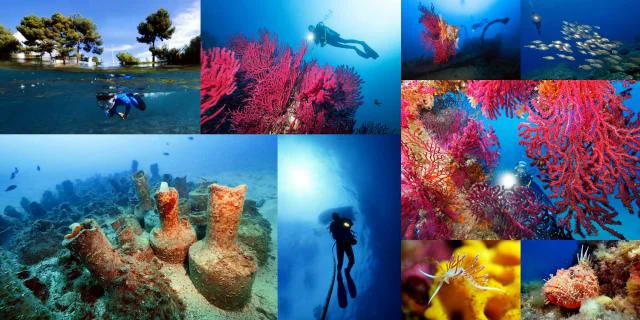
Tenerife, Gozo, Madeira and the other islands are not stages in an itinerary linking Tenerife, Gozo, Madeira and the other islands. To see which of them remain strongest between December and March, our winter scuba diving in Europe comparison filters specifically for the cold season. They are seven competing destinations: choose one for the trip, book a dive centre based on that island and keep the same base until the diving programme is over. Trying to connect several of them in a few days would require flights, ferries and transfers that are incompatible with a useful dive schedule and with safe intervals before exposure to altitude.
For a short break reached by air, four nights are the minimum planning model here, not a promise to collect sites. The cautious structure is straightforward: arrive and check in with the centre, allow one or two dive days suited to the diver, then keep at least one complete day out of the water before the return flight. For a cautious schedule that is easy to verify, allow at least 24 hours between the final dive and take-off. If a computer, centre, training agency or medical professional requires longer, the longest interval wins.
The choice therefore depends on certification, recent experience, desired dive type, sea conditions and local logistics. A deep wreck, cavern, exposed wall or rocky entry does not become suitable because it appears in a list. The centre must approve site, equipment, gas, supervision and backup according to the conditions on the day.
The trip at a glance
Which trip should you plan?
Tenerife suits travellers who want many operators, year-round visitor infrastructure and volcanic underwater scenery. The south can simplify a short stay through its concentration of accommodation and centres, but “Tenerife” is not a precise location: compare arrival airport, centre address, harbour or shore entry and pickup time. Do not turn the post-dive surface day into a Teide ascent or high-altitude drive. Put Teide before the dive sequence, on a sufficiently separate day, or remove it from this trip.
Gozo is a destination in its own right, reached from Malta by land transfer and ferry. Its shore dives, formations, caverns and wrecks appeal to different profiles, but the final connection changes a weekend. Sleep on Gozo and dive with a Gozo centre instead of commuting from the island of Malta every morning. Rough water can close an entry and move the programme; a good centre offers a level-appropriate alternative, not a race to another island.
Madeira is the Atlantic option for divers comfortable with more exposed ocean conditions who can concentrate the stay around Caniço, Garajau or Caniçal. Protected areas, rocky relief and biodiversity give the trip a clear purpose, but weather and sea state decide the site. Select the centre and its usual operating area before the room. Mountain roads and high hikes are not an automatic “dry-day” programme after diving: schedule them before the dives or discuss them explicitly with the centre.
Malta, meaning the main island, is convenient for a first look at wreck and shore-diving options, with more urban choice than Gozo. It should not be presented as interchangeable with Gozo within the same day. For four nights, select either a Malta base or a Gozo base. Ferries and transfers can be used before the dive sequence begins or once the required interval has elapsed, but they do not justify an island-collecting programme.
Lanzarote combines volcanic topography, numerous dives and legible bases such as Puerto del Carmen. It can work without a car when hotel, centre and departure point align. Wind and swell may still move or cancel an outing; booking a named site months ahead does not guarantee access. For an introduction, request a genuinely suitable environment and a clear supervision ratio rather than choosing the most dramatic photograph.
Cyprus contains two very different projects. Larnaca draws wreck divers to Zenobia, which requires certification and experience compatible with the planned profile; it is not an introductory dive. More sheltered bays towards Protaras and Cape Greco can suit another level. Do not book generic “Cyprus diving”: choose the region and site type, then an accredited centre that checks logbook, recent experience and certification limits.
Crete is enormous on the scale of a short break. Choose one zone, such as the west around Chania, then a nearby centre and accommodation. Crossing the island to tick a second site consumes the weather buffer and tires the group. Crete works better for a traveller combining two local dive days with a proper coastal day than as an extra stop on a flight circuit between islands.

When to go and how many days to allow
The Canaries and Madeira can support operations across much of the year, while the Mediterranean often concentrates its easiest conditions when water, weather and seasonal services align. That does not guarantee visibility, temperature or departure: wind, swell, rain, marine traffic and boat availability remain local and change daily.
Ask the centre which sites it normally uses in your month, what it substitutes when wind changes, which thermal protection local divers actually use and how many departures are from shore or boat. A precise backup plan is more useful than an annual average temperature.
Four nights allow arrival without diving, two possible dive days and a complete surface day. With only three nights, the return flight may remove the second dive day or make the whole trip too tight. Five or six nights create a real weather buffer, allowing a cancelled outing to move without touching the preflight interval.

Where to stay
Choose accommodation after the centre, or at least alongside it. Ask for the exact meeting address, departure time, pickup arrangements, equipment storage and drying, and the early-morning route. “Ten kilometres from the site” can hide a slow road, ferry or missing bus.
The four cards below are alternatives, not stages. Book only one. On Gozo, spend the nights on Gozo; on Madeira, stay on the coast where the operator works; in Cyprus, do not confuse wreck-focused Larnaca with easier eastern bays.
South Tenerife
Many centres and hotels; verify airport, pickup and intended site. No Teide ascent after diving.
Gozo
Sleeping on the island removes the daily ferry. Pick the locality around the centre and its entries.
Caniço, Madeira
Useful for Garajau and several operators; check gradient, bus and equipment transfer.
Larnaca, Cyprus
Choose it for a wreck project matching certification, not to improvise an introduction on Zenobia.

Getting there and moving around
Tenerife, Madeira, Lanzarote, Cyprus and Crete normally require separate flights from the mainland or their own connection. Gozo requires arrival in Malta followed by a road transfer and ferry. They are therefore separate trips: never build a dive itinerary that connects them by air within a few days, especially immediately after diving.
An aircraft cabin exposes the body to pressure below sea-level pressure. The consensus published by Divers Alert Network recommends minimum surface intervals of 12 hours after one no-decompression dive, 18 hours after repetitive diving over multiple days, and substantially longer than 18 hours after dives involving mandatory decompression or certain mixes. These minimums do not describe every traveller or profile. A computer, agency, centre or doctor may require longer; never shorter in our model.
Terrestrial altitude matters too. A Teide road, Madeira's high terrain or another post-dive ascent can lower ambient pressure without boarding an aircraft. Keep the surface day at sea level or low altitude and ask for competent advice when uncertain. Put summit visits and high roads before the first immersion, not between the final dive and the flight.
On the chosen island, use a centre transfer when clearly included; it solves cylinders and can reduce fatigued driving. If a car is necessary, verify driver, parking, shore access and the policy for wet equipment. Keep margin after a boat dive before even a local ferry: a delayed return, rinsing and sea state can move the timetable.

Day-by-day itinerary
Arrive on the one selected island
Morning. Reach the accommodation and centre without scheduling a dive on arrival day, especially after a late flight or connection.
Afternoon. Present certification, logbook, last-dive date and medical questionnaire. Fit suit, mask, weights and rented equipment.
Evening. Confirm time, meeting point, transport, weather and backup site. Sleep on this island; no second destination is added.
Why this order: equipment and transfer problems are solved before anyone enters the water.
First local dive day
Morning. Begin with a check dive or site matching recent experience. Decide with the centre, not with an online ranking.
Afternoon. Add a second dive only when profile, group and conditions allow. Follow computer, depth, gas and surface-interval requirements.
Evening. Rinse equipment, hydrate, eat and check tomorrow. No flight, aerial island hop or high-altitude ascent follows.
Why this order: the first day measures conditions and comfort before a harder objective.
Second day on the same island
Morning. Choose the main site among those actually open. A wreck, cavern or wall remains subject to certification and supervision.
Afternoon. Keep a conservative profile and an easier substitute if the sea changes. Record the exact surfacing time of the final dive.
Evening. The no-altitude and preflight interval starts at that time. Dinner stays local; there is no transfer to another island.
Why this order: the same centre retains knowledge of the group and removes needless logistics.
Complete no-dive day at low altitude
Morning. Walk along the coast, visit a town or rest. Do not ascend Teide or Madeira's high peaks after the dives.
Afternoon. Check the final surfacing time against the flight. If 24 full hours are unavailable, move the departure.
Evening. Pack dry equipment and arrange the airport transfer. With unusual symptoms, do not fly and seek urgent medical advice.
Why this order: the surface day is a safety component, not a gap to fill with another island.
Depart after the verified interval
Morning. Leave only once the conservative 24-hour interval is complete and any longer instruction has been followed.
Afternoon. Keep airport or exit-ferry margin; a transfer delay must never encourage a shorter interval.
Evening. The trip ends without another underwater activity. A second archipelago belongs to another journey.
Why this order: the return ticket follows the dive-safety plan, never the reverse.

What should be booked first?
The links below point directly to the product described. Compare language, inclusions, cancellation and end point.
Tenerife beginner try dive
An example only for travellers who selected Tenerife. Check medical form, supervision ratio, exact site and the interval before flying.
Tenerife first scuba experience
Another Tenerife-only option, not a stage after Gozo or Madeira. Confirm depth, equipment, transport and weather policy.
Abades protected-area dive
An advertised Abades-area experience to compare with actual level and hotel location. It never justifies an inter-island transfer.
Eat without turning the trip into a trap
Food supports the programme instead of complicating it. Eat a digestible breakfast early enough, carry water and ask how lunch works between outings. A distant gastronomic booking is poor value when it makes the group rush for the boat.
After diving, hydrate, eat normally and do not build the evening around excess alcohol. The next morning starts with an honest check of fatigue, ears and general condition.
The no-dive day is ideal for a market, coastal restaurant or low-altitude town. In Tenerife and Madeira, do not choose a summit restaurant or high scenic road as a routine “dry activity” after immersion.
- Breakfast near the centre with no journey threatening departure time.
- Personal water and a snack consistent with operator instructions.
- A light lunch whose timing respects the surface interval.
- Local dinner on the same island and near the accommodation.
- A coastal surface day without excess alcohol or an altitude excursion.

Realistic budget per person, excluding flights
The ranges below are planning envelopes per person for four nights in a shared room, excluding flights. Actual cost varies by island, season, owned equipment, number of dives, boat and supervision. A remote wreck or boat dive is not priced like a straightforward shore dive.
Request a written quote listing cylinders, weights, suit, computer, any insurance, transfer, boat, tax and cancellation. The cheapest trip is not the one with the lowest airfare but the one where centre, room and transport work without a rental car or daily ferry. Keep a reserve for a weather substitution without ever spending the surface day.
| Item | Controlled budget | Comfort |
|---|---|---|
| Accommodation, 4 nights | €160–420 | €380–820 |
| Diving and equipment | €190–380 | €340–620 |
| Food | €110–210 | €220–390 |
| Local transfers | €35–120 | €100–260 |
| Total excluding flights | €495–1,130 | €1,040–2,090 |
Booking strategy and backup plan
Book in this order: one island, flights leaving at least 24 complete hours after the final dive, a centre suited to the diver, then accommodation near that centre. Before paying, send certification, number of logged dives, most recent dive date, rental needs and any medical question that must follow the centre's procedure.
Do not book a headline site as a guaranteed attraction. Ask for two programmes: normal conditions and adverse wind or swell. A responsible centre may change site, shorten or cancel an outing. That decision protects the diver and should not be challenged merely to justify a ticket.
The flight follows the dive plan. Record the expected final surfacing time, add at least 24 hours and confirm take-off lies beyond it. Mandatory-decompression dives, technical profiles, symptoms or a stricter instruction require longer. Suitable insurance, emergency contacts and an understanding of local chamber provision belong in the preparation.
Share the plan with a non-diver or someone at home: centre, boat, schedule and contact. Keep certification, insurance, personal medicines and medical information according to the applicable rules. The itinerary organises the trip; dive professionals and medical professionals decide what is safe for the person and the day.
Common mistakes to avoid
- Presenting the seven islands as stops on one itinerary.
- Flying or ascending to altitude inside the post-dive interval.
- Booking the return flight before fixing the final dive time.
- Choosing Zenobia, a cavern or deep wreck without the relevant level.
- Sleeping on Malta and commuting by ferry to dive Gozo every day.
- Choosing a room before knowing the centre's operating area.
- Treating a no-dive day as a Teide excursion.
- Forcing a named site despite wind, swell or the centre's decision.
Frequently asked questions
These answers resolve the decisions travellers most often face.
Can Tenerife, Gozo and Madeira fit in one short break?
No. Each needs its own flight or transfer chain. Choose one island for this dive trip.
Can I fly the morning after diving?
Only when the required interval has fully elapsed. Our itinerary holds at least 24 hours; any longer instruction from the computer, centre, agency or doctor prevails.
Does DAN always recommend exactly 24 hours?
DAN publishes different minimums by profile: 12 hours after one no-decompression dive, 18 after repetitive multi-day diving, and substantially longer after mandatory decompression. Our 24-hour rule is a conservative planning buffer, not a simplified quotation from DAN.
Can Teide fill the no-dive day?
Not as a routine post-dive activity. Altitude also lowers ambient pressure; put Teide before the dive sequence or follow competent advice for the actual profile.
Which island is best for a beginner?
No island guarantees a safe introduction. Compare operator, sheltered site, supervision ratio, medical screening and daily conditions. Tenerife, Lanzarote, Malta or some Cyprus bays may have options depending on the operator.
Are Gozo and Malta one base?
Not for this plan. They share an archipelago but require ferry and transfers. For four nights, sleep on the island where you dive.
How many nights are needed?
Four at minimum to hold arrival, two possible dive days, a complete surface day and departure. An extra night better absorbs weather cancellation.
What if weather cancels the outing?
Accept a suitable substitute or cancel. Do not fly to another island and never cut the safety interval to recover a dive.
Official sources to recheck
Hours, prices, access and conditions change faster than the route. Check them when booking and again immediately before travel.
Transparency: some booking links are affiliate links. Using them may support LowCostWings without changing the displayed price. Recommendations remain based on trip value.