Where to Scuba Dive in Europe in Winter: 5 Destinations from December to March
Compare the Canary Islands, Madeira, Malta, Cyprus and Silfra for winter scuba diving: water temperature, dive level, where to stay and realistic cost.
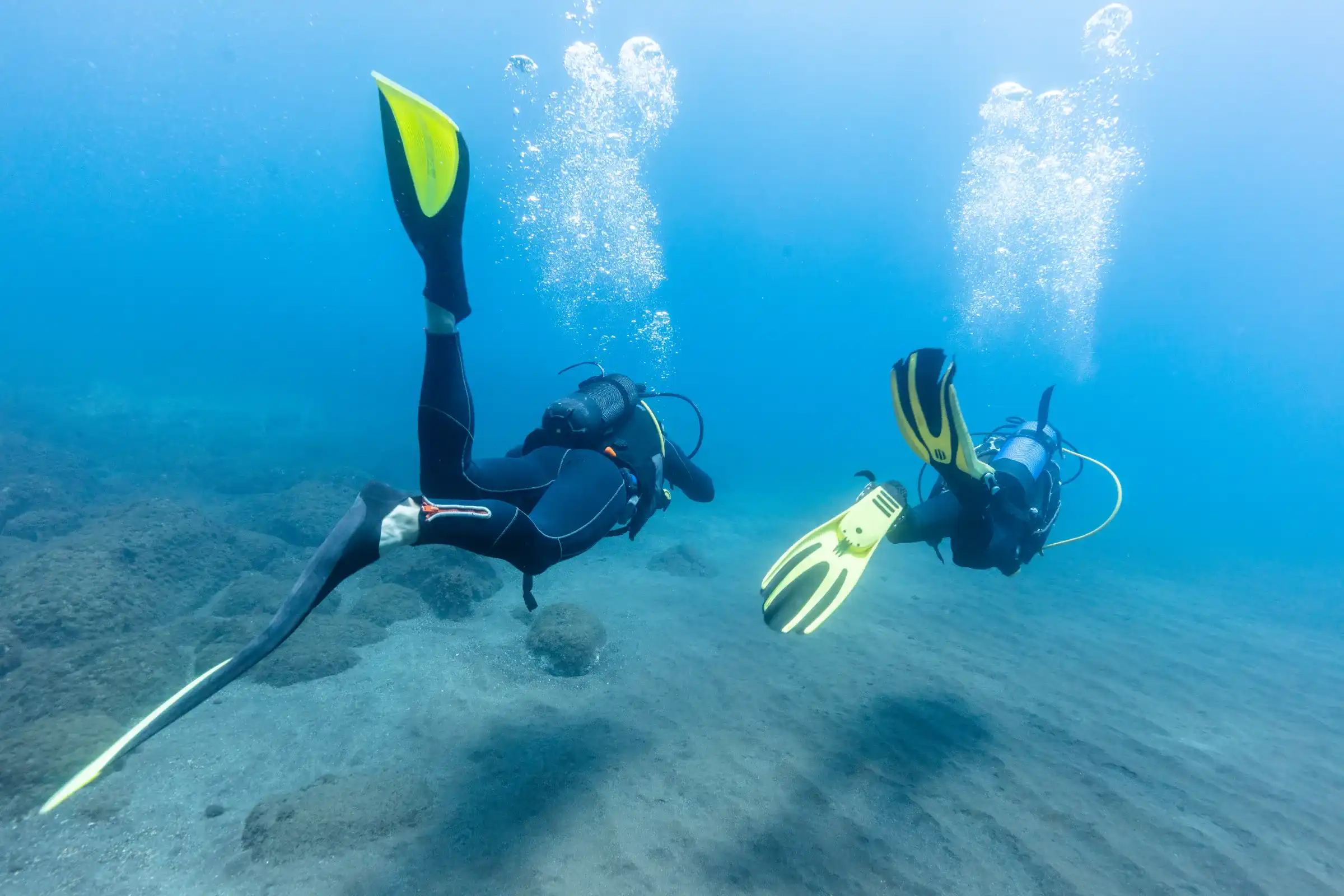
Yes, you can scuba dive in Europe all winter — but the trip changes by destination
European scuba diving does not stop between December and March; it shifts south and becomes more weather-dependent. The Canary Islands and Madeira still offer water around 18–20°C and substantial winter operations. Malta, Gozo and Cyprus remain diveable but demand warmer exposure protection and more flexibility. Silfra in Iceland is a completely different proposition: 2–4°C water, a dry suit and specific experience requirements.
The useful question is therefore not simply “where is the warmest water?”. You need to combine sea temperature, centres that are genuinely open for your dates, shore-versus-boat access, certification requirements, the backup plan when wind changes and the timing of the return flight. On a short winter break, a slightly colder destination with a reliable operator can be a much better trip than a theoretically warmer island with seasonal services.
Our trip-planning rule: keep one complete no-dive day before your return flight. DAN publishes minimum preflight surface intervals of 12 hours after one no-decompression dive and 18 hours after repetitive diving or multiple days, but decompression profiles, your dive computer, operator or medical advice may require more. The flight follows the dive plan, never the other way round.
The 5 European winter dive destinations that make the strongest case
| Destination | Winter water | Best fit | Exposure protection | Main compromise |
|---|---|---|---|---|
| Canary Islands | ~18–20°C | Easiest all-round winter trip | 5–7 mm depending on comfort | Swell and wind vary by coast |
| Madeira | ~18–19°C | Volcanic scenery and nature | 7 mm / semi-dry | Not every centre opens Jan–Feb |
| Malta / Gozo | ~14–17°C | Wrecks, caverns and shore dives | Thick 7 mm / semi-dry | Cold water and fewer boat options |
| Cyprus | ~16–17°C | Zenobia and certified divers | 7 mm / semi-dry | Wreck programme must match experience |
| Silfra | 2–4°C | Divers confident in dry suits | Dry suit | Cold, weather and technical prerequisites |
These are seasonal planning ranges, not guarantees. Suit choice also depends on dive duration, repetitive dives, wind at the surface and your own cold tolerance. For a two-dive winter day, plan warmer than the absolute minimum.
Canary Islands
Tenerife and Lanzarote combine year-round tourism, dive operators, flight choice and strong backup activities if the sea changes.
Gozo or Larnaca
Gozo packs a lot of diving into a small island; Larnaca makes sense when Zenobia genuinely matches your certification and experience.
Silfra
A unique cold-water dive, but only for travellers who meet the operator’s dry-suit requirements.
The easiest place to scuba dive in Europe from December to March
The Canary Islands are the most straightforward answer when you want a real winter holiday as well as scuba. Water is generally around 18–20°C, the islands remain busy through winter and several areas have dive centres operating throughout the year. That does not make the Atlantic predictable: different coasts can have very different swell and wind on the same day.
Tenerife is the easiest mixed holiday. Los Cristianos and the south combine hotels, restaurants, transport, excursions and numerous operators. Tenerife Tourism describes year-round water between 19 and 26°C and typical visibility of roughly 10–30 metres. In winter, a thick 5 mm or 7 mm suit is a more realistic starting point than a summer suit, especially for repetitive dives.

Lanzarote is more compact and especially appealing when volcanic landscapes matter above and below the surface. Puerto del Carmen is the simplest base: Playa Chica supports shore diving, there are several operators and non-divers can use the beach, promenade and restaurants without hiring a car. Lanzarote Tourism gives winter water around 18°C and often more than 20 metres of visibility.

El Hierro is the specialist choice. La Restinga gives access to the marine reserve and sites such as El Bajón can suit experienced divers looking for a trip built primarily around the water. It takes more effort to reach than Tenerife or Lanzarote, so it is not our default recommendation for a four-night mixed holiday.
Which Canary Island? Tenerife for the easiest mixed trip, Lanzarote for compact volcanic diving, El Hierro for a dive-first holiday. If the wider island experience still matters, compare our Canary Islands in winter guide.
H10 Big Sur
An adults-only base in Los Cristianos that works especially well when only one traveller dives: restaurants, the promenade, beaches and land excursions remain easy for the non-diver.
THB Flora
A practical Puerto del Carmen base that keeps you near the Playa Chica area instead of adding a long transfer to every dive morning.
Do not turn your final no-dive day into a Teide summit excursion. Altitude matters after scuba too: schedule high mountain roads before your diving programme and keep the preflight surface day on the coast.
Excellent winter diving — as long as you check the operator’s opening calendar
Madeira is one of the strongest alternatives to the Canaries if you want Atlantic diving, volcanic scenery and a nature-focused trip. Visit Madeira describes diving as a year-round activity, with water around 18–19°C from December to March. Visibility can remain good, although winter brings more potential swell and wind than summer.
The crucial detail is operational: not every dive centre opens for all twelve months. Some close for part of January and February while others advertise year-round operation. For a mid-winter trip, choose the operator before the hotel and ask for the exact opening days, rental equipment and heavy-sea backup plan.

Caniço is the practical dive-focused base for the Garajau area and several operators along the south-east coast. Funchal is better when one traveller does not dive and wants a city, restaurants and more land-based options.
For thermal comfort, a 7 mm or semi-dry suit with a hood is a better winter baseline than a light 5 mm. On repetitive dives, the second immersion can feel far colder than the average sea-temperature number suggests.
Sentido Galosol
This coastal hotel has an on-site dive centre and removes a lot of morning logistics. Still confirm that the specific operator is running on your January or February dates before building the whole stay around it.
As in the Canaries, keep the post-dive day at low altitude. Madeira’s high viewpoints and mountain roads are tempting, but place Pico do Arieiro and major ascents before the first dives, not immediately after the last one.
Colder water, but a strong winter case for wrecks and shore diving
Winter Malta is not warm-water scuba: plan for roughly 14–17°C depending on the month. In return, the archipelago keeps two major advantages. Mediterranean visibility can remain excellent, and many sites are accessible from shore, reducing dependence on boat departures when wind makes one side of the islands uncomfortable.
For a trip mainly about diving, Gozo is usually the stronger base. Distances are short and experienced operators can move between coasts as wind direction changes. Winter still requires explicit confirmation that your chosen centre is open and an acceptance that the headline site may change on the morning of the dive.

Marsalforn makes sense when the operator is based in northern Gozo; Xlendi is another classic diving base. Sleeping on Gozo avoids commuting by ferry from Malta every morning. If only one person dives, St Paul’s Bay or Qawra on the main island provide more winter services and easier non-diving days.
Exposure protection becomes a real decision here. A thick 7 mm, semi-dry or sometimes a dry suit may suit winter depending on your experience. Ask what the guides actually wear in January or February, not what a generic annual packing list suggests.
Atlantis Lodge
The appeal is logistical as much as the room: Atlantis Lodge sits next to Atlantis Diving, making early starts, gear handling and the return after a cold dive considerably easier.
If your real goal is a first try dive or certification rather than a certified-diver winter holiday, our beginner scuba diving in Europe guide is the better starting point.
Larnaca becomes the winter base when Zenobia is the reason for travelling
Cyprus has a long dive season, but winter is cooler than the island’s sun-holiday image suggests. Visit Cyprus gives roughly 16–17°C from January to March. For a certified winter diver, the logic is different from a summer try dive in Protaras: Larnaca becomes the useful base because of Zenobia and operators working year-round.
Zenobia lies on its side with different sections running from roughly the mid-teens to more than 40 metres. That does not make “dive Zenobia” one single recreational product for every certification. Depth, penetration, overhead environment and the diver’s recent experience determine what is appropriate. Some operators use a check dive before taking a guest to the wreck.

Stay around central Larnaca, Finikoudes or Mackenzie depending on your operator’s meeting point. You remain close to the airport, have restaurants and the promenade for the no-dive day, and avoid relying on an eastern beach resort during its quietest season.
Best Western Plus Larco Hotel
Its position between central Larnaca and Mackenzie is useful for a short dive trip: you stay close to the airport and several possible meeting areas without isolating yourself in a seasonal resort.
If you are a complete beginner, do not choose Cyprus simply to “do Zenobia”. Our September and October beginner diving guide explains the difference between a try dive, a recently qualified Open Water diver and a more demanding wreck objective.
An exceptional winter dive, not a normal alternative to the Canaries
Silfra belongs in this guide because winter does not remove the experience — not because it makes it comfortable. The groundwater stays around 2–4°C throughout the year. Visibility can be extraordinary, but scuba requires a dry suit and genuine familiarity with that equipment.
Operators apply specific experience rules. DIVE.IS, for example, requires an Open Water certification or equivalent plus a dry-suit certification, or ten documented dry-suit dives within the previous two years. Recreational scuba at Silfra is limited to a maximum depth of 18 metres. Check the current operator terms before buying flights because not every otherwise qualified diver will meet the dry-suit requirement.

In winter, Silfra is also one of the Icelandic sites that remains regularly operational while snow, ice and road conditions make many alternatives harder. That does not guarantee departure: surface weather can still delay or cancel the experience.
Reykjavík is the easiest base. Transfer-inclusive options remove the need for a rental car just for the dive and the city provides a proper backup plan if conditions postpone the trip. It is also the expensive outlier in this comparison: one diving day can already exceed €250 before accommodation.
Center Hotels Plaza
On Ingólfstorg in the Old Town, it is convenient for city pickup points and gives you an easy Reykjavík day if weather moves the dive.
Silfra is not simply cold-water beginner scuba: do not book it unless your dry-suit experience meets the current operator rules. Cold, buoyancy and the equipment make this a very different dive from an easy Mediterranean or Canary Island shore entry.
The easiest choice changes slightly through winter
| Month | Easiest choices | What to check |
|---|---|---|
| December | Canaries, Madeira, Malta, Cyprus | Christmas availability, hotel demand and exact centre calendars. |
| January | Canaries, Malta / Gozo, Cyprus, Silfra | Some Madeira operators close for part of the month. |
| February | Canaries, Malta / Gozo, Cyprus, Silfra | Mediterranean water is near its coldest; Atlantic swell can still matter. |
| March | Canaries, Madeira, Malta, Cyprus | More seasonal centres reopen, but the sea remains cool. |
December and March generally give you a wider choice of operators. January and February require more individual checking, especially in Madeira and smaller Mediterranean bases. A destination described as “year-round diving” does not mean every centre you find online opens every winter week.
How to build a short winter dive holiday safely
Four nights are far more realistic than three when you want two possible dive days and a flight. Five nights give a genuine weather buffer. The outline below does not prescribe two dives per day: depth, number of dives and site choice always stay with the diver and the professionals running the day.
Arrive and confirm the plan
Check in, visit the centre, show certification, complete medical paperwork, fit rental gear and confirm tomorrow’s site.
Local dive days
Start with a site matching recent experience, then use the best weather for the main objective.
Complete no-dive day
Stay at low altitude, walk the coast or visit the town while the preflight surface interval runs fully.
Fly home
Leave only after the interval required by the profile, dive computer, operator and any medical guidance.
The land day is not wasted. In Tenerife it can be beach and promenade; in Madeira, Funchal; on Gozo, Victoria; in Larnaca, Finikoudes; in Reykjavík, museums and cafés. The key is not replacing scuba with a major altitude gain just before flying.
What does a 4-night winter diving break cost?
The ranges below are planning estimates per diver, assuming two people share a room and excluding flights. They are for comparison, not guaranteed rates. The number of dives, boat use, equipment rental, insurance, transfers and required certifications can move the total quickly.
| Destination | Accommodation, 4 nights | Indicative diving | Trip total excl. flights |
|---|---|---|---|
| Canary Islands | €150–320 | €170–300 | about €470–850 |
| Madeira | €170–340 | €190–300 | about €500–880 |
| Malta / Gozo | €150–310 | €150–280 | about €430–800 |
| Cyprus | €150–300 | €180–280 | about €460–800 |
| Silfra | €220–420 | ~€260–315 for one tour | about €650–1,050 |
Before comparing only the advertised dive price, ask what is included: cylinder, weights, suit, computer, insurance, boat, site transfer and supplements such as Nitrox. Two centres advertising €50 and €65 can finish at almost the same total once winter rental equipment is added.
Accommodation is the other big variable. For this kind of trip, compare hotels only after choosing the destination and dive operator. A room that saves €20 but adds a 45-minute transfer every morning is rarely good value.
9 questions to send the dive centre
- Are you open every day of my exact travel dates?
- Which sites do you normally use in January or February?
- What is the backup site when wind or swell changes?
- Is the dive shore-based or from a boat?
- What exposure protection do your guides actually use this month?
- Are suit, cylinder, weights, computer and insurance included?
- What certification, logged dives and recent experience do you require for my target site?
- What time is the final dive expected to surface?
- What interval do you require before my flight or any significant altitude gain?
Send your certification, logged-dive count, last-dive date and rental needs before paying. On Zenobia or Silfra, this conversation is part of booking the trip, not paperwork to solve after buying a flight.
Frequently asked questions about winter scuba diving in Europe
The Canary Islands generally offer the best balance, with water around 18–20°C through mid-winter. Madeira is close at roughly 18–19°C. Mediterranean destinations cool considerably more.
Can you scuba dive in Malta in January or February?Yes, but expect cold water, confirm that the operator is genuinely open and stay flexible around wind. Malta and Gozo benefit from many shore-access dive sites.
Can you dive in Madeira all year?The island supports year-round diving, but not every operator opens throughout January and February. Check the exact centre before booking accommodation.
Is Silfra suitable for a newly qualified Open Water diver?Not simply because the depth is moderate. Dry-suit requirements are central. You must meet the current operator’s dry-suit certification or experience criteria.
How long should I wait before flying after scuba diving?DAN recommends at least 12 hours after a single no-decompression dive and 18 hours after repetitive dives or multiple diving days. Some profiles require longer. Our short-break itineraries keep a complete no-dive day before the return flight.
Which destination works best with a non-diver?Tenerife and Madeira are the easiest to turn into full holidays away from the water. Larnaca and Reykjavík also work well when scuba is only one part of the trip.
Useful practical sources
Winter does not close European scuba diving — it rewards better planning
Choose the Canary Islands for the easiest trip. Pick Madeira for a more nature-focused volcanic alternative, but verify the operator in January and February. Gozo and Larnaca make stronger cases for wreck-focused certified divers. Silfra remains a specialist experience for people who genuinely meet the dry-suit requirements.
Whichever you choose, select the dive centre first, the accommodation area second and the return flight last. In winter, the quality of the bad-weather backup plan matters almost as much as the headline site.
Disclosure: some accommodation links may be affiliate links. This does not change the price you pay or the criteria used in our recommendations.