Portugal by Train Without a Car: Lisbon, Coimbra & Porto in 7 Days
A practical 7-day Portugal rail itinerary: Lisbon, Coimbra and Porto, two train journeys, six nights, stations, where to stay and realistic costs.
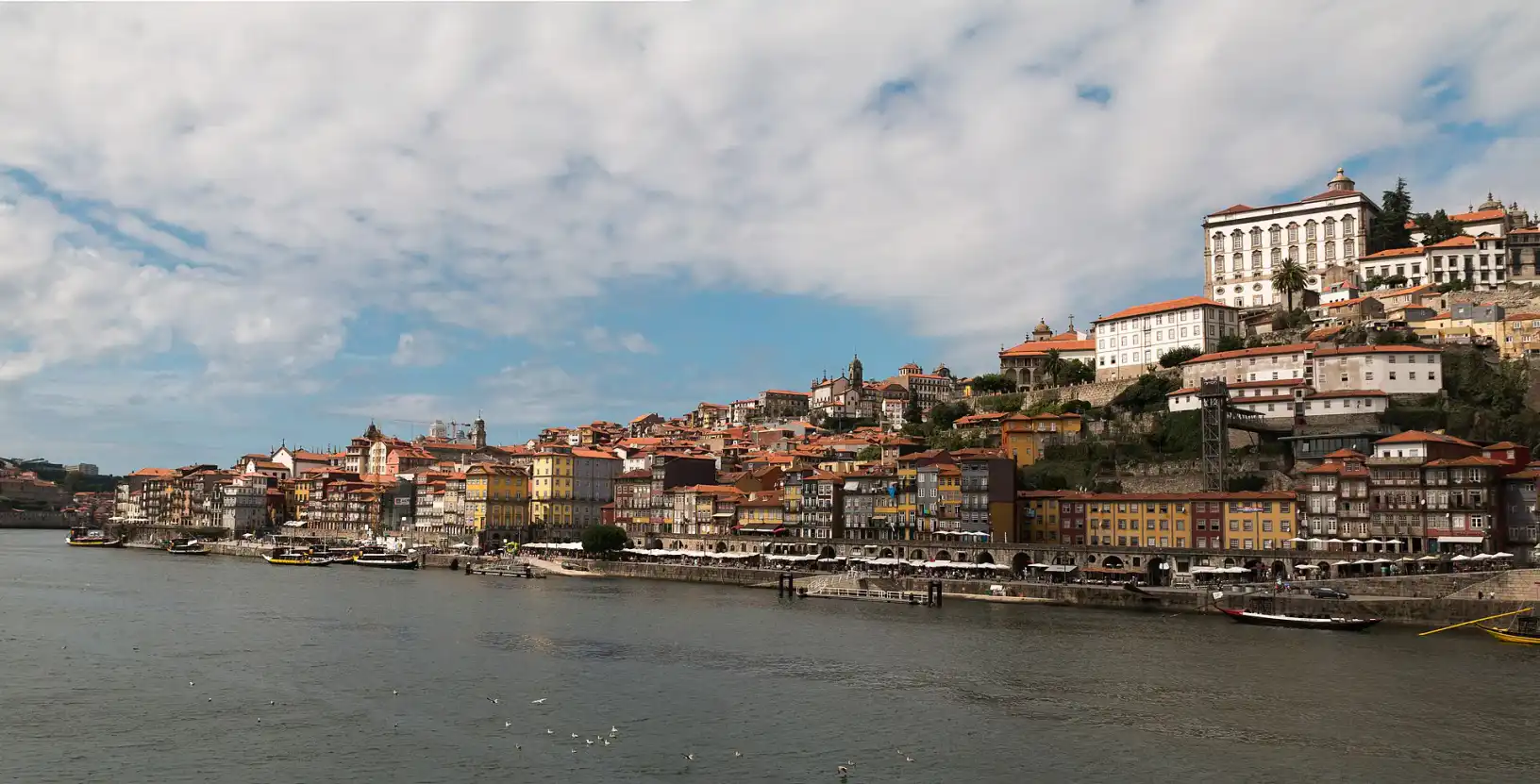
Portugal · Lisbon → Coimbra → Porto · 7 days / 6 nights
Lisbon begins with steep lanes and tiled façades. Halfway through the week, Coimbra swaps the capital's bustle for a hilltop university and the remarkable Joanina Library. Porto closes the journey with the Douro, riverside streets and the wine lodges of Gaia. Just two intercity trains connect all three cities, and there is no need to hire a car.
The most satisfying seven-day version is three nights in Lisbon, one in Coimbra and two in Porto. Rather than racing between landmarks, you have room for a proper lunch, a slow viewpoint and a few sights that matter. Flying into Lisbon and out of Porto saves a final cross-country journey; compare open-jaw flights before booking.
Portugal by train in seven days: the simple route
| Day | Plan | Overnight |
|---|---|---|
| 1 | Arrive in Lisbon, Baixa and the Tagus riverfront | Lisbon |
| 2 | Alfama, Graça and viewpoints | Lisbon |
| 3 | Belém, Jerónimos Monastery and river walk | Lisbon |
| 4 | Train to Coimbra; university and historic centre | Coimbra |
| 5 | Slow Coimbra morning; train to Porto and Ribeira | Porto |
| 6 | Porto, Gaia and one Douro activity | Porto |
| 7 | Final stroll and fly home from Porto | — |
This is seven calendar days, not seven full sightseeing days. A late arrival on day one or early departure on day seven will shorten your time. A return flight from Lisbon also means adding the Porto–Lisbon train and a sizeable airport buffer; it is not the same leisurely itinerary.
In this guide
- At-a-glance route
- Day-by-day itinerary
- Trains and stations
- Where to stay
- What to book
- Realistic budget
- When to go
- FAQs
Day by day: a week that does not feel like a transfer marathon
Day 1 — Lisbon: arrive, check in and see the river
Use the airport metro or a taxi if you have awkward luggage, then check in around Baixa, Rossio or Chiado. These districts balance access to restaurants, sights and your eventual train north. Your first walk can be almost effortless: Praça do Comércio, the Tagus waterfront and a late dinner in Chiado. Avoid booking a timed monument for an arrival afternoon that could easily be shortened by a flight delay.
A nearby viewpoint is a lovely bonus, but leave the steep lanes of Alfama for day two. Lisbon's cobbles can be slippery in the rain, and the exact hotel street matters when you are pulling a suitcase uphill.

Day 2 — Alfama, Graça and the downhill approach
Take a bus or tram uphill if it saves your legs, then explore Portas do Sol, Santa Luzia and Alfama as you descend towards the cathedral. São Jorge Castle makes sense if its history and hilltop setting appeal; free viewpoints are a fine alternative when time or money is tighter. Treat tram 28 as transport rather than a compulsory ride with a long queue.
Keep the afternoon for the smaller pleasures of the city: tile-covered lanes, cafés and maybe a museum in the same area. A fado evening can be excellent, but read the dinner requirement, performance length and cancellation terms first. In spring, our three-day Lisbon guide explores the capital's neighbourhoods in greater detail; this rail itinerary focuses on how the cities fit together.
Day 3 — Belém without trying to collect every museum
Travel to Belém early by tram or suburban rail, subject to the day's service. For a big paid sight, the cloisters of Jerónimos Monastery justify the time if you care about Manueline architecture; the official adult reference admission in 2026 is €18. Enjoy the outside of Belém Tower from the waterfront, but do not rely on indoor access until the current opening arrangements have been checked.
Pick one more stop — MAAT for contemporary art or the National Coach Museum for history — and allow time for a riverside walk and a pastel de nata. If you want Sintra more than Belém, give it the whole third day. It is not a brief detour between monuments in Lisbon.

Day 4 — Lisbon to Coimbra: the stop most hurried itineraries miss
Book an Intercidades or Alfa Pendular from Lisboa-Santa Apolónia or Lisboa-Oriente to Coimbra-B. Typical journeys take roughly 1 hour 40 minutes to 2 hours, depending on the service. Do not follow older instructions to take a connecting train to Coimbra-A: that railway link closed in January 2025. Since September 2026, the electric Metrobus connects Coimbra-B with central stops including Portagem and Praça da República.
After leaving your bags in the lower town, climb to the university. The Paço das Escolas, St Michael's Chapel and the Baroque Joanina Library are the reason to protect an afternoon here. In 2026, the official ticket including Joanina, the university and the Science Museum was listed at €16.50. Joanina entry has a fixed time even when other spaces can be visited flexibly. Book that slot after choosing your train, and leave room for the station transfer.

Day 5 — Coimbra to Porto: do not rush the morning
Coimbra is worth more than a photograph of its university. Take breakfast in the Baixa, visit the Santa Cruz area or walk towards the Mondego before collecting your luggage. This quiet time is why one night here feels different from squeezing in a day trip.
Return to Coimbra-B on the Metrobus and travel to Porto-Campanhã — around one hour to one hour twenty minutes on typical long-distance services. Campanhã is not the postcard São Bento station. Continue by suburban rail or metro according to your hotel, checking whether your onward ticket is included. Once settled, head to Ribeira and cross Dom Luís I Bridge for the late light over the Douro.

Day 6 — Porto: tiled halls, two riverbanks and one worthwhile booking
Begin with the painted-tile hall at São Bento, pass the cathedral and wander downhill to Ribeira. Cross into Vila Nova de Gaia on the bridge, taking the hills seriously: a short distance on the map can mean a tiring climb at the end of the day.
For a deeper introduction to port, the Cálem cellar tour with fado and wine tasting combines a cellar visit, wine and a concert in a format listed at about 75 minutes, generally guided in English. Check the specific language and cancellation conditions. If you would rather stay outdoors, the six-bridges Douro cruise is a roughly 50-minute look at the waterfront from the river. Choose the experience that genuinely interests you instead of automatically paying for both.


If Porto is your main priority, the three-day Porto car-free guide adds a more detailed look at the best hotel areas, hills and optional day trips.
Day 7 — Porto breakfast and departure
With a later flight, fit in Bolhão Market, a favourite café or the Crystal Palace gardens rather than another timed attraction. Metro line E links the wider city network to Francisco Sá Carneiro Airport; check the connections, Andante fare zone and airport buffer for your departure point. If your flight leaves from Lisbon instead, the return intercity trip will consume a substantial part of this day.
How to book Lisbon–Coimbra–Porto trains
For this route, buying two point-to-point tickets is the logical starting point. Portugal's national operator, CP – Comboios de Portugal, runs both Alfa Pendular and Intercidades along the main north–south railway. Alfa Pendular is typically quicker and more expensive, while Intercidades can be better value. Long-distance services require a seat reservation.
| Leg | Stations | Guide time | Last-mile detail |
|---|---|---|---|
| Day 4 | Lisboa-Santa Apolónia / Oriente → Coimbra-B | about 1h40–2h | Metrobus to central Coimbra |
| Day 5 | Coimbra-B → Porto-Campanhã | about 1h–1h20 | Suburban train or metro towards São Bento |
CP's Promo tickets offer up to 65% off a limited allocation when purchased five to sixty days in advance; availability is not guaranteed and Promo tickets cannot be refunded. CP lists €8.50 as a reference promotional Intercidades fare from Lisbon to Coimbra, not as a fare you can expect on every date. Compare your exact train and departure time rather than building the budget around the lowest headline price.
The detail that prevents the biggest arrival mistake is Coimbra: Coimbra-B, then Metrobus, not an onward railway ride to Coimbra-A. Check Metro Mondego schedules for your date; Portagem is practical for the lower town and Praça da República for another part of the upper city.
Where to stay without a car or unnecessary hills
For a train itinerary, a hotel should make luggage days easy first and look attractive second. A seemingly cheap room far from the main transport lines can undo that saving in taxis and exhausting climbs. These are useful areas and specific properties to start a comparison, not claims that any room will always be available at a given price.
Lisbon — three nights near Rossio or Baixa
Rossio, Baixa and lower Chiado give easy dinner options and sensible metro links towards your train departure. Hotel Gat Rossio is well placed near Restauradores; compare room size and cancellation rules, not just the address. Check Hotel Gat Rossio rooms. For a wider choice, compare Lisbon hotels near the metro.
Coimbra — one night in the lower town
Staying in the Baixa near Portagem saves dragging bags up to the university. Hotel Oslo is centrally positioned on Avenida Fernão de Magalhães and puts the lower town within easy reach; visiting the university still means an uphill climb. View Hotel Oslo. To compare other practical addresses, search hotels in Coimbra.
Porto — two nights around Batalha, Bolhão or São Bento
The convenience of those neighbourhoods is worth checking against steep riverfront alternatives. The Moov Hotel Porto Centro occupies a converted cinema on Praça da Batalha and is a straightforward central base, though some extras such as breakfast may cost more. Check Moov Hotel Porto Centro; or compare hotels in central Porto.
The destination searches use 10–16 May 2027 as a sample six-night journey (Lisbon 10–13, Coimbra 13–14, Porto 14–16). They are illustrative dates, not recommended travel dates. Change the dates before booking. Named-hotel links do not lock in dates.
Which bookings actually protect the trip?
Secure the flight routing and three hotel stays first, then book the two long-distance trains. The time-specific Joanina Library entry is next: its allotted slot matters more than a random restaurant reservation. At Lisbon's Belém, book Jerónimos if the cloister is a must; skip a paid extra elsewhere if the day feels full. In Porto, choose either a port cellar or a river cruise, not two boxes to tick.
The university's official ticketing page clearly lists what the Joanina admission includes. An organised tour is optional, and an independent visit can be better value. Leave free viewpoints, casual meals and walks flexible enough to absorb weather and railway delays.
How much does seven days in Portugal by train cost?
The table estimates a trip for two adults sharing one room for six nights, excluding international flights. Hotel and meal figures are planning bands rather than live quotes for the sample May dates; advance train prices vary by service and availability.
| For two travellers | Lower-cost trip | More comfort |
|---|---|---|
| Hotels, 6 nights (3+1+2) | €500 | €950 |
| Meals, 7 days | €350 | €600 |
| Two CP rail legs | €40 | €115 |
| Local and airport transport | €45 | €110 |
| Attractions and activities | €75 | €180 |
| Approximate total, no flights | €1,010 | €1,955 |
Plan on roughly €1,000–2,000 for two people, or €500–1,000 per person before flights. The lower scenario relies on simple meals, a limited number of paid attractions and functional central rooms; holidays and peak weeks can exceed the higher one. For reference, Lisbon's Carris/Metro single ticket costs €1.90 in the 2026 fare table; Porto's Andante Z2 single costs €1.40, with longer-zone trips priced differently.
Before accepting a return flight to the same city, compare arriving in Lisbon and flying out of Porto with LowCostWings flight search. One fare can look cheaper until it forces a further rail trip, luggage handling and an extra time buffer.
Best time to go and how to change the route
Spring and early autumn are easiest on foot
April to June and September to October tend to work well for sightseeing on foot. Midsummer heat adds fatigue on Lisbon's and Coimbra's slopes, while winter brings shorter days and a greater need for indoor backups. Our Lisbon in spring itinerary is useful if that is when you are travelling.
Is Coimbra worth an overnight stop?
Yes if the university, historic centre and slower rhythm are part of the appeal. You could visit Coimbra between trains and sleep a third night in Porto, but luggage storage becomes a task and you lose the evening atmosphere. An overnight stay is the more human pace for a seven-day trip like this.
Can I squeeze in Sintra or a Douro Valley day trip?
Only by dropping something else. Sintra takes a real day away from Lisbon; heading farther along the Douro takes time beyond Porto's city centre. Keep those worthwhile additions for an eight- to ten-day journey instead of turning your final days into transfers.
Portugal without a car: common questions
Can you visit Lisbon, Coimbra and Porto entirely without driving?Yes. CP intercity trains link the cities. Metro, Coimbra's Metrobus and walking handle the urban transfers and most sightseeing.
Which station serves Coimbra?Long-distance trains arrive at Coimbra-B. The rail link to the former Coimbra-A station closed in 2025, and Metrobus services reached Coimbra-B in September 2026.
Do I need a Portugal rail pass for this itinerary?Usually it is better to price the two point-to-point CP journeys first. Promotional tickets may undercut a pass, depending on dates and reservations.
How do I reach Porto's centre from Campanhã?Use suburban rail towards São Bento or the metro according to your hotel. Check any transfer-ticket entitlement instead of assuming it is included.
Can I travel north to south instead?Absolutely. Reverse the order to Porto, Coimbra and Lisbon and adapt the final airport accordingly.
What budget should two people allow?Approximately €1,000–2,000 for six shared hotel nights, meals, local transport, the two rail legs and some sights, before international flights.
Useful official information
CP timetables and booking · CP Promo conditions · Coimbra Metrobus update · University of Coimbra tickets · Lisbon Metro fares · Porto Andante fares · Portugal monuments admission.
Some hotel and activity links are affiliate links. LowCostWings may earn a commission at no extra cost to you. Check up-to-date prices, opening arrangements, language options, refund conditions and availability before paying.
Three cities are plenty for an excellent first rail trip
Lisbon's hills, an unhurried night in Coimbra and two evenings beside the Douro offer three distinct versions of Portugal. The trip works because the train transfers are few, the hotel bases are chosen for practical reasons and the key timed admission is reserved early. Leave the rest of your week room to surprise you.