Sicily without a car: train and bus itinerary
Explore Sicily without driving in 8 days: Palermo, Cefalù, Catania and Syracuse. Real train and coach connections, hotel bases, Etna and budget.
Sicily · Palermo → Catania → Syracuse · 8 days / 7 nights
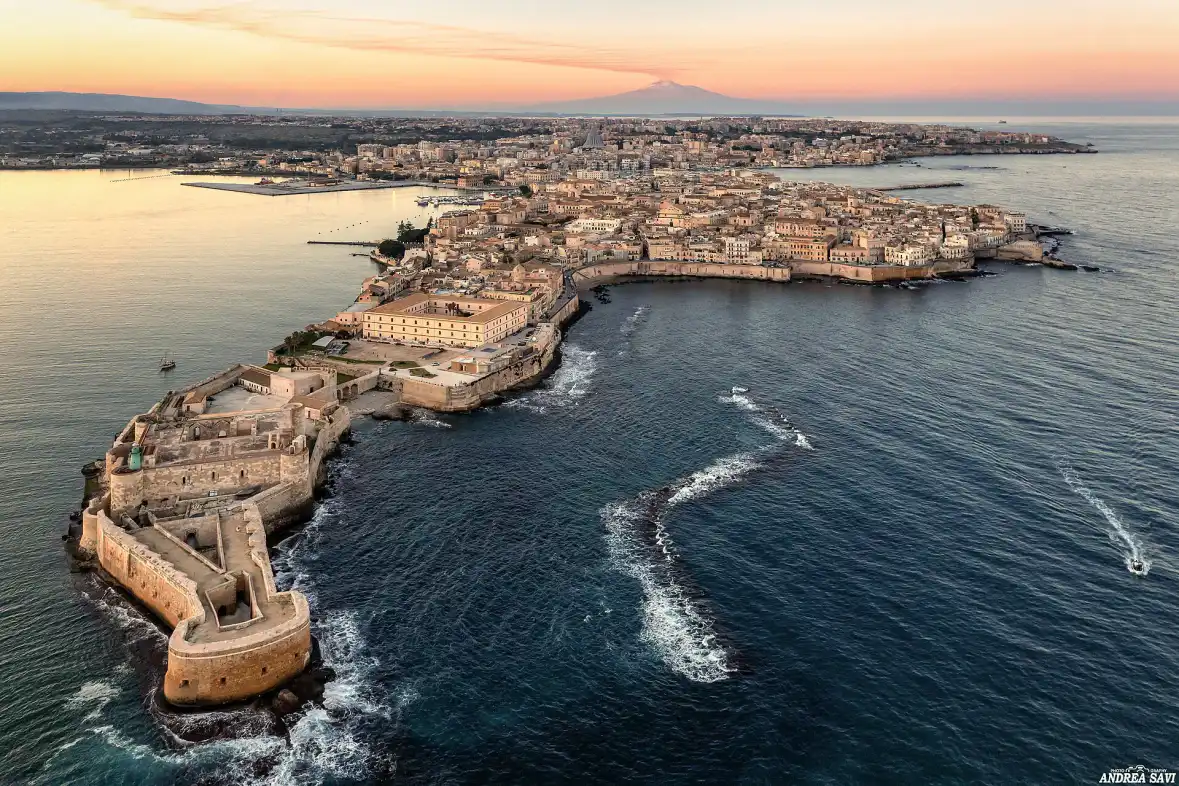
Palermo wakes to the sound of market stalls and espresso cups. Days later, Mount Etna hangs above Catania’s dark stone streets; at the far end of the trip, Ortigia catches the evening light over the sea. You can experience all three without renting a car. The important distinction is that travelling by public transport does not mean insisting on a train for every leg.
For a first cross-island trip, spend three nights in Palermo, two in Catania and two in Syracuse. Eight days and seven nights allow a day trip to Cefalù and a proper choice between Etna and Taormina, while keeping suitcase moves to just two. If you only have seven days, remove one excursion rather than sacrificing a full day in each city.
In this guide
- Palermo to Syracuse: the eight-day route at a glance
- Train or bus in Sicily: what actually works
- Days 1–2: Palermo beyond the postcard
- Day 3: Cefalù by train, keeping the same hotel
- Day 4: crossing to Catania and exploring the city
- Day 5: Mount Etna or Taormina — make a choice
- Day 6: Catania to Syracuse, then an Ortigia evening
- Day 7: Neapolis, Ortigia and the sea
- Day 8: a gentle departure or optional Noto
- Where to stay in three bases
- An honest eight-day budget for two
- Tickets, seasons, luggage and common mistakes
- Sicily without a car: FAQ
Palermo to Syracuse: the eight-day route at a glance
The smartest direction is Palermo → Catania → Syracuse, ideally flying into Palermo and out of Catania Airport. This avoids a frustrating crossing back to Palermo at the end. If your flights are cheaper into and out of the same airport, calculate the extra transfer and possible hotel night before calling them a bargain.
| Day | What to do | Sleep |
|---|---|---|
| 1 | Arrive Palermo; Kalsa and a first evening walk | Palermo |
| 2 | Palaces, mosaics, markets and Quattro Canti | Palermo |
| 3 | Cefalù by local train: old town and beach | Palermo |
| 4 | Direct coach across the island; Catania centre | Catania |
| 5 | Etna excursion or Taormina | Catania |
| 6 | Train or coach to Syracuse; evening in Ortigia | Syracuse |
| 7 | Neapolis archaeological park and Ortigia | Syracuse |
| 8 | Catania Airport transfer, or slow extra hours | — |
A late flight into Palermo reduces the first day to dinner. An early flight out of Catania takes away most of day eight. Add a night if both flight times are poor; do not pretend you have eight full sightseeing days.
Train or bus in Sicily: what actually works
The stretch from Palermo to Cefalù is ideal for a regional train. The main island crossing is different: engineering work has affected the Palermo–Catania railway and produced replacement-bus sections. Instead of asking readers to navigate a rail itinerary that may be part coach anyway, a direct SAIS intercity coach is often the more straightforward choice. It is still a car-free holiday, with much less uncertainty over transfers.
Between Catania and Syracuse, compare the regional train against Interbus. Works on the Messina–Catania–Siracusa corridor in 2026 mean that an older timetable or search-result snippet may not reflect the service that will actually run. Use the operator’s booking results for your date, and check whether the journey has a substitution coach, a change or an unexpectedly long journey time.
The useful transport hubs are Palermo Centrale and its coach departure points, Catania Centrale and surrounding bus terminals, then Siracusa railway station and city coach stops. Ortigia is walkable from central Syracuse, but arriving with a rolling suitcase on uneven paving after a summer afternoon is not quite the same as strolling there with a camera.
| Journey | Usually simplest | Check before booking |
|---|---|---|
| Palermo Airport → city | Airport train or bus, depending on hotel | Last service and arrival stop |
| Palermo ↔ Cefalù | Trenitalia regional service | Return time and any disruption |
| Palermo → Catania | SAIS direct intercity coach | Bus terminal, luggage and travel time |
| Catania → Syracuse | Regional train when operating well, or Interbus | Current works and substituted services |
| Syracuse → Catania Airport | Direct Interbus coach | Departure stop and airport buffer |
Check live timetables with Trenitalia, SAIS Autolinee and Interbus. Trenitalia’s Palermo–Catania work notice and eastern Sicily disruption notice explain why a “three-hour direct train” from an old guide is not a promise. Replacement buses can have different stops and practical conditions.
Days 1–2: Palermo beyond the postcard
On arrival, head for Kalsa and Piazza Marina if you have daylight left. Palermo is at its best when you allow one street to lead to the next: a weathered doorway, a shaded courtyard, then suddenly a magnificent church façade. Take the waterfront slowly and save your appetite for a proper Sicilian dinner close to your hotel.
Start the first full day with the Norman Palace and Palatine Chapel, allowing more time than the mosaic ceilings seem to require in photographs. Opening arrangements can change when institutional rooms are in use, so check the ticket conditions. Continue towards Palermo Cathedral, then follow the city’s old axes to Quattro Canti and Piazza Pretoria. Those few blocks contain an extraordinary concentration of layers of Sicilian history.
Lunch is an opportunity to taste the city, rather than tick off a viral stall. Ballarò is lively and a little chaotic; panelle, arancine and crocchè work best between short walks and conversations with vendors. Visit Teatro Massimo or a single additional interior in the afternoon. Trying to combine every palace, market and church in one day will make you remember the queue rather than the place.
Where to stay in Palermo: the stretch between Palermo Centrale, Via Roma and the southern historic centre makes the Cefalù trip and coach departure easy. Hotel Ambasciatori at Via Roma 111 is an attractive example with good access to the old town; check room conditions rather than assuming it is the cheapest option. Politeama makes sense for lively evenings, although it is less convenient for an early departure from the railway area. If you visit in autumn, our Mediterranean city-break guide offers useful alternatives to a longer Sicily trip.


Day 3: Cefalù by train, keeping the same hotel
Cefalù is exactly the sort of excursion public transport should make easy. A regional service from Palermo Centrale reaches the coast in roughly an hour, depending on the departure. From the station, walk down through the streets towards the old fishing quarter. The sand sits remarkably close to the medieval centre, so you can have a coastal day without a complex bus connection.
The cathedral and harbour deserve time before lunch. When the weather is kind, settle on the beach or walk along the seafront. Travellers keen on views can climb La Rocca, but it is a genuine uphill walk on uneven steps, not an effortless beach detour. Avoid the hottest hours and wear grippy shoes.
Keep your room in Palermo for the third night. A single train journey back means no luggage collection, no new check-in and another dinner in a city you will otherwise leave too quickly. Travellers who prefer mosaics and churches to the sea can replace Cefalù with Monreale and more Palermo; this itinerary does not become a failure just because you skip the beach.
One practical rule: check your useful return train before ordering a relaxed dinner by the water. The picturesque part of the day should never depend on guessing the last workable connection.

Day 4: crossing to Catania and exploring the city
Have breakfast, collect your bags and take the intercity coach across the island. Treat it as a transfer day, not a hidden opportunity for three extra sights. Once you reach Catania, drop your luggage and head for Piazza Duomo. A city built with volcanic rock feels very different from Palermo: black paving stones, warm Baroque façades and the lava-stone elephant in the main square.
Continue along Via Etnea as the evening develops. On a clear day, the volcano appears almost casually between the buildings. The Pescheria fish market is best seen in the morning, so do not advertise a market experience to anyone arriving late afternoon. You can enjoy the surrounding streets and restaurants now, then decide whether a quick market visit fits before tomorrow’s excursion.
Where to stay in Catania: favour Stesicoro, Via Etnea and the Corso Sicilia corridor. B&B HOTEL Catania City Center is at 32 Corso Sicilia and makes a practical central base for public transport and some excursion meeting points; you still need to check the exact pick-up location. For a deeper look at the city and volcano options, use our three-day Catania guide.

Day 5: Mount Etna or Taormina — make a choice
Etna and Taormina are both worth seeing, but they are not a comfortable two-for-one excursion. Etna is a day of volcanic landscapes, stark rock and changing mountain weather. Taormina means Greek theatre, coastal views, little lanes and a different kind of indulgence. Decide which experience you value rather than spending a day being moved between tourist stops.
For Etna without a car, a guided excursion with transport from central Catania is genuinely useful. Do not mistake a trip around the Silvestri Craters for a summit expedition: the permitted altitude, transport included, walking level and safety restrictions vary dramatically. A small-group Etna sunset and local wine experience is an appealing alternative if you enjoy scenery and food, but check where it starts, the guide language, and the actual itinerary. Eruptive activity and bad weather can change or cancel it.
For Taormina, travel by train or coach to a practical connection and take a bus uphill to the old centre. Taormina-Giardini railway station lies below town; arriving there does not deposit you beside Corso Umberto. See the ancient theatre first if views matter, then walk away from the busiest shopping stretch. Isola Bella is another possibility, but leave it out when the beach access or cable car schedule does not fit.
Our preferred choice for a first-time visitor who loves landscapes is Etna, with Taormina as a strong weather-dependent alternative. Either is better than rushing both. A quiet extra Catania morning is also entirely defensible.

Day 6: Catania to Syracuse, then an Ortigia evening
Check the regional train and Interbus departures for the morning. With works affecting the east-coast railway, the correct choice is whichever provides a genuine, manageable arrival in Siracusa, not whichever normally looks faster on paper. Give yourself time to leave the station or coach stop, cross the bridges and find your room.
Spend the afternoon in Ortigia. Begin by the market and Temple of Apollo, pass Piazza Archimede and the cathedral square, then continue towards the Fountain of Arethusa and the sea. Warm stone, fishing boats and lively evening tables make a wonderful contrast with Catania’s dark architecture.
Do not try to see Neapolis this afternoon unless you have arrived exceptionally early and knowingly accept a rushed day. The archaeological park sits across Syracuse from Ortigia. Keep it for tomorrow, when your legs and concentration are fresh.
Where to stay in Syracuse: northern Ortigia, near the market and the bridges, gives you evening atmosphere without a long suitcase walk to the far end of the island. Hotel Posta on Via Trieste 33 fits that geography, although room noise and stairs still merit checking. Our car-free Syracuse and Ortigia guide compares the island with the station side and explores beach options.

Day 7: Neapolis, Ortigia and the sea
Visit the Neapolis Archaeological Park early. The Greek theatre is genuinely impressive, and the stone quarry area around the Ear of Dionysius adds another layer when access is open. There is limited shade in exposed areas; carry water and do not plan a long walk across the city at the hottest time of the day. The park currently lists a standard adult ticket at €14; see the official archaeological-park ticket page for the actual hours on your date.
Return to Ortigia for a long lunch and a less structured afternoon. The eastern waterfront, the lanes of Giudecca, little squares and the evening harbour light are more rewarding if you stop trying to collect landmarks. Cala Rossa can work for a short urban swim when conditions and access allow, but it is not a broad managed sandy beach.
A guided boat trip around Ortigia and its sea caves is one optional treat that adds real variety, especially if you would love to see the city walls from the water. Check seasonal departure times, sea conditions, swimming arrangements and what is included. It is not essential: a free walk and a good dinner can be just as memorable. If you already paid for a more elaborate Etna excursion, consider keeping Syracuse inexpensive.

Day 8: a gentle departure or optional Noto
The cleanest ending is a transfer from Syracuse towards Catania Fontanarossa Airport. Interbus operates airport-bound services from Syracuse; confirm the exact stop, expected journey time and enough buffer before check-in. A morning flight effectively removes day eight as a sightseeing day.
Noto’s honey-coloured Baroque streets are a tempting final addition, and rail or coach can work for a separate day trip. What does not work well is leaving Syracuse, exploring Noto, returning for bags, and hoping several connections will deliver you to an afternoon flight. Save Noto for a late flight with verified timing, or preferably add another night.
If your return flight is from Palermo, the route becomes a different proposition. Reversing the itinerary or keeping a separate full transfer day may make more sense than a last-minute cross-island dash. A low airfare is no bargain if it adds another hotel night or an expensive taxi.
Where to stay in three bases
This is a trip where location matters more than chasing the absolute lowest room rate. In Palermo you want a comfortable walk to the historic centre and manageable access to the station area. In Catania, excursions and the airport connection matter. In Syracuse, staying on Ortigia adds evenings that day-trippers never see.
Keep your seven nights in three hotels. A one-night stop in Cefalù or Taormina may sound romantic, but it introduces extra luggage moves and eats into the time you wanted for the villages themselves.
| Base | Nights | Area to look at | Watch out for |
|---|---|---|---|
| Palermo | 3 | Via Roma / Palermo Centrale / lower old town | Noise and exact street after dark |
| Catania | 2 | Stesicoro / Corso Sicilia | How you reach the excursion departure |
| Syracuse | 2 | North Ortigia by the bridges | Pedestrian lanes, steps and luggage |
To compare other options, browse Palermo hotels around the historic centre, Catania rooms near the central transport corridors and Syracuse and Ortigia accommodation. The suggested search dates can be adjusted to your actual holiday.
Look beyond the first picture: confirm air conditioning in summer, whether the reception is staffed for a late arrival, and the total rate including city taxes. A cheaper room with an awkward station transfer can be a poor saving on a multi-base trip.
An honest eight-day budget for two
For two adults sharing a double room over seven nights, the following gives planning ranges rather than live quotes. Flights to and from Sicily are excluded. So are premium volcano trips and private boat charters, which can change the final number substantially. Prices rise during summer weekends and festivals.
| Cost for two | Value-conscious | More comfortable |
|---|---|---|
| Seven nights, double room | €490–770 | €840–1,330 |
| Food, drinks and cafés | €320–440 | €480–720 |
| Intercity trains/coaches and airport transfers | €90–160 | €130–220 |
| Local public transport | €30–60 | €60–110 |
| Monuments and modest sightseeing | €60–110 | €100–200 |
| Indicative total excluding flights | €990–1,540 | €1,610–2,580 |
A mountain tour is often the single largest optional addition. If seeing Etna is the reason for the trip, spend on that experience and keep other days simple; do not book paid excursions in every city merely because a booking page suggests them.
Accommodation is the biggest adjustable cost. Saving a modest amount each night has a meaningful effect across seven nights, but a room that adds a late taxi or an hour of awkward travel to every day can easily cancel the saving. Sicily also rewards straightforward food choices: bakeries and markets for lunch, a proper dinner when you want it, without pretending anyone needs to eat snacks for eight days.
Tickets, seasons, luggage and common mistakes
Late spring and early autumn generally offer the most forgiving balance for cities and walking. In July and August, begin archaeological visits early, schedule generous afternoon rests and check that your room has effective air conditioning. In winter, the urban heritage is still compelling but swimming and many boat departures are a different proposition. Etna has its own mountain conditions regardless of the weather in Catania.
Book the open-jaw flights first if the price makes sense, then the two intercity legs, cancellable rooms and any volcano outing with limited capacity. Regional rail tickets have their own digital validity rules; follow the instructions on the ticket you buy rather than repeating old advice about stamping every paper ticket.
Carry bags you can manage on cobbles and steps, and keep an offline copy of your bookings. Coach departures from a city can use several different stops. “Palermo” or “Siracusa” on the ticket is not precise enough to plan a ten-minute connection. Build in margin and know whether your service reaches a railway forecourt, a bus station or an airport.
Avoid trying to squeeze Agrigento, Ragusa, Modica, Taormina, Etna and Noto into these eight days. Those destinations are worthwhile, but Sicily’s size and connection patterns make a fast checklist especially punishing without a car. A first route that finishes with energy left is worth far more than a route with every famous name.
For a colder-season alternative, our Sicily-in-February itinerary explains which days to keep flexible. To decide whether you need the whole island or a shorter trip, compare our budget-friendly European islands.
- Keep one generous buffer before your outbound flight.
- Check the exact coach stand or replacement-bus meeting point.
- Reserve a transport-inclusive Etna excursion only after reviewing the altitude, fitness and cancellation terms.
- Be honest about how many full days your flight times provide.
Sicily without a car: FAQ
Yes. Use public transport via Catania, choosing a direct intercity coach for the cross-island leg when engineering works make the train less practical.
How many days do you need?Eight days and seven nights are a good balance for Palermo, Catania and Syracuse, including Cefalù and a choice between Etna and Taormina.
Is the Palermo–Catania train direct?Rail operations and replacement sections have been affected by construction. Always compare the live Trenitalia itinerary with a SAIS direct coach rather than assuming a continuous train.
Should I sleep in Cefalù or Taormina?Not on this trip. Cefalù works as a day trip from Palermo; Taormina, if you choose it, works from Catania. That avoids dragging luggage through another hotel move.
Etna or Taormina: which is better?Choose Etna for volcanic landscapes and a special outdoor experience; choose Taormina for architecture, sea views and a gentler urban day.
Where should I stay in Syracuse?Northern Ortigia works well for evening atmosphere and access over the bridges. The mainland around the station is more practical for a very early departure.
Can I get from Syracuse to Catania Airport?Interbus serves airport-bound routes from Syracuse. Check the actual departure stop and leave generous time for the airport.
Can I add Noto or Agrigento?Noto can replace a free day or work with an extra night. Agrigento needs substantially more travel and is best treated as a separate addition, not a casual detour.
The pleasure of this route is the changing character of the island: Palermo’s markets, Catania’s lava stone and Syracuse’s warm waterfront. Let public transport connect three strong bases, rather than dictate eight frantic days. The trip works because you leave room to linger.
Some hotel and activity links may earn a commission at no additional cost to you. Recheck transport works, tickets and access rules for your own dates.