Sicily in February: Etna, Hiking, Itinerary and Budget
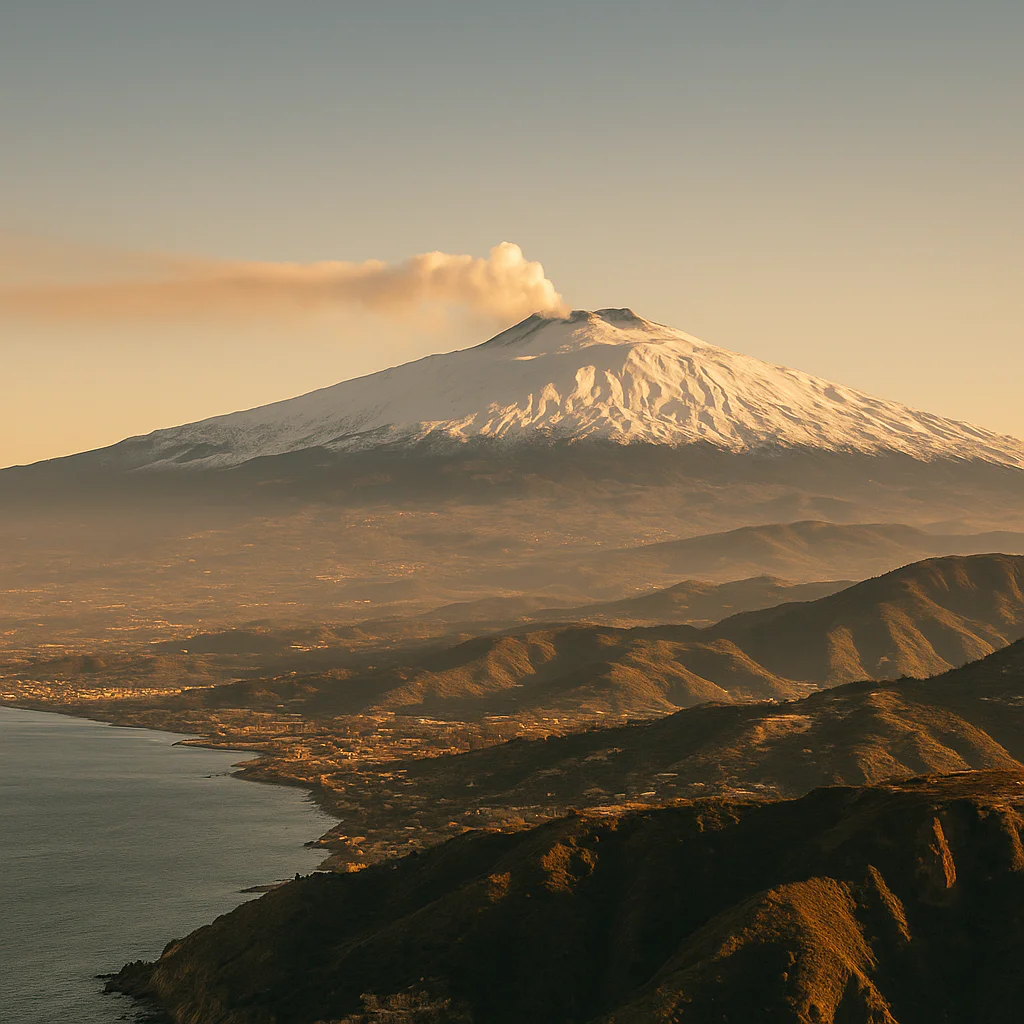
Sicily in February is not a warm-water beach destination. It is an island of contrasts: almond trees may begin to flower, winter citrus fills the markets, clear light cuts across Baroque façades and snow can cover Etna. In Catania, you may eat lunch outside in a patch of sun and put your jacket back on when the wind arrives. A thousand metres higher, proper winter equipment can be necessary.
That contrast makes the month compelling. Cities breathe more easily than in peak summer, major sites can be explored without punishing heat and Etna reveals a dramatic face. It also demands discipline: never confuse coastal temperatures with mountain conditions, never make every day dependent on fair weather and do not cross the island merely to add Palermo to a short Catania trip.
This five-day route therefore stays in eastern Sicily. Catania is the base, Syracuse and Taormina work by public transport, and one day is reserved for Etna with a guide suited to the conditions. If Palermo is your priority, take a different trip. Sicily does not become richer because you spend more of it on a train.
Is February a good month for Sicily?
Yes for travellers who prioritise cities, food, archaeology, urban walking and volcanic landscapes. No if the holiday depends on swimming, long warm evenings or a complete beach-season infrastructure. Coastal attractions and restaurants may reduce hours, but historical centres regain a life less dominated by the high season.
Our verdict: eastern Sicily is one of February’s strongest culture-and-nature trips when you are willing to move the Etna day. For guaranteed sun and warm sea, choose another destination.

February weather: mild coast, genuinely wintry Etna
On the eastern coast, mild afternoons alternate with rain, wind and cool evenings. A monthly average never describes the five days you will experience. Pack layers, a waterproof jacket and shoes that can handle wet paving. Days are longer than in December, but darkness still comes early enough to give outdoor sightseeing a clear order.
Altitude changes everything on Etna. Snow, ice, strong wind, access closures and volcanic activity can change the level reached. A tour sold weeks earlier guarantees neither summit nor cable car. A responsible operator explains the inclusion, provides or requires suitable equipment and offers an alternative when safety keeps the group lower.
Do not arrive in city trainers because Catania happens to show 16°C. Ask the guide the day before about expected altitude, footwear, clothing, food, transfer and cancellation terms.
Where should you stay in Catania for five car-free days?
Between Piazza Stesicoro, Via Etnea and Piazza Duomo, you live in the centre while keeping urban buses and tour meeting points accessible. The district is animated, so examine insulation comments when a room faces a bar street. Around Teatro Massimo Bellini, evenings are pleasant and the railway remains walkable, although the character can change from one block to the next.
Accommodation close to Catania Centrale saves time for Syracuse or Taormina but gives up some evening atmosphere. A position ten or fifteen minutes from the station is often better than facing the tracks. In an old building, ask about floor, lift and heating. High ceilings are beautiful; a damp room in February is not.
Via Etnea / Stesicoro
Central for walking and easy for tour pickups. Check recent reviews for street noise.
Eastern centre
Stay between the Bellini theatre and station rather than in a purely railway-facing area.
The Feast of Saint Agatha transforms Catania
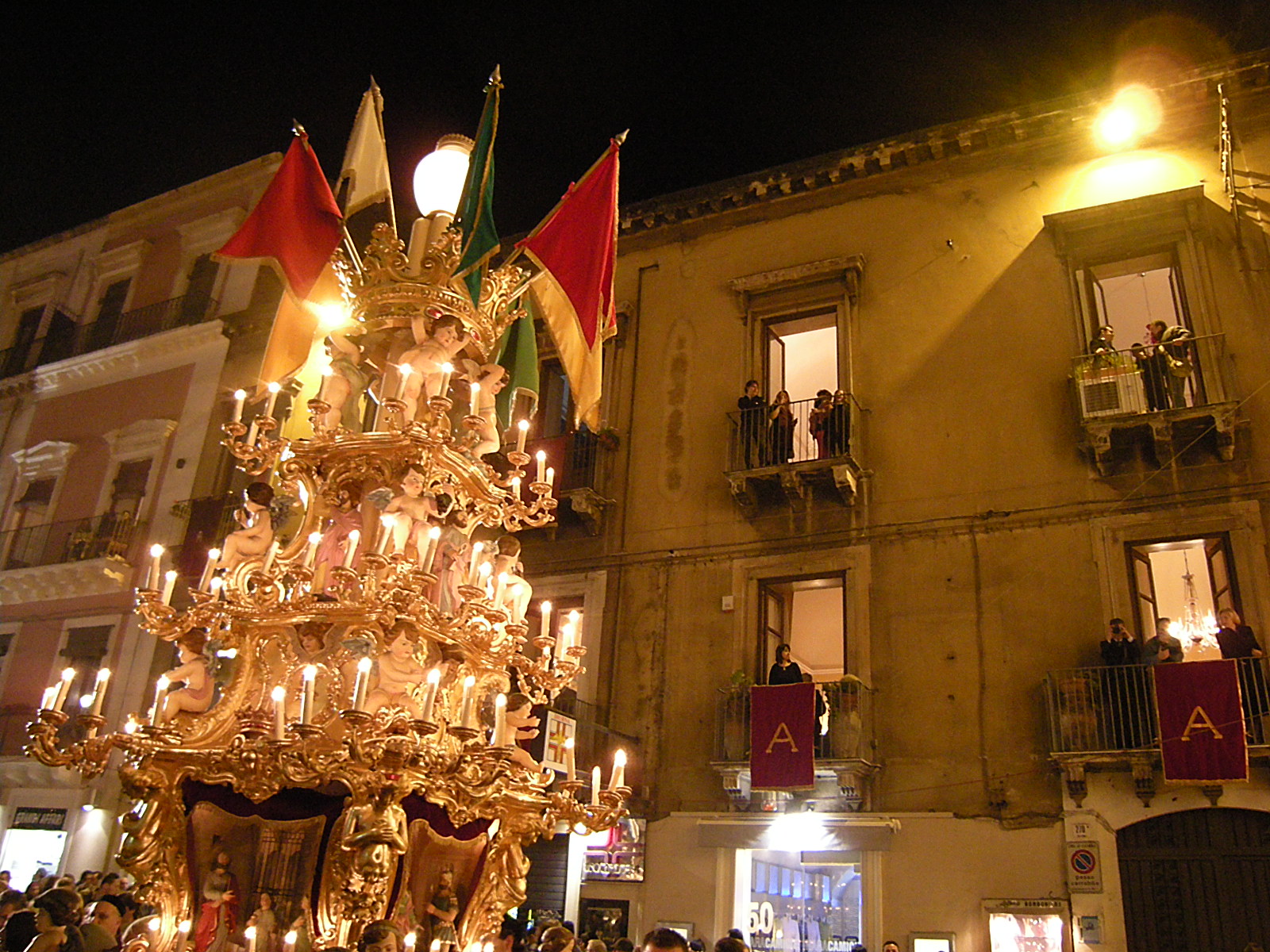
Every year on 3, 4 and 5 February, Catania celebrates its patron saint. Processions, candelore, masses, lights, fireworks and enormous crowds transform the centre. This is not a tourist animation placed on a calendar. It is a major religious and civic event followed for hours, sometimes throughout the night. Travellers should consciously decide whether to take part or avoid those dates.
Visiting for the festival means booking earlier, accepting street closures, walking more and respecting worshippers. A good photograph never justifies blocking a procession or pushing a camera into someone’s face. Arriving during the festival without caring about it can make transport, sleep and sightseeing much harder. Consult the official programme because detailed ceremonies and restrictions evolve.
The regional tourism site confirms the central celebrations from 3 to 5 February. Then check municipal information for the edition matching your trip.
Airport, trains and the distance beyond the station
Buses and urban services connect Catania airport with the centre on schedules that must match your actual arrival. Compare the full cost of a late flight: a low fare loses its advantage when reception closes and a private transfer becomes compulsory. Ask the accommodation for the exact stop rather than accepting “near the airport” as useful information.
Trains to Syracuse and Taormina-Giardini are valuable, but the station is not always the place you came to visit. Taormina still requires an uphill connection. Syracuse involves a manageable walk towards Ortigia, yet it takes time. Search the outward and return journey together, inspect engineering work and follow the validation rules for the ticket category. A missed frequency matters more in February because daylight is limited.
For Etna, favour an operator with a precise Catania pickup. Hiring a car solely for the mountain does not provide extra access when authorities close an area; it mainly leaves you responsible for driving in conditions you do not know.
Eastern Sicily itinerary for February
Catania, markets and volcanic stone
Begin in Piazza Duomo before entering La Pescheria. The market makes most sense in the morning while it still functions as a source of food. Walk up Via Etnea, noticing how dark lava stone draws lines around the Baroque façades. Piazza Università, the visible Roman amphitheatre at Stesicoro and Villa Bellini form an easy route almost entirely on foot.
Choose one indoor site in the afternoon: the Benedictine monastery, a theatre, a museum or an accessible church. Do not fill every hour. Catania also appears at a pastry counter, beside an arancino and in the streets around Castello Ursino. When the trip overlaps with Saint Agatha, use this day to understand procession routes and closures before the largest gatherings.
Guided Etna, with altitude decided that morning
Book a departure from Catania or a clearly reachable meeting point. In February, a guide’s value goes beyond geology: they assess snow, wind, activity and access. An outing around 1,800–2,000 metres can already reveal lateral craters, old lava and a winter landscape. Chasing the highest altitude number is meaningless when conditions change.
Keep the evening free. Cold, uneven ground and the transfer are more tiring than urban sightseeing. If the tour is cancelled, swap Syracuse into this day or explore Catania further. Do not pay an improvised transfer towards a closed zone. A tasting is a pleasant addition, but it should not disguise a minimal amount of walking.

Syracuse and Ortigia, from archaeology to the sea
Leave early by train or bus, whichever has the most useful direct schedule. The Neapolis Archaeological Park deserves the morning when ancient monuments are a priority, though its outdoor spaces are less rewarding in heavy rain. Ortigia works in almost any conditions: the Temple of Apollo, narrow streets, Piazza Duomo and waterfront form a compact route.
Do not treat Syracuse as a collection of boxes. Choose Neapolis plus Ortigia, or spend the whole day on the island with its market, cathedral, museum and sunset. February hours may be shorter, so confirm the final journey before lingering at the southern tip. Our car-free Syracuse guide adds detail, with its swimming advice naturally adjusted for winter.

Taormina and its ancient theatre, without a fictional beach day
Taormina remains touristy in winter but develops pockets of calm. Travel uphill from the station by a verified bus or connection: Taormina-Giardini station is at sea level, not inside the elevated centre. Begin with the ancient theatre when the view towards Etna is open, then walk Corso Umberto and the side lanes.
Isola Bella and the coast can extend the day if the cable car or bus operates and the weather invites you down. Do not build the programme around swimming. In rain, shorten Taormina and keep time for Catania; shopping alone does not justify eight hours. Alcantara Gorge is another option, but its access, services and routes change outside summer. Confirm before detouring.

Buffer day: deeper Catania or a second chance at Etna
Preserve one day the weather can redistribute. If Etna was cancelled, move it here. If it succeeded, use this time for the Benedictine monastery, the streets around Via Crociferi, a food tour or Acireale when the carnival calendar gives you a reason. Check the annual programme; carnival and related events do not occupy the same dates every year.
This day also protects the return. An itinerary that demands Taormina, Syracuse, Etna, Noto and Palermo in five days is not rich; it is fragile. A free morning in Catania lets you revisit the market, buy local products and understand a city too often treated as an airport.
Where Noto fits without weakening the route
Noto is a worthwhile Baroque extension when you have a sixth full day or decide to replace Taormina. It should not be squeezed into the Syracuse afternoon merely because both cities appear in the same south-eastern chapter. Transport connections, shorter winter opening hours and the pleasure of seeing the stone change in late light all reward a separate day.
If rain settles over the entire coast, choose the city with the indoor sites you value most rather than protecting every name on the list. A February route becomes stronger when one optional town is removed early, not when all five are experienced through station windows.
What if western Sicily appeals more?
Palermo is the better base when markets, Arab-Norman heritage, Monreale and street food matter more than Etna. Fly into Palermo and spend at least four nights there. Cefalù or Agrigento can extend the trip; Catania should not be added for a single evening.
Our seasonal guide to Palermo in October helps compare the western atmosphere, even though its weather advice is tied to autumn. For the east, the Catania itinerary explores the base used here in greater detail.
Citrus, markets and February cooking
February gives meaning to blood oranges, mandarins, fennel, artichokes and winter vegetables. In Catania, look around La Pescheria before choosing a meal. Arancini, pasta alla Norma, cipollina, fish and pastries are not trophies to collect. Alternate street food, a trattoria and market produce so that each day does not become a chain of heavy portions.
During Saint Agatha, olivette and minnuzzi refer directly to the saint’s tradition. Taste them with context and moderation. In Syracuse, pay attention to Ortigia’s market; in Taormina, move away from the most expensive axis before ordering. Displayed menus and recent reviews are more useful than an address made famous years ago.
A realistic budget for five nights in eastern Sicily
Ranges are per person, based on a shared double room and before flights. Saint Agatha, carnival dates and weekends can change room rates. Protect the Etna budget: one serious tour and a free city day offer more than three superficial excursions.
| Cost | Lean | Balanced | Comfort |
|---|---|---|---|
| 5 nights | €165–275 | €275–475 | €480–800 |
| Trains and airport | €40–70 | €65–110 | €105–180 |
| Food | €130–195 | €200–310 | €315–480 |
| Etna and visits | €75–120 | €120–210 | €210–380 |
| Total before flights | €410–660 | €660–1,105 | €1,110–1,840 |

Five traps that weaken the trip
Placing Etna on the final morning
Without a replacement day, one closure removes the central experience. Schedule the volcano early and keep day five mobile.
Adding Palermo to the eastern route
The journey consumes an entire city’s worth of time. Choose one side for five days and return for the other.
Underestimating Saint Agatha
The feast transforms movement, noise and accommodation. Travel for it or change dates, but never treat it as a minor detail.
Booking a damp hotel with uncertain heating
A mild afternoon does not prevent a cool night. Read recent winter-comfort reviews rather than concentrating on the terrace.
Confusing sunny coast with beach season
Enjoy walks by the sea without building the budget around beach clubs or seasonal crossings that have not been confirmed.
FAQ: Sicily in February
Often to an appropriate altitude, but never with a guarantee. Snow, wind, volcanic activity and official decisions determine access on the day.
Not for this route. Catania, Syracuse and Taormina are connected, and a guided transfer is preferable for Etna. A car adds value for more isolated villages.
The coast can deliver mild afternoons, but rain, wind and cool evenings remain possible. Etna experiences genuine winter conditions.
Five for the east and a week to add Noto and slower time. For the whole island, plan several bases and a much longer trip.
Yes when you travel for the event and accept crowds, walking and closures. For a quiet break with easy transport, avoid 3–5 February.
Checks before departure
Confirm Etna activity and access with authorities and your operator, use official sites for transport, and check events through Visit Sicily. Price ranges and off-season services must be rechecked for your dates.
Come for winter Sicily, not an imitation of summer
In February, the east offers more breathable cities, seasonal food and a transformed volcano. Keep Etna flexible, make Catania a genuine base and leave Palermo for a second trip. The result gains in depth what it gives up in kilometres.
Transparency: some booking links are affiliate links. Using them may support LowCostWings without changing the displayed price. Recommendations remain driven by safety, useful time and the coherence of the stay.