Fuerteventura in 3 Days: Itinerary, Beaches, Where to Stay and Budget
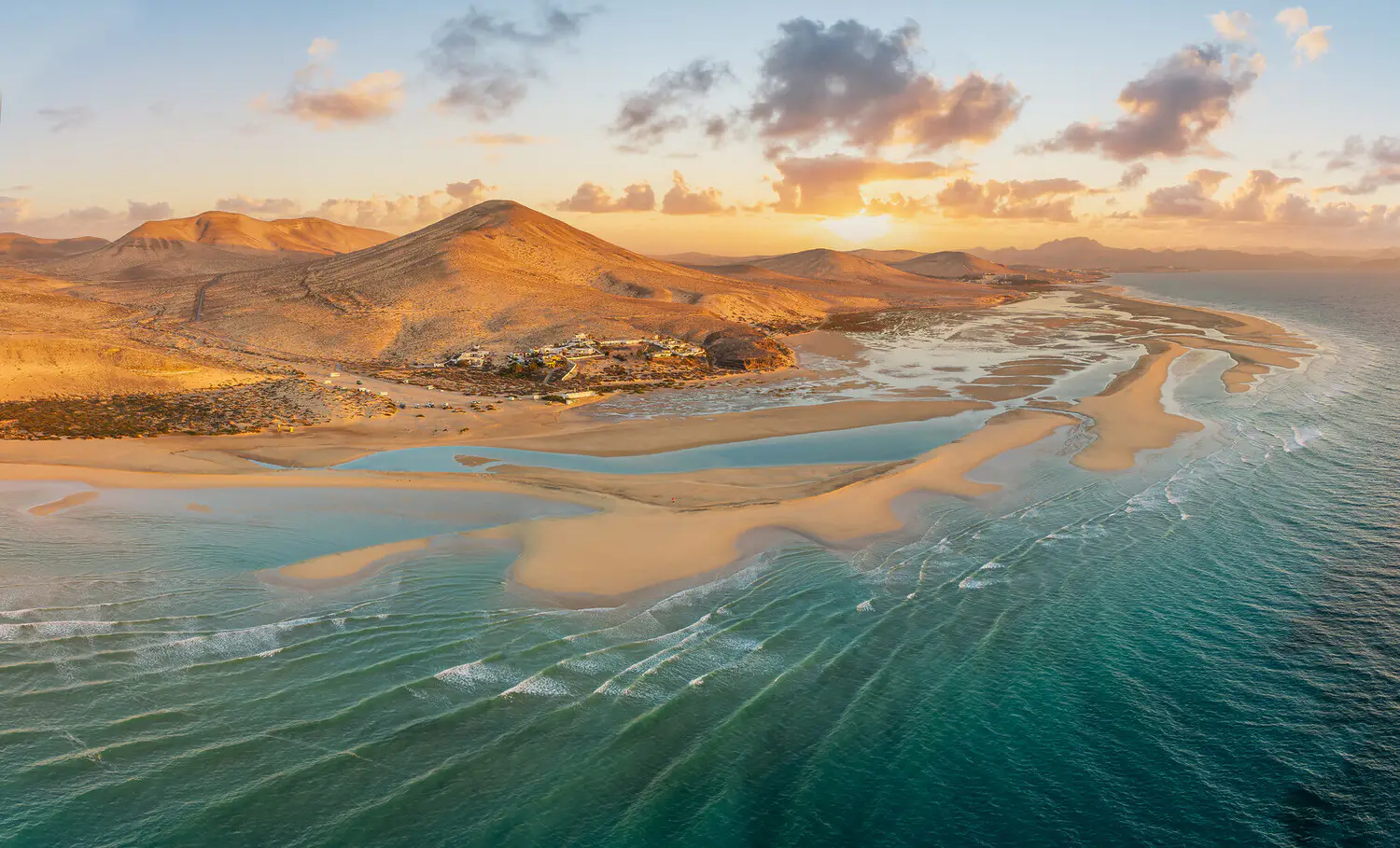
Fuerteventura looks straightforward — sunshine, wind and one long island — yet a three-day plan becomes unrealistic as soon as beaches, dunes, villages and driving time are stacked together. The decisive choice is not a list of attractions but a base that matches the trip. Corralejo works for dunes and Lobos; El Cotillo suits a slower west-coast stay; Costa Calma shortens the journey to Sotavento and Jandía.
This guide builds a workable first visit with or without a car. It separates routes that look easy on a map from days that still feel like a holiday, shows how to react to wind and explains where a paid activity adds genuine value. Prices and schedules change, so treat the figures as planning ranges and confirm the details for your dates with the official operators.
Our recommendation: use one base for three nights. Pick Corralejo for the most varied first trip, hire a car for only two days if Cofete or Betancuria matters, and leave half a day flexible for wind and sea conditions.
Before you go: the basics that matter on a 3-day trip
Fuerteventura has one main airport, Fuerteventura Airport (FUE), near Puerto del Rosario. Official airport information from Aena lists bus access from the airport, while the island bus operator Tiadhe publishes route information for the wider network. If you are arriving late or leaving early, always check the latest timetables directly on those official pages rather than relying on old travel forum advice.
For a stay this short, a car is usually the easiest way to make the island feel manageable. Roads are straightforward, distances are reasonable by Canary Islands standards, and having your own vehicle makes it far easier to connect Corralejo, El Cotillo, Ajuy or the Sotavento area in a single trip. If you want maximum flexibility from the airport onward, a car rental can save a surprising amount of time. Without a car, the trip is still possible, but it is smarter to focus on one area, especially the north.
For flights, the easiest approach is to compare multiple departure days and look for schedules that give you nearly three full days on the island. You can find flights through LowCostWings and compare whether a morning outbound and evening return make the trip more worthwhile. If you are mostly interested in kitesurfing and wind, spring and summer are often the first seasons people consider. If your main goal is a pleasant beach-and-road-trip weekend, winter can work very well too thanks to Fuerteventura’s mild climate.

Where to stay in Fuerteventura for 3 days
Corralejo: best overall base for a first visit
Corralejo is usually the safest choice for a short stay. You get restaurants, supermarkets, easy access to the dunes, a lively but manageable evening atmosphere, and a convenient starting point for the north of the island. It is also the area that makes a 3-day itinerary feel the least rushed.
Costa Calma: better if watersports are the priority
If you are coming mainly for Sotavento and the southern beaches, Costa Calma can make sense. The trade-off is that evenings feel quieter and sightseeing in the north becomes more time-consuming.
El Cotillo: calmer and more laid-back
El Cotillo suits travelers who prefer a slower pace, a smaller town feel and beautiful sunset swims. It is a lovely base, but slightly less practical than Corralejo if you want to combine several parts of the island on a quick trip.
For accommodation, location matters more than star rating. A well-placed apartment or hotel in Corralejo often works better than a more luxurious stay in a remote area that forces you back into the car every time you want dinner. For short stays, simplicity wins. You can compare options on Booking.com.
Corralejo is especially useful if you want a mix of beaches, restaurants and short outings without feeling stuck in a resort area. Costa Calma suits travelers happy to build the trip around the south. El Cotillo is often the most atmospheric for sunset and a slower rhythm, but it works best when that slower rhythm is exactly what you want.
The places worth prioritizing on a short Fuerteventura trip
Corralejo Natural Park and the dunes
The dunes near Corralejo are one of the island’s signature landscapes. Official island tourism information and the protected-area documentation from the Cabildo describe the area as a major natural site of dunes and volcanic scenery on the northeast coast. For a first visit, this is one of the easiest places to understand immediately: broad sand, big sky, turquoise water and that unmistakable feeling of open space. For official visitor information, see the Corralejo Natural Park page and the protected area material from the Cabildo.
The best times here are early morning and late afternoon, when the light is softer and the heat is less intense. Bring water, avoid treating the whole visit like a roadside photo stop, and give yourself time to walk a little away from the busiest access points.
Sotavento and the south
Sotavento is one of the most famous names on the island, especially among beach lovers and watersports travelers. Official tourism pages from Spain.info and Visit Fuerteventura highlight the long beach, open scenery and strong reputation for wind-related sports. Even if you do not kitesurf, the scale of the place makes it worth seeing.
That said, Sotavento is a place where conditions define the experience. On one day it can feel ideal for a long walk and bright, cinematic scenery. On another, the wind may be intense enough to make a relaxed beach session less appealing. That is why a good short itinerary needs a backup plan.
Ajuy and the west coast
Ajuy shows a very different side of Fuerteventura. It is darker, rougher and more dramatic, with black sand, cliffs and the famous caves reached by a coastal path. Official island tourism information explains that the Ajuy Caves are among the oldest geological formations in the Canary Islands and part of a protected natural setting. This is one of the best additions if you want your 3-day itinerary to feel more varied than “just beaches.”
The path itself is not highly technical, but it is not a flip-flop stroll either. Wear decent shoes, especially if the wind is strong or the rock is uneven underfoot. Ajuy works especially well in the middle or later part of the day, when you want a scenic stop that feels different from the brighter east and northeast coast.
A practical 3-day Fuerteventura itinerary
Day 1: Corralejo, dunes and northern beaches
After landing, pick up the car or head straight to your accommodation. If arrival times are good, spend your first afternoon in the north. Start with the dunes, then continue into Corralejo for lunch or an easy coffee stop. Later, either stay around town, relax on a nearby beach or drive toward the coast road for a first impression of the island’s open landscapes.
For dinner, keep things simple and stay in Corralejo. On a short trip, the first day should be about settling into the island rather than burning time on long drives.
Day 2: Southern day trip to Sotavento
Leave early and give the south the full day it deserves. This is the best moment to include kitesurfing, windsurfing or simply one of the island’s most famous beach landscapes. Spend time walking, swimming if conditions allow, and taking in the feeling of scale that makes this side of Fuerteventura so distinctive.
If you are traveling with mixed interests, this is a good day to split the plan naturally: beach time for some, a lesson or gear rental for others, and a long lunch before driving back north.
Day 3: Ajuy or El Cotillo depending on the mood
Your final day works best when left flexible. If you want more drama and different scenery, head to Ajuy. If you want a softer finish with lagoons, an easier swim and a slower pace, choose El Cotillo. Both options make sense, but they create very different final memories of the island.
Always leave time for the return to the airport, especially if you are dropping off the car on the same day.

Kitesurfing in Fuerteventura: what to expect
Fuerteventura has a strong reputation for kitesurfing, but it is important to keep that reputation in context. Yes, the island has excellent conditions in the right places and at the right times. No, that does not mean every famous beach is suitable for every level every day. Wind strength, tide, swell and beach setup can change the experience significantly, and beginners are usually much better off asking a local school what is appropriate on the day rather than assuming a famous name automatically means beginner-friendly water.
Sotavento is often the first place people mention because of its scale and its lagoon conditions when they form. That can make it easier to understand than more exposed breaks. On the other hand, some northern or western areas may be visually impressive without being the right choice for someone who is just starting out. If kitesurfing is the main purpose of the trip, build the stay around the best likely area for your level. If it is only one part of a broader holiday, avoid booking the whole weekend around one dream session that may depend entirely on the weather.
For active days, take the sun and wind seriously. Even outside summer, the combination of brightness, dry air and hours outdoors can be tiring. A light wetsuit may be enough depending on the season, but local rental shops and schools will usually give more useful guidance than generic packing lists found online.
Getting around: car, bus, distances and common mistakes
A rental car is still the easiest way to make a 3-day trip feel relaxed. From the airport, it lets you move at your own pace, stop for viewpoints, carry beach gear more easily and adapt if one coast is too windy. If that flexibility matters, you can rent a car before arrival and keep the transfer from airport to hotel simple.
Buses are useful for budget-conscious trips or stays focused on one area. The official sources to check are the Cabildo bus pages, Tiadhe’s route overview and airport bus access information. The network is useful, but on a trip this short it becomes restrictive as soon as you try to combine beaches, viewpoints, towns and off-center stops in one day.
One common mistake is underestimating the island because it looks sparse on the map. Fuerteventura is not difficult to drive, but it is easy to lose time through repeated backtracking. Another mistake is choosing a very remote hotel because it looks quiet and scenic online, then spending the whole stay organizing around it.
Realistic budget for 3 days in Fuerteventura
| Category | Budget trip | Comfort trip | Higher-end trip |
|---|---|---|---|
| Return flights | €80 to €170 | €170 to €280 | €280+ |
| 2 nights accommodation | €90 to €160 | €170 to €320 | €320+ |
| Car + fuel for 3 days | €55 to €110 | €110 to €170 | €170+ |
| Food | €45 to €75 | €80 to €130 | €130+ |
| Watersports / lesson | €0 to €70 | €70 to €180 | €180+ |
| Extras | €15 to €30 | €30 to €60 | €60+ |
For one traveler, a reasonable total often lands around €270 to €500 before splurges, depending mostly on flight timing and whether you share the accommodation and the car. Fuerteventura can feel affordable, but the final cost depends more on logistics than people first expect. Flights, not daily expenses, are often the biggest variable.
To keep the total sensible, focus on three levers: compare dates when you search for cheap flights, avoid paying extra for a hotel you will barely use, and build an itinerary that reduces unnecessary mileage. If you like comparing Canary Islands budgets, it can also help to look at trips such as Las Palmas in January or winter options in Lanzarote like Lanzarote in January.

When to go: seasonality and what changes through the year
One of Fuerteventura’s biggest strengths is that there is no single short “right season” for a 3-day trip. The island works year-round, but the experience changes depending on what you want. For walking, mild temperatures and a generally easy beach break, autumn, winter and spring are often very pleasant. For travelers who are coming specifically for wind and watersports, some periods are naturally more attractive, but that also means the wind becomes a bigger factor in daily comfort.
The useful question is not only “what is the best month?” but “what kind of trip do I want?” More wind can be perfect for kite and tiring for lounging. A bright day can still feel cool because of the breeze. A beautiful beach can be less swim-friendly than expected when the surf picks up. That is why flexible planning matters more here than on some city-break destinations.
If you are comparing islands for a winter or shoulder-season break, you may also want to look at 2 days in Lanzarote in winter or 3 days in Lanzarote in winter. Those can help you decide whether you prefer Fuerteventura’s beach-and-space feel or Lanzarote’s more volcanic and architectural identity.
Can you do Fuerteventura in 3 days without a car?
Yes, but only if you simplify the plan. The smartest version is to stay in Corralejo or near Puerto del Rosario depending on your flight times, then focus on the north. You can spend one day around Corralejo and the dunes, another around El Cotillo if bus timings line up, and keep the final day lighter. Trying to add both Ajuy and Sotavento without a car on a trip this short tends to make the whole stay more stressful than enjoyable.
If your main goal is simply to get some sun, eat well and enjoy a few beaches, that may be completely fine. If you want to compare several parts of the island, carry sports gear or keep the freedom to adapt to weather, a car becomes much more valuable.
Alternatives for bad weather, strong wind or a slower pace
When the wind feels too strong for a classic beach day, switch the emphasis rather than fighting the island. Spend more time in towns, scenic drives, cafés and short walks rather than trying to force a long sunbathing session. If the west coast looks too rough for swimming, move back toward a more sheltered area. If the southern day trip starts to feel too demanding, replace it with a Corralejo and El Cotillo day and enjoy a smoother, calmer rhythm.
Another option from Corralejo is a day trip toward Lobos, but access is regulated. The official information from Fuerteventura Rural explains that the visit permit is free, personal and must be requested in advance, while transport is separate. On a very short stay, Lobos makes most sense if you are already staying in Corralejo and conditions look good.
If you want to compare this trip with the original French version of the same destination for reference, you can also see this Fuerteventura guide in French.
Common mistakes to avoid
- Trying to see the entire island in three days without accepting the driving time involved.
- Choosing an isolated hotel because it looks peaceful, then losing time on every meal and outing.
- Underestimating the combination of sun, wind and dehydration, even outside peak summer.
- Assuming a famous kite spot will automatically suit your level on the day you arrive.
- Packing only beachwear when some scenic stops, especially Ajuy, are better with proper shoes.
- Building a plan with no backup for strong wind, surf or simple travel fatigue.
FAQ
Is Fuerteventura worth visiting for only 3 days?
Yes. Three days are enough for a strong first impression if you keep the plan realistic. The north alone can fill a long weekend, and one day trip south adds contrast without turning the trip into a race.
What is the best base for a first-time trip?
Corralejo is usually the best all-round choice thanks to its mix of beach access, restaurants, practical services and easy reach to the dunes.
Can you mix beaches, a road trip and kitesurfing in 3 days?
Yes, but it works best with one northern day, one southern day and a final flexible day rather than trying to fit everything everywhere.
Should you book the car in advance?
On busy dates, it is a good idea. It makes airport logistics easier and gives you more choice on timing and pickup conditions.
Which other Canary Island should I compare it with?
If you enjoy beach breaks, open scenery and short island escapes, Lanzarote is the most natural comparison. This guide to 3 days in Lanzarote is a good place to start.
Useful official resources
Some links may be affiliate links, at no extra cost to you, and they help support the site.
Where to stay: choose a base that saves travel time
Compare the total trip cost, not only the room price: a cheaper address can add transfers, time or car hire.
Corralejo
The most versatile base for dunes, restaurants, ferries and tours. It is busier, but car-free days become realistic.
El Cotillo
Quieter and west-facing, with sunsets and smaller beaches. A car is still useful for the interior and longer beach days.
Costa Calma
Best for Sotavento, wind sports and the south. Poor value if Lobos and Corralejo are your daily priorities.

Three activities worth booking selectively
Book an activity that solves a real need — boat, Lobos access or water-sports instruction — rather than a string of short stops.
Beginner dive and snorkel
Read the fitness level, language and age requirements.
Continue planning without duplicating this itinerary
These guides extend the trip through another city, a different season or a useful budget comparison.
Official sources to check before departure
- Visit Fuerteventura — Corralejo beach
- Visit Fuerteventura — Corralejo Natural Park
- Tiadhe — island buses and current timetables
Schedules, prices, works, weather closures and access conditions are those published by the operator for your date.

Fuerteventura rewards coherent choices
A good short trip does not try to tick every box. It protects travel time, places major sights at the right hour and keeps room for weather or an unexpected discovery. Book a suitable base first, then one activity that genuinely improves the itinerary.
Some accommodation and activity links are affiliate links. They may earn a commission without changing your price. Always verify schedules, cancellation terms and requirements with the provider.