Marrakech in Winter: 3-Day Itinerary, Where to Stay, Weather and Budget
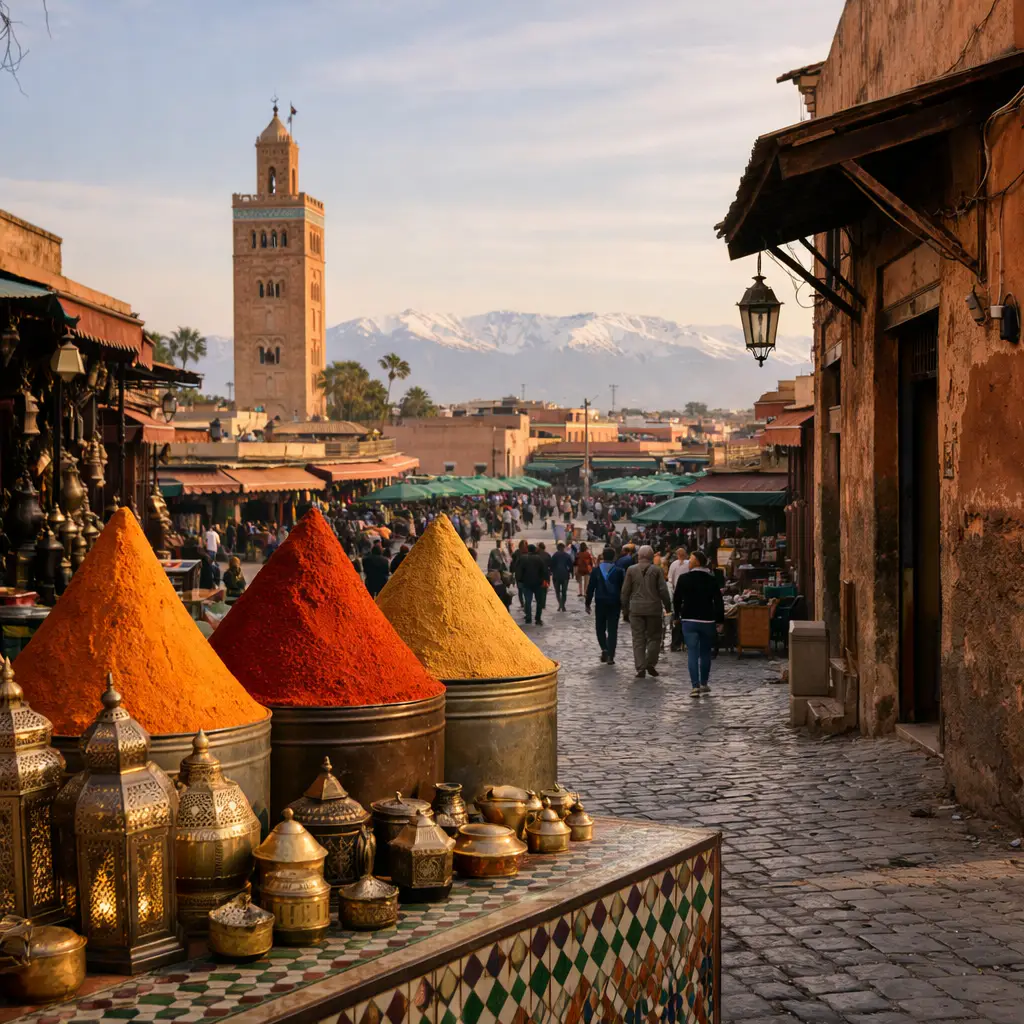
Three days to understand the city, not merely cross Jemaa el-Fnaa Marrakech in winter often brings bright days and distinctly cooler evenings. The season is excellent for walking through the medina, visiting palaces and taking time in gardens, but it guarantees neither uninterrupted warmth nor a comfortable pool. A strong visit uses one suitable base, two substantial city days and a deliberately chosen third day: Ourika Valley, Agafay or deeper time in Marrakech.
This rebuild replaces the short former article and absorbs the duplicate two-day winter guide. The December page remains separate because it serves a specific period. Prices and hours change; budgets are planning bands, activities are direct examples to verify, and no GetYourGuide link carries a broken partner parameter.
Who should visit Marrakech in winter, and for how long?
Three days form the strongest first trip. Day one establishes the medina and reaches Jemaa el-Fnaa in the evening. Day two connects Bahia, the Saadian Tombs or El Badi with Majorelle and Gueliz. Day three becomes either a genuine excursion or time for Ben Youssef, Le Jardin Secret, focused shopping and a hammam without rushing.
Two days work with well-timed flights but leave no room for a day trip. Four days add Ourika or Agafay while preserving city time. A three-day Merzouga journey does not fit inside this city break; it consumes long road hours and belongs to a separate holiday.
Marrakech suits couples, friends, solo travellers comfortable with an intense city and families who prepare transfers. It fits less well when the aim is a beach, constant quiet or total improvisation during a busy school-holiday period.
.jpg?width=1280)
Sun warms; shade, night and the Atlas cool quickly
A sheltered terrace can feel excellent in daytime. Once the sun drops, the difference is pronounced, especially inside a riad arranged around an open courtyard. Check heating, bedding and winter reviews because attractive architecture does not guarantee a comfortable January room.
Pack layers, a light warm jacket, scarf, closed shoes and sun protection. Add a stronger layer for the Atlas and accept that snow, rain or trail conditions may alter an outing. Agafay is an exposed stone desert, not a promise of warm nights.
An unheated pool may remain decorative. When swimming matters, filter explicitly for a heated pool and confirm operating dates. Do not pay for a remote resort around a facility that will not be useful.
Medina, Gueliz or Hivernage create three different trips
The medina provides the strongest experience through lanes, riads, rooftops and souks. It requires a precise address. Confirm where a taxi can actually stop, the luggage walk, whether someone will meet you and the noise around the room. “Ten minutes on foot” can be ideal or frustrating according to the route.
Gueliz simplifies modern hotels, cafés, the railway station and restaurants. Taxis are needed for parts of the medina, while arrival and evenings become more predictable. Hivernage leans towards comfort, resorts and wide roads; value depends on whether you truly use the facilities.
For a first three-day trip, choose the medina when immersion comes first and Gueliz when sleep, access or facilities matter more. Do not change base; the lost time outweighs the benefit.
Airport, taxi and lanes: secure the first thirty minutes
The airport sits close to the city, while the last stage to a riad can be the most confusing. Ask for a precise meeting point and reachable phone number. A booked transfer is rational after a late arrival or with luggage; otherwise compare the official options available on the day.
Walk inside the medina and keep an offline map without following every proposed shortcut. Scooters, carts and pedestrians share narrow passages. Keep right when possible and move aside before looking at the phone.
Small taxis connect Gueliz, Majorelle and Hivernage. Clarify the meter or price according to current practice. For a tour, read the exact pickup point because vehicles may not enter the lanes and can require a walk to a square or hotel.
Medina, Koutoubia, souks and Jemaa el-Fnaa
Begin by Koutoubia to understand the medina’s scale and establish an external landmark. Mosque access follows religious rules; visitors gain most from the minaret, gardens and urban role. Enter the souks without treating the first hour as a shopping mission.
Use midday for orientation through squares, fondouks, workshops and quieter lanes. A licensed guide can add historical context and reduce wrong turns. A “shopping tour” that funnels you into several shops is not the same as a cultural walk.
Reach Jemaa el-Fnaa before sunset and watch the square change. Eat only where prices, portions and conditions are clear. Respect performers and ask before photographing. Return along a known route instead of multiplying unfamiliar lanes on the first night.

Bahia, Mellah, Majorelle and Gueliz without wasteful zigzags
Visit Bahia early and study its courtyards, ceilings and light rather than collecting quick photographs. Continue towards the Mellah and Place des Ferblantiers, then El Badi or the Saadian Tombs according to time. These sights sit close together and should not require two city crossings.
After lunch, take a taxi to Majorelle. Use an official timed slot where required and avoid ambiguous tickets. The garden is compact; its value lies in composition, colour and collections, not a half-day stay. Add the Yves Saint Laurent Museum only when its subject genuinely interests you.
Finish in Gueliz with a café, gallery, bookshop or dinner. The contrast with the medina belongs to Marrakech. This direct Majorelle ticket with museum options lets you inspect inclusions, though it should always be compared with the official channel.

Ourika, Agafay or a genuine third city day
Ourika Valley fits when you want relief, villages and a walk. Winter trail condition, water and cold change the experience. “Waterfall hike” does not describe difficulty or footwear. This direct Ourika outing with waterfall walk is an example to read closely for journey time, lunch, local guide, gradient and pickup.
Agafay is closer and suits sunset, yet it is not Saharan dunes. Packages combining quad bike, camel, dinner and a show are standardised. Choose one for that experience, not a promise of total authenticity. Marrakech does not need Agafay to succeed.
Staying in the city is often the best third day: Ben Youssef Madrasa, Maison de la Photographie, Le Jardin Secret, targeted souks, a cooking class or hammam. It removes road hours and finally creates space to observe.

Tanjia, couscous and terraces: look for coherence
Marrakchi tanjia is slow-cooked and deserves more than a hurried meal. Couscous is traditionally associated with Friday in many families, while tourist restaurants serve it more widely. Tagines, soups, Moroccan salads, grills and pastries create variety without eating the same formula three times.
At Jemaa el-Fnaa, atmosphere forms part of the price. Read the menu, ask about extras and calmly reject anything not ordered. In the souks, do not follow a stranger solely because a lane is supposedly closed or a unique workshop happens to open today.
A cooking class earns its place when it includes market context, technique and genuine participation. For a hammam, distinguish a local bath, private spa and hotel treatment because privacy, process and cost differ completely.

How much for three days in Marrakech?
Flights vary sharply by origin, luggage and school holidays. On the ground, accommodation creates the main spread. A central heated riad may cost more than a Gueliz hotel while reducing taxis and strengthening the evenings.
These per-person ranges assume three nights in a shared double room, excluding flights. They include food, urban taxis, major admissions and one activity. A private tour, high-end spa or dinner show moves the total quickly.
Carry small cash rather than the whole budget. Check your bank’s withdrawal and conversion fees. Shopping remains outside the table; set a ceiling before entering the souks if negotiation tends to pull you along.
Swipe the table horizontally on mobile.
| Per person | Lean | Balanced | Comfort |
|---|---|---|---|
| 3 nights | €75–150 | €150–300 | €320–700 |
| Food | €45–80 | €90–150 | €180–320 |
| Taxis and transfer | €15–35 | €35–70 | €80–180 |
| Visits | €20–45 | €45–90 | €100–200 |
| Activity or tour | €0–45 | €45–100 | €120–300 |
| Total excluding flights and shopping | €155–355 | €365–710 | €800–1,700 |
Stay attentive without turning the city into a threat
Marrakech is intense and rewards normal precautions, strengthened in very dense areas. Keep the bag closed, avoid displaying cash, retain the accommodation address and agree a meeting point when travelling in a group. False guides and commercial detours are more common than serious incidents.
Ask before photographing a person, stall or performance. When an interaction becomes persistent, refuse clearly and move towards a shop, open square or identifiable official. Do not negotiate a service you have no intention of buying.
Water, food and sun also deserve care. Drink regularly, choose busy places with cooked food and use protection even in winter. Review official travel advice and insurance before departure.
Ten mistakes that shrink the trip or inflate its cost
Majorelle, Bahia, the tombs, souks and Ourika do not belong in one day. A remote resort that saves money before requiring four taxis daily is not efficient. A Merzouga tour inside a three-day visit turns the holiday into a road journey.
An unheated pool, a cold courtyard, no medina meeting point and every offered “shortcut” increase stress. Buying in the first shop removes comparison; aggressive bargaining damages the experience.
Do not redirect the Marrakech in December page because its seasonal intent remains distinct. Consolidate the generic two-day winter guide only after this target is published and verified.

FAQ — Marrakech in winter
Yes for two city days and one flexible day. Keep four when an excursion matters and you do not want to compress the medina.
Medina for immersion and walking; Gueliz for a modern hotel, easier access and more predictable nights.
Often enough for a jacket, particularly in a courtyard or on a day trip. Confirm accommodation heating.
Yes when timed entry is required or demand is high. Check the official channel and the exact inclusions.
Ourika for relief and walking; Agafay for a closer sunset outing. Neither is compulsory.
Information to confirm before travelling
Use the official Jardin Majorelle site, Marrakech Menara Airport, official travel advice and each monument’s own information. For a day trip, confirm pickup, road time, equipment and weather policy.
Do not copy a fare or timetable found months earlier. The architecture of the trip remains stable; commercial and operational conditions do not.
Three days, one base and a genuinely chosen third day
Marrakech works in winter when mornings carry the major visits, afternoons use the light and evenings return to a comfortable riad or restaurant. Do not compress the medina between two long excursions. Choose Ourika, Agafay or a city day, but not all three.
Transparency: some booking links are affiliate links. Using them may support LowCostWings without changing the displayed price. Recommendations remain based on genuine trip value.