Venice in 2 Days: Itinerary, Neighbourhoods, Islands and Budget
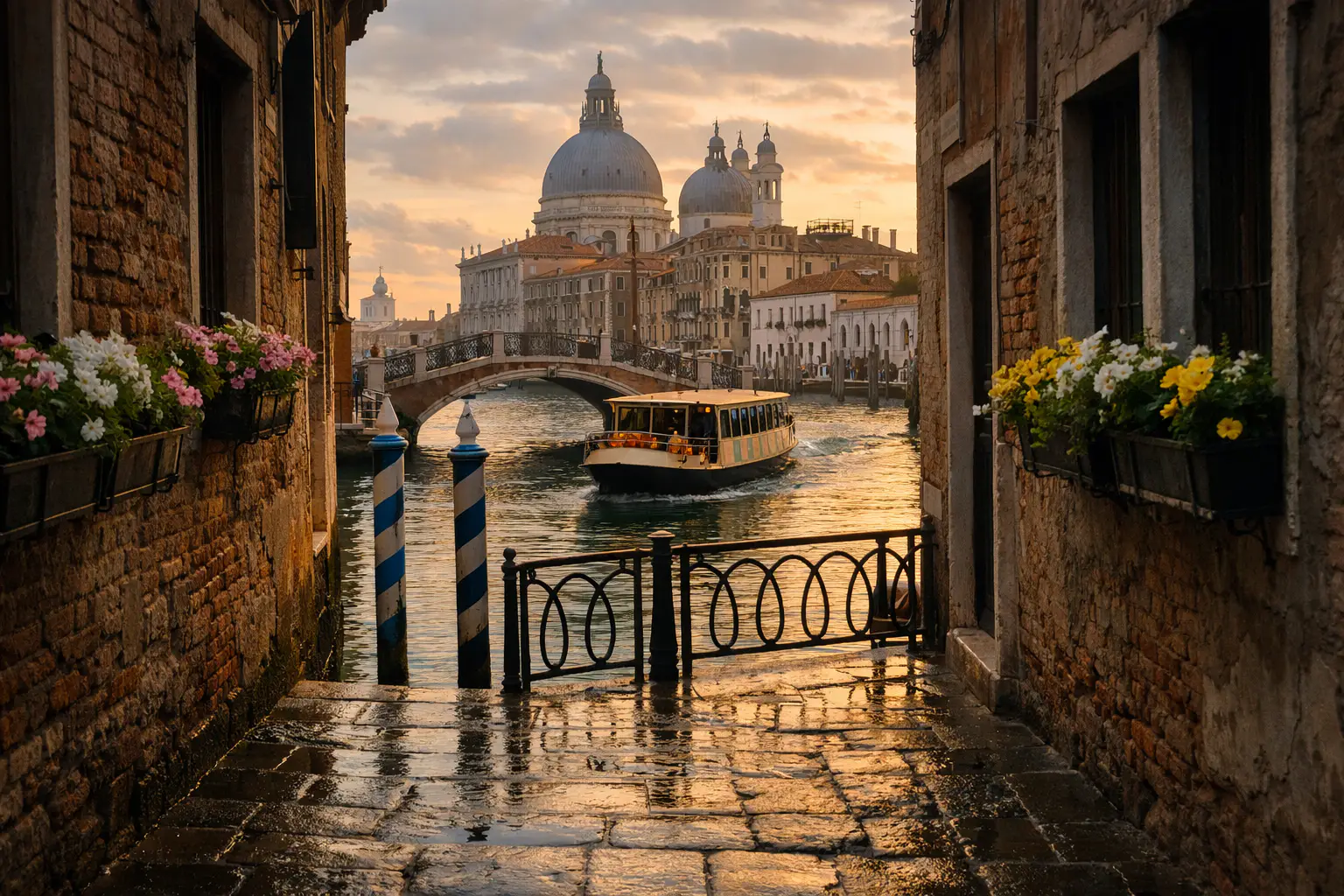
Two days in a city where the journey is part of the visit Venice does not behave like a compact capital. A closed bridge, a shifted landing stage or a detour around a canal can redraw the day; an apparently aimless walk between Cannaregio and San Polo may become its best hour. A sound itinerary therefore combines one booked morning around San Marco, freer neighbourhood time and deliberate use of the vaporetto.
This guide consolidates the useful material from two former April weekend pages into an evergreen pillar. It keeps their best ideas — start early, connect Dorsoduro with San Polo, add islands only when time allows — but removes brittle timetables and prices. More importantly, it addresses the choices that genuinely cost time or money: airport transfer, area to stay, tickets, transport pass and the choice between Murano, Burano or a slower Venice.
Two days are enough to understand the city if you do not add every island, three palaces and every church. They allow a monumental chapter, a more residential one and several meaningful crossings of the lagoon. An extra night still changes a great deal: Venice becomes gentler before day visitors arrive and after they leave.
What is the best 2-day Venice itinerary?
The first day should absorb San Marco because the basilica, Doge’s Palace and campanile concentrate reservations, security and crowds. Start early, then leave the square deliberately before its busiest period. Castello provides a gradual transition into a lived-in city; Rialto and the Grand Canal can wait until late afternoon, when light restores balance to their façades.
The second day works better to the south and west: Accademia, Zattere, Dorsoduro, San Polo and Frari. This line reduces backtracking and combines art, open quays, markets and small squares. A traghetto or vaporetto crossing can replace a long walking detour, but it should not become a race to extract value from a pass.
The islands are optional. Burano requires meaningful navigation time and rewards a committed half-day; Murano is easier to fit in, particularly if glassmaking interests you. With only two days, add one island instead of a museum or district, never on top of an already full plan.
Simple rule: book one major complex per day. In Venice, spare time protects the trip better than a fourth timed entry.

Where to stay in Venice
Cannaregio is often the best first-visit base. The railway station remains accessible, the fondamenta support calmer dinners and San Marco is walkable without every outing starting in the densest crowd. The trade-off is distance from parts of Dorsoduro; also check whether the property sits near the station or much farther east within this long district.
San Polo and Santa Croce balance Rialto, the bus terminal and the centre. Small properties can feel rooted in daily Venice, although bridges and lanes complicate luggage. Dorsoduro suits travellers prioritising galleries, the Zattere and quieter evenings. Around Campo Santa Margherita, request a room away from late-night activity.
San Marco reduces the distance to the first morning’s monuments, not necessarily total fatigue. Prices, noise and density can be high, while an address described as “central Venice” may still sit behind several bridges. Castello becomes more local as you move away from the square and suits visitors prepared to walk further.
Mestre may lower accommodation costs and simplify arriving by car, but it removes the decisive benefit of a night in the lagoon: early and late walks. Compare the total difference after daily transport and choose the mainland only when the saving materially improves another part of the trip.
Cannaregio
Station access, good evenings and a natural progression towards the centre.
Dorsoduro
A coherent base for the Accademia, Zattere and San Polo.

Airports, vaporetti and practical walking
From Marco Polo Airport, compare the bus to Piazzale Roma, public boat and water taxi against your exact address. A bus is often logical for Santa Croce or the railway station; a boat may avoid bridges while taking longer; a water taxi becomes rational for a group, heavy luggage or a very late arrival. From Treviso, the land journey adds another connection, so the airfare alone is not the true comparison.
On arrival, record the nearest vaporetto stop and the number of bridges to the door. Six hundred metres looks short on a map and feels different with luggage over repeated steps. Porters and private boats do not fully repair a poorly understood location.
Use vaporetti for long links, the Grand Canal and islands. Fares and pass rules change, so consult the official ACTV information before purchasing. A pass makes sense for several crossings within a continuous period; it is often unnecessary during a mainly walkable day.
Validate correctly and expect busy platforms around peak periods. Routes can change with works, tides and events. Keep a screenshot, but read the landing-stage signs: two nearby stops with similar names do not always serve the same direction.

San Marco, Doge’s Palace, Castello and Rialto
Enter Piazza San Marco early and read the space before looking only at façades. The square is a political device as well as a picture: basilica, campanile, Procuratie and Doge’s Palace organise access to the lagoon. Reserve the visit that matters most and observe the rest outside instead of joining several unrelated queues.
The basilica has dress rules, storage requirements and a timetable shaped by worship. Doge’s Palace takes longer because institutional rooms, apartments, prisons and the Bridge of Sighs explain how the Republic worked. Ticket products evolve; use official sites or suppliers with explicit inclusions. The campanile is a clear alternative when lagoon geography matters more than another interior.
Leave the square through Castello rather than taking the straightest route to Rialto. Riva degli Schiavoni is spectacular but dense; a few streets behind it, churches, workshops and small campos lower the pace. Extend to the Arsenale or Giardini if the Biennale or maritime history matters, otherwise protect energy for the evening.
Return towards San Polo and Rialto in late afternoon. Cross the bridge once for the view, then move beyond its first terraces. The market is livelier in the morning; in the evening, the banks become an orientation point before dinner in Cannaregio or San Polo. This loop ends near several neighbourhoods rather than trapping the day inside San Marco.

Dorsoduro, Zattere, San Polo and Cannaregio
Start at the Accademia or Peggy Guggenheim Collection according to your relationship with art. The first places Venetian painting in historical sequence; the second offers a more compact modern collection. Visiting both in one morning is possible but leaves little room for Dorsoduro. Choose the one that answers your curiosity and reserve only when demand requires it.
Walk towards the Zattere next. The south-facing quay opens the view, makes the lagoon legible and provides a useful pause after galleries. Continue to Punta della Dogana if you want to understand the entrance to the Grand Canal. The pleasure comes from continuity — façades, workshops, the squero and views towards Giudecca — rather than one isolated attraction.
Climb back through Campo Santa Margherita, cross into San Polo and enter the Frari if art or architecture interests you. Scuola Grande di San Rocco can become the day’s major ticket instead of a museum. Then put the map away for an hour: small squares around San Polo tolerate improvisation better than the Rialto–San Marco corridor.
Finish in Cannaregio around the Ghetto and its fondamenta. Approach the area with respect: the Ghetto is a place of history, memory and religious life, not merely a quiet backdrop. Check visit arrangements, then reach the canals for dinner. This ending provides the best transition between monumental Venice and a city that is still lived in.

Murano, Burano or no island at all?
Murano is easier to integrate. Glass remains a living craft, but demonstrations vary and some lead into persistent sales. Prefer an identified workshop, the glass museum or an independent walk, and do not treat the island as a displaced souvenir shop.
Burano requires more navigation. Its coloured houses, canals and lace tradition justify the trip when photography or lagoon islands are a priority. Leave early, walk beyond the first lanes and accept that Dorsoduro or another major visit must leave the plan. Adding Torcello becomes coherent only with a full day for the northern lagoon.
Staying in Venice is frequently the best first-weekend decision. Giudecca, San Pietro di Castello or a complete Grand Canal ride already provide a meaningful water experience without sacrificing hours in transit. The right choice is not the most famous island; it is the one matching the time you truly have.

Eating well without chasing a list
Cicchetti are small bar snacks, not a uniform set menu. Order a few, read displayed prices and move to another bacaro if you want comparison. In crowded districts, a composed plate can be clearer than an accumulation of bites whose price was never asked.
Venetian cooking combines lagoon produce, vegetables, rice, polenta and seafood. Sarde in saor, baccalà mantecato, risotto or cuttlefish ink are not available everywhere or every season. A short seasonal menu is more convincing than an illustrated book translated into ten languages. Always check cover charge, service and terrace supplements.
Cannaregio, Castello and Dorsoduro allow meals near the itinerary without returning to Rialto. Booking helps on Friday or Saturday night, but leave at least one meal flexible. Venice rewards the right place at the right hour more often than a one-hour detour to a viral table.
How much should you budget for 2 days in Venice?
Venice becomes expensive when late central accommodation, several major tickets, an oversized vaporetto pass and every meal around San Marco accumulate. It remains manageable with two nights booked ahead, one major paid visit each day and substantial walking. These ranges are planning envelopes to recalculate for your dates, not guaranteed prices.
A Mestre hotel may lower the room line but adds transport and removes the most pleasant hours. Compare the net difference. For sights, total only places you genuinely want before buying a card. For water transport, count planned long journeys instead of taking boats simply to justify a pass.
City tax, luggage storage and visitor access or contribution systems may evolve. Consult official city pages before departure, particularly for a day visit or a major event period.
| Per person | Lean | Balanced | Comfort |
|---|---|---|---|
| 2 nights, shared double room | €90–180 | €180–340 | €340–650 |
| Food and drink | €55–90 | €100–170 | €190–320 |
| Airport and local transport | €25–45 | €45–85 | €90–220 |
| Visits | €25–55 | €60–130 | €150–280 |
| Total excluding flights | €195–370 | €385–725 | €770–1,470 |
When to go and how to handle weather and tides
Spring and autumn favour walking, while rain, wind and acqua alta can redraw routes. Check local forecasts, carry a waterproof layer and do not assume disposable overshoes solve every situation. Walkways and access are managed according to water levels and can change.
In summer, begin outside early, place a museum or long pause in the hottest hours and return to the quays later. Shade is inconsistent, landing stages can feel airless and refillable water reduces waste. Winter brings shorter light and dampness with calmer streets, although exposed crossings become less pleasant in strong wind.
Carnival, the Biennale, holiday weekends and local festivals alter rates and flows. Book accommodation first, then fit visits around it. The goal is not to avoid every crowd — impossible at San Marco — but to contain it within a chosen slot and protect the rest of the trip.
Nine Venice mistakes to avoid
Staying far away without calculating journeys removes the best hours. Arriving with a large suitcase without counting bridges turns a short map distance into a physical task. Buying a transport pass before choosing islands encourages unnecessary boat rides.
Scheduling San Marco, both major galleries and Burano on one day is not ambitious; it is internally contradictory. Eating on the first monument-facing terrace is not always wrong, but should be conscious. Following only the station–Rialto–San Marco axis gives a narrow picture of the city.
Sitting or picnicking where prohibited and blocking bridges adds pressure to a fragile space. Treating residential lanes as a private film set does the same. Finally, leaving for the airport without margin ignores queues, landing-stage changes and lagoon conditions.
FAQ: visiting Venice in 2 days
Yes for San Marco, two or three districts and meaningful time on the water. Adding an island requires removing another visit.
Only when planned long journeys justify it. Count trips and check current ACTV prices and validation rules.
Cannaregio balances station access, evenings and walking; Dorsoduro favours art and calm; San Polo remains very central.
Yes to reduce some costs, but you lose early and late Venice. Compare the saving after daily transport.
Murano fits more easily; Burano deserves more time. Neither is mandatory for a successful weekend.
Useful LowCostWings guides
For another substantial city itinerary, read our guide to Rome in 3 days. For a southern trip with fewer blockbuster monuments, compare the practical strengths of car-free bases in Puglia.
Venice is clearer when the itinerary has spare space
Book the major complex that matters, choose a district protecting early hours and keep time for detours. Two days cannot cover the whole lagoon, but they can connect power, water and everyday life without reducing Venice to a queue between Rialto and San Marco.
Before departure, recheck airport transport, ACTV notices and the visitor rules applying to your dates. That final review is more useful than adding another attraction: it protects the first arrival, the last transfer and the flexibility on which this itinerary depends.
Transparency: some booking links are affiliate links. Using them may support LowCostWings without changing the displayed price. Recommendations remain based on trip value.