Copenhagen in July: Weather, 4-Day Itinerary and Realistic Budget
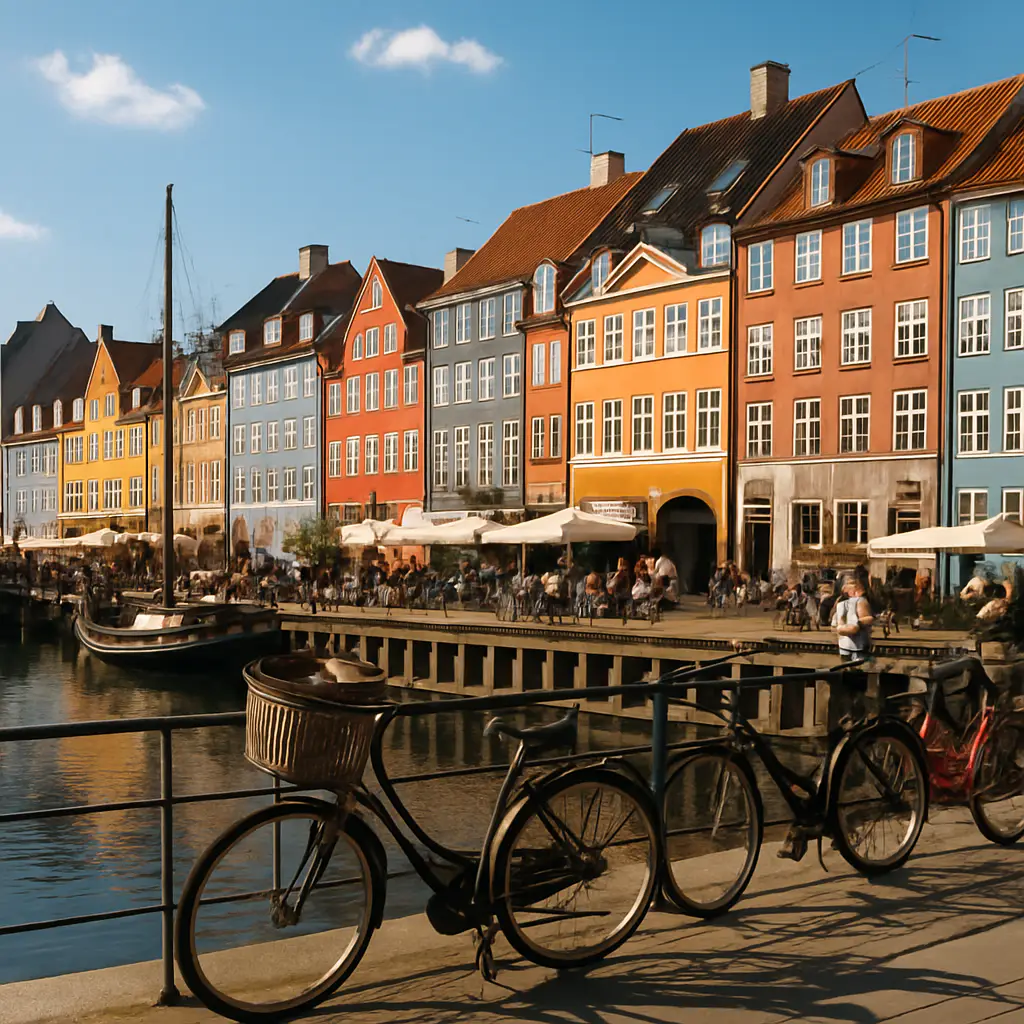
In July, Copenhagen is at its best when the harbour shapes the trip
July is one of the clearest months for understanding Copenhagen’s appeal: very long days, busy terraces, cycling, harbour swimming, Tivoli after dark and Reffen by the water. It is also a high-demand period in an already expensive city. A successful trip is therefore not about collecting attractions. You need to choose a neighbourhood that reduces friction, build a weather-proof itinerary and calculate whether a transport or attraction pass genuinely saves money.
For a first visit, the most balanced format is four days and three or four nights. That gives you enough time for the historic centre, neighbourhoods, the harbour and one major choice — Louisiana or Tivoli — without turning every day into a race. A car is unnecessary; walking, metro, trains, harbour buses and an optional bike cover the trip.
Vesterbro
Convenient from Central Station and the airport, lively in the evening, close to Tivoli and walkable to the historic centre. It is the safest choice when four days need to remain simple.
Nørrebro
Younger, more residential and food-focused, with useful areas around Jægersborggade, Assistens and Nørrebrogade. Check the exact metro distance: not every part of Nørrebro is equally convenient.
Christianshavn or Islands Brygge
Canals, pedestrian bridges, fast harbour access and the possibility of ending the day by the water. Accommodation supply is smaller and some addresses require more walking, but the summer atmosphere is difficult to beat.
Our ideal formula: stay in Vesterbro or close to a metro station in Nørrebro, keep two days for the centre and neighbourhoods, one flexible waterfront day and one day for Louisiana or Tivoli. Book the room first, then one genuinely useful paid experience: a guided canal tour, bike introduction or food tour.
Plan Copenhagen in July
- What July genuinely changes
- Weather and packing
- Where to stay
- Transport and passes
- Four-day itinerary
- Louisiana, Tivoli or the beach
- Activities worth booking
- Realistic budget
- Eating without overspending
- Mistakes to avoid
- FAQ
Why visit Copenhagen in July?
The city operates differently in summer. Quays, parks and official swimming areas become social spaces; evenings remain light for a long time; Reffen is fully seasonal; walking and cycling are more attractive. July therefore adds value to free or low-cost experiences: following the harbour, crossing pedestrian bridges, picnicking, swimming in an authorised zone or exploring a neighbourhood without a rigid schedule.
The trade-off is European holiday demand. Well-located rooms disappear, Nyhavn and central attractions become busy in the middle of the day, and the weather remains changeable despite the season. The strongest plan alternates one outdoor block, one indoor refuge and one flexible evening. It never assumes four perfect sunny days.
Before committing to Denmark, compare the rhythm with our three-day Stockholm guide. For a broader shortlist rather than a single-city comparison, the guide to safe, good-value spring and summer destinations helps place Copenhagen’s higher daily cost against easier beach, nature and city-break options.
What July improves
- Harbour baths and city beaches.
- Long evenings at Nyhavn, Reffen or Islands Brygge.
- Cycling between neighbourhoods, when you are confident.
- Parks, gardens and outdoor cafés.
- Louisiana, where the park and Øresund setting matter as much as the galleries.
What July makes harder
- Central accommodation prices.
- Queues at the best-known attractions.
- Popular restaurants without a weekend booking.
- Itineraries that depend entirely on dry weather.
- Improvised bike rental for visitors unfamiliar with busy urban lanes.
If Copenhagen’s July room prices are already too high, compare the complete cost with our better-value Mediterranean city breaks. The weather and experience are different, but changing destination can be smarter than accepting a poor Copenhagen location.
What weather should you expect in Copenhagen in July?
Pleasant summer days often sit around 20–25°C, but this range should not be treated as a daily promise. The same day can bring sunshine, harbour wind, a shower and a cool evening. Layering matters more than packing a large summer-only wardrobe.
Light waterproof jacket
It is more useful than a fragile umbrella when the wind rises by the water. Choose something that can remain in a day bag.
Warm layer for evenings
A sweatshirt or light knit becomes useful after a boat trip, beside the harbour or when a sunny afternoon turns cooler.
Swimwear and compact towel
An authorised harbour swim can become a highlight. Use official bathing areas and check local conditions before entering the water.

Smart rain plan: keep Designmuseum Danmark, Glyptoteket, the National Museum or SMK as flexible alternatives. Do not pre-book every museum for the same day; weather flexibility is more valuable than a perfectly filled timetable. Travellers mainly looking for easy outdoor scenery rather than a capital can also compare our car-free easy hikes in Europe.
Where should you stay in Copenhagen in July?
A cheaper room can become poor value if it requires several connections, creates a difficult late-night return or leaves you without affordable food nearby. For a four-day trip, first look for a base within roughly ten minutes’ walk of a useful metro or rail station, then compare room size, ventilation, noise and cancellation terms.
| Area | Best for | Main advantage | Limitation | Booking check |
|---|---|---|---|---|
| Vesterbro | First visit, short stay | Station, Tivoli, food and airport access | Noise near Kødbyen on some nights | Read room-specific noise reviews |
| Nørrebro | Food, cafés and neighbourhood life | Strong atmosphere / value balance | Convenience varies by address | Prioritise metro access or an easy route to Nørreport |
| Christianshavn | Canals, quieter evenings, couples | Character and harbour access | Limited supply and sometimes high rates | Book early with understandable cancellation |
| Østerbro | Families, sleep, longer stays | Residential feel, parks, connections | Less spontaneous nightlife | Stay near an S-train or metro station |
| Indre By | Comfortable budget, sight-led trip | Maximum walkability | High prices and crowds | Pay the premium only for a genuinely better room |
Vesterbro near Central Station
Especially useful for a late arrival, a Tivoli evening and an early departure. Avoid rooms directly above nightlife streets when sleep matters.
Nørrebro near the metro
Good for bakeries, cafés and food away from the most visitor-focused streets. A far-northern address can lengthen every day, so check the route carefully.
Østerbro
Strong for families, running routes and sleep. It remains connected, but the evening feels less immediate than Vesterbro.
Christianshavn
Excellent for canal walks and easy central access. Good July options disappear quickly, so hold a cancellable room when the price remains reasonable.
City Pass, Copenhagen Card or single tickets?
The centre is highly walkable. A pass becomes useful when your plan adds the airport, Nørrebro, Reffen, a beach, repeated metro journeys or a regional train trip. The right choice depends more on paid attractions than on the headline trip length.
| Option | What it covers | When it makes sense | When to skip it |
|---|---|---|---|
| Single tickets | Trips bought as needed | Mostly walking, airport plus a few journeys | Very mobile plans or several zones |
| City Pass Small | Unlimited central-zone transport for 24–120 hours | Several daily journeys, airport and outer neighbourhoods | You walk almost everywhere |
| Copenhagen Card Discover | 80+ attractions and regional public transport, including the airport | Two or three paid attractions per day, Louisiana, Tivoli or castles | Mostly free waterfront and neighbourhood plans |
| Bike | Neighbourhood freedom | You already understand urban cycling and hand signals | You are hesitant, travelling with small children or facing heavy rain |
As a July 2026 reference, City Pass Small starts at DKK 100 for 24 hours per adult. Copenhagen Card Discover is listed at DKK 589 for 24 hours, DKK 859 for 48 hours and DKK 1,039 for 72 hours. Prices can change, so repeat the calculation with the attractions you will actually visit.
Simple value test: add the normal admission price of the two or three attractions you genuinely want, then transport. Never add a museum simply to “use” the card. A Nyhavn, neighbourhood, harbour-swim and Reffen day can be outstanding with almost no paid admission.

Four-day Copenhagen itinerary for July
This route reduces unnecessary crossings and gives you an indoor alternative when a shower or cool wind changes the day. Swap days 3 and 4 according to the forecast. Times remain flexible on purpose: July’s long light lets you move harbour walks and neighbourhoods beyond peak visiting hours.
Historic centre, Rosenborg, Nyhavn and an introduction from the water
A boat tour is valuable on the first day because it explains the city’s geography: the Opera House, Christianshavn canals, Black Diamond, new waterfront and true distances. It prevents you from treating each harbour landmark as an isolated stop later.
Danish design, Christianshavn, a harbour swim and Reffen

Nørrebro, cycling or walking, markets and Vesterbro
Choose one major highlight: Louisiana, Tivoli or the beach
Do not combine Louisiana and Tivoli on the same day simply to optimise a pass. You would create an expensive schedule while giving both places less time. With a fifth day, keep both.
Louisiana, Tivoli or Amager: which should you choose?
Louisiana Museum of Modern Art
Choose Louisiana when modern art is one of the reasons for travelling. The train to Humlebæk, sculpture park and Øresund setting form a complete experience. Copenhagen Card Discover can make sense when you add several other attractions and regional transport.
Tivoli
Tivoli is strongest in summer when you stay into the evening. Pricing depends on date and ticket type; entry and unlimited rides are different products. Adults who mainly want the gardens and atmosphere may only need entry.
Amager Strandpark
An excellent sunny-weather choice when the budget has already absorbed accommodation and museums. Bring a picnic and windproof layer, then combine it with Christianshavn or Islands Brygge instead of another paid attraction.
Rosenborg + museum + harbour
Stay in the city when you only have three full days. Louisiana becomes frustrating when the half-day forces you to remove the neighbourhoods that give Copenhagen much of its personality.

Which Copenhagen activities are worth booking?
The centre, quays, gardens and several neighbourhoods are free to explore. A paid experience should therefore explain the city or solve a practical problem. A canal tour makes the harbour legible; a guided bike tour introduces local rules; a food tour prevents Danish food from becoming a random list of stops; Tivoli serves a specific evening or family goal.
Guided electric canal tour
Useful for understanding the waterfront and distances. Check the meeting point, language and weather protection before booking.
Guided bike introduction
Book it when you plan to rent independently afterwards. A short tour is enough to learn the codes and connect several districts without consuming the whole day.
Tour with local tastings
Most coherent when food is a major trip objective. Treat it as a substantial lunch and avoid booking another expensive meal immediately afterwards.
Tivoli admission
Check the product carefully. Park admission and unlimited rides are different purchases; the more expensive option has no value when you mainly want gardens and atmosphere.
Realistic budget for four days in Copenhagen in July
The ranges below cover two adults, three nights and four days before flights. They are planning targets rather than promises. A concert, major event, very late booking or unusually busy weekend can move accommodation well beyond them.
A simple but connected room, bakery breakfasts, quick meals or picnics, tickets or a calculated City Pass, mostly free experiences and one major visit.
A comfortable central room, restaurants for main meals, flexible transport, a canal or guided tour and one Louisiana or Tivoli day.
A sought-after hotel, several good restaurants, multiple paid experiences and room for Tivoli, cocktails or spontaneous transport. Accommodation and meals create most of the increase.
Saving DKK 250 over three nights may not offset extra journeys, reduced energy and a pass used only twice.
Swipe the table horizontally on mobile.
| Item | Budget target | Comfort target | What inflates it |
|---|---|---|---|
| Accommodation / night | DKK 900–1,400 | DKK 1,500–2,300 | Indre By, late booking, event dates |
| Food / day for two | DKK 450–700 | DKK 900–1,400 | Drinks, brunches and unplanned Nyhavn dinners |
| Transport | Single tickets or targeted City Pass | Pass plus regional journeys | Buying overlapping products |
| Attractions | One major paid experience | Two or three admissions per day | City card bought without calculation |
| Extras | Swimming, parks, picnics | Tivoli, cocktails, food experiences | Making every evening a premium spend |
For a broader seasonal comparison, see our guide to European destinations with fewer June crowds. If the room price is the deal-breaker, compare the complete trip with our lower-cost Eastern European destinations; if warmth matters more than Nordic light, use the guide to sunny June destinations before peak season. Copenhagen’s strongest July value is not low prices; it is the amount of free outdoor life available once the room is paid for.
How to eat well in Copenhagen on a controlled budget
The right strategy is not to chase only the cheapest food. Spread the spending: one strong bakery, one smørrebrød lunch, one chosen dinner, then simpler meals when the experience adds little. Markets and food halls are convenient, but several small orders plus drinks can exceed the price of a proper meal.
Bakery breakfast
Often better value than an expensive hotel breakfast supplement. Go reasonably early on weekends and avoid turning every coffee stop into a full brunch.
Smørrebrød at lunch
Choose a specialist and treat the meal as an experience. A thoughtful lunch can replace a food tour when you prefer to explore independently.
Torvehallerne with limits
The market is useful for variety, but several tasting-sized orders can become more expensive than lunch. Decide how many stalls you will use before starting.
Reffen for the setting
Go for the summer atmosphere, choice and waterfront, not with the assumption that it will be the cheapest meal in the city.
Nyhavn: walk through it, photograph it, return later and perhaps have one drink. You do not need to buy every meal there to enjoy the area.
Eight mistakes to avoid in July
Booking the room after the flight
Check at least three acceptable rooms before buying a non-refundable fare. July accommodation can reverse the destination ranking.
Buying Copenhagen Card automatically
It is excellent for an intensive attraction plan and expensive for a harbour, neighbourhood and free-experience trip.
Planning four fully outdoor days
Keep one museum or neighbourhood café for each major area so rain does not force a complete rewrite.
Renting a bike without learning the rules
The lanes work because they are used seriously. Do not stop in the flow and learn signals before joining commuters.
Staying far away for a minor saving
Time matters more on three nights than on a long holiday. Check the real 11 p.m. route, not only distance.
Putting Louisiana and Tivoli on one day
Both deserve time. Choose according to your profile or add a fifth day.
Swimming outside authorised areas
The harbour remains active and navigated. Use official baths and zones, then check local information before entering.
Assuming Reffen is guaranteed low cost
Entry is free, but orders add up. The setting justifies the trip; decide the meal budget first.
Copenhagen in July
Pleasant summer days are often around 20–25°C, but wind, showers and cool evenings remain possible. Pack layers and a light waterproof rather than an exclusively hot-weather wardrobe.
Can you swim in Copenhagen harbour?Yes, in official harbour baths and authorised swimming zones. Islands Brygge is the best known, but other areas exist. Always check local conditions and signage before entering the water.
How many days do you need in Copenhagen in summer?Three days cover the main sights. Four provide a better balance between monuments, neighbourhoods and waterfront life. Five are useful when you want both Louisiana and Tivoli without removing the rest.
What is the best area for a first visit?Vesterbro is the most practical because of Central Station, Tivoli, restaurants and connections. Nørrebro is better for travellers prioritising neighbourhood atmosphere and food.
Is Copenhagen Card worth it?It can be when you visit two or three paid attractions daily and use regional transport, particularly for Louisiana or castles. It is rarely the best choice for a plan centred on walking, swimming, parks and neighbourhoods.
Do you need to rent a bike?No. Copenhagen works very well on foot and by public transport. Rent one when you are already comfortable in dense cycling traffic and understand the rules; a short guided ride can be a useful introduction.
Is Copenhagen genuinely expensive?Yes, especially for accommodation, restaurants and alcohol. The trip remains manageable through free outdoor experiences, a useful neighbourhood, bakeries, picnics and strict selection of paid attractions.
Useful official sources
July is excellent when Copenhagen is not treated as a monument checklist
The month’s value is outdoors: harbour life, canals, long evenings, neighbourhoods and the ability to move from a museum to a swim without leaving the city. Four days make this possible without overloading the schedule. Vesterbro remains the simplest base, Nørrebro the strongest atmosphere choice and Christianshavn the most appealing waterfront option.
To control the cost, book a useful room first, calculate passes against the real itinerary and pay for only one or two strong experiences. A boat tour on day one, Louisiana or Tivoli later and generous free time beside the water usually produce a better trip than a city card treated as an obligation.
Transparency: some accommodation and activity links are affiliate links. LowCostWings may receive a commission if you book after using them, at no extra cost to you. Recommendations are based on trip coherence rather than commission level.