Tbilisi in 3 Days: Itinerary, Where to Stay and Budget
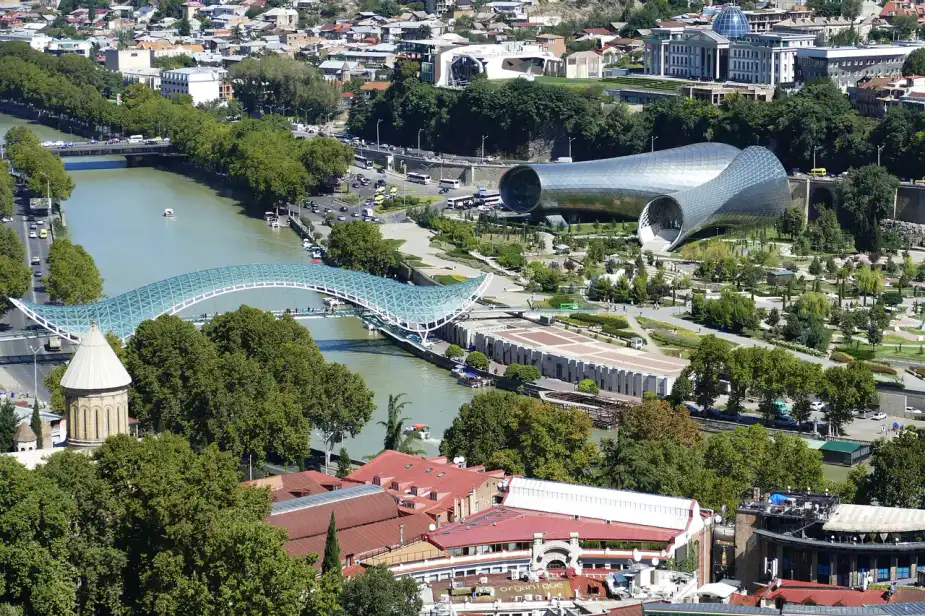
Three days of old-town balconies, sulphur baths, food and layered history
Tbilisi is easiest to understand in layers. Start with Abanotubani, the river and the lanes below Narikala; continue with Freedom Square, Rustaveli Avenue and the city’s museums; then decide whether the third day belongs to left-bank neighbourhoods or to Mtskheta. Trying to combine the capital, Kazbegi and the wine region in three days produces more road than travel.
The city is hilly, pavements can be uneven and map distances hide steep climbs. A central base near Freedom Square, Sololaki or Avlabari reduces friction, but each has a different evening atmosphere. Choose the street, not only the district name, and check whether a balcony-view hotel requires a long staircase.
Tbilisi can be excellent value, yet cheap taxis and meals should not encourage careless planning. Reserve a reputable sulphur bath if it matters to you, use licensed transport, and keep the final day flexible enough for weather, museum closures and the reality of Georgian meal times.
Quick verdict: Give Tbilisi three nights, keep the first two days inside the city, and choose only one third-day excursion. Mtskheta is the cleanest addition; Kazbegi deserves more time and should not be squeezed between flights.
Decide in 30 seconds
Start with the constraint that truly matters: duration, arrival, evening atmosphere or day trip. In Tbilisi, that choice shapes comfort more than adding another secondary sight.
Sololaki
Beautiful residential streets and a short walk to Freedom Square, with slopes that vary by address.
Freedom Square
The simplest central anchor for metro, Rustaveli and the historic core.
Avlabari
Useful for Rike Park and the metro; inspect the exact hill and road crossing.
Mtskheta
A coherent heritage day; keep mountain regions for a longer Georgia itinerary.
Where to stay: the area changes the trip
On a short stay in Tbilisi, a small room saving rarely compensates for repeated journeys, stairs or an uncertain final service. Compare the real doorstep, not only the district name.
Freedom Square
Central, legible and connected by metro. It is the easiest choice when you want to split time between the old town and Rustaveli.
Lower Sololaki
Wooden balconies, wine bars and handsome streets. Lower Sololaki is easier on foot than addresses high above the centre.
Avlabari
Good for Rike Park, Metekhi and the metro. Some streets feel less polished after dark, so study the immediate surroundings.
Vera
A more residential choice near cafés and Rustaveli, but less convenient for early walks through Abanotubani.
Before paying: in Tbilisi, check cancellation, luggage access, recent noise reports and the route after 10 p.m. A beautiful room should not weaken the whole journey.

A realistic budget
These ranges help cost Tbilisi; they are not live prices. Weekends, events and late booking can move accommodation and activity costs sharply.
Swipe to see every column.
| Expense | Planning range | Useful decision |
|---|---|---|
| Central double room | €45–€100 a night | Compare recent reviews, heating or air-conditioning and the exact uphill walk. |
| Food | €20–€40 per person a day | Share dishes, order gradually and keep room for bread, dumplings and vegetable plates. |
| Metro and local journeys | €3–€15 a day | Use the metro for long axes and walk within one neighbourhood at a time. |
| Bath or day trip | €25–€80 | A private bath room or a guided Mtskheta outing should be chosen for quality, not simply the lowest price. |
Budget rule: for Tbilisi, add the journey, transfer, location, food and one strong activity before calling the trip cheap. A low fare does not always offset a badly placed room.
Arrival and getting around without a car
Tbilisi airport sits outside the centre. Public transport can be economical, while a pre-arranged transfer or official taxi is more comfortable after a late flight. Confirm the method before landing, download the address offline and avoid negotiating with unverified drivers inside the arrivals flow.
Inside the city, the metro solves the longer north–south movements, but much of the historic centre is best explored on foot. Group sights by contour: Abanotubani, Metekhi and Rike Park form one cluster; Freedom Square, Sololaki and Rustaveli form another. This prevents repeated climbs and river crossings.
- On arrival: keep the address and route available offline.
- At night: check the final useful service, not an average timetable.
- With luggage: count stairs, cobbles and pedestrian access.
- For departure: put no uncertain excursion immediately before the flight or train.

Detailed itinerary
Each day stays within a clear geography to avoid backtracking. The times below set a workable rhythm, not a minute-by-minute obligation.
Day plan 1
Day 1 — Abanotubani, Narikala and the river
Enter the old town through the lower lanes and reach Abanotubani before the bath district becomes busy. Look at the brick domes, continue to the small Leghvtakhevi waterfall and climb only as far as your shoes and the weather make comfortable. Narikala is a viewpoint, not a reason to exhaust the day.
Cross towards Metekhi and Rike Park in the afternoon, then return to the old town for a reserved bath or dinner. A bath slot belongs at the end of a walking block, not before a steep climb. If you want a scrub or private room, confirm inclusions and duration in advance.
- 09:00 — Freedom Square and lower old town
- 11:00 — Abanotubani and waterfall
- 14:30 — Narikala or botanical-garden edge
- 17:00 — Rike Park and Metekhi
- 19:00 — bath or Georgian dinner

Day plan 2
Day 2 — Rustaveli, museums and Sololaki
Use the morning for one museum or the Dry Bridge market, depending on opening days and your interests. Rustaveli is a city axis rather than a single attraction; pause for architecture, a café and one cultural visit instead of walking it as quickly as possible.
Spend the late afternoon in Sololaki, where the pleasure comes from courtyards, carved doors and residential façades. Respect private entrances and photograph discreetly. Choose a wine bar or restaurant nearby so the evening ends on foot rather than with another cross-city taxi.
- 09:30 — one museum or market
- 12:30 — lunch near Rustaveli
- 15:00 — Freedom Square and side streets
- 17:00 — lower Sololaki
- 20:00 — wine and shared dishes

Day plan 3
Day 3 — Mtskheta or a deeper city day
Mtskheta is close enough to create a coherent heritage day. A guided outing simplifies the relationship between Jvari, Svetitskhoveli and the confluence viewpoints; independent travel can be cheaper but requires more attention to the final connection between sites.
If the weather is poor or you dislike organised excursions, stay in Tbilisi: visit the Chronicle of Georgia only if transport is solved, explore the left bank, or take a long lunch followed by a museum. A calm third city day is preferable to an improvised mountain journey.
- 09:00 — leave Tbilisi
- 10:00 — Jvari viewpoint
- 11:30 — Svetitskhoveli
- 13:30 — Mtskheta lunch and lanes
- 17:00 — return to Tbilisi

Day trip or extra day
Kazbegi
Make it a separate overnight or a long, deliberate day with early departure. Mountain weather and road time make it a poor add-on before an evening flight.
Kakheti wine country
Choose it instead of Mtskheta when wine is the main interest. Use a responsible driver or organised tour and do not plan to drive after tastings.
Good trade-off: a day trip should replace a block, never sit on top of an already full day. Keep margin before departure.
Eat well without inflating the budget
In Tbilisi, keep breakfast and some lunches simple, then choose one dinner that genuinely expresses the destination. Booking four supposedly essential restaurants removes useful flexibility.
Khinkali
Order a modest first round; dumplings are filling and different fillings reward sharing.
Khachapuri
Adjarian khachapuri is a full meal for many travellers, not a side dish.
Vegetable and walnut dishes
Pkhali, aubergine rolls and salads keep a shared table balanced.
Georgian wine
Ask about grape and method, taste slowly and pair the glass with food rather than treating wine as a checklist.
Weather, season and pace
Spring and autumn are generally the easiest seasons for long walks, though rain can turn cobbles and slopes slippery. Summer can be hot in the lower old town; start early, use museums during the hottest hours and leave the exposed viewpoints for later light.
Winter gives clear urban atmosphere and warm bath evenings, but short daylight and mountain conditions should shrink the excursion plan. Tbilisi itself remains rewarding when the itinerary is built around food, museums and neighbourhoods rather than distant scenery.
Plan B: in Tbilisi, decide before departure which indoor visit, neighbourhood and long meal will replace the outdoor plan. A chosen alternative still feels like a real day.
Three activities worth booking when they fit
In Tbilisi, compare language, meeting point, inclusions, physical effort and cancellation. An activity earns its price when it simplifies a difficult journey or adds insight you would not gain alone.
Mtskheta, Jvari and Svetitskhoveli day trip
Check the date-specific details before paying.
View activityDetails that protect the trip
- Adding Kazbegi, Kakheti and Mtskheta to a three-day city break.
- Choosing a hotel for the view without checking stairs, slope and taxi access.
- Entering an unmarked taxi without confirming the fare or using a trusted booking method.
- Scheduling a sulphur bath before a long uphill walk.
- Ordering an entire Georgian meal at once and discovering that the table is far too large.
For Tbilisi, finalise the trip in this order: area, arrival, fixed-time visit, weather-dependent excursion, then restaurants. This prevents a secondary booking from dictating the whole stay.
Fine-tune the trip without overloading it
When you arrive late in the day
Do not launch straight into “Day 1 — Abanotubani, Narikala and the river”. Check in, learn the route between Freedom Square and dinner, then keep the first walk short and well lit. That evening is for understanding distance, slope and neighbourhood atmosphere without risking a closure or a rushed return.
Start the complete plan next morning with suitable shoes and every essential confirmation available offline. In Tbilisi, a restrained first evening improves the following days: you know where transport leaves, where to buy water and how long the walk back genuinely takes.
Choosing between the two strongest bases
Freedom Square prioritises immediate efficiency; Lower Sololaki gives more atmosphere or solves a different constraint. Compare the arrival route, post-dinner walk, stairs and distance to the earliest departure. The winning district is the one that removes repeated journeys, not the one with the most romantic description.
For two or three nights in Tbilisi, changing hotels rarely helps. Even a visible price gap must be weighed against luggage, lost time and a possible taxi. One carefully chosen base also lets you swap days when the weather changes without rebuilding the whole trip.
Making weather decisions
Protect “Day 2 — Rustaveli, museums and Sololaki” first when it relies on outdoor conditions. Use the short-range forecast, official information and operator notice, then swap the days if necessary. A movable booking may be worth more than a small non-refundable discount.
If conditions deteriorate, do not fill the gap with random indoor stops. Return to a neighbourhood, museum and meal already chosen. In Tbilisi, the fallback should keep the same quality of pace: one coherent half-day is better than four unrelated shelters.
Adapting the pace to your group
Headline distances reveal nothing about cobbles, slopes, queues or temperature. Build the speed around the least mobile traveller and remove a secondary stop when necessary. The first mistake to avoid is explicit: adding kazbegi, kakheti and mtskheta to a three-day city break.
With children, luggage or reduced mobility in Tbilisi, place pauses near transport or the next meal. Check lifts, platform access, toilets and where a loop can be shortened. This preparation does not remove spontaneity; it protects energy for the places everyone actually came to see.
Booking in the right order
Begin with accommodation around Freedom Square, then secure only the activity or visit whose capacity is limited. Compare “Historic Tbilisi guided walk” after solving the arrival. Keep ordinary meals, walks and untimed visits flexible until the final days.
For every purchase, reread the meeting point, language, true duration, exclusions and cancellation. In Tbilisi, a well-placed activity simplifies the day; one booked only because it is popular can impose two transfers and remove a better evening.
Using an extra night well
Choose Kazbegi when you want make it a separate overnight or a long, deliberate day with early departure. Pick Kakheti wine country when that compromise better fits the weather or your energy. Do not absorb both: the extra night should loosen the journey, not create another race.
Use the margin for a lunch built around Khinkali or Khachapuri, a return to the favourite district and one evening without transport. That space often turns Tbilisi into a stay rather than a chain of slots. Keep the final route to the airport or station independent of any fragile excursion.
Final pre-departure checklist
For Tbilisi, this ten-minute check prevents problems that later cost an hour, a taxi or a missed activity. Complete it forty-eight hours before departure, then repeat only the sensitive timetable checks the evening before.
Transport confirmed
Open Georgia Travel and the relevant transport source, then check works, final departure and exact stop. Save a screenshot and the address for Freedom Square. The return connection should not depend on a full battery or perfect mobile coverage.
A day bag matched to the route
For “Day 2 — Rustaveli, museums and Sololaki”, carry water, sun protection or a light layer, suitable shoes and a power bank. Store the ticket or QR code offline. Remove what you will not use: excess weight becomes obvious on cobbles, hills, steps and platforms.
Meals placed intelligently
Identify one simple option around Khinkali and a slower table for Khachapuri. Check closing days, and do not force a restaurant across Tbilisi after the longest day. The best dinner is also one you can reach without rushing.
A protected final day
Recalculate departure from the hotel with luggage, transport margin and a backup. Put neither Kazbegi nor any weather-dependent activity before the journey home. Keep the final block in a district with a direct route to the station or airport.
Finally, reread “Day 1 — Abanotubani, Narikala and the river” from your accommodation around Freedom Square. If the first stop creates a detour, move or remove it before departure. In Tbilisi, a loop that begins and ends naturally is worth more than a longer list built without reference to the street where you are staying.
Keep the accommodation number, operator contact and one reliable return option as well. If Kakheti wine country depends on an uncertain connection, decide now to drop it. That small discipline leaves room for the enjoyable surprises: beautiful light, a market that is still lively or a lunch you genuinely want to extend.
Official sources to check before departure
Timetables, works, openings and conditions change. Check these official pages during the week before departure and again before any sensitive outing.

Frequently asked questions
How many days does Tbilisi need?
Three full days give the old town, Rustaveli/Sololaki and either Mtskheta or a deeper neighbourhood day.
Is Tbilisi walkable?
The central districts are walkable but hilly, with uneven surfaces. Use the metro for longer axes and plan clusters by elevation.
Where should first-time visitors stay?
Freedom Square or lower Sololaki gives the most balanced access. Avlabari is useful when metro and old-town views matter.
Should you book a sulphur bath?
Reserve if a private room, a specific bath or an evening slot matters. Confirm duration, towels and any scrub separately.
Is Mtskheta worth a day?
Yes, especially for a first Georgia trip. It is close enough to add heritage without the road time of Kazbegi.
Can you visit without a car?
Yes. Metro, walking, booked transfers and guided day trips cover this itinerary comfortably.
In short
Tbilisi is most memorable when its contrasts have room to breathe: bath domes and balconies, Soviet and contemporary layers, a long shared meal and one heritage excursion. Keep the mountains for a longer journey and the city becomes far more generous.
Commercial links help compare offers. Always check final price, conditions, location and cancellation before paying.