Valencia in May: 3-Day Itinerary, Weather and Budget
Three May days of old-town markets, gardens, sea and late Mediterranean evenings
Valencia in May offers a rare balance: warm days without the most intense summer heat, long light for the Turia Gardens and enough city life to make the trip worthwhile even if the sea is cool. Build the stay around three distinct zones—the historic centre, the Turia/City of Arts axis and the coast—rather than criss-crossing the city repeatedly.
The best base depends on your evenings. Ciutat Vella puts monuments and the Central Market outside the door; Ruzafa gives restaurants and rail access; the beach districts make sense only when sea time outranks the old town. For three days, sleeping near the centre usually saves the most time.
May weather is generally kind, but it is not a promise of midsummer swimming. Keep beach time flexible, protect timed visits such as Oceanogràfic or a cooking class, and let the Albufera sunset replace—not join—another full excursion.
Quick verdict: Stay in or beside Ciutat Vella, dedicate one day to the centre, one to the Turia and City of Arts, and use the third for the beach plus Albufera only when the forecast is stable.
Decide in 30 seconds
Start with the constraint that truly matters: duration, arrival, evening atmosphere or day trip. In Valencia, that choice shapes comfort more than adding another secondary sight.
Ciutat Vella
Walk to the market, Lonja, cathedral and evening squares.
Ruzafa
Excellent restaurants and rail access, with a longer walk to some sights.
Cabanyal
Choose it only when mornings by the beach matter more than central convenience.
Albufera
Use one late afternoon and sunset; do not attach it to an already full museum day.
Where to stay: the area changes the trip
On a short stay in Valencia, a small room saving rarely compensates for repeated journeys, stairs or an uncertain final service. Compare the real doorstep, not only the district name.
Ciutat Vella
Strongest for early market visits and late central walks. Check nightlife noise and taxi access inside pedestrian streets.
Ruzafa
A lively restaurant base near Estació del Nord. It suits travellers who enjoy a neighbourhood evening more than a postcard doorstep.
Cabanyal
Characterful streets and quick sea access. Metro or tram time to the old town becomes part of each day.
Extramurs
Often better value just outside the historic core, especially near a useful metro station.
Before paying: in Valencia, check cancellation, luggage access, recent noise reports and the route after 10 p.m. A beautiful room should not weaken the whole journey.

A realistic budget
These ranges help cost Valencia; they are not live prices. Weekends, events and late booking can move accommodation and activity costs sharply.
Swipe to see every column.
| Expense | Planning range | Useful decision |
|---|---|---|
| Central double room | €85–€160 a night | Compare Ciutat Vella noise with Extramurs value. |
| Food | €30–€55 per person a day | Use the market for breakfast or lunch and reserve paella deliberately. |
| Local transport | €5–€15 a day | Walk by zone; use metro or tram for the beach and airport. |
| Paid highlight | €15–€45 | Choose Oceanogràfic, a guided cycle or a cooking class—not every option. |
Budget rule: for Valencia, add the journey, transfer, location, food and one strong activity before calling the trip cheap. A low fare does not always offset a badly placed room.
Arrival and getting around without a car
Valencia Airport connects to the urban network, making a car unnecessary for this itinerary. Check the current metro schedule against your landing time, especially late in the evening. Estació del Nord and Joaquín Sorolla serve different rail patterns; confirm which station your ticket uses before choosing a hotel solely for rail access.
Within the city, distances are best understood by corridor. The old town is walked, the Turia Gardens form a pleasant east–west route, and metro or tram handles the coast. Cycling can be efficient, but only use a route and operator that make you comfortable around crossings and shared paths.
- On arrival: keep the address and route available offline.
- At night: check the final useful service, not an average timetable.
- With luggage: count stairs, cobbles and pedestrian access.
- For departure: put no uncertain excursion immediately before the flight or train.

Detailed itinerary
Each day stays within a clear geography to avoid backtracking. The times below set a workable rhythm, not a minute-by-minute obligation.
Day plan 1
Day 1 — Central Market, Lonja and old-town evening
Reach the Central Market while the stalls are active, then cross directly to the Lonja de la Seda. These two places explain Valencia through food and trade better than a rushed sequence of churches.
Continue through the cathedral quarter and Plaza de la Virgen, saving El Carmen for the cooler late afternoon. Dinner should not be squeezed between monuments; choose one square or neighbourhood and let the evening stretch.
- 09:00 — Central Market
- 10:30 — Lonja de la Seda
- 13:00 — market or neighbourhood lunch
- 16:00 — cathedral quarter
- 19:30 — El Carmen and dinner

Day plan 2
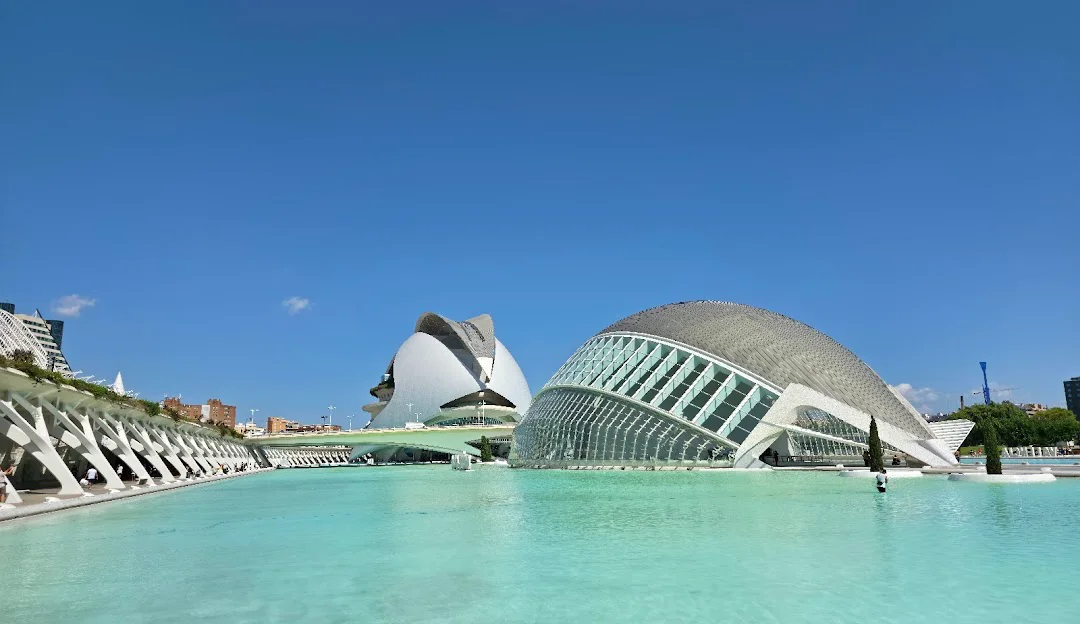
Day 2 — Turia Gardens and City of Arts
Enter the Turia Gardens at a central point and move east gradually. The former riverbed is not merely transport: bridges, trees and sports areas make the journey part of the visit. Carry water and resist detouring back into the centre for lunch.
At the City of Arts and Sciences, decide whether architecture alone is enough or whether Oceanogràfic/science exhibits justify several hours. A timed entry belongs here; stacking every venue leaves no space for the gardens or the evening.
- 09:30 — enter the Turia
- 11:30 — gardens and bridges
- 13:30 — lunch on the east side
- 15:00 — chosen City of Arts venue
- 19:00 — Ruzafa dinner

Day plan 3
Day 3 — Cabanyal, Malvarrosa and Albufera
Explore Cabanyal’s tiled façades before reaching the beach. In May, plan a walk and lunch first; treat swimming as a bonus according to wind and water temperature. This keeps the day satisfying even when the sea feels cool.
For Albufera, travel only after checking the current public-transport return or booking a suitable excursion. Sunset is the reason to go, so avoid an early rushed visit. If wind or cloud spoils the plan, stay by the coast or return for a museum.
- 09:30 — Cabanyal streets
- 11:30 — Malvarrosa promenade
- 14:00 — seafood or rice lunch
- 17:00 — depart for Albufera if conditions suit
- 20:30 — return after sunset

Day trip or extra day
Albufera and El Palmar
A strong half-day for lagoon landscape and rice culture. EMT lines 24 and 25 are listed by Visit València, but verify the current timetable.
Xàtiva or Sagunto
Choose one rail day only on a fourth day. Neither should displace the Turia or old town on a first three-day stay.
Good trade-off: a day trip should replace a block, never sit on top of an already full day. Keep margin before departure.
Eat well without inflating the budget
In Valencia, keep breakfast and some lunches simple, then choose one dinner that genuinely expresses the destination. Booking four supposedly essential restaurants removes useful flexibility.
Paella valenciana
Order it for lunch, confirm the style and expect preparation time; authentic rice is not fast food.
Central Market produce
Fruit, horchata ingredients, cured goods and bakery items make an efficient first lunch.
Esgarraet and clóchinas
Seasonal local dishes reward asking what is available rather than following a fixed list.
Horchata and fartons
Best enjoyed as an afternoon pause, particularly after the Turia ride or walk.
Weather, season and pace
Visit València lists average May temperatures around 23°C by day and 14°C at night. That supports long walks and outdoor dinners, but sea conditions vary and a light layer remains useful after sunset.
May weekends, sporting events and festivals can tighten room supply. Book a central refundable hotel first, then the one paid visit that matters. Keep the beach and Albufera portions responsive to the forecast.
Plan B: in Valencia, decide before departure which indoor visit, neighbourhood and long meal will replace the outdoor plan. A chosen alternative still feels like a real day.
Three activities worth booking when they fit
In Valencia, compare language, meeting point, inclusions, physical effort and cancellation. An activity earns its price when it simplifies a difficult journey or adds insight you would not gain alone.
Details that protect the trip
- Assuming warm air guarantees warm swimming water.
- Sleeping by the beach on a first visit when every evening is planned in the old town.
- Booking every City of Arts venue for the same afternoon.
- Ordering paella late at night and expecting immediate service.
- Visiting Albufera without checking the return after sunset.
For Valencia, finalise the trip in this order: area, arrival, fixed-time visit, weather-dependent excursion, then restaurants. This prevents a secondary booking from dictating the whole stay.
Fine-tune the trip without overloading it
When you arrive late in the day
Do not launch straight into “Day 1 — Central Market, Lonja and old-town evening”. Check in, learn the route between Ciutat Vella and dinner, then keep the first walk short and well lit. That evening is for understanding distance, slope and neighbourhood atmosphere without risking a closure or a rushed return.
Start the complete plan next morning with suitable shoes and every essential confirmation available offline. In Valencia, a restrained first evening improves the following days: you know where transport leaves, where to buy water and how long the walk back genuinely takes.
Choosing between the two strongest bases
Ciutat Vella prioritises immediate efficiency; Ruzafa gives more atmosphere or solves a different constraint. Compare the arrival route, post-dinner walk, stairs and distance to the earliest departure. The winning district is the one that removes repeated journeys, not the one with the most romantic description.
For two or three nights in Valencia, changing hotels rarely helps. Even a visible price gap must be weighed against luggage, lost time and a possible taxi. One carefully chosen base also lets you swap days when the weather changes without rebuilding the whole trip.
Making weather decisions
Protect “Day 2 — Turia Gardens and City of Arts” first when it relies on outdoor conditions. Use the short-range forecast, official information and operator notice, then swap the days if necessary. A movable booking may be worth more than a small non-refundable discount.
If conditions deteriorate, do not fill the gap with random indoor stops. Return to a neighbourhood, museum and meal already chosen. In Valencia, the fallback should keep the same quality of pace: one coherent half-day is better than four unrelated shelters.
Adapting the pace to your group
Headline distances reveal nothing about cobbles, slopes, queues or temperature. Build the speed around the least mobile traveller and remove a secondary stop when necessary. The first mistake to avoid is explicit: assuming warm air guarantees warm swimming water.
With children, luggage or reduced mobility in Valencia, place pauses near transport or the next meal. Check lifts, platform access, toilets and where a loop can be shortened. This preparation does not remove spontaneity; it protects energy for the places everyone actually came to see.
Booking in the right order
Begin with accommodation around Ciutat Vella, then secure only the activity or visit whose capacity is limited. Compare “Oceanogràfic and Science Museum combo” after solving the arrival. Keep ordinary meals, walks and untimed visits flexible until the final days.
For every purchase, reread the meeting point, language, true duration, exclusions and cancellation. In Valencia, a well-placed activity simplifies the day; one booked only because it is popular can impose two transfers and remove a better evening.
Using an extra night well
Choose Albufera and El Palmar when you want a strong half-day for lagoon landscape and rice culture. Pick Xàtiva or Sagunto when that compromise better fits the weather or your energy. Do not absorb both: the extra night should loosen the journey, not create another race.
Use the margin for a lunch built around Paella valenciana or Central Market produce, a return to the favourite district and one evening without transport. That space often turns Valencia into a stay rather than a chain of slots. Keep the final route to the airport or station independent of any fragile excursion.
Final pre-departure checklist
For Valencia, this ten-minute check prevents problems that later cost an hour, a taxi or a missed activity. Complete it forty-eight hours before departure, then repeat only the sensitive timetable checks the evening before.
Transport confirmed
Open Visit València and the relevant transport source, then check works, final departure and exact stop. Save a screenshot and the address for Ciutat Vella. The return connection should not depend on a full battery or perfect mobile coverage.
A day bag matched to the route
For “Day 2 — Turia Gardens and City of Arts”, carry water, sun protection or a light layer, suitable shoes and a power bank. Store the ticket or QR code offline. Remove what you will not use: excess weight becomes obvious on cobbles, hills, steps and platforms.
Meals placed intelligently
Identify one simple option around Paella valenciana and a slower table for Central Market produce. Check closing days, and do not force a restaurant across Valencia after the longest day. The best dinner is also one you can reach without rushing.
A protected final day
Recalculate departure from the hotel with luggage, transport margin and a backup. Put neither Albufera and El Palmar nor any weather-dependent activity before the journey home. Keep the final block in a district with a direct route to the station or airport.
Finally, reread “Day 1 — Central Market, Lonja and old-town evening” from your accommodation around Ciutat Vella. If the first stop creates a detour, move or remove it before departure. In Valencia, a loop that begins and ends naturally is worth more than a longer list built without reference to the street where you are staying.
Keep the accommodation number, operator contact and one reliable return option as well. If Xàtiva or Sagunto depends on an uncertain connection, decide now to drop it. That small discipline leaves room for the enjoyable surprises: beautiful light, a market that is still lively or a lunch you genuinely want to extend.
Official sources to check before departure
Timetables, works, openings and conditions change. Check these official pages during the week before departure and again before any sensitive outing.

Frequently asked questions
Is May a good time for Valencia?
Yes for walking, gardens and outdoor meals. Swimming is possible for some travellers but should not be guaranteed.
How many days do you need?
Three days cover the old town, Turia/City of Arts and a coastal or Albufera day.
Where should you stay?
Ciutat Vella for convenience, Ruzafa for food and rail access, Cabanyal only for a sea-first trip.
Do you need a car?
No. Metro, tram, buses, walking and cycling cover the city and Albufera can be reached by public transport or tour.
Should Oceanogràfic be booked?
Book ahead when it is a priority or dates are busy; allow several hours and do not combine it with every other venue.
Can you visit Albufera for sunset?
Yes, but verify the last public transport or book a return-inclusive activity before leaving the city.
In short
Valencia in May is at its best when each day has one geography: stone and markets, gardens and contemporary architecture, then sea and lagoon. The result feels spacious even on a three-night budget.
Commercial links help compare offers. Always check final price, conditions, location and cancellation before paying.