Winter City Breaks in Europe Without a Car: 8 Easy Destinations and Budgets
Compare 8 easy winter city breaks in Europe without a car: weather, transport, budget, where to stay and the best destination for your trip.
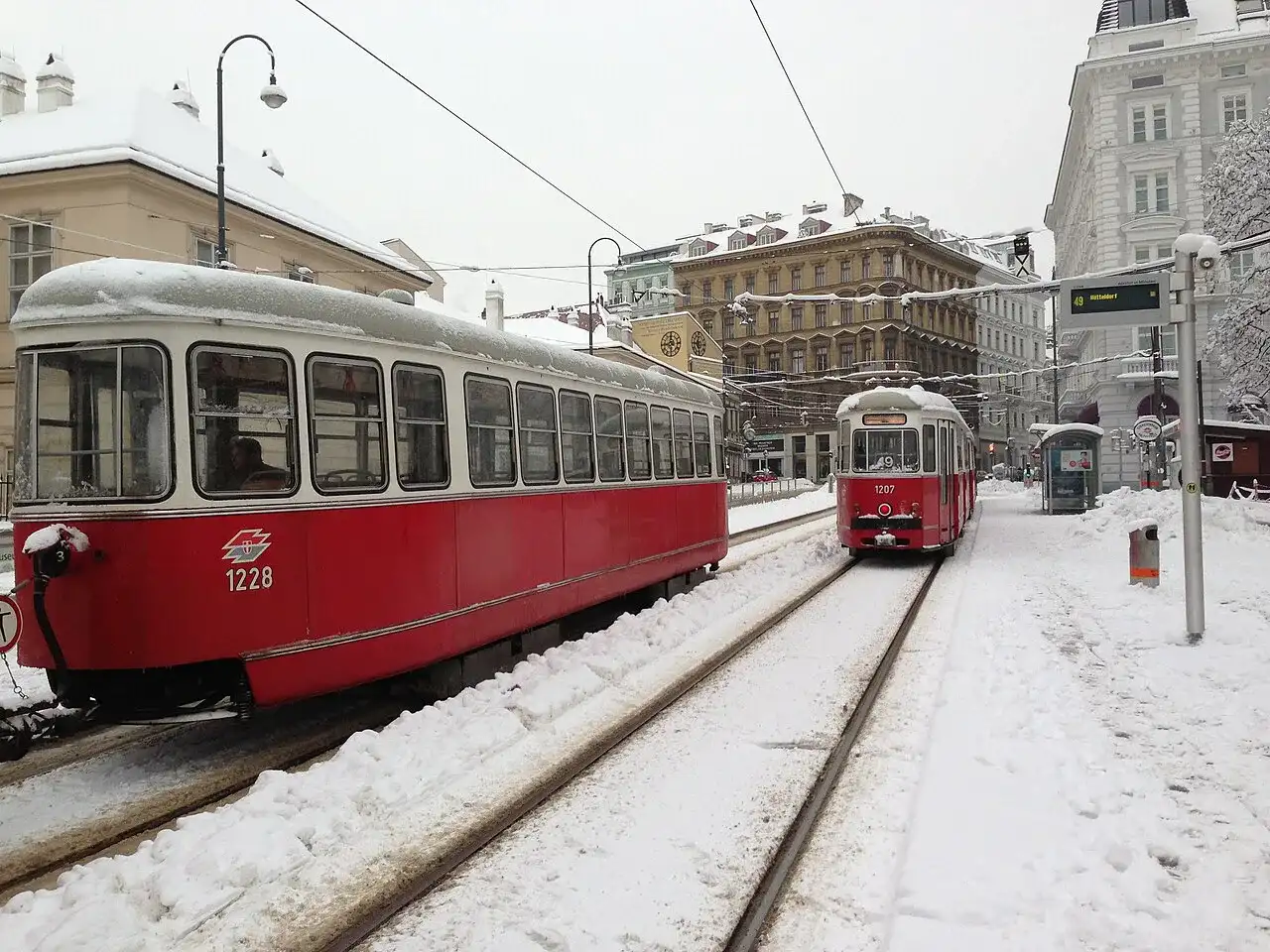
Europe · winter · city breaks · no car
A good winter city break is not simply a city that can be visited in January.
It still needs to work when darkness comes early, rain replaces the snow you imagined, pavements turn icy or you simply have no desire to collect a rental car after landing.
That filter changes the shortlist.
In Helsinki, airport trains, trams and the public ferry to Suomenlinna naturally structure the trip. In Budapest, cold weather actually makes the thermal baths more appealing. If that contrast is exactly what you want, our thermal city breaks in Europe in winter comparison shows which other cities work on the same principle. In Malaga, winter means something completely different: more light and easier walking without pretending the trip is a beach holiday. For a city break where the mountains genuinely shape the trip, our Innsbruck in winter without a car guide is the natural next comparison.
We selected eight destinations that meet three conditions: arrival must be straightforward without a car, three days must be enough for a real trip, and winter must add something rather than simply make the destination harder. For a trip where skiing is the main purpose, our cheap ski resorts in Europe comparison is the more useful next step.
The 8 destinations at a glance
Budgets below are per person for three nights when two travellers share a room, excluding the main journey.
| Destination | Best reason to go | Winter | Without a car | 3-night budget |
|---|---|---|---|---|
| Budapest | Thermal baths + city + value | Cold | Excellent | €280–500 |
| Helsinki | Sauna + Baltic + design | Proper winter | Excellent | €380–750 |
| Prague | Atmosphere + architecture | Cold | Excellent | €270–500 |
| Vienna | Museums + cafés + comfort | Cold | Excellent | €400–700 |
| Athens | Ancient sites without summer heat | Mild to cool | Excellent | €300–520 |
| Malaga | Light + culture + sea | Mild | Excellent | €300–520 |
| Valletta | Heritage + Mediterranean | Mild, variable | Very good | €330–580 |
| Rovaniemi | Snow + Arctic winter | Very cold | Good | €650–1,100 |
Christmas, New Year and school holidays can move these ranges dramatically. To compare two destinations properly, start with the same three hotel nights on the same dates.
Budapest — thermal baths, the Danube and a winter that is easy to live with
Budapest is probably the easiest destination here to recommend without knowing much about the traveller. It has enough substance for three full days, remains comparatively affordable and has enough indoor depth that cold weather does not turn every day into a test of endurance.
The real advantage is that winter improves some of the city’s best experiences. Steam rising from the outdoor pools at Széchenyi feels very different when the air is close to freezing. Parliament above the Danube looks particularly good after early darkness, while cafés and large interiors provide genuine weather-proof pauses.

Why a car adds nothing
The 100E Airport Express runs directly to central Budapest. After that, metro, trams and walking are more than enough. We would keep each day geographically coherent: Buda and the castle, Parliament and the Danube, then the baths and Pest.
Our Budapest in winter: 3-day itinerary, thermal baths and budget guide lays out that route without unnecessary river crossings.
Deák Ferenc tér, Astoria or the edge of the Jewish Quarter
This area keeps a first stay simple and often lets you walk home after dinner.
Helsinki — sauna, the Baltic and almost frictionless transport
Helsinki answers a very different travel question. We would not choose it for guaranteed Northern Lights, and we would not try to turn it into a miniature Lapland trip. If the Northern Lights are the priority, our Tromsø in winter without a car guide is a much better fit for that kind of trip.
We would choose it to experience winter as a Nordic city: train from the airport, tram through the centre, ferry to Suomenlinna, sauna by the Baltic and Oodi when the light disappears.

I and P trains link the airport with the centre, and HSL then covers metro, trams, buses and the public ferry to Suomenlinna. On the pure “without a car” criterion, Helsinki may be the strongest destination in this comparison.
Our new Helsinki in winter without a car: 3 days, saunas, Suomenlinna and budget guide builds the complete trip around that simplicity.
Prague — a compact historic centre that works even without snow
Prague has an obvious drawback: its historic core can become extremely busy. January and February, once the festive period has passed, change the experience considerably.
Geographically, it is close to ideal for a three-day car-free trip. Staré Město, Josefov, Malá Strana, the castle, Nové Město and Vyšehrad can be organised around a few deliberate crossings of the Vltava instead of constant transport.

From the airport, trolleybus 59 connects with metro line A at Nádraží Veleslavín. Once you reach the centre, walking takes over again.
Our Prague in 3 days guide follows exactly that neighbourhood-based logic.
Vienna — one of the hardest winter city breaks to ruin
Vienna has an advantage that is not especially dramatic but matters enormously in winter: bad weather does not easily break the trip.
If it is cold, go to a major museum. If it snows, the Ring remains beautiful. If it rains, a Viennese coffee house can become part of the actual itinerary rather than an emergency backup.

For winter 2026-2027, rail works around the airport connection will alter some of the usual routes from September 2026. That does not make a car useful; it simply means checking the live airport route shortly before travel.
Our Vienna in 3 days guide gives you the strongest base for palaces, museums, neighbourhoods and transport.
Athens — winter removes the constraint that dominates summer
Athens may have the biggest seasonal contrast of any city in this comparison. In summer, heat can dictate the whole day. In winter, that problem largely disappears.
You trade guaranteed blue skies for more variable weather, but the Acropolis, Ancient Agora, Plaka and Koukaki become far easier to explore on foot.
Metro line 3 connects the airport directly with Syntagma and Monastiraki. From there, much of the city break is walkable.
Our Athens in winter: 3-day itinerary, budget and where to stay guide keeps one flexible half-day for exactly this reason.
Malaga — culture, harbour and sea without depending on swimming
Malaga is not a good winter destination because January suddenly becomes summer. It works because it remains a real, active city when many purely beach-oriented places become heavily seasonal.
The historic centre, museums, Alcazaba, Gibralfaro, harbour and waterfront all work without needing a single beach day.

The C1 train links the airport directly with Málaga Centro Alameda. The historic centre, Soho, harbour and La Malagueta are then straightforward without a car.
Our Malaga in winter guide treats the beach as a place for light and walking rather than promising swimming weather.
Valletta — the right choice if you accept that three days are not enough for all of Malta
Malta looks tiny on a map, which makes it tempting to cross the island several times every day. That is exactly what we would avoid.
For three days without a car, the stronger strategy is to use Valletta as the base, then add the Three Cities, Sliema or one carefully chosen excursion by ferry and bus.
Winter means less heat, more comfortable walking through the fortifications and often better accommodation value. It also means possible wind and rain: the Mediterranean should not be presented as swimmable every day.
Our Malta in winter: 2 or 3-day itinerary, weather and budget guide explains how to avoid turning the trip into a sequence of long bus rides.
Rovaniemi — car-free, yes; transfer-free, no
Rovaniemi is the most different destination in this comparison. Technically, yes: you can plan the trip without a rental car.
But here, without a car no longer means that everything is walkable or reached by metro. Santa Claus Village, forests, husky and reindeer activities and aurora outings require more buses, pickups and organised transport.

The budget rises because the reason for travelling is not contained inside the city itself. Our rule would be simple: two major paid experiences, not five, then independent time for Arktikum, Ounasvaara and the centre.
Our Rovaniemi in winter without a car guide goes into the buses, hotel areas and experiences that make sense for a short stay.
Which destination actually matches the winter trip you want?
Budapest
Winter atmosphere, baths, public transport and budget remain unusually well balanced.
Helsinki
Sauna, sea, design and public transport create a distinctive winter break without turning it into an Arctic expedition.
Rovaniemi
The most reliable option here for a genuinely snowy setting, with a much higher budget.
Prague
Especially attractive after the festive peak, when the centre regains a more normal rhythm.
Vienna
The strongest choice if all three days happen to be cold, wet or snowy.
Malaga
With Athens close behind if history matters more than the sea.
Which city handles one genuinely bad weather day best?
| Destination | If rain or snow lasts all day | Why |
|---|---|---|
| Vienna | Excellent | Museums, cafés, palaces |
| Budapest | Excellent | Baths, cafés, interiors |
| Helsinki | Very good | Oodi, museums, sauna, trams |
| Prague | Very good | Cafés, castle, museums |
| Athens | Good | Strong museums but many open-air sites |
| Malaga | Good | Museums and a lively centre |
| Valletta | Fair | Compact but exposed to wind |
| Rovaniemi | Variable | More dependent on planned activities |
Bad weather in Vienna may simply turn an outdoor block into a museum. In Rovaniemi, severe conditions can affect the activity that justified travelling there in the first place.
What if the mountain is actually your priority?
Then we would not choose any of these eight cities simply because mountains happen to be visible nearby.
A mountain break works differently: rail access, lifts and local transport become part of the main experience. Our guide to winter mountain breaks by train without a car answers that travel intent far more directly.
Mixing a city break with a mountain trip often means paying for an urban base and then spending hours in transfers.
The cheapest flight is almost never the whole story
Imagine Helsinki at €55 return and Budapest at €90. Helsinki is not automatically the cheaper trip.
Three hotel nights, food, a sauna and the city’s general price level can easily absorb the €35 saved on airfare.
1. Price three hotel nights
Use the exact dates before anything else.
2. Airport to centre
An expensive transfer can erase part of the flight saving.
3. One or two defining experiences
Thermal baths, sauna or an Arctic outing genuinely change the total.
4. Compare the flight last
The main transport only becomes meaningful once the ground budget is understood.
You can then compare flights between destinations or across nearby dates.
Periods we would avoid when budget matters most
Roughly 20 December through New Year
Prague, Vienna, Budapest, Helsinki and especially Rovaniemi can move into a completely different price category. If Christmas markets or New Year are the actual reason for travelling, that may still make sense. Otherwise, January or February often offer a better balance.
School holidays without checking hotels first
A low-cost flight can remain surprisingly cheap while accommodation has already doubled.
Late arrival with an outlying hotel
This is exactly how a supposedly “car-free” city break becomes an expensive taxi ride during the first hour.
If we had to suggest only three
Budapest
The best balance between winter atmosphere, price, transport and things to do.
Helsinki
The most distinctive proposition: a genuine Nordic urban winter that remains remarkably simple without a car.
Malaga
Because some travellers in February specifically want not to be cold. If snow is the absolute priority, replace it with Rovaniemi.
Winter city breaks in Europe without a car: FAQ
Helsinki, Budapest, Vienna and Prague are all excellent. Helsinki stands out because the same public transport system also covers the ferry to Suomenlinna.
Where should I go in Europe in winter if I want milder weather?Malaga, Athens and Valletta are our three choices here. None guarantees summer warmth or dry weather.
Which destination should I choose for snow?Rovaniemi is by far the most reliable option in this comparison. Helsinki can be very snowy but should not be booked with a guaranteed-white-city expectation.
Which city is cheapest?Budapest and Prague are often very competitive on the total cost, but accommodation dates matter enormously. Always price the hotel before judging the trip by airfare alone.
Are three days enough?Yes for the urban city breaks. Rovaniemi benefits more from a fourth night because weather and paid activities need flexibility.
Do I need a car in Malta?Not for a city break centred on Valletta, the Three Cities and Sliema. Buses and ferries are enough. Trying to cover the entire island in three days makes public transport much more restrictive.
Will Vienna still be easy from the airport in winter 2026-2027?Yes. Rail works change some usual routes from September 2026, but public transport continues to connect the airport and city. Recheck the live route for your exact dates.
The best car-free city break is the one where you stop thinking about logistics
The best winter destination without a car is not necessarily the one with the largest public transport map.
It is the one where not having a car genuinely makes the trip simpler.
In Prague, you walk. In Budapest, you combine metro, tram and neighbourhoods. In Helsinki, even a ferry acts as urban transport. In Malaga, the train gets you close to the centre almost immediately. In Rovaniemi, not driving mainly means you do not have to add Arctic-road driving to a trip that already contains enough decisions.
Thermal baths in Budapest. Sauna and Baltic Sea in Helsinki. Coffee houses in Vienna. Old streets in Prague. The Acropolis in Athens. Low winter light over Malaga harbour. Valletta’s fortifications. Snowy forest outside Rovaniemi.
For three days in January or February, the best scenario is often the same: arrive, drop the bag, then stop thinking about the car until the journey home.
Practical sources to re-check before travelling
Timetables, works, prices and weather conditions change. Re-check details for your exact dates.
- BKK — Budapest Airport Express
- HSL — Helsinki airport trains
- Prague Airport — public transport
- Wien.info — airport rail changes 2026-2027
- OASA — Athens airport metro
- Aena — Malaga Airport train
- Malta Public Transport — Airport Direct
- Visit Rovaniemi — getting around
Transparency: some accommodation links are affiliate links. If you book after clicking, LowCostWings may receive a commission at no extra cost to you. Destinations and recommendations are still selected for their usefulness to the trip.