Malta in Winter: 2 or 3-Day Itinerary, Weather, Where to Stay and Budget
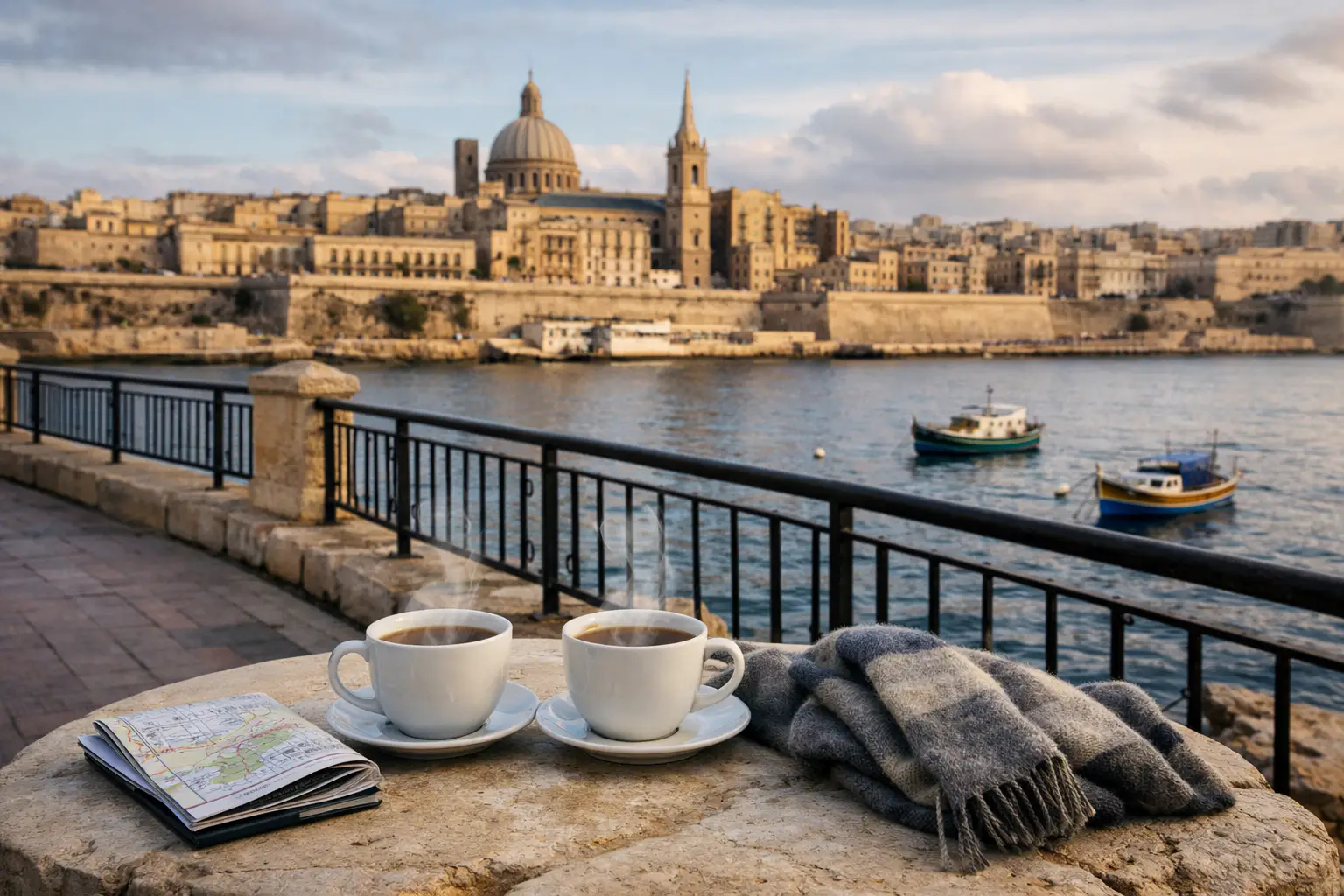
A compact winter city break with heritage and genuinely workable car-free logistics Malta in winter is not a beach promise. It is a trip of light, limestone, harbours and museums, with days that can move between mild sun, wind, showers and cool evenings. In two days, Valletta and the Three Cities form a coherent route. A third day adds Mdina and Rabat without forcing you across the archipelago.
This version consolidates the former February guide into one winter pillar. It retains the useful third day, areas to stay, slower pacing and poor-weather alternatives without keeping two nearly identical pages. Timetables, fares and crossings change, so check official sources for your dates.
Is Malta worth visiting in winter?
Yes for a cultural, walkable break that does not depend on heat. No if swimming every day or spending forty-eight hours on a sunbed is the priority. The sea shapes the views and transport, while the itinerary depends on fortifications, churches, museums, cafés and harbour districts.
Two days cover Valletta and the Three Cities. Three days add Mdina and Rabat without rushing. Four or five become useful for Gozo, prehistoric temples or a slower day, provided you do not turn the holiday into a sequence of long bus journeys.
Malta works especially well without a car. Left-hand driving, parking and rental expense are unnecessary for this route. The trade-off is accepting that buses may be slow and wind may alter some crossings.

Mild in sun, cool in wind and damp after showers
Winter days are often comfortable for walking, while the sensation changes quickly on bastions, quays and ferries. Wind matters more than the temperature headline. Pack a windproof layer, shoes that handle wet limestone and something warmer for the evening.
Rain often arrives in spells rather than as an unbroken background. Build days geographically: indoor visits in Valletta first, then gardens and the waterfront when conditions improve. Do not place a boat trip at the centre of the holiday before a near-term forecast exists.
Swimming may appeal on an exceptionally calm day, but it is not a sound planning assumption. A hotel with an indoor pool or spa answers that desire better than a remote beach base.
Valletta for time; Sliema for choice
Valletta is the most efficient two- or three-day base. You begin among the streets, walk to major monuments and use ferries towards the Three Cities or Sliema. Rooms may cost more, and historic buildings can have stairs, small windows or variable soundproofing, so read the details beyond the photographs.
Sliema and Gżira provide more hotels, apartments and restaurants. They work when the room is close to a ferry or useful bus corridor. A lower rate far inland can add an awkward walk and transfer every day. St Julian’s fits nightlife more naturally than a short heritage break.
For a late flight, confirm check-in and the actual airport journey. Prioritise location, heating, access and insulation rather than a vague promise of charm.
Valletta
Start on foot and turn Grand Harbour into a transport axis.
Sliema or Gżira
Stay near the ferry or a real bus corridor and calculate the full journey.

Airport, buses and ferries: plan before buying a pass
Airport buses serve several areas, but route and frequency depend on the hour. Check Malta Public Transport before selecting a room. A taxi or transfer may be rational for two people late at night; compare the complete cost rather than defending the bus at any price.
Ferries between Valletta, Sliema and the Three Cities are shortcuts and sights. Recheck timetables and disruption with Valletta Ferry Services. Keep a bus alternative in windy conditions.
Do not buy a pass automatically. List the journeys first: much of Valletta, Birgu, Mdina and Rabat is explored on foot. A transport product is useful only when its duration and rules match your actual days.

Valletta: bastions, co-cathedral and steep streets
Begin at Upper Barrakka Gardens before the busiest period. Its Grand Harbour view explains Valletta, Senglea, Birgu and the fortification lines before you enter individual rooms. Move next to St John’s Co-Cathedral according to the current opening schedule.
The co-cathedral deserves time for its decoration, chapels and Caravaggio works. Respect the religious setting and check dress, services and ticketing. Continue through Republic Street, Merchant Street and side lanes rather than chasing every museum.
In the afternoon, select one substantial indoor collection according to your interests. Finish on the bastions or waterfront. Valletta looks small on a map but its slopes make six hours on your feet more tiring than a flat city break.

Three Cities: Birgu first, then Senglea
Cross Grand Harbour by ferry and begin in Birgu. The waterfront, auberges, streets around the Inquisitor’s Palace and Fort St Angelo explain the Knights’ presence before Valletta. Choose one major interior and leave room for lanes; the district’s value does not come from a ticket checklist.
Continue towards Cospicua and Senglea on foot or with a short connection. Senglea Garden and its watchtower reverse the harbour perspective. Returning by ferry gives a second reading, especially in late light.
A guided visit can add value when fortifications and the Great Siege matter to you. This direct two-harbour cruise is one option to assess, never a requirement. Read duration, departure point and weather conditions.
.jpg?width=1280)
Mdina and Rabat: slow down instead of adding an island
Reach Mdina early to experience the fortified town before groups arrive. The gate, quiet streets, palaces and island views form a compact whole. The cathedral can complete the visit, but do not reduce Mdina to a gate photograph.
Walk into Rabat. Catacombs, shelters, churches and cafés create more depth than a simple return bus. Choose a subterranean visit according to interest and mobility because floors and stairs can be uneven.
Do not combine Mdina, southern Malta and Gozo in one day. Winter rewards geographic pacing. If you want a guide, choose a genuine Mdina and Rabat walk instead of a panoramic tour made of twenty-minute stops.

Gozo, Comino or more time on Malta?
Gozo deserves a complete day and ideally one or two nights. Crossing and connections consume time, while winter sea conditions add another variable. Our three-day Gozo guide helps decide whether the extension earns that time.
Comino should not be the core of a first winter visit. Sea conditions, exposure and seasonal services may make it weak value. An extra day in Valletta, Mdina or the temples is often more resilient.
Main-island Malta is enough for four days. Gozo becomes coherent at five or six when you accept a base change or a long transport day. The aim is not to tick three islands, but to keep a sensible ratio between transport and discovery.
Pastizzi, ftira and harbour cooking without a viral checklist
Pastizzi are a snack, not a full meal. Use them between visits, then look for a short menu of soup, rabbit, fish when available, vegetables, pasta and Mediterranean influences. Ftira varies by shop and works as a simple lunch.
Do not cross an entire district for a social-media address. A restaurant beside the route with a readable menu and comfortable room offers more value than one lost hour. Reserve on Friday or Saturday when a particular dinner matters.
Terraces can feel excellent in sun and cold as soon as wind turns. Keep one indoor option for every day and do not assume every terrace is heated. Check opening hours, service and any cover locally.
How much for 2 or 3 winter days in Malta?
Accommodation controls the budget. Valletta may cost more while reducing transport and protecting the first hours of each day. Sliema may lower the room line when ferry and walking remain simple.
These per-person ranges assume three nights in a shared double room, excluding flights, with mixed meals, route transport and two paid visits. Add a late transfer and one excursion only if they materially improve the trip.
A visitor card is worthwhile only when its attractions match the plan. Price the tickets you would genuinely buy, then read exclusions and duration. Do not distort the itinerary to justify a card already purchased.
Swipe the table horizontally on mobile.
| Per person | Lean | Balanced | Comfort |
|---|---|---|---|
| 3 nights | €105–180 | €180–330 | €330–650 |
| Food | €65–95 | €105–165 | €180–300 |
| Transport and transfer | €20–40 | €40–75 | €85–180 |
| Visits | €25–45 | €50–90 | €110–220 |
| Total excluding flights | €215–360 | €375–660 | €705–1,350 |
What damages a short visit
A room far from a ferry or useful route may save €20 and add hours of transport. Placing Gozo inside a two-day trip removes the route’s logic. Relying on a boat without a fallback ignores winter wind.
Underestimating Valletta’s slopes, wearing slippery shoes and booking six interiors in one day creates avoidable fatigue. An outdoor-only plan is equally fragile. Alternate one substantial interior, one district and one viewpoint.
Finally, do not redirect the former Malta in February page until this target is live, returns 200, has the correct canonical and contains its useful material. SEO consolidation must be direct and verified.
FAQ — Malta in winter
Yes for Valletta and the Three Cities. Add a third day for Mdina and Rabat.
No for this route. Ferries, buses and walking suffice, with a taxi possible after a late flight.
Valletta for efficiency; Sliema or Gżira for more choice close to the ferry.
It is not a reliable planning assumption. Choose Malta for heritage and light instead.
Yes with at least four or five days and suitable conditions, not inside a forty-eight-hour visit.
Official links before departure
Review Visit Malta, Malta Public Transport, Valletta Ferry Services and the official sites of your selected monuments. Check winter hours, services, works and weather warnings.
Journey times and crossings alter this itinerary more than a small difference in average temperature. Recheck after booking and again forty-eight hours before travel.
Three days provide the strongest balance
Valletta, the Three Cities, then Mdina and Rabat form a dense car-free winter break. Add Gozo only when both time and weather support it. Malta works in winter when heritage is the goal and the sea remains a landscape rather than a swimming promise.
Transparency: some booking links are affiliate links. Using them may support LowCostWings without changing the displayed price. Recommendations remain based on genuine trip value.