Valletta in 2 Days: Itinerary, Three Cities, Where to Stay and Budget
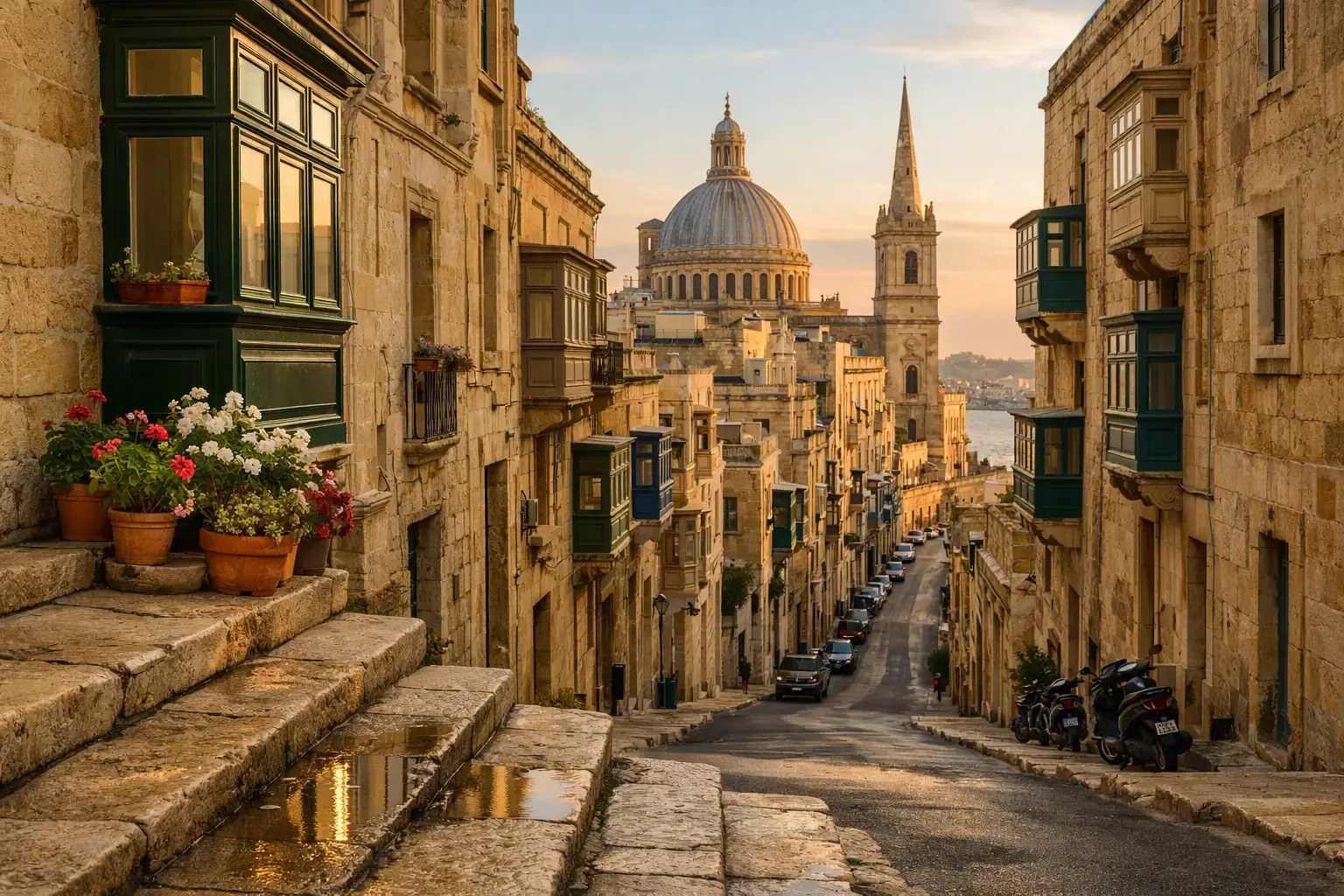
Valletta is small on the map, yet its slopes, fortifications, museums and water links readily fill two days. The capital is not just one main street: its appeal comes from views opening at the end of stairways, the Knights’ auberges and the constant relationship with the Three Cities across Grand Harbour.
Day one stays inside the walls around St John’s Co-Cathedral, the Barrakka Gardens and side streets. Day two crosses to Vittoriosa, Senglea and Cospicua, with Mdina as an alternative when medieval history matters more. The separate Malta winter guide remains distinct because it answers a broader seasonal island trip.
Two days cover Valletta and one extension, not all Malta. Gozo needs a dedicated day, as does a full Mdina–Rabat visit. Buses and ferries make an excellent car-free break; a car becomes useful mainly when a longer trip spreads to coves and villages, with left-hand driving and parking to consider.
The trip at a glance
This itinerary uses coherent areas, one structural booking per day and a complete budget.
When to go and how many days to allow
Spring and autumn bring the easiest temperatures for sloping streets. Sun remains strong on pale stone, so water, a hat and shade breaks matter beyond summer. Cultural and religious events can change both access and hotel rates.
In summer, put interiors early, avoid crossing the centre in peak heat and give swimming a genuine time block. Valletta is not a beach resort; the simplest bathing requires travel. In winter, museums, churches and cafés sustain a rich trip with possible wind and showers; the dedicated winter guide develops that scenario.
Marine weather affects ferries, boats and excursions. Any plan involving Gozo or a harbour boat needs a land alternative. Do not stack three tight crossings and assume perfect punctuality.

Where to stay
Sleeping inside Valletta gives the finest hours: quiet early streets, golden evening light and a walk home after dinner. Historic buildings may bring stairs, small rooms or retrofitted lifts, so accessibility information needs close reading.
Floriana is adjacent, often calmer and excellent for the bus terminal. Sliema offers more hotels and a scenic ferry, but turns each capital visit into a crossing. The Three Cities provide harbour atmosphere with logistics tied to ferry or bus.
Inside Valletta
Best for mornings and evenings, with every capital sight on foot. Check stairs, lift, insulation and taxi access on sloping lanes.
Floriana
Minutes from City Gate and the main bus terminal. Evening choice is smaller, but island transport is excellent.
Sliema
A broad room and restaurant market with a view across to Valletta. Build in ferry frequency and a bus fallback during wind.
Vittoriosa / Birgu
Strong atmosphere after day visitors leave and direct access to the Three Cities. Late return to Valletta needs more planning.

Airport, public transport and walking
Malta International Airport links with Valletta and the main hubs by bus and taxi. Direct routes vary with time and works, so consult Malta Public Transport. A taxi or shared transfer is useful with several bags, a late arrival or difficult lodging access.
Valletta’s bus terminal sits in Floriana outside City Gate. Many island routes radiate from this area, but congestion makes duration variable. Never plan a tight airport connection from a theoretical average.
Ferries to Sliema and the Three Cities are transport and panorama at once. Check quay, last departure and weather operation. The Barrakka Lift can reduce the climb from the waterfront, subject to service and hours.
Walking dominates inside Valletta, with steep streets, steps and paving. Travellers with reduced mobility should select workable axes and verify monument entrances. Six hundred metres can feel entirely different in the opposite direction.

Detailed Valletta itinerary
The route keeps a buffer around tickets and offers a genuine alternative when the third day is optional.
Co-Cathedral, palace, Barrakka and Valletta streets
Morning. Enter St John’s Co-Cathedral early and take time with the contrast between the restrained façade and Baroque interior. Check dress, services and tickets. Continue along Republic Street to the rooms or museums that genuinely match your interests; the Grand Master’s Palace can be affected by official use.
Afternoon. Eat on a side street, then reach Upper Barrakka Gardens to understand Grand Harbour. Descend towards the waterfront if the lift and heat make sense, or explore auberges and southern stairways. Lower Barrakka and the siege bell extend the walk well.
Evening. Return around Strait Street and Merchant Street as groups leave. Reserve a specific weekend table, but keep the bastion walk open; sunset depends on season and orientation.
Why this order: the most popular interiors come early, then the gardens explain the harbour geography. The evening remains inside the walls and does not depend on a last ferry.
The Three Cities or Mdina and Rabat
Morning. For the Three Cities, cross early to Vittoriosa and start with Birgu’s lanes, waterfront and Fort St Angelo according to hours. Continue to Senglea for Gardjola Gardens and the return view towards Valletta.
Afternoon. Cospicua completes the harbour story, but there is no need to trace every bastion. Return by ferry or bus with margin. If choosing Mdina instead, give it and Rabat at least half a day and verify buses, catacombs and final admissions.
Evening. Eat on the side where you stay. From Birgu, confirm the last return; from Mdina, evening travel can take longer. A calm Valletta night beats an uncertain connection.
Why this order: the Three Cities are the natural harbour extension, while Mdina answers a different priority. Presenting them as alternatives keeps day two realistic.
Optional third day: Gozo or southern Malta
Morning. Gozo requires an early start and a transport strategy on the island. Victoria, the Citadel and one coastal area are enough for a first day; chasing every bay creates more waiting than discovery.
Afternoon. In southern Malta, Marsaxlokk, Blue Grotto or prehistoric temples must be selected around weather and hours. Public transport does not automatically turn them into one simple loop.
Evening. Return with a large margin before a flight or ferry. A final night near Valletta protects departure better than a late crossing from a distant point.
Why this order: the third day genuinely leaves the capital and needs its own plan rather than being added to the city itinerary.

What should be booked first?
The three options below link directly to the described product. Compare language, inclusions, cancellation and end point before confirming.
Valletta and the Three Cities
A Valletta–Three Cities combination can explain the harbour as one story. Check whether the boat is included, walking duration and end point.
Mdina and Rabat
Mdina and Rabat are easier with organised transport when time is short. Compare admissions, free time and group size.
Gozo day trip
Gozo needs a full day. Verify crossings, on-island travel, guaranteed stops and real return time before payment.

Eat well without multiplying tourist traps
Malta combines Mediterranean, Sicilian and British influences. Try pastizzi, ftira, rabbit dishes, fish and sweets without turning every speciality into an obligation. A pastizz is an economical snack but not always a balanced meal during a long walking day.
Valletta has more strong restaurants than its size suggests. Strait Street, Merchant Street and the theatre area change character quickly. Check terrace charges, service and kitchen hours, especially on Sundays or out of season.
For fish, ask about price and weight when relevant. A Marsaxlokk setting does not automatically guarantee the best plate. Reserve one important dinner and keep lunches flexible around ferries, museums and heat.
- Valletta: broadest choice and easy walks home.
- Birgu: harbour restaurants after excursions leave.
- Sliema: extensive selection with a modern feel.
- Pastizzi: inexpensive pause that may need a fuller meal later.
- Fish: confirm price by weight and stated origin.

Realistic budget per person, excluding flights
These per-person ranges assume a shared room. Events, weekends and harbour views move accommodation most. Buses and ferries keep a trip reasonable, while repeated taxis and private excursions can double the transport line.
Save without weakening the visit by staying near a useful axis, selecting one paid extension and using Barrakka’s free views. Keep another 10–15% for weather, suspended ferry, luggage storage or a fallback taxi.
| Item | Controlled budget | Comfort |
|---|---|---|
| Accommodation, 2 nights | €120–250 | €280–520 |
| Food and drink | €55–95 | €125–215 |
| Local transport | €20–45 | €55–110 |
| Sights and activities | €40–85 | €100–210 |
| Total excluding flights | €235–475 | €560–1,055 |
Booking strategy and backup plan
Book the Co-Cathedral or any genuinely capacity-limited activity first, followed by the room. A Three Cities tour adds context, while independent ferries suit travellers who prefer freedom. Mdina and Gozo should not be bought from fear of missing out.
Check included transport, whether the boat is real, the number of stops, free time and return point. “Gozo tour” can describe radically different days according to vehicle and admissions. Weather and cancellation terms matter.
Prepare a wind or rain plan using Valletta’s museums, Co-Cathedral, palace or auberges. If a ferry stops, buses preserve the trip but require more time. Save those timetables offline.
For any harbour activity, identify the operating vessel and boarding quay before the morning begins. Several waterfront levels and place names can look close on a map while requiring a lift, staircase or long detour. Screenshot the ticket and the operator’s contact details rather than relying on reception in the bastions.
If an excursion advertises many island highlights, calculate the real time at each stop. A long list can mean short photo pauses and hours in a vehicle. Independent travellers may prefer fewer locations connected by public transport, while visitors with limited time may value a smaller guided circuit with reliable return.
Religious sites require additional care. Services, dress expectations and private ceremonies can override ordinary visitor times. Treat an official closure as part of a living city, keep another nearby interior ready and return only if the revised opening fits without damaging the harbour plan.
Pace, accessibility and the short version
Map times assume continuous movement. In Valletta, they exclude security, station exits, queues and photo stops. Add fifteen minutes around a reserved visit and more with children, luggage or reduced mobility. The buffer protects lunch and the next activity; it does not remove value from the day.
Define a short version each morning with one essential sight, one neighbourhood and one good meal. Remove the most distant extension first, then a secondary interior. Do not sacrifice the airport margin or the admission that motivated the trip. This hierarchy prevents an expensive decision in rain or a queue.
For accessibility, verify the exact monument entrance, station lift and surface of the route. A general “accessible” label may not describe cobbles, gradients or waiting areas. Contact the site when access determines the visit and keep a strong alternative in the same district.
Cut costs without weakening the trip
Start with accommodation, the largest variable in Valletta. Compare the total including cancellation, taxes, breakfast and airport transport. A slightly dearer central room can cost less than a remote address followed by taxis or late connections.
Concentrate spending on one memorable visit and one meal. Free viewpoints, walkable districts and a simple lunch release real budget. A pass only pays when its included admissions match the plan; total the tickets you would independently buy.
Keep a 10–15% reserve for storage, weather, an unexpected transfer or closure. Without it, a small disruption forces an urgent purchase. With it, you can reject an activity that no longer makes sense and preserve the priorities.
Checklist 48 hours before departure
Confirm local arrival time, last transport, check-in procedure and the first ticket. Download confirmations, maps and addresses. Check works, closures and baggage rules on official sources, then read the hourly weather rather than one general icon.
- Confirm slots and the exact entrance for each sight.
- Recalculate the airport-to-hotel journey.
- Prepare an indoor option and a short version.
- Check shoes, water and seasonal protection.
- Leave a real margin before the return flight or train.
Common mistakes to avoid
The plan becomes far more reliable when these mistakes are removed before departure.
- Believing two days cover Valletta, Mdina, Gozo and beaches.
- Stacking tight boat departures without a wind alternative.
- Underestimating the capital’s slopes and steps.
- Choosing Sliema without the last ferry or bus fallback.
- Renting a car solely for central Valletta.
- Confusing waterfront with an easily accessible beach.
Frequently asked questions
The answers below resolve the decisions travellers most often face.
Are two days enough for Valletta?
Yes for the capital and one extension to the Three Cities or Mdina. Gozo deserves an extra day.
Where should I stay?
Valletta for immersion, Floriana for buses and calm, Sliema for hotel choice and ferry, Birgu for harbour character.
Can I visit without a car?
Yes for this plan. Buses, ferries and walking are enough; a car helps only on a more scattered island stay.
Three Cities or Mdina?
The Three Cities naturally extend Valletta across the harbour; Mdina provides a separate medieval atmosphere. Choose one in two days.
Is Gozo worth a day?
Yes with a third day and coherent transport. Crossings and travel around Gozo must be counted.
Does Valletta have a beach?
Not a large urban beach comparable to a resort. Pleasant swimming generally requires travel.
When should the Co-Cathedral be booked?
During busy periods or when time is short. Also verify services, dress and official hours.
Do ferries always operate?
Weather or operations can affect them. Check on the day and keep the bus as fallback.
Official sources to recheck
Hours, prices and conditions change faster than the route. Check these sources when booking and again before travel.
Valletta in 2 days: the balanced plan
A successful short trip does not try to cover everything. It protects the sights that define the destination, groups neighbourhoods and leaves enough room for weather, queues and one deliberate meal.
Transparency: some booking links are affiliate links. Using them may support LowCostWings without changing the displayed price. Recommendations remain based on trip value.