Athens in 3 Days: Acropolis, Neighbourhoods, Where to Stay and Budget
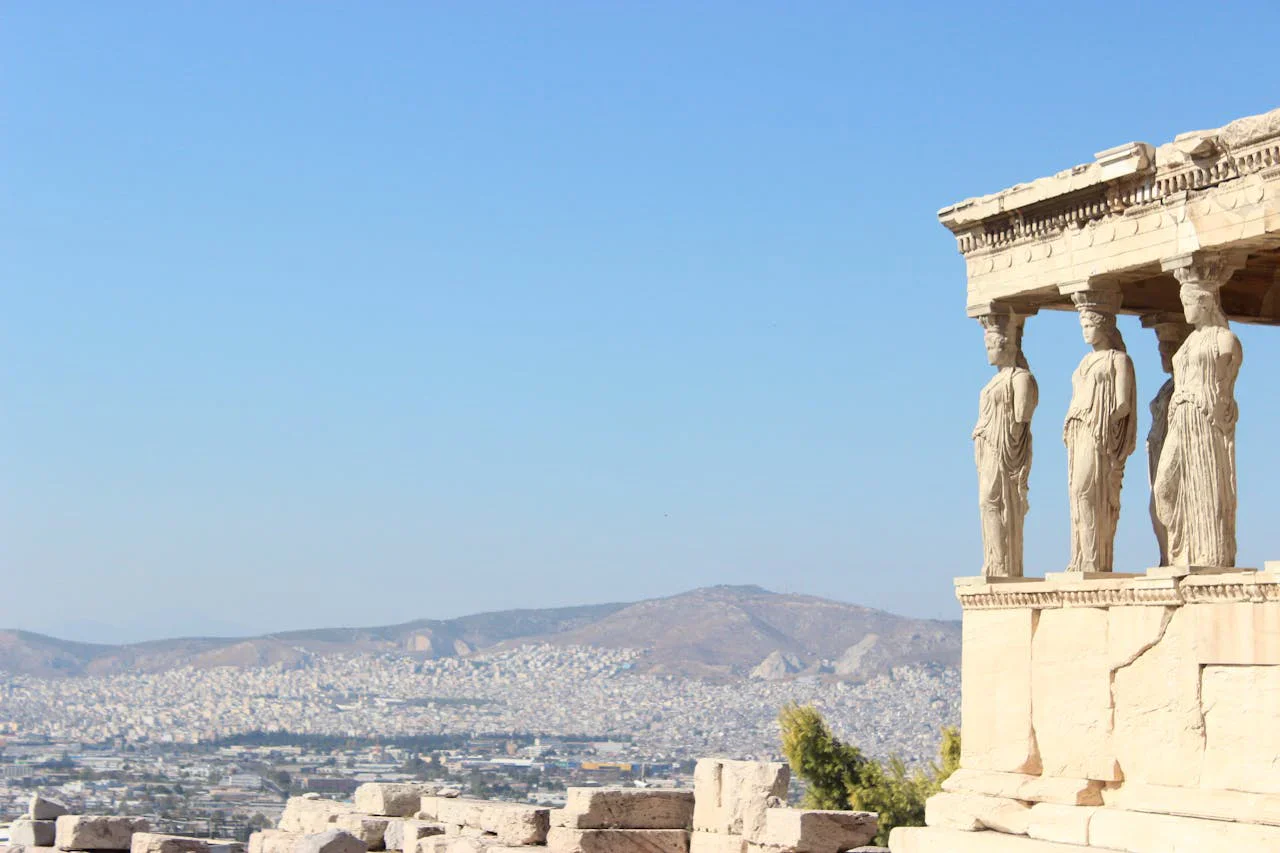
Athens is far more than a staging point for the islands. Its appeal lies in the collision between the Acropolis, ancient sites embedded in the modern city, central markets and neighbourhoods that change within a few streets. The common mistake is visiting each ruin separately at the hottest hour and losing the rest of the day to avoidable travel.
This route gives day one to the Acropolis and its museum, day two to the Agora, Monastiraki and contemporary Athens, then day three to a major museum, Lycabettus or one chosen excursion. The dedicated winter and spring guides remain separate because they answer seasonal planning questions; this is the evergreen pillar for a first visit.
Three days work when mornings are protected and sights are grouped. Summer requires a real heat strategy, while winter brings shorter light but much easier walking. In either season, check official archaeological opening times and access conditions for the exact date rather than relying on an old ticket screenshot.
The trip at a glance
This itinerary uses coherent areas, one structural booking per day and a complete budget.
When to go and how many days to allow
April, May, September and October usually offer the easiest walking, although bright sun on pale stone can still be demanding. Start the Acropolis near opening, carry water within site rules and place a museum or long lunch in the middle of the day.
From June to August, avoid a chain of exposed hills. Heat measures can change access, so monitor official notices. Winter creates a calmer city break with cool, sometimes wet evenings. The separate Athens winter guide focuses on that experience, while the spring guide goes deeper on shaded parks and museums.
Two days cover the Acropolis, Plaka, the Agora and one evening district. A third creates room for the National Archaeological Museum, Lycabettus, the coast or Cape Sounion. Choose only one extension: combining a major museum, beach and excursion mainly produces transport.

Where to stay
Central Athens looks compact, but heat, slopes and major roads alter walking times. A useful metro station and a simple evening route are worth more than theoretical proximity measured in a straight line.
Koukaki and Makrygianni balance the Acropolis, museum and restaurants. Syntagma simplifies airport travel. Monastiraki brings energy and connections but requires a noise check. Plaka is beautiful, yet pedestrian lanes and steps can complicate luggage.
Koukaki
Close to the Acropolis Museum, with neighbourhood restaurants and an easy evening return. Check the walk to Syngrou-Fix metro if several cross-city trips are planned.
Syntagma
Direct connections, airport buses and a central position reduce friction. The closest streets are functional rather than intimate and can command a premium.
Monastiraki / Psyrri
Market, metro, restaurants and nightlife sit on the doorstep. Reliable soundproofing is essential, particularly over a weekend.
Plaka
Excellent for early walks below the Acropolis. Compare taxi access, steps and the actual street atmosphere before paying a large location premium.

Airport, public transport and walking
The airport connects to central Athens by metro, express bus and regulated taxi under defined conditions. The best option depends on arrival time, district and group size. Metro is straightforward for Syntagma and Monastiraki; buses may suit certain hours or direct stops; a taxi becomes rational when shared or after a late landing.
Athens combines metro, trams, buses and trolleybuses. For this itinerary, walking plus a few metro rides is usually enough. Buy the product that matches the real period and distinguish airport fares from urban tickets. Never assume a city pass includes every airport journey; verify OASA conditions.
The Acropolis area includes gradients, irregular surfaces and exposed approaches. Travellers with a pushchair or limited mobility should check official entrances and add far more margin than a standard map suggests. A site can be geographically close and physically demanding.
The tram is useful for the coast but slower than the map implies. Piraeus is primarily a port and transport hub, not a central beach. Add the sea to a three-day trip only when it is a genuine priority.

Detailed Athens itinerary
The route keeps a buffer around tickets and offers a genuine alternative when the third day is optional.
Acropolis, museum and Plaka
Morning. Enter the Acropolis at the earliest sensible slot. Climb without endless stops, then slow down for the Parthenon, Erechtheion and view across the Agora. Stone can be slippery and shade limited, so stable shoes and an even pace materially improve the visit.
Afternoon. Descend to the Acropolis Museum after a break. The galleries provide context the plateau cannot always deliver and suit the hotter hours. Continue through Anafiotika and Plaka without treating every picturesque lane as compulsory.
Evening. Use Areopagus or Philopappos only if light, weather and energy support it, then eat in Koukaki. An Acropolis view does not require an expensive rooftop; ordinary streets and terraces already frame the monument.
Why this order: exertion and exposure come first, the museum absorbs midday and dinner stays close. The site and its objects are understood within one coherent day.
Ancient Agora, Monastiraki, Psyrri and modern Athens
Morning. Begin at the Ancient Agora, where the Stoa of Attalos and Temple of Hephaestus deserve more time than expected. Continue into Monastiraki and the flea-market streets, distinguishing everyday stalls from shops built solely for passing visitors.
Afternoon. Cross Psyrri, the Central Market and Athinas Street. Depending on interest, continue towards renewed Omonia, a city museum or return to Syntagma through commercial arcades. The sequence reveals present-day Athens without abandoning its ancient layers.
Evening. Choose dinner in Psyrri, Monastiraki or Pangrati instead of an improvised rooftop crawl. If a view matters, book one drink and check minimum spend; the experience should not consume the whole food budget.
Why this order: the Agora is handled before heat, then the route follows trade and daily life. Distances remain short and the evening can change without losing a fixed booking.
Major museum, Lycabettus or Cape Sounion
Morning. The National Archaeological Museum is the best way to understand Greece beyond the Acropolis. Give it a real half-day and target selected collections. A lighter alternative combines the National Garden, Panathenaic Stadium and Pangrati.
Afternoon. Choose Lycabettus for a city view, the coast for sea air, or Cape Sounion for a structured excursion. Sounion occupies a long block and cannot honestly be combined with a complete major museum. Check return timing and sunset before confirming.
Evening. If the day stayed in Athens, finish in Pangrati or Exarchia according to the atmosphere you want. After Sounion, keep dinner simple near the hotel because the real return may exceed the sales schedule.
Why this order: the day begins with one cultural priority and keeps only one extension. It avoids pretending that a museum, beach and distant temple fit into the same afternoon.

What should be booked first?
The three options below link directly to the described product. Compare language, inclusions, cancellation and end point before confirming.
Acropolis early access
An early guided entry helps interpret the site before heat and large groups. Confirm whether admission is included and which entrance the group uses.
Acropolis and museum
Combining Acropolis and museum creates a coherent story. Check total duration, breaks, included ticket and finish time before committing to dinner.
Cape Sounion sunset
Sounion deserves a dedicated departure. Compare transport, free time at the temple and the real return; a sunset promise remains dependent on weather.

Eat well without multiplying tourist traps
Athens makes it easy to eat well without booking every meal. A pita or koulouri works for a quick stop, while a taverna deserves time to share salads, vegetables, fish or meat. Portions often suit the table, so ordering gradually limits waste and keeps spending clear.
Plaka and Monastiraki contain good restaurants and the most tourist-oriented menus. Look at the clientele, menu length and price by weight when fish is sold that way. The Central Market and neighbouring streets explain ingredients, but visitors should still assess hygiene, opening times and the final bill.
Reserve a specific dinner when it matters, especially at weekends. Keep the rest flexible: heat may move lunch, a site can take an extra hour and the best meal is often in the district where the route naturally ends.
- Koukaki: modern tavernas and an easy return after the Acropolis.
- Psyrri: lively at night; choose the street as carefully as the restaurant.
- Pangrati: neighbourhood meals and cafés after the stadium or gardens.
- Central Market: produce and simple counters, best explored in daytime.
- Rooftops: pay for one deliberate view, not a sequence of average drinks.

Realistic budget per person, excluding flights
These per-person ranges assume a shared room and are designed for scenario planning. They do not freeze future Acropolis prices or hotel rates. Simulate exact dates and check official sight prices because season, combination tickets and access rules can change.
The main trade-off is location versus thermal comfort. A slightly dearer room near a metro may save taxis and exhaustion. On the ground, target one major paid site or museum each day, share dishes where natural and keep a reserve for water, storage or fallback transport.
| Item | Controlled budget | Comfort |
|---|---|---|
| Accommodation, 3 nights | €135–270 | €300–570 |
| Food and drink | €75–125 | €150–255 |
| Local transport | €20–40 | €55–100 |
| Sights and activities | €45–85 | €105–210 |
| Total excluding flights | €275–520 | €610–1,135 |
Booking strategy and backup plan
Book the Acropolis first at a time compatible with weather and your real arrival. Add the museum or a guide only when it supplies useful context. Cape Sounion comes later: it is an excursion, not a small end-of-day extra.
Before payment, verify admission, language, accessibility, standing time and end point. A combination can be efficient but may impose several hours without a real break. Heat-sensitive travellers sometimes gain more from two separate reservations.
Prepare an indoor plan: Acropolis Museum, National Archaeological Museum or Benaki Museum depending on interest. During extreme heat, rain or a strike, that alternative protects the day without an urgent purchase.
Pace, accessibility and the short version
Map times assume continuous movement. In Athens, they exclude security, station exits, queues and photo stops. Add fifteen minutes around a reserved visit and more with children, luggage or reduced mobility. The buffer protects lunch and the next activity; it does not remove value from the day.
Define a short version each morning with one essential sight, one neighbourhood and one good meal. Remove the most distant extension first, then a secondary interior. Do not sacrifice the airport margin or the admission that motivated the trip. This hierarchy prevents an expensive decision in rain or a queue.
For accessibility, verify the exact monument entrance, station lift and surface of the route. A general “accessible” label may not describe cobbles, gradients or waiting areas. Contact the site when access determines the visit and keep a strong alternative in the same district.
Cut costs without weakening the trip
Start with accommodation, the largest variable in Athens. Compare the total including cancellation, taxes, breakfast and airport transport. A slightly dearer central room can cost less than a remote address followed by taxis or late connections.
Concentrate spending on one memorable visit and one meal. Free viewpoints, walkable districts and a simple lunch release real budget. A pass only pays when its included admissions match the plan; total the tickets you would independently buy.
Keep a 10–15% reserve for storage, weather, an unexpected transfer or closure. Without it, a small disruption forces an urgent purchase. With it, you can reject an activity that no longer makes sense and preserve the priorities.
Checklist 48 hours before departure
Confirm local arrival time, last transport, check-in procedure and the first ticket. Download confirmations, maps and addresses. Check works, closures and baggage rules on official sources, then read the hourly weather rather than one general icon.
- Confirm slots and the exact entrance for each sight.
- Recalculate the airport-to-hotel journey.
- Prepare an indoor option and a short version.
- Check shoes, water and seasonal protection.
- Leave a real margin before the return flight or train.
Common mistakes to avoid
The plan becomes far more reliable when these mistakes are removed before departure.
- Climbing the Acropolis in severe midday heat without a buffer.
- Assuming every city pass includes the airport journey.
- Treating Piraeus as though it were a beach beside the centre.
- Booking Acropolis, a major museum and Sounion on one day.
- Choosing a rooftop from a photo without checking prices and minimum spend.
- Underestimating slopes, slippery marble and limited shade.
Frequently asked questions
The answers below resolve the decisions travellers most often face.
Are three days enough for Athens?
Yes for the Acropolis, Agora, several districts and one major museum or excursion. An extra day substantially improves the pace.
Where should a first-time visitor stay?
Koukaki balances sights and restaurants; Syntagma simplifies transport; Monastiraki suits energy if the room is well insulated.
Should the Acropolis be booked?
Yes in busy periods. Select a realistic time and check official conditions, particularly when heat can alter access.
Can Athens be visited without a car?
Yes. Metro, walking, buses and trams are enough, while a car complicates parking and central traffic.
Can I reach a beach in three days?
Yes, but it replaces a half-day in the city. The coast involves travel and must be a priority rather than an extra box.
Is Cape Sounion worth the trip?
Yes for the temple and landscape if you accept a long transport block. Check the return time and weather.
Which museum should I choose?
The Acropolis Museum completes the site; the National Archaeological Museum broadens the history of Greece. Both require real time.
Is Athens good in winter?
Yes: less heat, calmer sites and strong culture. Expect possible rain, cool evenings and seasonal hours.
Official sources to recheck
Hours, prices and conditions change faster than the route. Check these sources when booking and again before travel.
Athens in 3 days: the balanced plan
A successful short trip does not try to cover everything. It protects the sights that define the destination, groups neighbourhoods and leaves enough room for weather, queues and one deliberate meal.
Transparency: some booking links are affiliate links. Using them may support LowCostWings without changing the displayed price. Recommendations remain based on trip value.