Where to Go in Europe for October Half-Term: 10 Affordable Destinations
Late October · Europe · 4-day breaks · realistic budgets
Late October is one of the most interesting moments for a short European break, but it is also easy to misread. School holidays can push up flights and family-friendly rooms, Mediterranean weather becomes less predictable, and the warmest destination is not always the cheapest once transfers and accommodation are included.
For a four-day trip, the strongest choices are places that still work when the forecast changes. The Canary Islands offer the most reliable warmth; Madeira adds dramatic nature; Malta, Malaga, Seville and Valencia are easy without a car; Palermo and Cagliari combine food, heritage and the possibility of a bright coastal day. Faro and Lisbon suit travellers who accept a more Atlantic version of autumn.
Rhodes is also worth considering if you want a Greek island with more depth than a resort-only break. Our guide to Rhodes for October half-term covers swimming, weather, where to stay and what remains open late in the month.
Before booking: compare the complete trip rather than the headline airfare. A €45 flight can become poor value if it lands late, requires a long transfer and leaves only expensive rooms. A slightly higher fare to a compact city often produces the cheaper four-day break.
Where should you go for an October half-term break?
For the best chance of warmth
South Tenerife. It is the safest choice when sunshine matters more than historic-city atmosphere.
For nature
Funchal. Madeira works well when cliffs, viewpoints and walking matter more than swimming.
For an easy city break
Malaga or Valencia. Airport access, public transport and strong wet-weather alternatives keep the trip simple.
For culture and evenings
Seville or Palermo. Both reward long days on foot and do not need beach weather to justify the journey.
| Destination | Late-October feel | Without a car? | 4-day target for 2 | Best for |
|---|---|---|---|---|
| South Tenerife | Mildest and usually driest | Yes, with a Teide tour | €520–850 | Sun + volcanic landscapes |
| Funchal | Mild, showers possible | Yes, with tours/transfers | €500–800 | Nature |
| Malta | Mediterranean, variable | Very easy | €430–720 | Compact heritage |
| Malaga | Mild, often bright | Excellent | €390–680 | Balanced city break |
| Seville | Comfortable for sightseeing | Excellent | €410–720 | Architecture + evenings |
| Valencia | Mild, with rain risk | Excellent | €400–690 | City + park + sea |
| Faro | Mild, wind or rain possible | Good with a focused route | €390–680 | Ria Formosa + slow travel |
| Palermo | Mild and changeable | Very good in the city | €420–720 | Markets + palaces + food |
| Cagliari | Bright spells, swimming uncertain | Good from a central base | €420–730 | Sardinian city + coast |
| Lisbon | Mild, Atlantic showers possible | Excellent | €460–780 | Neighbourhoods + viewpoints |
Swipe the table horizontally on mobile.
Budget ranges are search targets, not guaranteed prices. They assume two adults sharing a room for roughly four days / three nights with sensible hand luggage, local transport, meals and a limited number of paid visits. School-break weekends can move flight and hotel prices sharply.
Ten affordable European destinations for late October
1 South Tenerife: the safest choice for warmth
Best weather oddsChoose Tenerife when the main goal is to maximise the chance of warm, bright weather rather than to recreate a classic European city break. The south around Los Cristianos and Costa Adeje is usually the most practical area for a short stay: airport transfers are manageable, the coast is walkable in sections and buses cover the main resort corridor.
Los Cristianos is usually the more convenient car-free base. The harbour, beach, restaurants and bus connections sit close together. Costa Adeje has a broader resort offer and polished waterfront, but individual hotels can be higher up the slope, so check the map rather than judging by the destination name alone.
Four days can combine the south coast, one organised Teide day, a visit towards La Laguna or Santa Cruz and one flexible day for a boat trip, swimming or a slower beach afternoon. Do not rent a car automatically for such a short stay: an organised Teide excursion removes parking, mountain-road and timed-access decisions.
- Choose Tenerife if: warm weather is the first priority.
- Think twice if: you want a dense historic centre directly outside the hotel.
- Best base: Los Cristianos for buses and everyday convenience.
With four full days, Tenerife can combine volcanoes and beaches without trying to cross the entire island every day.

2 Funchal: Madeira for nature without a full road trip
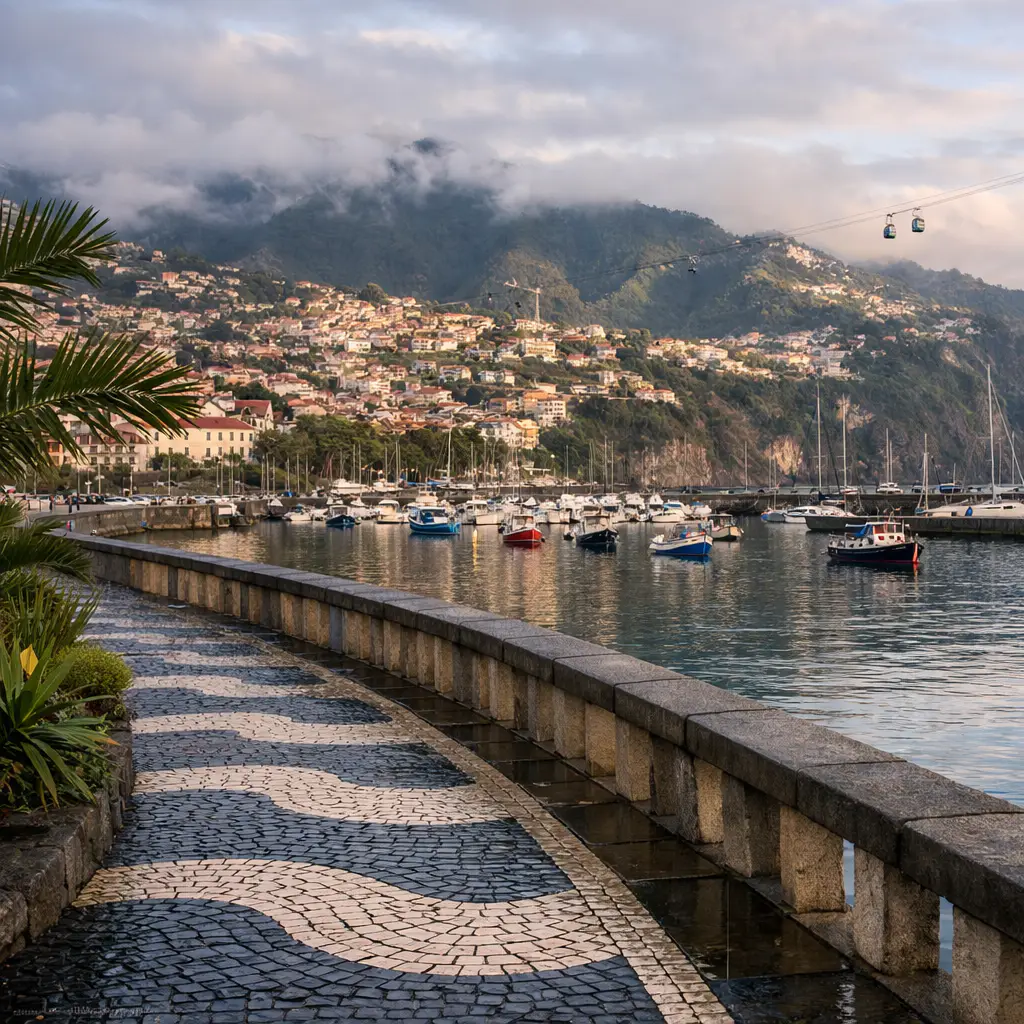
Best for sceneryMadeira is a stronger choice than many beach islands when autumn weather becomes changeable because the trip does not depend on swimming. Funchal gives you markets, gardens, restaurants, the waterfront and cable-car access, while organised transfers make mountain viewpoints and levada walks possible without keeping a rental car for the whole stay.
The important compromise is weather. Madeira can be mild and bright on the south coast while cloud sits over the mountains. A fixed four-day timetable therefore works less well than choosing the mountain or hiking day once the forecast becomes clearer.
Stay in central Funchal or on the western side around São Martinho if the accommodation saving is meaningful and bus access remains simple. An isolated hillside room with a beautiful view can quickly create taxi costs and steep walks.
- Choose Funchal if: viewpoints, gardens and active nature matter more than a guaranteed beach day.
- Without a car: use one east/west island tour or a dedicated hiking transfer.
- Keep flexible: the highest-altitude day.
With a shorter stay, three days in Funchal work well when one day stays urban and the strongest weather window goes to the mountains.
3 Malta: the easiest heritage-and-sea mix without a car
Very easy transportMalta is compact enough for a four-day break but dense enough that bad beach weather does not ruin it. Valletta, the Three Cities, Mdina and the harbour ferries already fill a strong cultural itinerary. A bright day can then go to the coast rather than being the reason for the entire journey.
Sliema or Gżira often make the easiest budget bases because ferries, buses, restaurants and a large accommodation supply are close together. Valletta has more atmosphere but can be more expensive and involves more slopes and steps with luggage.
Do not try to see Valletta, Mdina, Gozo and the far south in a single long weekend. Choose one major excursion beyond the harbour area. That decision matters more than saving a few euros on a room that adds an hour of bus travel every day.
- Choose Malta if: you want history, sea views and simple car-free logistics.
- Best-value base: Sliema or Gżira when ferry access is close.
- Weather strategy: move the most exposed coastal activity to the clearest day.
Two days around Valletta and the Three Cities leave enough room for Mdina or another island day without rushing the harbour.

4 Malaga: one of the simplest late-October city breaks
Best all-rounderMalaga has a useful combination for a short autumn trip: airport rail, a compact historic centre, the Alcazaba and Gibralfaro, strong museums, a waterfront and a beach that remains pleasant for walking even when swimming is not appealing.
Stay around Centro Histórico or Soho if the goal is to do most of the trip on foot. A cheaper room far along the Costa del Sol is not automatically a saving when every museum, dinner and evening requires a train or taxi back towards Malaga.
Use the clearest morning for Gibralfaro and the waterfront, then keep the Picasso Museum, Carmen Thyssen Museum or a long lunch for a shower. The beach is a useful extra at this time of year, not something that needs to be forced into the schedule.
- Choose Malaga if: you want a low-friction city break with a Mediterranean backdrop.
- Avoid: booking a distant resort simply because the nightly rate looks lower.
- Best base: Centro or Soho for a four-day trip.
If your schedule is tighter, two days in Malaga are enough for the Alcazaba, old town, museums and waterfront without needing a car.
5 Seville: architecture, tapas and long evenings
Best for cultureLate October suits Seville particularly well because walking becomes more comfortable than in the hottest summer months. The Alcázar, cathedral, Santa Cruz, Plaza de España, Triana and the Guadalquivir can fill three days without any need for a beach or a rental car.
The main booking decision is the Real Alcázar. Secure a timed entry if it is essential, then keep the rest of the days lighter. A city break becomes unnecessarily rigid when the cathedral, flamenco, river cruise and every meal are all locked to fixed times before arrival.
For accommodation, the edges of the historic centre or Arenal often provide a useful balance between evening atmosphere and access. Santa Cruz is beautiful, but a room directly above a busy restaurant street can trade atmosphere for poor sleep.
- Choose Seville if: monuments, food and evening atmosphere matter more than the sea.
- Book first: the Alcázar.
- Keep flexible: Triana, riverfront and most food stops.
Three days in Seville comfortably cover the Alcázar, Triana, flamenco and the main central neighbourhoods.
6 Valencia: city, park and sea in one compact break
Excellent without a carValencia works well in late October because the trip has three different layers: the historic centre, the Turia Gardens and the City of Arts and Sciences, plus the seafront when conditions are pleasant. Rain is possible, but the aquarium, museums and food markets give you credible alternatives.
Ciutat Vella is convenient for a first visit; Ruzafa suits travellers who value restaurants and evenings. Beach accommodation makes sense only if morning walks by the sea matter more than being able to step outside into the historic centre.
Do not allocate a full day to the beach before seeing the forecast. A clearer day is better spent linking the Turia with the City of Arts and Sciences and continuing towards the coast; a wet spell can be absorbed indoors without losing the whole afternoon.

If Alicante is also cheap from your departure airport, three days in Valencia or Alicante make it easier to choose between a larger urban break and a more compact coastal one.
7 Faro: Ria Formosa, islands and a slower Algarve
Quiet coastal breakFaro is not the Algarve’s most spectacular beach resort, and that is exactly why it can work for a short autumn trip. The old town, marina and Ria Formosa are close together, while trains connect Olhão and Tavira. A boat trip can be added when wind and sea conditions are suitable rather than treated as guaranteed.
Stay in central Faro for a four-day car-free break. Moving to a remote resort because the room looks attractive can leave you paying for taxis or sacrificing evenings in town. If you want more variety, use the railway east instead of trying to cover the entire Algarve.
One day can remain in Faro and the lagoon, one can reach Tavira or Olhão, and the clearest day can go to an island or boat trip. If the weather turns, cafés, markets and the old town keep the stay intact, although Faro has fewer large indoor attractions than Malaga or Valencia.
- Choose Faro if: you want a quiet coastal rhythm rather than a resort holiday.
- Without a car: keep the itinerary on the Faro–Olhão–Tavira axis.
- Weather-dependent: lagoon and island boats.
Three days around Faro and the eastern Algarve are enough for the old town, Ria Formosa and one well-chosen excursion.
8 Palermo: markets, palaces and food with autumn light
Best for foodPalermo does not need beach weather to justify an October trip. Arab-Norman architecture, baroque churches, Ballarò and Capo markets, street food and the long axis between the cathedral and the sea create several dense days on foot.
A central base around Teatro Massimo, Quattro Canti or the quieter edges of Kalsa keeps most visits walkable. Check recent noise comments before choosing a room directly above a nightlife street; the cheapest central rate can be a poor deal if sleep becomes the compromise.
Keep one day available for Monreale or Cefalù rather than trying to combine both with a full Palermo programme. Weather can change quickly in autumn, so a city-first schedule is safer than treating the trip as a late beach holiday.

For seasonal conditions and a compact route, Palermo in October works especially well when the city remains the priority and the coast stays optional.
9 Cagliari: hilltop old town and autumn light over the lagoons
City + coastCagliari works better as a Mediterranean city than as a promise of beach weather. Castello rises above Marina, Stampace and Villanova; the bastions open views across the gulf; Molentargius holds flamingos and Poetto creates a long coastal escape. In late October the light can be excellent, but wind or cooler sea conditions reduce the value of a trip built only around swimming.
Marina is the easiest base for the station, restaurants and the climb towards Castello. Buses reach Poetto and Molentargius, while a more distant excursion needs a little more planning. Keep at least two days for Cagliari itself before adding Nora or another part of Sardinia. The island looks compact on a map, but its transport network does not make a four-day island circuit realistic.
Choose Cagliari if you want a less obvious Italian city, wide views and an accessible coastline. Think twice if your idea of Sardinia depends entirely on the turquoise coves of high summer.
For a first stay, three days in Cagliari without a car are enough to explore Castello, Poetto and Molentargius without renting a vehicle. If you are travelling in October, Cagliari in October lets you keep the beach day flexible around the wind, account for the difference between early and late October and add Nora when you have a fourth day.

10 Lisbon: neighbourhoods, viewpoints and strong rain backups
Most complete cityLisbon is less reliable for sunshine than the southern Mediterranean choices, but it has enough neighbourhoods, museums, cafés and covered attractions to absorb an Atlantic shower. The mistake is not the weather; it is trying to fit Alfama, Belém, Sintra and Cascais into the same four-day break.
Stay around Baixa, Chiado, Arroios or Estrela according to budget and evening preferences. Being near a metro or a useful tram/bus axis matters more than sleeping beside one famous viewpoint. Lisbon’s hills make small map distances feel much longer with luggage.
Use one day for the centre and Alfama, one for Belém and the river, then choose either Sintra or a deeper neighbourhood day. Cascais is an extra, not a compulsory box to tick. If rain arrives, extend museums, markets and cafés instead of crossing the city repeatedly.

Three car-free days in Lisbon work best when Alfama, Belém and the western neighbourhoods each get enough time rather than being compressed into one crossing of the city.
How to book a late-October break without overspending
1. Compare a small date matrix
Check at least three departure times against three return options. A Thursday evening flight may look expensive but create a full Friday; a Friday evening bargain can leave you paying for a hotel night without gaining a usable day. Compare the trip in hours on the ground, not only nights away.
2. Check accommodation at the same time as flights
Late-October demand is uneven. One destination can have cheap flights and unusually expensive rooms because of a conference, local event or school-break weekend. Hold a cancellable central room when the value is good, then finalise the flight once the complete total makes sense.
3. Choose one paid experience that changes the trip
A Teide day from south Tenerife, one levada transfer in Madeira, the Alcázar in Seville or a Ria Formosa boat trip can justify advance planning. Four pre-paid activities usually reduce flexibility exactly when autumn weather makes flexibility valuable.
Flight + good cancellable room
These two items explain most of the trip cost and lose value quickly during school-break dates.
One high-demand attraction
Use timed tickets for the activity you would genuinely regret missing.
Beach, boat and outdoor day
Move them to the best forecast rather than forcing the original order.
What budget should you expect for four days?
For two adults leaving from a well-connected European airport, a disciplined continental city break can often be built around €800–1,350 all in once flights, three nights, meals, local transport and a limited number of paid visits are included. Island trips more often land around €1,050–1,700, especially when flight schedules are limited.
| Cost | Budget approach | Comfort approach | Common mistake |
|---|---|---|---|
| Flights for 2 | €120–280 | €280–500 | Choosing the cheapest timing despite a lost day |
| 3 hotel nights | €240–390 | €430–700 | Sleeping far out and paying for transport |
| Food | €180–260 | €300–450 | Every meal in the most tourist-facing street |
| Local transport | €25–60 | €70–150 | Airport taxis by default |
| Visits / one excursion | €40–110 | €130–280 | Pre-booking an activity every half-day |
Families should not simply double the couple total. An apartment can reduce the nightly cost per person and make breakfasts easier, while four plane seats, checked luggage and airport transfers can raise the transport share sharply. Compare the complete door-to-door cost for your actual group.
What usually goes wrong in late October?
Buying the flight before checking rooms
A cheap airfare can coincide with a surprisingly expensive accommodation weekend. Search both before paying.
Confusing “mild” with “swimmable”
Twenty-two degrees in the sun can feel lovely for lunch and still be disappointing for a beach holiday once wind and sea temperature are added.
Trying to road-trip an island in four days
Tenerife, Madeira and Sardinia reward a focused base. Repacking every night usually consumes the time you hoped to save.
Booking every half-day
Autumn weather rewards movement. Keep at least one full day able to swap with another.
October half-term travel FAQ
The Canary Islands generally offer the strongest odds of warmth among these choices, especially south Tenerife. Mediterranean cities can still be very pleasant, but their weather is less consistent and swimming is not guaranteed.
Start comparing several months ahead when you are tied to school dates. The most useful early move is often a well-priced cancellable room in a central area, followed by the flight once the complete cost is competitive.
Malaga, Valencia and Malta are particularly straightforward. South Tenerife also works from Los Cristianos when Teide is handled with an organised excursion rather than a rental car.
Sometimes, yes. Cagliari, Malta, Malaga and other southern coasts can still produce attractive swimming days, especially in a warm spell. Wind, cloud and sea state make it too variable to promise in advance.
There is no universal winner because the departure airport changes everything. Malaga, Valencia, Faro and Palermo often produce competitive complete-trip totals when direct flights line up well; always compare accommodation before choosing from airfare alone.
It can make sense in the Canary Islands when the main goal is sun and resort time. In Seville, Palermo, Lisbon, Valencia or Cagliari, a central room is usually more useful because food and neighbourhoods are a major part of the experience.
Practical checks for an autumn trip
- School dates: half-term timing varies by country, region and individual school. Confirm your own calendar before buying non-refundable travel.
- Weather: use the forecast to order the days, not to decide whether an entire Mediterranean destination is “good” or “bad”.
- Island transport: check Sunday and late-season bus timetables before relying on one connection.
- Boat trips: wind and sea conditions can cancel departures even when the sky looks bright.
- Attractions: autumn opening hours can differ from summer schedules.
Which destination would we choose?
Choose south Tenerife when weather is the priority, Funchal for nature, Malaga or Valencia for the easiest city break, and Seville or Palermo when food and heritage matter more than the sea. Malta is the strongest compact island without a car; Cagliari is particularly attractive when Sardinia appeals but you do not want a four-day road trip.
The cheapest destination is the one that works from your departure airport on your exact dates. Compare flight times, a central room and airport transport together, then protect one day from fixed bookings so autumn weather can work in your favour rather than against you.
Some accommodation links may be affiliate links at no extra cost to you. Prices and transport schedules can change quickly around school-break dates; check the final price, cancellation conditions, location and current timetable before paying.
Related articles
Continue your trip planning
Core guide
Top 10 Naturist Destinations in Europe: Where to Stay and Which One to Choose
inspiration
Read next
Cheap Naturist Destinations in Europe: 8 Places That Offer Real Value
Read next
Matera in October: 2 Days in the Sassi, Weather, Where to Stay and Budget
Read next