Split in 2 Days: Palace, Sea, Markets, Where to Stay and Budget
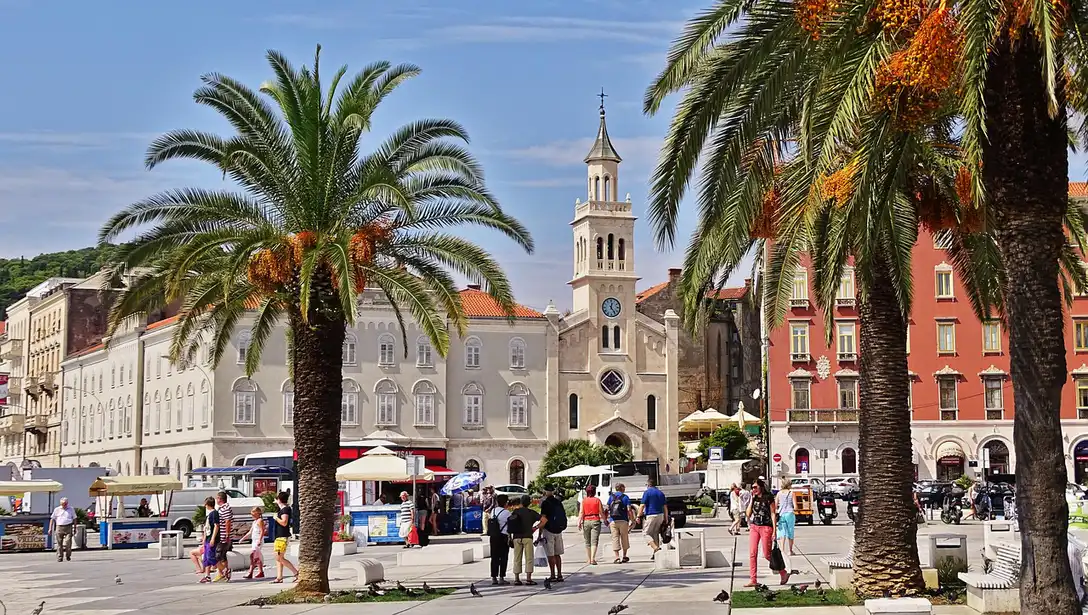
Split is neither merely a stop before the islands nor a Roman film set. Diocletian’s Palace still forms the inhabited centre: flats, cafés, passages and squares occupy an ancient structure with no single entrance gate. Minutes away, the Riva opens onto the port, Veli Varoš climbs towards Marjan and Bačvice retains the character of a real urban beach.
Two days are enough to understand this geography if Hvar, Krka, Trogir and a boat cruise are not added to the same plan. Day one should remain urban. Day two can combine Marjan and the sea or become one complete excursion. That choice matters more than the number of landmarks collected.
The trip at a glance
Which trip should you plan?
On a first two-day stay, choose Split itself. Give the palace one morning with a guide or prepared reading, then return alone: the Peristyle, basements, gates and lanes make sense once the medieval city’s growth inside the Roman compound is understood.
If swimming is the priority, stay in Bačvice or near the port and keep day two for coast and Marjan. For restaurants and evening walks, Veli Varoš is more balanced. Rooms inside the palace are central but may combine stairs, noise and difficult luggage access.
Do not rent a car for the centre. It becomes useful only for a defined route outside town, and even then bus, ferry or a tour may remove parking and a tiring return. Compare the full independent day with the organised transfer, not the advertised rental rate alone.
.jpg?width=1280)
When to go and how many days to allow
May, June, September and early October often balance daylight, sea and visitor numbers, without guaranteeing quiet streets. July and August require early starts, a real midday pause and tighter reservations. In spring or autumn, wind and rain can disrupt boats while the old town remains workable.
If your trip falls later in October, during the school half-term period, do not choose Split for the sea alone. Compare it with affordable European destinations for October half-term: Tenerife and Malta offer stronger odds of mild weather, while Malaga, Palermo and Valencia remain worthwhile when a day turns cooler or wet.
With two days, weather should decide the order. Put Marjan, Bačvice or a sea trip in the best window and keep the palace, basements, markets and museums for uncertainty. Check sea conditions and cancellation directly with the operator.
Arriving the previous evening materially improves the stay: the first visit can begin before day-trip groups. A third night allows dinner without watching a ferry or flight deadline.

Where to stay
The right address removes hills, taxis and noise. In the historic core, check floor, lift, route from the drop-off and soundproofing reviews. In Bačvice, make sure beach proximity does not hide a long walk to the sights.
Choose cancellation when arrival depends on a seasonal ferry or flight. “Central” describes very different positions: measure the real walk to the Golden Gate and to the terminal you will use.
Palace and Old Town
Everything is walkable and tours start nearby. Check stairs, noise and taxi access.
Veli Varoš
Stone lanes, restaurants and Marjan access. Some streets are steep and car-free.
Bačvice
Useful for swimming, bus station and port, with a ten-to-twenty-minute walk to the palace.
Lučac-Manuš
A good compromise east of the centre. Check the exact street and slope, not only the district name.

Getting there and moving around
Split Airport lies west of the city near Trogir. Depending on time, use the official shuttle, public lines listed by the airport or a transfer. The theoretical time expands in peak traffic; retain a proper flight margin and confirm the exact drop-off terminal.
The centre, Bačvice, Veli Varoš and lower Marjan work on foot. Promet buses help with outer districts and some approaches to Marjan. Buy and validate the correct ticket through the current channel; schedules and fares belong on the official site or app.
Trogir is reachable by bus without a car, although traffic can slow the return. For Hvar, Brač or Šolta, confirm company, port, service type, duration and last sailing: “Split–Hvar” may reach a town or harbour different from the one imagined. A Blue Cave trip depends much more on sea conditions and should never precede a flight.
Krka consumes a day. A tour resolves admission and transport but fixes the rhythm; going independently offers freedom and more connections. With only two days, select it only when the park is the true reason for travelling.
.jpg?width=1280)
Day-by-day itinerary
Diocletian’s Palace, markets and the Riva
Morning. Enter through the Golden Gate before the crowds, then cover the Peristyle, Vestibule, basements and lanes. A short guided visit provides the necessary chronology.
Afternoon. Cross Pazar and Peškarija as working markets, lunch away from the most obvious Riva tables and follow the waterfront towards Veli Varoš.
Evening. Return to the palace after groups leave. Eat on a secondary lane and notice how ancient stone and daily life share the same space.
Why this order: the route stays compact and the evening return reveals a different centre without transport.
Marjan and sea, or one deliberate excursion
Morning. Climb towards Marjan’s first viewpoints early with water and suitable shoes. Do not mistake the entire park for a short lookout walk.
Afternoon. Descend towards Ježinac or stay around Bačvice according to swimming, conditions and energy. Alternatively give the whole day to Trogir, Krka or a booked boat.
Evening. Keep dinner close to the accommodation and take one final Riva walk. Avoid an activity ending without departure margin.
Why this order: the day remains coherent: nature and sea in Split, or one full excursion, never a fragile mix.

What should be booked first?
The links below point directly to the product described. Compare language, inclusions, cancellation and end point.
Palais de Dioclétien et vieille ville
Best on the first morning to understand Roman, medieval and contemporary layers. Check language, basement inclusion and group size.
Grotte Bleue et cinq îles
A spectacular full day highly dependent on the sea. Read the real duration, vessel, stops, weather policy and return port.
Cascades de Krka et Šibenik
A complete land option when waterfalls matter more than Split. Compare park admission, food, walking, free time and return.
Eat without turning the trip into a trap
Split is also read through food schedules. Pazar is strongest in the morning; Peškarija reflects the everyday Adriatic connection. Arrive to observe and buy, not to block working aisles. For lunch, streets just behind the Riva often make the balance between cooking and location easier to judge.
Try fish or seafood when origin and weight pricing are clear, pašticada for a slow Dalmatian dish, and soparnik when a reliable kitchen offers it. A konoba is not automatically authentic: read the menu, supplements and recent reviews.
Reserve one important dinner, especially at weekends. Leave the other flexible for a delayed boat or longer swim. Ask about water, cover charges and sides before ordering so that the real cost is visible.
- Pazar: best in the morning for produce and local rhythm.
- Peškarija: fish and Secession architecture near Marmontova.
- Pašticada: a rich Dalmatian dish for a slow meal.
- Soparnik: an inland speciality that works well to share.
- Gelato and coffee: useful pauses, though the Riva also charges for its view.

Realistic budget per person, excluding flights
Ranges are per person for two nights in a shared double room, excluding flights. In summer accommodation can exceed them quickly; in spring and autumn cancellation and position may be worth more than the deepest discount.
The controlled version walks, pays for one major interior and leaves excursions optional. Comfort adds a central room, guide and organised day. Keep 10–15% for storage, a transfer or a weather change.
| Item | Controlled budget | Comfort |
|---|---|---|
| Accommodation, 2 nights | €90–190 | €240–480 |
| Food and drink | €65–115 | €145–260 |
| Local transport | €15–35 | €55–120 |
| Visits / excursion | €25–100 | €120–260 |
| Total excluding flights | €195–440 | €560–1,120 |
Booking strategy and backup plan
Do not lock a boat and a long visit on the same day. For a maritime product, verify weather policy, shade, toilets, meal, equipment, vessel capacity and final landing point.
Forty-eight hours before travel, check flight, transfer, any ferry, wind and hours. On waking, choose between coast and urban programme. The palace does not close as one monument: paid spaces have separate rules while its streets remain inhabited.
A strong backup combines basements, cathedral or one chosen museum, markets when active, a long lunch and coffee. It is not a list of ten interiors. In deep heat, reverse the logic: heritage early, slow lunch, rest, then Marjan or the sea late.
Checks specific to this stay
From Palace and Old Town, time the journey to “Diocletian’s Palace, markets and the Riva” at the hour it will actually happen, including luggage on arrival and the evening return. From Palace and Old Town, compare that result with Veli Varoš. For “Diocletian’s Palace, markets and the Riva”, the best district is not necessarily the most central one; it should simplify the two days that matter most.
When “Marjan and sea, or one deliberate excursion” depends on weather, a road or an infrequent service, keep “the first day” as the substitute. For “Diocletian’s Palace, markets and the Riva”, decide the evening before and again that morning. Between Palace and Old Town and Veli Varoš, swapping two days costs less time than preserving an outing that is no longer workable.
During “Diocletian’s Palace, markets and the Riva”, for Palais de Dioclétien et vieille ville, check language, included admission, door-to-door duration, final point and cancellation. Between Palace and Old Town and Veli Varoš, compare those items with Grotte Bleue et cinq îles rather than price alone. Around Palais de Dioclétien et vieille ville, two offers with similar titles may occupy very different amounts of the day.
On arrival day, reach Palace and Old Town before adding a visit. Around Palais de Dioclétien et vieille ville, if the first journey seriously cuts into “Diocletian’s Palace, markets and the Riva”, retain one walk and a meal in the same area. Before “Marjan and sea, or one deliberate excursion”, on departure day, set a final cut-off that protects the principal journey even when one last activity appears nearby.
Common mistakes to avoid
- Adding Hvar to an already full Split day.
- Renting a car only for the historic centre.
- Ignoring stairs in a palace apartment.
- Booking a boat immediately before a flight.
- Climbing Marjan in peak heat without water.
- Choosing a restaurant solely for its Riva position.
- Confusing port, bus station and exact departure point.
Frequently asked questions
These answers resolve the decisions travellers most often face.
Are two days enough?
Yes for the palace, markets, Marjan and time by the sea. An excursion replaces part of Split.
Where should I stay?
Old Town for efficiency, Veli Varoš for character and Bačvice for beach and departures.
Do I need a car?
No for this plan. Rent briefly only for a defined route outside town.
Can I visit Hvar?
Yes, but it deserves a day and verified sailing times.
Which beach is easiest?
Bačvice is simplest; coves towards Marjan require more walking or transport.
When should I see the palace?
Early for context, then again in the evening for atmosphere.
What should I book?
What if it rains?
Basements, palace interiors, one museum, markets and a slow meal create a real backup.
Official sources to recheck
Hours, prices, access and conditions change faster than the route. Check them when booking and again immediately before travel.
Transparency: some booking links are affiliate links. Using them may support LowCostWings without changing the displayed price. Recommendations remain based on trip value.